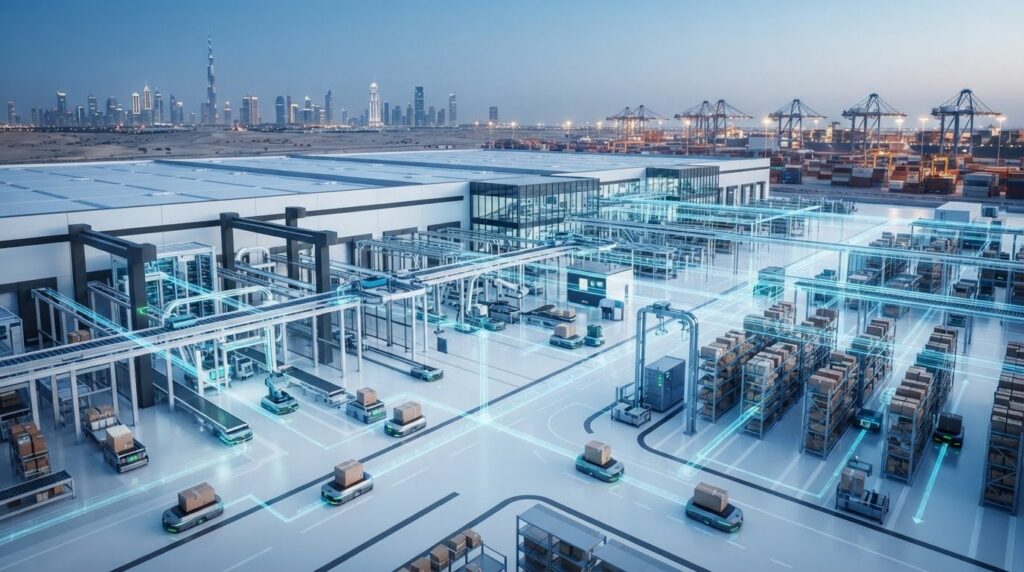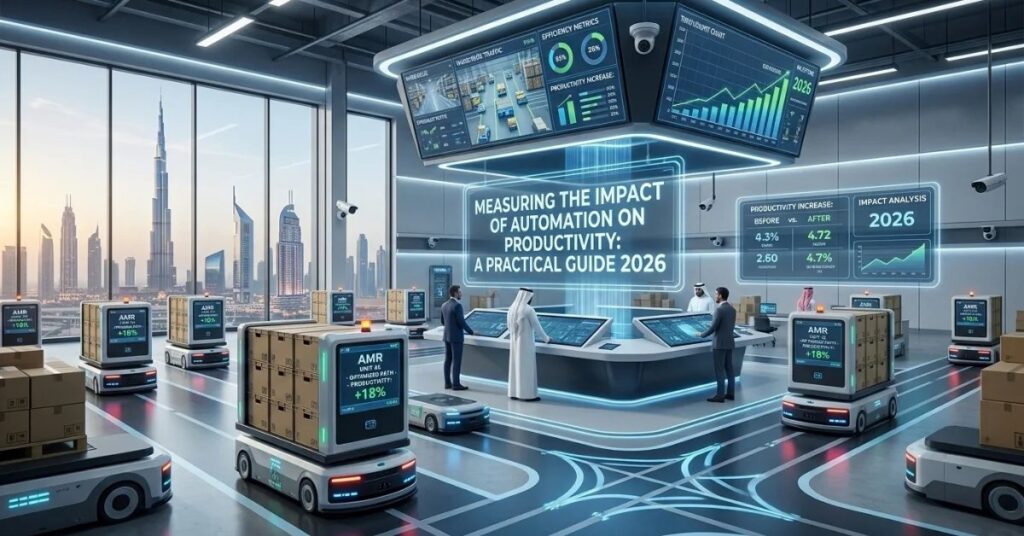
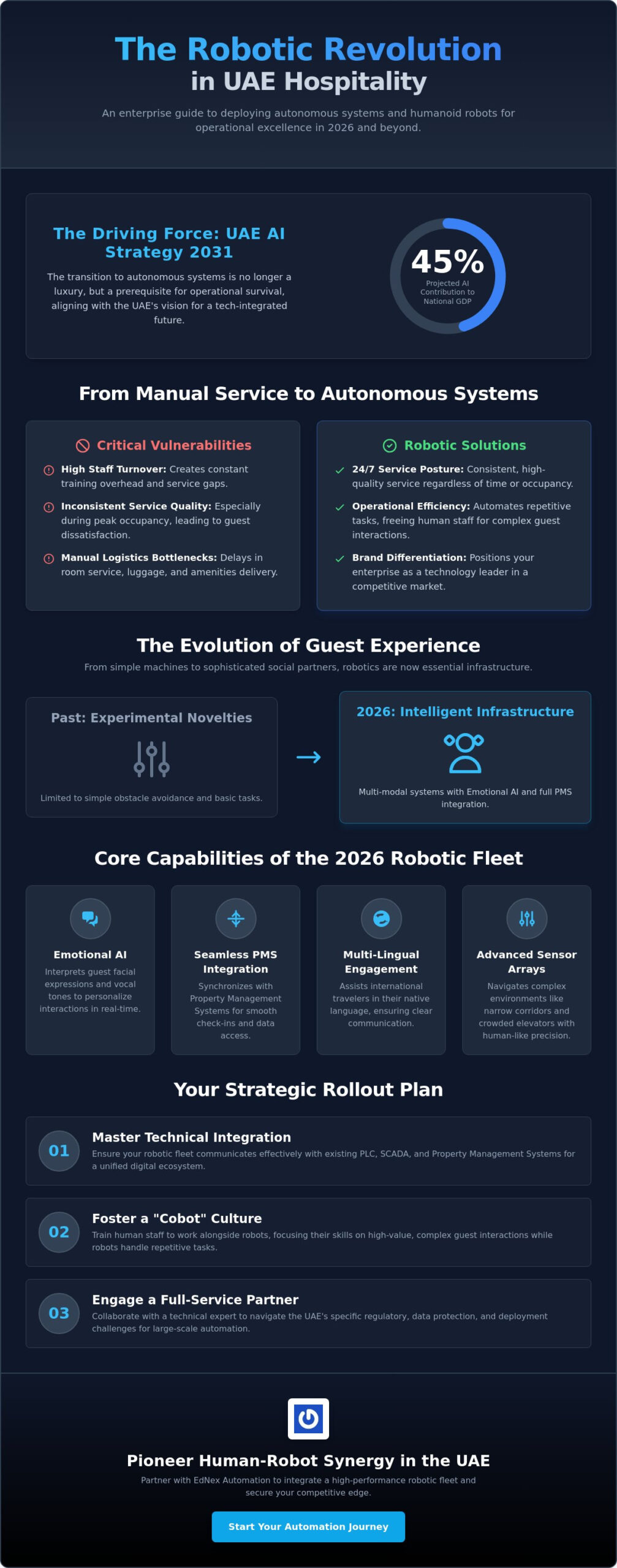
With the UAE’s AI Strategy 2031 projected to contribute nearly 45% of the national GDP, the transition from manual service to autonomous systems is no longer a luxury elective but a prerequisite for operational survival. Leading hoteliers recognize that high staff turnover and inconsistent service quality during peak occupancy periods create critical vulnerabilities in the guest experience. Identifying these manual logistics bottlenecks is the first step toward reclaiming operational control through advanced automation.
By leveraging the latest generation of delivery robots for hotels UAE, your enterprise can transition into a high-efficiency, tech-integrated environment that operates without interruption. This guide explores how autonomous delivery and humanoid robotics are transforming luxury hospitality into a sophisticated digital ecosystem in 2026. We’ll detail the technical pathways for achieving operational excellence through 24/7 automation and the seamless integration of these systems with your existing Property Management Systems (PMS) to ensure long-term business viability.
Key Takeaways
- Learn how humanoid robotics have evolved from experimental novelties into essential infrastructure for the 2026 hospitality landscape.
- Discover the operational benefits of integrating delivery robots for hotels UAE to resolve service inconsistencies and manual logistics bottlenecks during peak occupancy.
- Master the technical requirements for PLC and SCADA integration to ensure your robotic fleet communicates effectively with Property Management Systems.
- Establish a structured rollout plan that fosters a “cobot” culture, allowing human staff to focus on complex guest interactions while robots handle repetitive tasks.
- Recognize why a full-service technical partner is vital for navigating the UAE’s specific regulatory and data protection requirements during large-scale automation.
The Evolution of Guest Experience: Why Robotics are the New Standard
The hospitality sector in the Emirates is undergoing a structural transformation where the visual appeal of early automation has matured into a mission-critical functional necessity. Identifying the need for seamless logistics, forward-thinking operators are now prioritizing systems that offer full-stack connectivity and high-level task execution. While previous iterations of service bots were often limited to simple obstacle avoidance, the current deployment of delivery robot technology represents a shift toward intelligent, multi-modal systems. Hoteliers face a dual challenge: maintaining the high standards of luxury expected across the nation while managing significant labor shortages in service roles. Integrating delivery robots for hotels UAE provides a scalable solution that ensures consistent service quality regardless of occupancy fluctuations or staff turnover rates.
From Androids to Autonomous Social Partners
Modern robotics suites now incorporate sophisticated emotional AI, allowing systems to interpret guest facial expressions and vocal tones to adjust their interaction style in real time. This capability transforms a machine into a social partner that can personalize greetings or identify a guest’s immediate needs without manual input. Utilizing human-like morphology is a strategic design choice; it allows these units to navigate environments specifically engineered for people, such as narrow corridors or crowded elevator bays. The 2026 humanoid robot serves as a sophisticated, multi-modal interface that bridges the gap between complex digital backend systems and high-touch guest services. Leveraging advanced sensor arrays, these robots now perform with a level of precision previously reserved for human staff, ensuring that luxury stays remain both high-tech and human-centric.
The Strategic Advantage for UAE Enterprises
Implementing these systems aligns directly with the UAE’s AI Strategy 2031, which positions the nation as a global hub for Industry 4.0 applications. For luxury operators, the deployment of delivery robots for hotels UAE isn’t merely about cutting costs; it’s about brand differentiation in a hyper-competitive market. Positioning your brand as a technology leader requires a move away from isolated gadgets toward integrated robotic fleets that enhance operational visibility. Investing in high-performance delivery robot technology ensures that logistics remain invisible to the guest, maintaining an atmosphere of effortless service. When evaluating the long-term viability of these assets, operators often look for specialized humanoid robots for sale UAE that offer both technical reliability and the ability to integrate with regional data protection standards. This strategic integration secures a competitive edge by converting manual service bottlenecks into streamlined, automated workflows that drive both guest satisfaction and bottom-line efficiency.
Optimizing Operations with Delivery Robots for Hotels in the UAE
Integrating advanced robotics into the daily operational matrix of a hotel requires a strategic shift from simple task automation to comprehensive system synchronization. Utilizing delivery robots for hotels UAE allows properties to maintain a 24/7 service posture without the degradation often associated with manual labor during high-occupancy cycles. These units act as the physical manifestation of a hotel’s digital nervous system, ensuring that every guest touchpoint, from the lobby to the private suite, is managed with mathematical precision. Aligning with current hospitality technology trends, these systems provide the intellectual framework necessary to scale operations while preserving the high-touch luxury standards synonymous with the region.
For residential property managers and holiday home hosts who want to uphold these same high-touch luxury standards in their private offerings, Neatly Homes Property Care LLC provides hotel-standard property care to ensure every guest experience is flawless.
The Intelligent Concierge and Receptionist
Deploying humanoid units at the front desk mitigates the friction typically found during peak check-in windows. These robots leverage instant data synchronization with Property Management Systems (PMS) to facilitate seamless, multi-lingual arrivals and autonomous queue management. By providing constant availability, they ensure that international travelers arriving at off-peak hours receive the same level of sophisticated engagement as those arriving during mid-day. This reliability allows human staff to pivot toward high-value guest relations that require nuanced emotional intelligence while the machines handle the administrative logistics.
Precision in F&B and Room Service Logistics
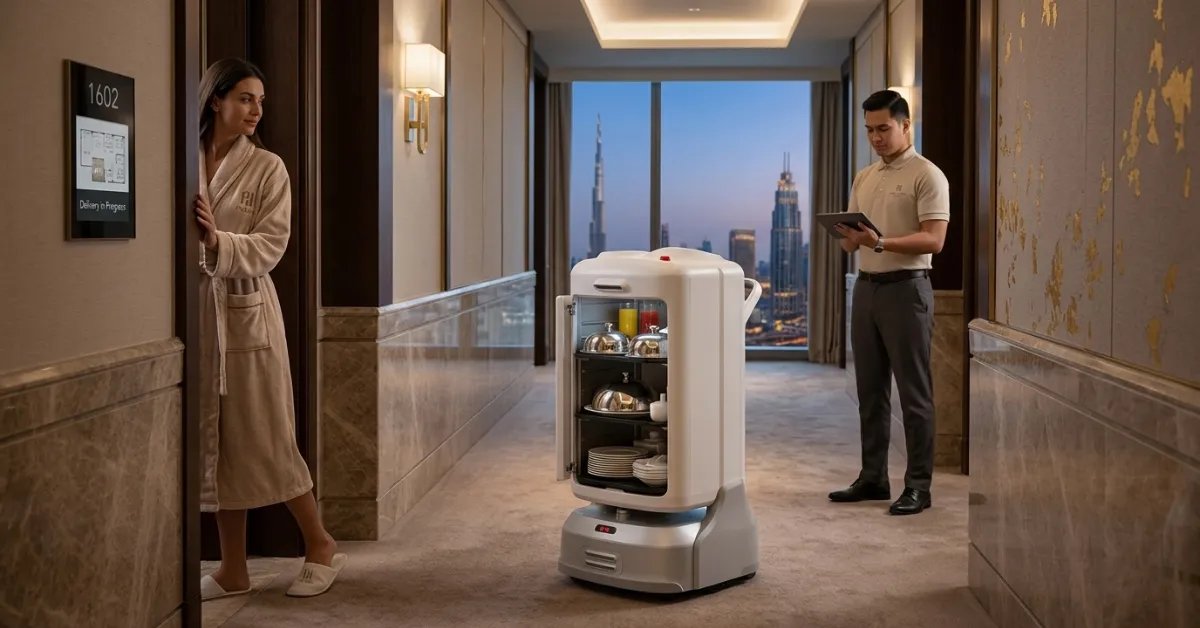
In the dining and logistics sector, the coordination between humanoid brand ambassadors and specialized autonomous mobile robots (AMRs) creates a frictionless service flow. While humanoid units handle interactive guest experiences and precision table service in high-end lounges, AMRs manage the heavy lifting of luggage transport and room service delivery. This tiered approach to automation ensures that delivery robots for hotels UAE are utilized according to their specific mechanical advantages. Linking these units with kitchen automation systems allows for end-to-end service delivery, effectively eliminating the manual bottlenecks that typically occur between the point of order and the guest’s door.
Beyond guest-facing roles, these autonomous units provide continuous surveillance and emergency response coordination, acting as mobile nodes within the facility’s security infrastructure. They scan for environmental hazards and monitor restricted zones, providing real-time data to human security teams via encrypted channels. Implementing such a comprehensive robotic fleet requires a partner who understands both the technical and cultural nuances of the Emirates. If you’re ready to modernize your facility’s operational flow, exploring a partnership for tailored robotic integration is the next logical step toward long-term business viability.
Technical Synergy: Integrating Robotics with Facility Infrastructure
Successful robotic deployment in large-scale hospitality facilities depends on the underlying industrial architecture rather than the aesthetic design of the units themselves. Identifying the technical requirements for a multi-unit fleet reveals that standalone operation is insufficient for enterprise-level ROI. Utilizing PLC and SCADA integration services ensures that your fleet of delivery robots for hotels UAE operates as a cohesive unit rather than isolated machines. This integration layer acts as the primary orchestrator, allowing robots to communicate with elevators, automated doors, and security barriers without human intervention. By establishing this high-level connectivity, operators can achieve a level of operational fluidity that manual processes simply cannot replicate.
The Backbone: Industrial Control Systems in Hospitality
Enterprise-grade hospitality robotics require robust PLC architectures to maintain high-availability performance in demanding environments. These systems provide the necessary logic for humanoid units to interact with physical infrastructure, such as calling elevators or navigating through restricted service corridors. SCADA integration provides a centralized command architecture that monitors robotic health metrics and synchronizes fleet movements with localized facility hardware to ensure uninterrupted service delivery. This centralized oversight allows technical teams to predict maintenance needs and optimize charging cycles, preventing service gaps during peak occupancy. Establishing this industrial backbone is essential for properties that aim to transition from experimental pilots to full-scale automated logistics.
IoT and Smart Room Connectivity
In the modern guest suite, humanoid robots serve as the physical interface for comprehensive ‘Smart Guest Room’ ecosystems. These units leverage edge computing to minimize latency, ensuring that robotic response times to guest commands remain instantaneous. Through voice-activated controls, guests can request adjustments to lighting, climate, and entertainment systems, which the robot then executes via the hotel’s Building Management System (BMS). This interaction model positions the robot as a sophisticated concierge that manages the guest’s immediate environment with precision. To ensure compliance with the UAE Personal Data Protection Law (PDPL), all interactions are processed within secure local networks, protecting guest privacy while maintaining high-tech convenience. Integrating delivery robots for hotels UAE into this IoT framework transforms the guest room into a responsive, hyper-personalized environment that reinforces the property’s status as a visionary luxury leader.
Strategic Implementation: Overcoming Deployment Challenges
Transitioning from an experimental pilot to a full-scale robotic enterprise requires a methodical approach that prioritizes long-term operational stability over short-term marketing appeal. Identifying the specific logistical needs of your property is the first step in developing a phased rollout plan that minimizes disruption to daily service. Successful integration of delivery robots for hotels UAE often begins with controlled pilot programs in specific departments, such as room service delivery on a single floor, before expanding to high-traffic public areas. This gradual scaling allows technical teams to calibrate sensor arrays and optimize pathfinding algorithms within the unique architectural constraints of the facility. By establishing a clear implementation roadmap, hoteliers can ensure that their investment translates into a reliable infrastructure node rather than an isolated novelty.
Calculating ROI for these systems in 2026 involves a multi-dimensional analysis that accounts for more than just labor savings. While reducing the reliance on manual labor for repetitive tasks is a primary driver, the true value lies in enhanced brand equity and the acquisition of data-driven insights. These units provide granular data on peak service times, delivery durations, and guest preference patterns, allowing management to optimize staffing levels and inventory with mathematical precision. Navigating the UAE’s stringent safety standards and technical certifications from the Telecommunications Regulatory Authority (TRA) is a prerequisite for any public-facing deployment. Ensuring that your robotic fleet complies with these regional requirements is essential for maintaining operational legitimacy and guest safety.
The Human-Robot Collaboration Framework
Positioning autonomous units as ‘cobots’ rather than human replacements is critical for maintaining a positive internal culture. By offloading the ’emotional labor’ and physical strain of repetitive logistics to humanoid units, human staff can pivot toward high-value guest interactions that require nuanced empathy. Designing clear guest-robot interaction protocols ensures comfort and accessibility for all visitors, regardless of their familiarity with technology. Managing guest expectations through transparency regarding robotic capabilities prevents friction and reinforces the property’s status as a sophisticated, tech-forward leader.
Maintenance and Long-Term Reliability
Securing the longevity of a robotic fleet requires a proactive maintenance strategy that extends beyond basic hardware care. Establishing localized technical support and preventative maintenance schedules ensures that units remain operational during high-occupancy periods without unexpected downtime. Software longevity is equally vital; regular firmware updates and AI model retraining are necessary to keep the fleet aligned with evolving environmental conditions and guest needs. Choosing a partner with deep regional expertise in the Emirates is the most effective way to manage these technical demands. If your organization is ready to move beyond the pilot phase, engaging with a specialized automation consultancy will provide the intellectual framework necessary for a successful full-scale deployment.
EdNex Automation: Pioneering Human-Robot Synergy in the UAE
Architecting the future of automated hospitality, EdNex Automation provides the intellectual and technical framework necessary for high-stakes enterprise transformation. We distinguish ourselves from simple equipment vendors by acting as a grounded technical partner that bridges the gap between global breakthroughs and regional industrial needs. Our comprehensive approach integrates specialized hardware supply with full SCADA synchronization, ensuring that your investment in delivery robots for hotels UAE remains a high-performance asset rather than a depreciating gadget. By delivering start-to-finish implementation support, we empower luxury properties to transition into the 2026 tech-integrated era with palpable confidence and technical excellence.
Bespoke Robotic Solutions for Global Hospitality Standards
Tailoring humanoid behaviors to match specific brand values is a core component of our bespoke integration services. We understand that a luxury resort in Ras Al Khaimah demands a different social intelligence profile than a corporate facility in downtown Dubai. Our systems allow for the simultaneous deployment of specialized units, such as integrating autonomous cleaning robots to manage facility hygiene while humanoid staff handle guest relations. This multi-layered workforce strategy provides:
- Consistent execution of repetitive sanitation protocols without service degradation.
- Sophisticated interaction layers that reinforce your property’s prestige and brand identity.
- Frictionless logistics through the deployment of high-capacity delivery robots for hotels UAE.
- Real-time performance tracking via centralized SCADA monitoring to ensure 24/7 reliability.
Our industrial-grade systems are engineered for the rigors of the commercial sector, ensuring reliability across every square meter of your facility. We don’t just supply tools; we design the digital nervous system that allows these autonomous units to thrive within complex hospitality infrastructures.
Securing the Future of Your Hospitality Enterprise
EdNex acts as a strategic consultant for organizations focused on long-term business viability and Industry 4.0 readiness. We provide the intellectual framework necessary for implementation, acting as a systematic organizer who brings order and efficiency to complex hospitality environments. Partnering with an industry leader ensures that your transition toward automation is controlled, deliberate, and fully aligned with UAE regulatory standards. We’re committed to securing the future of your enterprise through visionary technology and grounded engineering expertise. Consult with EdNex Automation experts to design your robotic hospitality strategy today.
Securing Operational Excellence in the Autonomous Era
Integrating advanced automation is no longer a peripheral upgrade but a fundamental requirement for maintaining competitiveness in the Emirates’ luxury hospitality market. By transitioning from manual logistics to a synchronized fleet of delivery robots for hotels UAE, properties can effectively eliminate service bottlenecks while simultaneously enhancing brand prestige. Success in this high-stakes industrial transformation relies on robust PLC and SCADA architectures that ensure your robotic assets remain fully integrated with existing facility infrastructure. Establishing this technical synergy allows for 24/7 operational reliability and data-driven insights that manual processes cannot replicate.
EdNex Automation provides the intellectual framework and technical precision necessary for this evolution. As a specialized division of the EdNex group focused on Industry 4.0, we leverage official certifications and alliances with global robotics entities to deliver end-to-end integration expertise. From initial PLC mapping to full-scale humanoid deployment, our team ensures your enterprise achieves long-term viability through controlled and deliberate innovation. It’s time to reclaim operational control and redefine the guest experience through the power of intelligent automation.
Explore Advanced Humanoid Solutions for Your Hospitality Enterprise
Frequently Asked Questions
What are the primary benefits of using delivery robots for hotels in the UAE?
The primary benefits include a 30% to 40% increase in housekeeping efficiency and the elimination of manual logistics bottlenecks during peak occupancy periods. Utilizing delivery robots for hotels UAE allows properties to maintain a 24/7 service posture without the degradation often associated with human fatigue. These units provide consistent, high-quality service while reinforcing the property’s status as a visionary leader in the competitive luxury hospitality market.
How do humanoid robots interact with existing hotel management software?
Humanoid units integrate directly with Property Management Systems (PMS) through secure API protocols and specialized middleware. This connectivity allows for real-time synchronization of guest data, room service orders, and billing information without the need for manual data entry. To further enhance this efficiency, hotels can utilize an Intelligent Document Processing platform to automate the extraction of data from physical IDs and supplier invoices. By acting as a physical interface for the hotel’s digital nervous system, these robots ensure that guest requests are processed and executed with mathematical precision.
Are delivery and humanoid robots safe to operate around guests and children?
Yes, these autonomous systems are engineered with multi-layered sensor arrays, including LiDAR and 3D depth cameras, to ensure safe navigation in crowded environments. They feature advanced obstacle avoidance algorithms that detect and respond to sudden movements from children or pets in real time. Official safety certifications ensure that every unit operates within strict regulatory parameters for public-facing industrial equipment in the Emirates.
What is the expected ROI for a humanoid robot deployment in hospitality?
Return on investment is achieved through a combination of labor optimization, reduced service turnaround times, and increased direct bookings driven by brand prestige. While initial acquisition costs vary based on fleet size, the long-term business viability is secured by the robot’s ability to handle repetitive tasks 24/7 without interruption. Properties often report enhanced revenue through optimized room service logistics and hyper-personalized guest interactions that drive repeat visits.
Can humanoid robots speak multiple languages for international guests?
Modern service robots utilize advanced Natural Language Processing (NLP) to communicate fluently in dozens of languages, including Arabic, English, and Mandarin. This capability ensures that international travelers receive personalized assistance in their native tongue at any hour. By removing linguistic barriers, these delivery robots for hotels UAE provide a seamless concierge experience that caters to the nation’s diverse global audience.
What happens if a humanoid robot encounters a technical malfunction in a public area?
If a malfunction occurs, the unit immediately transmits an automated alert to the centralized SCADA monitoring system for rapid technical intervention. Technical teams utilize remote diagnostics to resolve software issues or initiate a manual override if physical recovery is required. This hierarchical response protocol ensures that any service interruption is localized and rectified with minimal impact on the guest experience or facility flow.
How do humanoid robots handle complex guest requests like concierge recommendations?
Humanoid robots leverage Generative AI and localized data sets to provide sophisticated concierge recommendations for dining, entertainment, and local travel. They analyze guest preferences in real time to offer hyper-personalized suggestions that align with the property’s specific service ethos. For highly nuanced requests, the system facilitates a seamless handover to human staff to ensure the highest level of luxury service is maintained.
Do I need to upgrade my hotel’s Wi-Fi or electrical infrastructure for robotics?
Optimal performance typically requires a robust Wi-Fi 6 or 5G network to ensure low-latency communication between the robotic fleet and the Building Management System. Dedicated charging stations must be integrated into the facility’s electrical layout to support autonomous power management and fleet readiness. While many modern UAE properties are already compatible, a comprehensive infrastructure audit is a standard part of our strategic integration process.