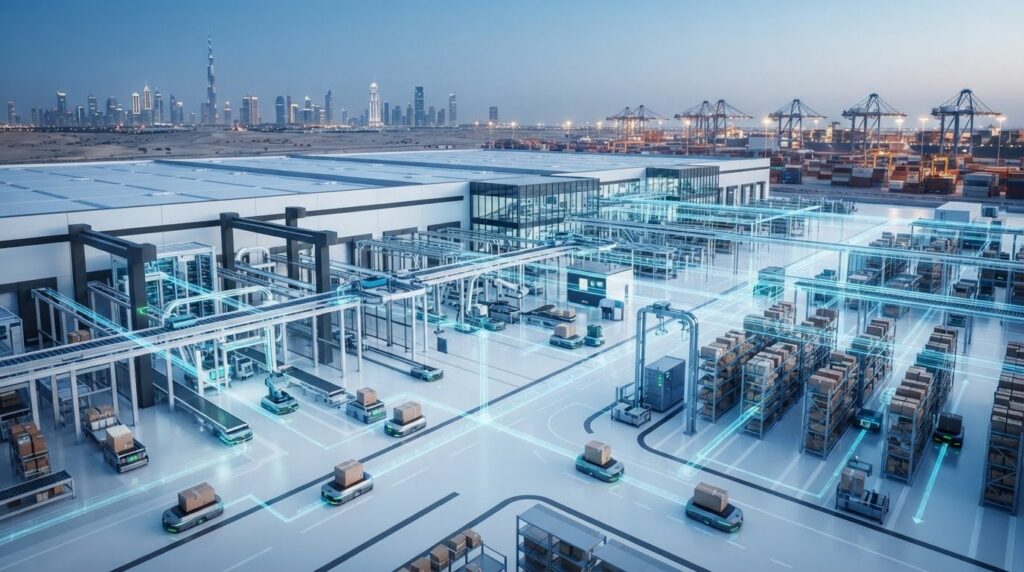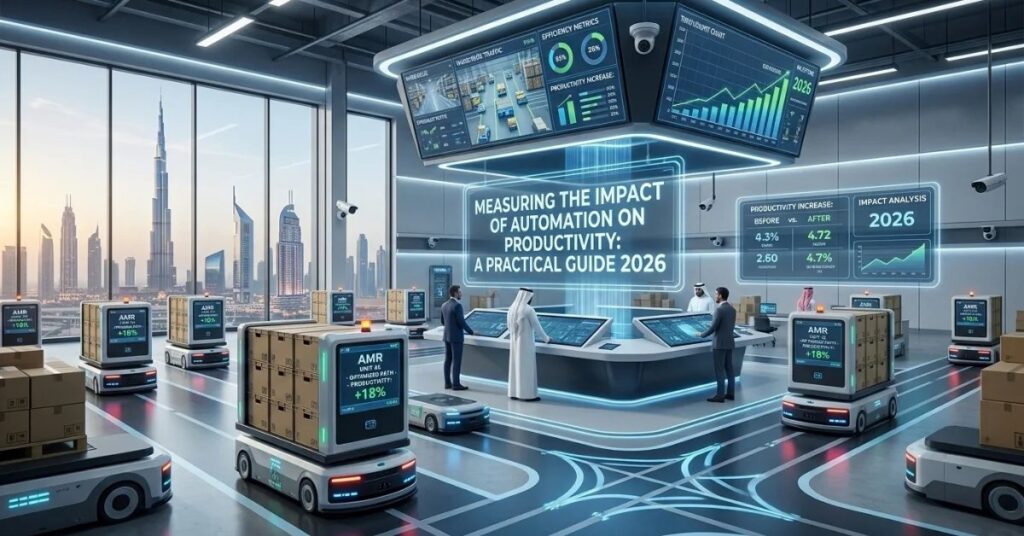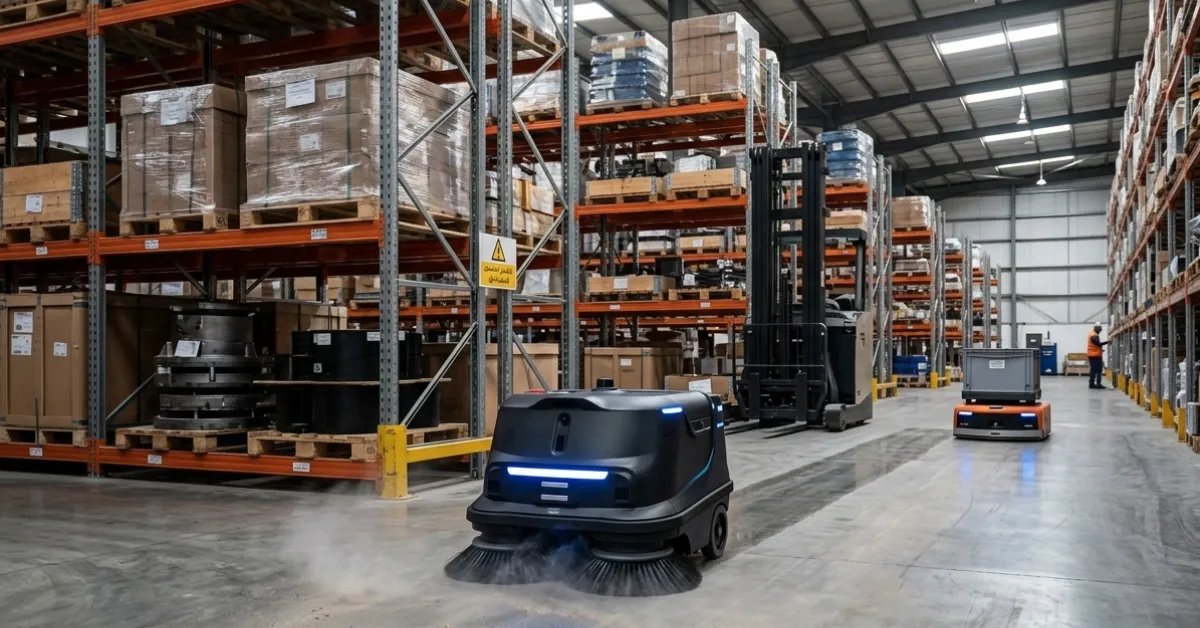
Integrating an automated floor scrubber for warehouses is no longer a speculative upgrade for the future; it’s a critical evolution for facilities navigating the labor and safety shifts of 2026. You’re likely facing the mounting pressure of rising manual labor costs for non-core tasks, coupled with the persistent difficulty of maintaining hygiene standards in high-dust industrial environments. Relying on inconsistent manual cleaning often leads to safety hazards that jeopardize your operational integrity and compliance status.
Leveraging the latest advancements in autonomous navigation and industrial automation, this guide explores how cleaning robots deliver a measurable reduction in operational overhead while improving facility hygiene. We’ll analyze the implications of the new ANSI/A3 R15.06-2025 safety standards and the strategic benefits of Robotics as a Service (RaaS) models. By examining the integration of high-performance systems like the Tennant X16 SWEEP and updated Avidbots Neo software, you’ll discover how to transform facility maintenance into a seamless, data-driven component of your digital nervous system.
Key Takeaways
- Redefine your maintenance strategy by transitioning from reactive manual cleaning to a proactive, data-driven model that utilizes an automated floor scrubber for warehouses as a specialized AMR.
- Ensure safe navigation in high-traffic facilities through advanced spatial awareness technologies like LiDAR and 3D cameras paired with SLAM mapping.
- Validate the ROI of autonomous systems by comparing cleaning consistency and square-meter coverage against traditional manual methods in high-dust environments.
- Streamline industrial workflows by integrating robotic telemetry data directly into your facility’s existing PLC and SCADA infrastructure.
- Leverage regional expertise to implement bespoke robotic cleaning solutions that align with the specific infrastructure and regulatory standards of the UAE industrial sector.
The Evolution of Facility Hygiene: Why Warehouses are Automating Floor Care
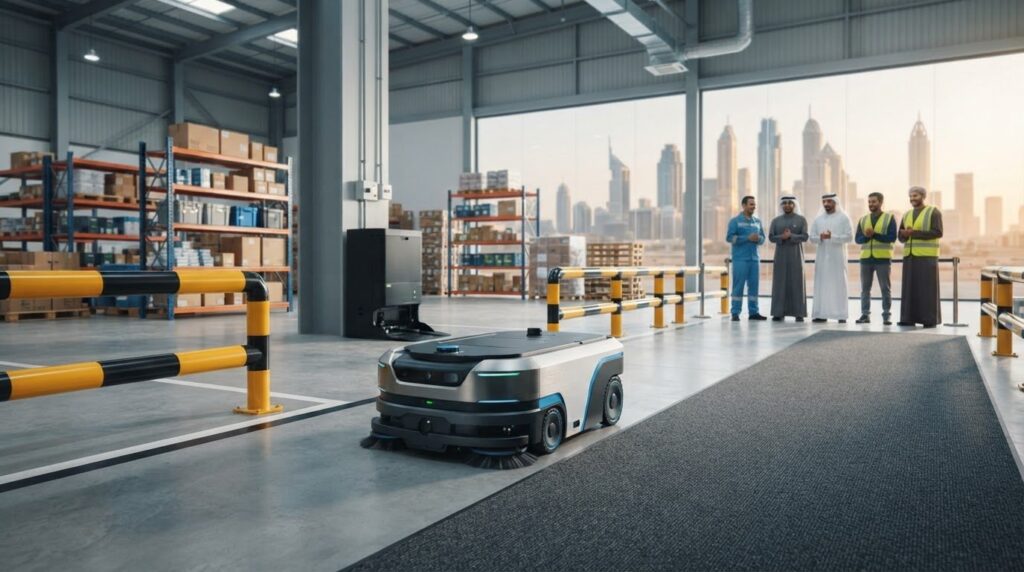
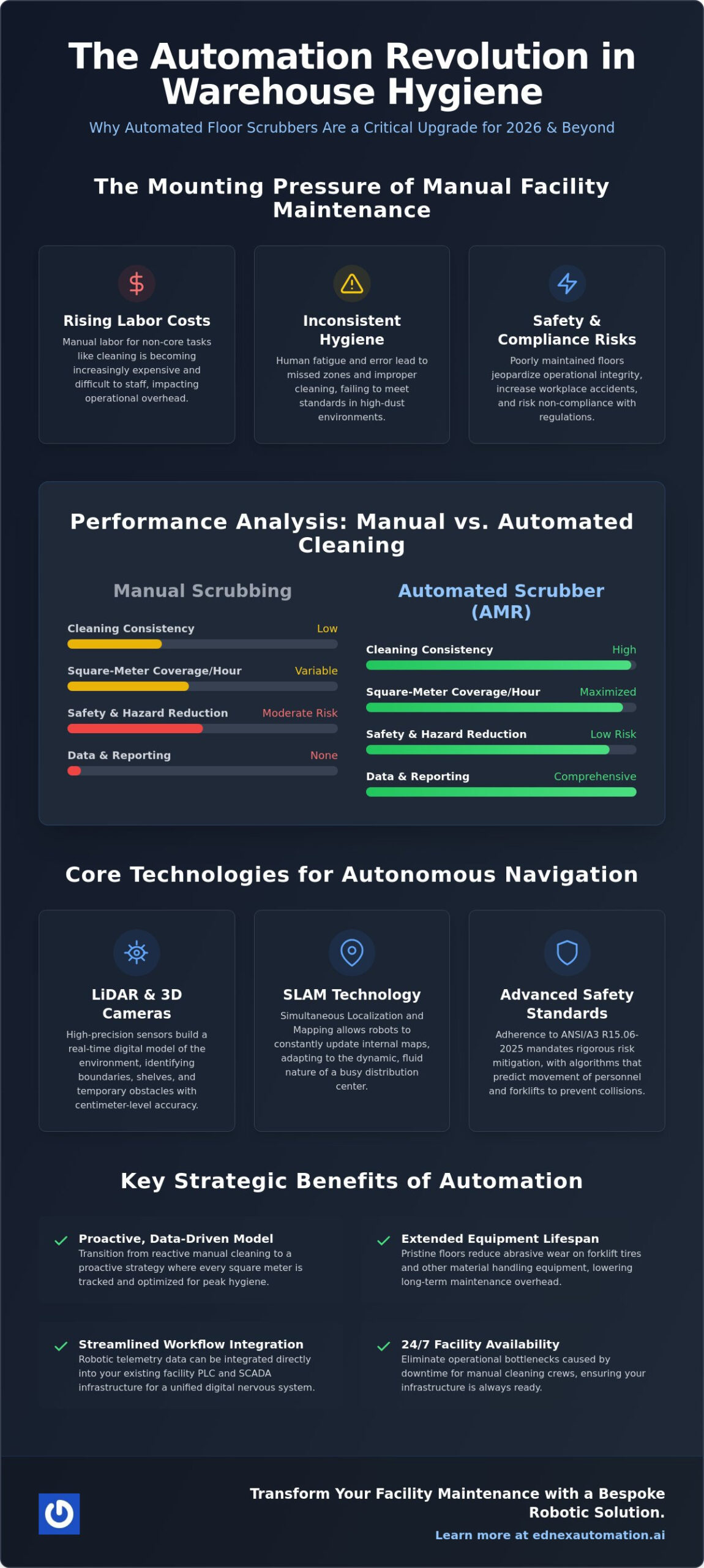
Modernizing warehouse logistics requires a fundamental shift from viewing floor care as a peripheral janitorial task to recognizing it as a core component of industrial automation. An automated floor scrubber for warehouses represents a specialized category of Autonomous Mobile Robots (AMRs), engineered to execute high-precision cleaning cycles without human intervention. This transition marks the end of reactive, manual scrubbing and the beginning of a proactive, data-driven maintenance era where every square meter of facility hygiene is tracked and optimized in real time.
In the UAE, the logistics sector is rapidly adopting Industry 4.0 standards, positioning regional hubs at the forefront of global automation trends. This acceleration is fueled by the demand for 24/7 facility availability and the critical need to mitigate the rising costs of manual labor. By integrating intelligent cleaning systems, organizations ensure that their infrastructure remains operational around the clock; this removes the bottlenecks traditionally caused by scheduled downtime for manual cleaning crews. These systems don’t just clean; they provide the intellectual framework necessary to manage large-scale facility hygiene in high-dust environments effectively.
From Manual Labor to Autonomous Systems
Traditional walk-behind and ride-on automatic floor scrubbers often struggle to maintain consistency in high-throughput environments where speed and safety are paramount. Manual cleaning is frequently compromised by human fatigue, leading to missed zones or inconsistent chemical application that fails to meet the strict hygiene standards required for sensitive cargo. Implementing an automated floor scrubber for warehouses eliminates these variables, significantly reducing workplace accidents and human error while ensuring a uniform finish across the entire facility footprint.
The Strategic Importance of Warehouse Floor Maintenance
Maintaining pristine floor conditions is a critical factor in extending the lifespan of expensive material handling equipment. Accumulated debris and dust act as abrasives, accelerating forklift tire wear and increasing long-term maintenance overhead. In high-rack storage environments, specialized dust mitigation strategies are essential for preventing product contamination and ensuring compliance with international health and safety regulations. These autonomous systems provide a systematic approach to hygiene that preserves both the structural integrity of the facility and the quality of the stored inventory. This methodical and reliable approach ensures long-term business viability in an increasingly competitive market.
Core Technologies: How Autonomous Scrubbers Navigate Complex Warehouses
Achieving true operational autonomy in a logistics environment requires more than basic automation; it demands a sophisticated navigation stack that processes environmental data in real time. An automated floor scrubber for warehouses utilizes an array of high-precision sensors, including LiDAR (Light Detection and Ranging) and 3D cameras, to construct an intricate digital model of its surroundings. This spatial awareness allows the unit to identify structural boundaries, permanent shelving, and temporary obstructions with centimeter-level precision. By employing Simultaneous Localization and Mapping (SLAM), these robots don’t just follow a pre-programmed path; they constantly update their internal maps to account for the fluid nature of a busy distribution center.
Safety remains the primary concern when deploying mobile robotics alongside human personnel. Adhering to the latest safety protocols for automated warehouses, modern scrubbers are designed with a system-wide safety approach that evaluates interactions between the robot, its software, and human operators. The industry has seen a significant shift toward the ANSI/A3 R15.06-2025 standard, which mandates rigorous risk mitigation for industrial robotic systems. These units utilize advanced algorithms to detect and predict the movement of forklifts, preventing collisions before they occur. To maintain this high level of intelligence, robust connectivity through industrial Wi-Fi or 5G networks is essential, enabling the seamless transmission of telemetry data and remote performance monitoring. For facilities ready to modernize, our specialists offer bespoke integration services to align these technologies with your specific infrastructure.
Sensor Fusion and Real-Time Mapping
By synthesizing data from multiple sensor inputs, autonomous scrubbers achieve unparalleled navigation accuracy. This sensor fusion allows the machine to distinguish between static obstacles and dynamic hazards, such as a pedestrian crossing an aisle. Advanced software, such as the Neo software version 2.6, enhances navigation in narrow hallways and complex configurations. This ensures the automated floor scrubber for warehouses maintains peak efficiency even as aisle layouts change to meet seasonal inventory demands.
Battery Management and Self-Charging Autonomy
The transition to high-density lithium-ion battery technology has revolutionized mission duration by enabling rapid opportunistic charging. Automated docking stations allow the robot to manage its own power levels, water drainage, and chemical replenishment without human oversight. This self-sustaining cycle is critical for calculating ‘uptime’ in 24/7 logistics operations, ensuring the cleaning fleet is always ready for the next mission. These advancements allow facility managers to focus on core logistics while the robotic system maintains a consistent hygiene standard independently.
Performance Analysis: Manual vs. Automated Floor Scrubbing
Evaluating the performance of an automated floor scrubber for warehouses against manual alternatives reveals a significant divergence in both consistency and throughput. While manual operators are subject to fatigue and environmental stressors, autonomous systems maintain a constant cleaning speed and pressure, ensuring every square meter of the facility meets identical hygiene standards. This precision is particularly vital in the high-traffic distribution hubs of the UAE, where fine particulate matter and ambient heat can compromise human performance. Beyond the obvious ergonomic benefits of automation, these systems provide a digital “proof of clean” through integrated telemetry. Every mission is logged, providing facility managers with verifiable data on coverage, chemical usage, and time-on-task, which is impossible to replicate with manual logs.
Transitioning to autonomous systems effectively removes the risk of operational interruptions. Manual cleaning often requires closing off large sections of a warehouse, creating bottlenecks in the flow of goods. In contrast, robots navigate around active workflows, maintaining hygiene without halting logistics. This capability ensures that 24/7 operations remain productive, as the cleaning occurs as a background process rather than a disruptive event. By utilizing real-time data, managers can identify high-traffic zones that require more frequent attention, allowing for a more surgical approach to facility maintenance.
Reliability in Harsh Industrial Environments
Engineering these robots to withstand the specific challenges of the Middle Eastern industrial landscape is essential for long-term viability. High-particulate environments, such as those found in regional logistics hubs, require specialized sensor protection to maintain clarity. Modern autonomous scrubbers utilize advanced filtration and self-cleaning sensor housings to prevent dust from interfering with LiDAR and 3D camera systems. This ensures that the automated floor scrubber for warehouses remains operational even during peak dust seasons, providing a reliable intellectual framework for facility maintenance that doesn’t falter under pressure.
The ROI of Autonomy Beyond Labor Savings
Quantifying the return on investment requires looking past immediate labor reductions. Precision dosing systems integrated into autonomous units significantly reduce chemical and water consumption by applying the exact volume needed for the floor’s soil level. This optimization protects the floor’s structural integrity, reducing the frequency of expensive resurfacing projects. Additionally, maintaining a consistently clean floor reduces the wear on forklift tires, leading to substantial savings across the entire mobile fleet. These factors, combined with the insurance and liability benefits of using certified safety systems, make automation a necessary evolution for competitive organizations.
Integration Strategy: Aligning Robotics with Warehouse Infrastructure
Successful deployment of an automated floor scrubber for warehouses requires a shift in perspective, moving from isolated equipment procurement to a holistic systems integration approach. These units shouldn’t function as standalone appliances; instead, they’re critical components of a broader fleet of autonomous mobile robots. By viewing cleaning robots through this lens, facility managers can synchronize maintenance schedules with material handling workflows, ensuring that robotic scrubbers don’t interfere with high-priority picking or replenishment tasks. This strategic alignment maximizes the utilization of the entire robotic ecosystem while maintaining the highest standards of operational hygiene.
Connecting robotic telemetry to the facility’s existing industrial control layer is the next step in achieving true autonomy. Utilizing professional PLC and SCADA integration services allows for the seamless exchange of data between the cleaning fleet and the warehouse’s central nervous system. This level of integration enables the system to trigger cleaning missions based on specific environmental triggers, such as an increase in dust detected by rack-mounted sensors or the completion of a high-volume shift. A skilled system integrator ensures that multi-robot fleets operate under sophisticated orchestration protocols, preventing traffic congestion and maintaining safe separation between different classes of AMRs. To begin your facility’s transformation, contact our team for bespoke industrial automation consulting.
Connecting to the Industrial Internet of Things (IIoT)
Modernizing your facility involves leveraging cleaning data to inform broader management decisions through the Industrial Internet of Things (IIoT). By establishing API integrations with your Warehouse Management System (WMS), an automated floor scrubber for warehouses can receive dynamic mission updates based on real-time inventory movement. This connectivity also necessitates a rigorous focus on cybersecurity to protect industrial hardware from external threats. Ensuring that all connected cleaning assets adhere to international security standards is paramount for maintaining the integrity of your facility’s digital infrastructure.
The Implementation Roadmap
Executing a successful rollout begins with a comprehensive facility readiness audit, focusing on floor quality and robust network coverage. While entry-level robotic scrubbers are priced between $15,000 and $25,000, the long-term value is realized through scalable deployment rather than isolated pilots. Transitioning from a pilot program to a full-scale fleet requires a structured roadmap that includes training staff to collaborate effectively with robotic systems. This human-robot synergy ensures that your workforce can focus on high-value logistics tasks while the autonomous fleet handles the repetitive demands of industrial floor care.
EdNex Automation: Your Partner in Industrial Cleaning Transformation
EdNex Automation positions itself as a visionary technical partner for organizations seeking to navigate the complexities of modern industrial transformation. Our comprehensive expertise in autonomous cleaning robots allows us to deliver high-level solutions specifically tailored for the unique environmental and economic requirements of the UAE market. We provide the intellectual framework necessary for implementation, ensuring that every automated floor scrubber for warehouses we deploy is fully integrated into the facility’s existing digital infrastructure. This end-to-end support begins with a meticulous facility audit and extends through long-term technical maintenance, aligning your operations with global Industry 4.0 standards and regional development goals.
By acting as a bridge-builder between global technological breakthroughs and regional industrial needs, we ensure that your automation strategy is both ambitious and grounded in technical reality. We don’t merely provide tools; we deliver a systematic approach to order, safety, and efficiency. This methodology ensures that your facility maintenance evolves into a seamless component of your broader logistics strategy, providing a reliable foundation for long-term growth.
Why Choose a Specialized Integrator?
Choosing a strategic automation partner over a simple equipment vendor is the critical factor in achieving measurable operational improvement. While a vendor might provide a standalone machine, EdNex Automation acts as a systematic organizer, ensuring that your cleaning fleet communicates effectively with other advanced systems. This includes the bespoke integration of cleaning robots with automated storage and retrieval systems (ASRS) to achieve total facility autonomy. By coordinating these technologies, we help regional logistics hubs transform their maintenance from a manual burden into an automated, value-adding asset. Our approach focuses on risk mitigation and tangible business outcomes, positioning your organization to remain competitive in an increasingly automated future.
Commitment to Technical Excellence and Safety
Maintaining the long-term viability of your investment requires a dedicated focus on technical excellence and rigorous safety standards. We ensure all deployed machinery adheres to international safety certifications, providing a secure environment for human-robot collaboration. Our team manages ongoing software and firmware updates, ensuring that your automated floor scrubber for warehouses benefits from the latest advancements in navigation and efficiency. This commitment to controlled and deliberate innovation guarantees that your facility hygiene standards remain at the cutting edge. To begin your journey toward a modernized industrial environment, consult with EdNex Automation experts to modernize your warehouse maintenance and secure your facility’s operational future.
Securing Operational Excellence through Industrial Autonomy
Transitioning to an automated floor scrubber for warehouses represents a fundamental pivot toward long-term business viability and operational precision. By integrating advanced navigation with existing industrial control systems, facilities achieve a level of hygiene and safety that manual processes simply cannot replicate. This evolution ensures that your infrastructure remains resilient against labor shortages while optimizing the lifespan of your material handling equipment. Adopting a data-driven approach to floor care transforms a routine maintenance task into a strategic advantage within your digital nervous system.
As a specialized UAE integrator for Industry 4.0, EdNex Automation provides the comprehensive PLC, SCADA, and AMR integration expertise required to modernize your infrastructure. Our official alliances with global robotics pioneers ensure your facility remains at the cutting edge of technological innovation. Optimize Your Facility with EdNex Automation’s Cleaning Solutions to transform your logistics environment into a model of efficiency and safety. Embracing these intelligent systems today ensures your organization is prepared for the rigorous demands of tomorrow’s global supply chain.
Frequently Asked Questions
How does an automated floor scrubber handle obstacles like moving forklifts?
An automated floor scrubber for warehouses manages dynamic obstacles by utilizing a sophisticated sensor fusion stack that includes LiDAR and 3D depth cameras. These systems process environmental data in milliseconds to distinguish between static shelving and moving machinery like forklifts. Adhering to the ANSI/A3 R15.06-2025 safety standard, the robot executes predictive path planning to halt or navigate around active traffic safely.
Can an autonomous scrubber operate in 24/7 warehouse environments?
Autonomous scrubbers are specifically engineered for continuous 24/7 operations through the use of high-density lithium-ion batteries and automated docking stations. When power or water levels diminish, the unit autonomously returns to its base for rapid replenishment without human intervention. This self-sustaining cycle ensures that facility hygiene is maintained as a background process; it allows your logistics operations to proceed without scheduled cleaning downtime.
What infrastructure is required for a warehouse to support robotic cleaning?
Supporting robotic cleaning requires a foundation of robust industrial Wi-Fi or 5G connectivity to facilitate real-time telemetry and remote monitoring. Facilities must also provide designated areas for automated docking stations that have access to power, clean water, and drainage. While these robots navigate complex environments, maintaining clear floor surfaces and consistent aisle layouts optimizes their navigation efficiency and overall cleaning throughput.
How much labor time can be saved by implementing automated floor scrubbers?
Implementing an automated floor scrubber for warehouses allows facility managers to reallocate human labor from repetitive janitorial tasks to high-value logistics operations. While the exact time saved depends on facility scale, autonomous systems eliminate the hours typically spent on manual walk-behind scrubbing. This shift reduces the operational overhead associated with non-core tasks and addresses the persistent challenges of labor scarcity in the industrial sector.
What is the typical ROI period for an industrial cleaning robot in a warehouse?
The return on investment for an industrial cleaning robot is typically realized through the combination of labor reallocation, reduced chemical waste, and extended equipment lifespan. By maintaining pristine floor conditions, facilities see a decrease in forklift tire wear and floor resurfacing costs. Specialized integrators provide the intellectual framework to calculate specific ROI based on your facility’s unique operational costs and throughput requirements.
Is special training required for my staff to manage these robots?
Staff members don’t require extensive engineering knowledge to work alongside these collaborative systems. Basic training focuses on mission initiation, routine maintenance like brush cleaning, and responding to simple system alerts via intuitive tablet interfaces. A specialized integrator handles the complex backend PLC and SCADA integration; this ensures the robot functions as a seamless, user-friendly extension of your existing team.
Can these robots integrate with my existing Warehouse Management System (WMS)?
Modern autonomous scrubbers are designed to integrate with Warehouse Management Systems (WMS) through secure API connections. This connectivity allows the robot to receive dynamic mission schedules based on real-time inventory movement or shift changes. By linking cleaning data with broader facility management software, organizations can ensure that floor maintenance is perfectly synchronized with high-priority picking and replenishment cycles.
How do automated scrubbers perform in high-dust industrial settings?
High-performance scrubbers utilize advanced filtration systems and self-cleaning sensor housings to maintain peak performance in high-dust industrial environments. These units are engineered to prevent fine particulate matter from interfering with sensitive LiDAR and camera optics. This specialized design ensures consistent cleaning quality in regional warehouses where ambient dust levels would otherwise compromise the efficiency of less sophisticated automated systems.