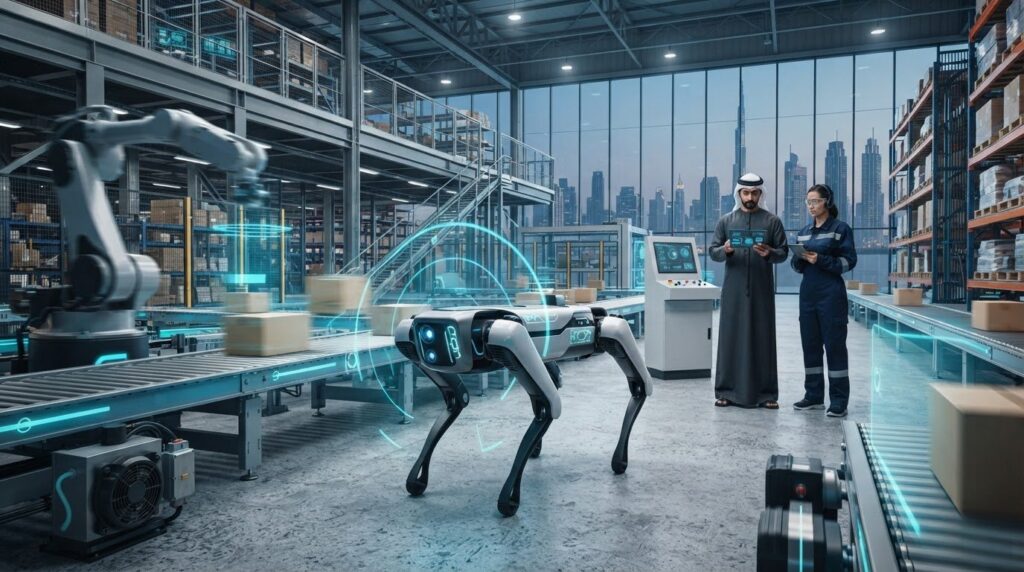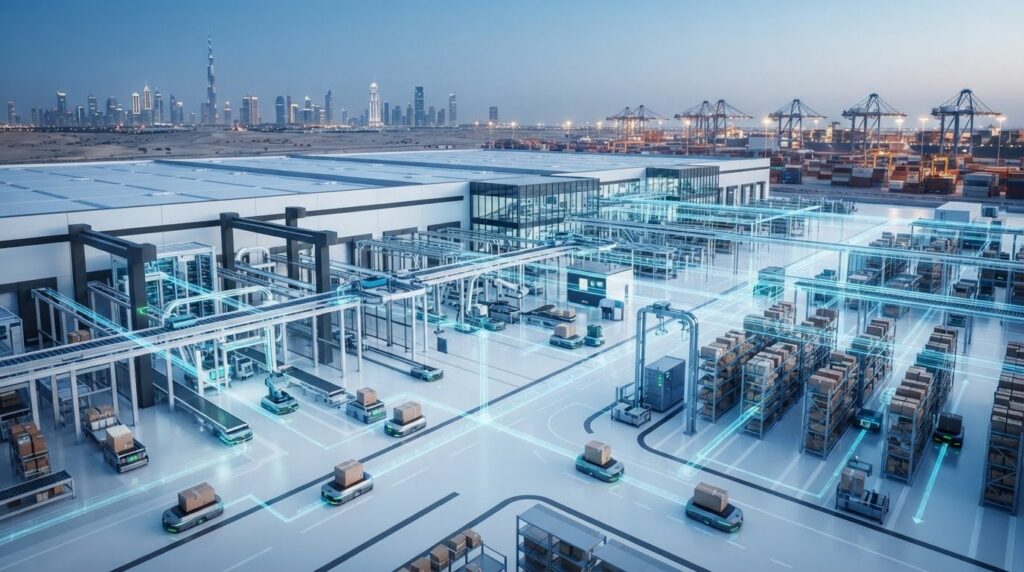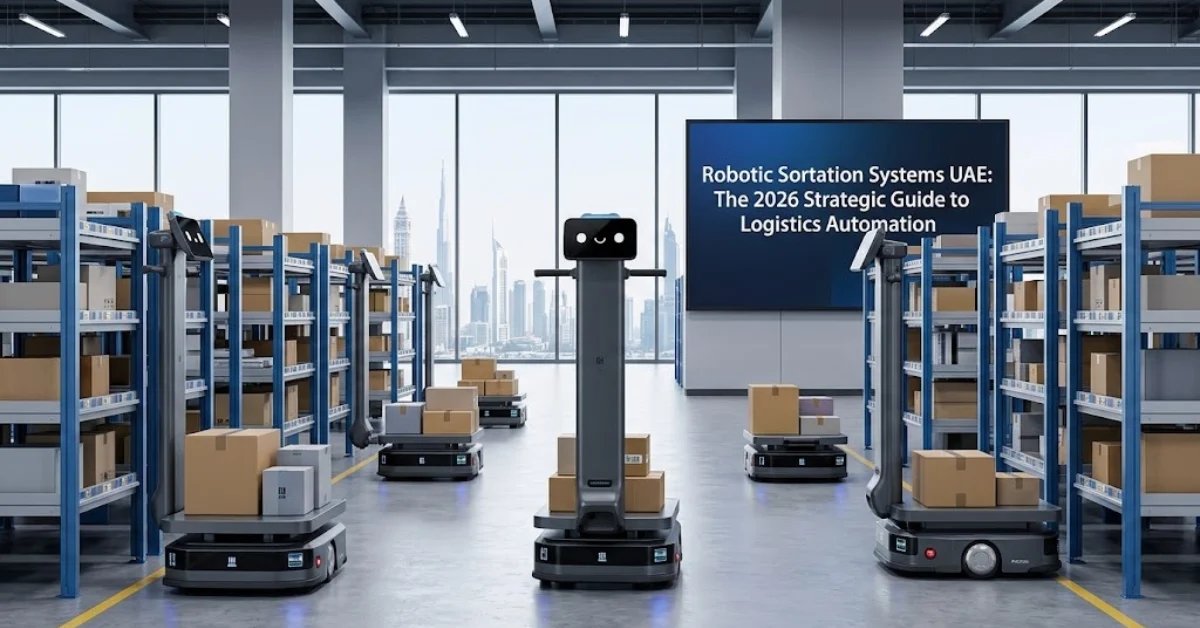
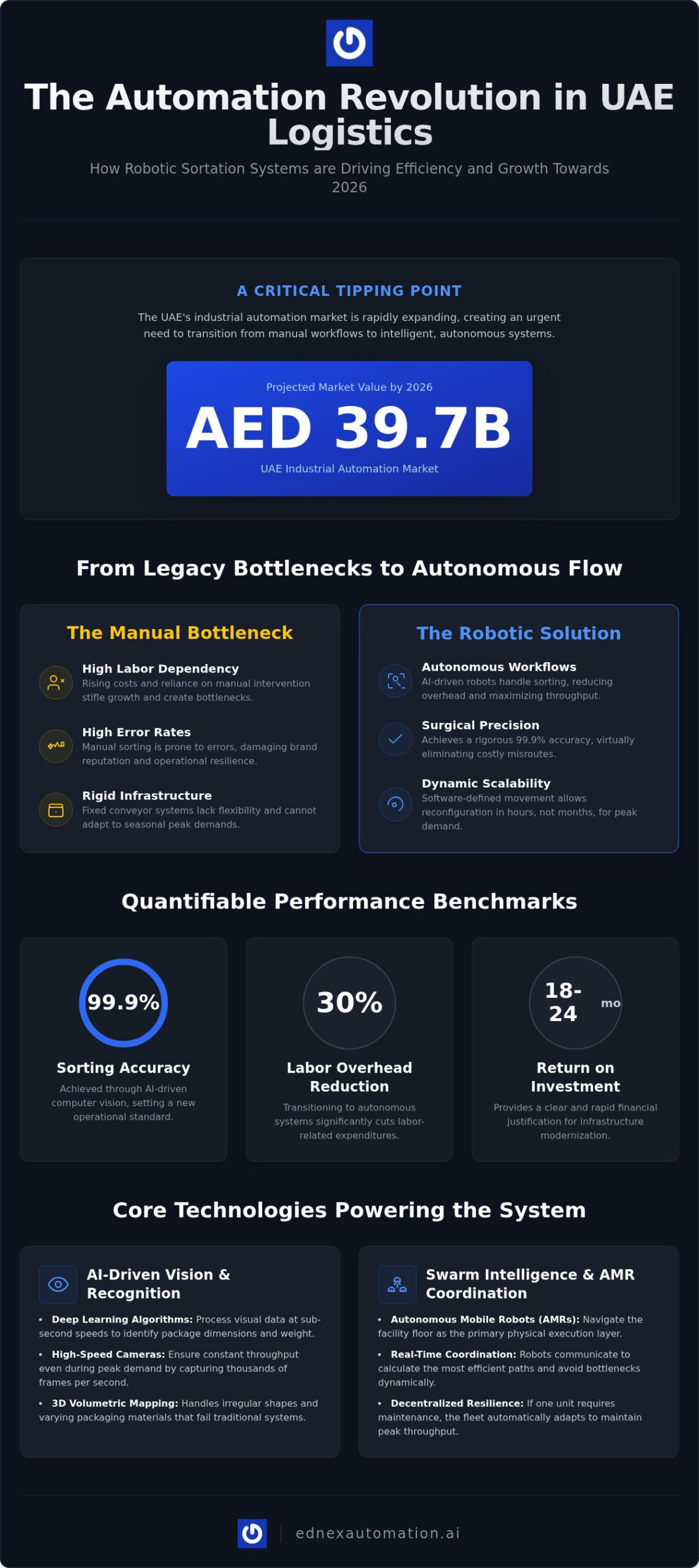
With the UAE industrial automation market projected to exceed AED 39.7 billion by the end of 2026, the pressure to transition from manual workflows to intelligent autonomy has reached a critical tipping point. You likely recognize that rising labor costs and a heavy dependency on manual parcel sorting are no longer sustainable for high-growth logistics hubs aiming for global competitiveness. Deploying advanced robotic sortation systems UAE offers a definitive path toward eliminating high error rates while ensuring your facility can scale effortlessly during seasonal peak demands.
This strategic guide details how modernizing your infrastructure with autonomous mobile robots and integrated PLC systems achieves a rigorous 99.9% sorting accuracy. By bridging the gap between legacy hardware and modern warehouse management systems, you’ll discover how to reduce operational overhead through autonomous workflows that future-proof your facility for Industry 4.0 standards. We examine the technical synergy between robotic sortation and automated storage to provide a comprehensive roadmap for long-term operational resilience in the 2026 landscape.
Key Takeaways
- Transitioning from legacy conveyor-based models to decentralized architectures that leverage AI-driven computer vision for high-velocity goods routing.
- Implementing robotic sortation systems UAE to eliminate rigid infrastructure constraints and enable rapid scaling during seasonal peak demands.
- Synchronizing sortation workflows with ASRS to create a seamless order-to-outbound bridge that maximizes both vertical and horizontal warehouse footprint.
- Establishing a unified control layer through PLC and SCADA integration to ensure reliable, real-time communication between robotic assets and management software.
- Quantifying long-term viability by analyzing ROI through reduced labor dependency and the achievement of 99.9% sorting accuracy benchmarks.
The Evolution of High-Velocity Logistics in the UAE (2026)
High-velocity logistics in the Emirates has undergone a fundamental paradigm shift. Traditional conveyor-based sorting, once the backbone of distribution, is being replaced by decentralized architectures that prioritize operational flexibility. We define robotic sortation systems UAE not merely as hardware, but as an autonomous ecosystem where AI-driven computer vision and mobile robots collaborate to route goods with surgical precision. This transition aligns with the UAE’s national drive toward autonomous industrial operations, spearheaded by key national programs for technological advancement. Manual sorting simply can’t keep pace with the projected AED 39.7 billion industrial automation market by the end of 2026. This evolution represents a move away from rigid, fixed-path hardware toward intelligent, software-defined movement that can be reconfigured in hours rather than months. To see how this agility supports the distribution of high-demand mobile accessories, learn more about JBQ Mobile Accessories UAE.
Addressing the Labor and Accuracy Gap
Relying on human labor for high-volume sorting has become a strategic liability. Rising labor costs and a persistent dependency on manual intervention create bottlenecks that stifle growth in the nation’s expanding industrial zones. In the high-throughput facilities across the Emirates, the cost of misrouting a single parcel extends beyond the immediate logistics fee; it damages brand reputation and operational resilience. Transitioning to logistics automation allows facilities to achieve a 30% reduction in labor-related overhead while virtually eliminating human error. Robotic precision ensures that 99.9% accuracy is no longer a goal but a standard operational baseline. Implementing these systems typically yields an ROI within 18 to 24 months, providing a clear financial justification for the modernization of national distribution hubs.
Meeting 2026 Consumer and Industrial Demands
Core Technologies Powering Modern Robotic Sortation
Modern robotic sortation systems UAE rely on a sophisticated technological stack that transforms raw data into physical movement. This architecture begins with high-performance computer vision, acting as the primary sensory input for the entire facility. Unlike legacy systems that require rigid alignment, these intelligent platforms utilize AI-driven recognition to process items in any orientation. This technological foundation allows for the seamless transition from static sorting to a dynamic, responsive environment that adapts to the specific needs of the UAE’s industrial sector.
AI-Driven Vision and Real-Time Recognition
Deep learning algorithms serve as the brain of the operation, processing visual data at sub-second speeds to identify package dimensions and weight instantly. High-speed cameras capture data at thousands of frames per second, ensuring throughput remains constant even during peak demand periods. This level of intelligence eliminates the need for manual scanning or pre-sorting. 3D vision systems play a critical role by mapping volumetric data, enabling the system to handle irregular shapes and varying packaging materials that would typically cause failures in traditional conveyor systems. By utilizing these advanced optics, facilities achieve the precision required for high-velocity distribution.
Swarm Intelligence and AMR Coordination
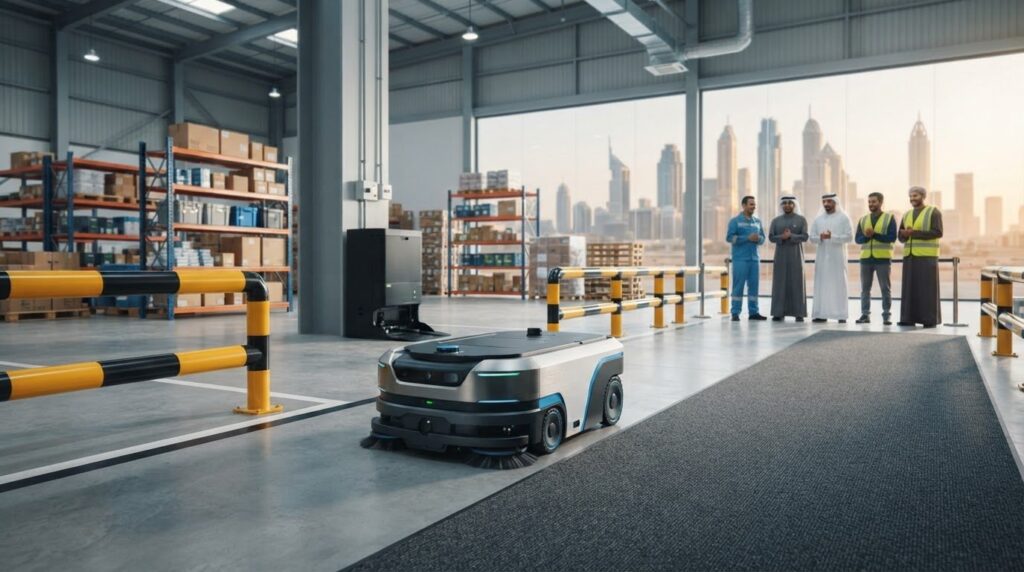
The physical execution layer increasingly relies on autonomous mobile robots to navigate the facility floor. Implementing swarm intelligence enables seamless coordination, where multiple robots communicate in real-time to calculate the most efficient paths and avoid bottlenecks. This decentralized approach ensures that if one unit requires maintenance, the rest of the fleet automatically adapts to maintain peak throughput. Such adaptability is vital for facilities navigating the complexities of integrating robotics and automation within existing infrastructure, as it allows for a flexible sortation layout that can be reconfigured as business needs evolve.
Safety in these collaborative environments is managed through advanced sensor arrays, including LiDAR and ultrasonic sensors, which create a 360-degree protective field around every moving asset. These technologies ensure that robots can operate safely alongside human workers, meeting international safety standards such as ISO 10218. The use of modular hardware means that capacity can be scaled by simply adding individual units to the fleet, providing a future-proof investment that grows with the organization. Organizations seeking to implement these intelligent layers can partner with EdNex Automation to design bespoke, high-performance sortation frameworks that maximize operational efficiency.
Strategic Synergy: Sortation, ASRS, and Space Optimization
Achieving operational excellence in modern logistics requires more than isolated machinery; it demands a unified architecture where robotic sortation systems UAE act as the connective tissue between storage and dispatch. By integrating these systems with automated storage and retrieval systems (ASRS), facilities can maximize their cubic footprint. This is a critical advantage when base construction costs for smart warehouses in Dubai reach AED 2,500 per square meter. This synergy transforms the warehouse from a static cost center into a high-density, high-velocity engine. High-density storage combined with vertical sortation capabilities ensures that every square meter of expensive industrial real estate is utilized to its full potential, allowing for a 2026-ready infrastructure that supports rapid growth.
The Seamless Flow from Storage to Dispatch
The transition of goods from deep storage to the outbound dock represents the most vulnerable phase of the logistics cycle. Integrated systems automate the handover between ASRS cranes and sorting robots, eliminating the bottlenecks associated with manual forklift operations. This orchestration significantly reduces the number of ‘touches’ per item, which directly enhances product hygiene and workplace safety while minimizing the risk of accidental damage. By synchronizing these assets, facilities can drastically reduce the need for large staging areas. Goods move continuously from the rack to the sortation cell. This ‘order-to-outbound’ flow ensures that throughput remains fluid, even as SKU complexity increases across diverse industrial sectors.
Scalability for Seasonal UAE Market Peaks
Regional demand cycles, particularly during major retail events or shifting industrial requirements, often strain traditional, rigid infrastructure. Robotic sortation offers a modular advantage. Operators can add sortation cells or expand robot fleets almost overnight to meet sudden volume spikes. This flexibility is essential for maintaining consistent throughput without the overhead of permanent, oversized systems. With industrial racking for ASRS ranging between AED 2,200 and AED 4,000 per pallet position, the ability to scale the sortation layer independently ensures that capital expenditure remains aligned with actual demand. This modularity provides the operational resilience needed to navigate the UAE’s fast-paced economic landscape with confidence, ensuring long-term business viability through controlled innovation.
The Integration Framework: PLC and SCADA Architecture
The reliability of robotic sortation systems UAE depends entirely on the underlying control architecture that orchestrates every physical movement. Positioned as the foundational intelligence of the facility, PLC and SCADA integration services ensure that high-speed robotic assets operate in perfect harmony with the overarching Warehouse Management System (WMS). This control layer acts as the vital translator, converting high-level enterprise orders into precise, millisecond-level instructions for the shop floor. By utilizing edge computing, facilities reduce the latency inherent in cloud-based processing, ensuring that sorting decisions are made locally and instantaneously to maintain maximum throughput.
Connecting the Shop Floor to the Enterprise Layer
Programmable Logic Controllers (PLCs) manage the rigorous timing required for robotic arms and high-speed sorters to function without collision or delay. While the robots perform the physical task, the PLC ensures each movement is synchronized with the facility’s real-time operational state. Complementing this, SCADA systems provide the necessary data visualization through interactive dashboards, allowing operators to identify potential bottlenecks within robotic sortation systems UAE before they cause downtime. Establishing unified data protocols isn’t just a preference; it’s a non-negotiable requirement for Industry 4.0, as it allows disparate hardware components to communicate within a single, cohesive digital ecosystem. This integration ensures that every scanned barcode and routed parcel is tracked with absolute transparency across the entire supply chain.
Ensuring Operational Resilience and Security
Maintaining high-velocity operations requires a proactive approach to system health and network integrity. Predictive maintenance alerts generated by the SCADA system analyze vibration, temperature, and cycle counts to forecast component failures before they occur, significantly improving the lifespan of robotic assets. As these systems become increasingly networked, implementing robust cybersecurity measures is essential to protect industrial assets from unauthorized access or operational disruption. Managing national facility networks from a ‘single pane of glass’ allows regional directors to monitor performance across multiple Emirates from a centralized command center. To secure your facility’s future through expert control architecture, explore our comprehensive PLC and SCADA integration services today.
Implementing Robotic Sortation: ROI and Next Steps
Deploying robotic sortation systems UAE requires a structured roadmap that transitions from theoretical throughput analysis to full-scale operational reality. This process begins with a granular evaluation of current parcel volumes and SKU profiles to design a bespoke fleet configuration that aligns with your facility’s specific geometry. Choosing an integrator with deep regional technical expertise’s vital for navigating the specific regulatory environment of the Emirates, including compliance with Ministry of Industry and Advanced Technology standards. EdNex Automation serves as this visionary partner, providing the intellectual framework and technical precision necessary to transform complex logistics challenges into streamlined, autonomous workflows.
Calculating the Total Cost of Ownership (TCO)
Evaluating the financial viability of automation extends far beyond the initial capital expenditure. A comprehensive TCO analysis must account for ongoing maintenance, energy consumption, and essential software updates that keep the system optimized for 2026 standards. While industrial automation projects carry significant upfront costs, the rapid deployment cycles characteristic of the UAE market accelerate the time-to-value. This contrasts sharply with the TCO of rigid traditional conveyors, which incur high costs during physical reconfiguration and extended facility downtime. Consider these primary financial drivers:
- Labor Savings: Achieving a 30% reduction in labor-related overhead through autonomous movement and reduced dependency on manual sorting staff.
- Error Mitigation: Eliminating the heavy financial penalties and reputational damage associated with misrouting and manual inaccuracies.
- R&D Incentives: Leveraging the new R&D tax credit effective from January 1, 2026, which offers a non-refundable tax credit of up to 50% on qualifying automation expenditures.
Future-Proofing Your Industrial Infrastructure
Ensuring your sortation ecosystem remains compatible with 2030 technological standards requires a commitment to continuous modernization. This involves more than just hardware; it necessitates a robust schedule of firmware updates and access to remote technical support to mitigate operational risks. By establishing a partnership with a dedicated automation consultant, facilities can ensure their infrastructure evolves alongside global breakthroughs. The objective’s to move away from static acquisitions toward a living system that adapts to the shifting demands of the global supply chain. To begin your transformation, engage with EdNex Automation for a comprehensive facility automation audit to identify your specific path to autonomous excellence.
Mastering the Future of Autonomous Logistics
Transitioning to autonomous logistics requires a systematic approach that bridges the gap between global technological breakthroughs and regional industrial needs. Implementing advanced robotic sortation systems UAE ensures your facility can handle the increasing complexity of 2026 supply chain demands while drastically reducing labor-related overhead. By synchronizing robotic assets through sophisticated PLC and SCADA frameworks, you secure the operational transparency necessary to identify bottlenecks and maintain peak throughput during seasonal peaks.
EdNex acts as a grounded, reliable technical partner, offering Industry 4.0 Certified Integration and specialized National UAE Technical Support to facilitate large-scale industrial transformation. Our advanced PLC/SCADA expertise ensures that every bespoke solution’s integrated seamlessly with your existing WMS for maximum reliability. Consult with EdNex Automation for Bespoke Robotic Sortation Integration to begin optimizing your facility for the future of Industry 4.0. We look forward to engineering your success.
Robotic Sortation Systems UAE: Frequently Asked Questions
What are the primary benefits of robotic sortation systems for UAE warehouses?
Achieving 99.9% sorting accuracy and reducing labor-related overhead by 30% are the most immediate advantages for regional operators. These systems enable facilities to handle SKU complexity without physical reconfiguration, providing a definitive edge in the region’s competitive industrial market. By eliminating manual dependency, operators ensure long-term operational resilience and the ability to meet the UAE’s 2026 industrial growth projections efficiently.
How do robotic sortation systems integrate with existing PLC and SCADA networks?
Integration occurs through a unified control layer where Programmable Logic Controllers (PLCs) manage real-time robotic timing and SCADA dashboards provide high-level visualization. This architecture ensures that robotic sortation systems UAE communicate seamlessly with existing Warehouse Management Systems. By utilizing standardized Industry 4.0 data protocols, we synchronize disparate hardware assets into a single, cohesive command structure that minimizes latency.
Can robotic sortation handle fragile or irregularly shaped industrial items?
Modern systems utilize AI-driven 3D vision and volumetric sensors to identify and adapt to varying item geometries instantly. Advanced end-of-arm tooling and gentle acceleration profiles ensure that fragile components or irregularly shaped industrial goods are routed without damage. This capability’s essential for diverse sectors, from electronics manufacturing to heavy industrial distribution, where maintaining product integrity is a critical performance indicator.
What is the typical ROI period for a robotic sortation implementation in the UAE?
Most facilities achieve a full return on investment within 18 to 24 months, depending on throughput volume and labor overhead reduction. This timeframe’s often accelerated by the UAE’s 2026 R&D tax credit, which offers up to 50% credit on qualifying automation expenditures. Beyond immediate financial gains, the long-term value lies in future-proofing infrastructure against rising labor costs and increasing market volatility.
How do AMRs differ from traditional conveyor sorters in a high-volume facility?
Autonomous Mobile Robots (AMRs) provide a decentralized, flexible architecture that navigates without fixed infrastructure, unlike traditional conveyors which require rigid, permanent installations. AMRs allow for rapid reconfiguration of the facility floor to meet changing demand, whereas conveyors create fixed paths that are expensive to alter. This flexibility ensures that high-volume centers can scale capacity by simply adding more units to the existing fleet.
What maintenance is required for a large-scale robotic sorting fleet?
Maintenance focuses on predictive analytics and firmware optimization rather than the heavy mechanical overhauls required by legacy conveyors. SCADA systems generate alerts based on cycle counts and vibration data, allowing for targeted component replacement before failures occur. Regular sensor calibration and software updates ensure the fleet maintains peak performance, while modular hardware designs allow for individual unit servicing without disrupting the entire ecosystem.
Is it possible to scale a robotic sortation system during peak seasons?
Scalability’s a core feature of these systems, allowing operators to expand their robot fleets almost overnight to manage seasonal demand spikes. Because the infrastructure’s decentralized, adding capacity doesn’t require construction or downtime; you simply introduce more robots into the coordinated swarm. This modularity ensures consistent throughput during peak UAE market periods without the burden of maintaining permanent, oversized systems during slower months.
How does EdNex Automation ensure the security of networked robotic systems?
We implement multi-layered cybersecurity protocols that protect industrial assets from unauthorized access while ensuring data integrity across the network. Our integration strategy includes encrypted communication channels and secure edge computing nodes that isolate critical control functions from external threats. By providing comprehensive facility audits and continuous remote support, we ensure that your networked robotic sortation systems UAE remain resilient against evolving digital risks.