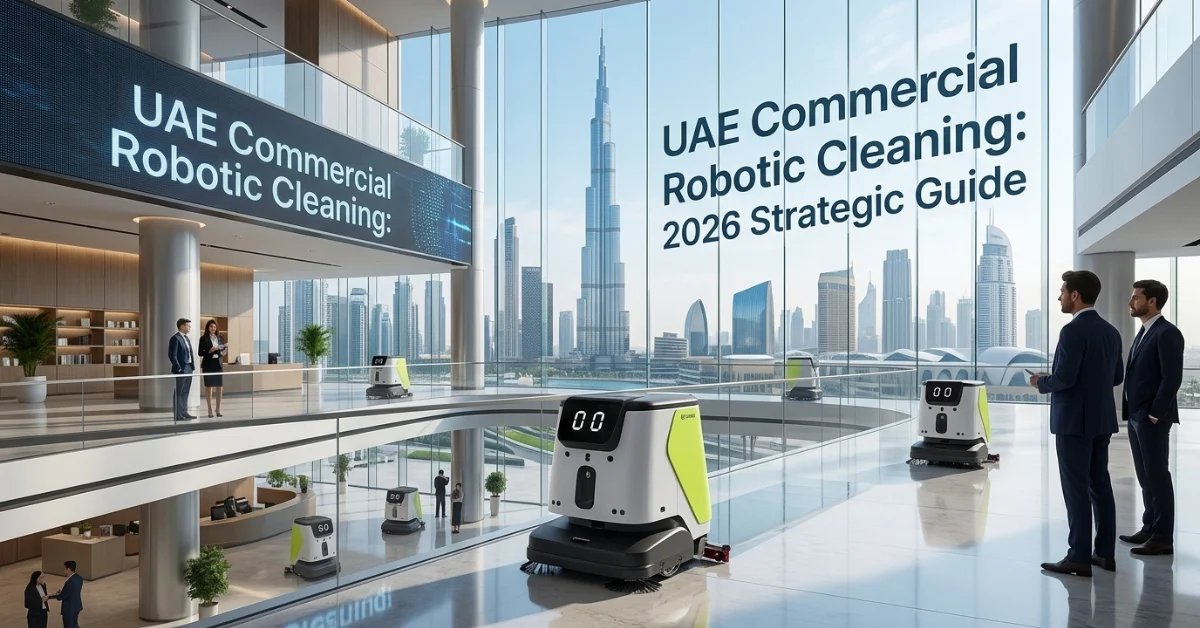
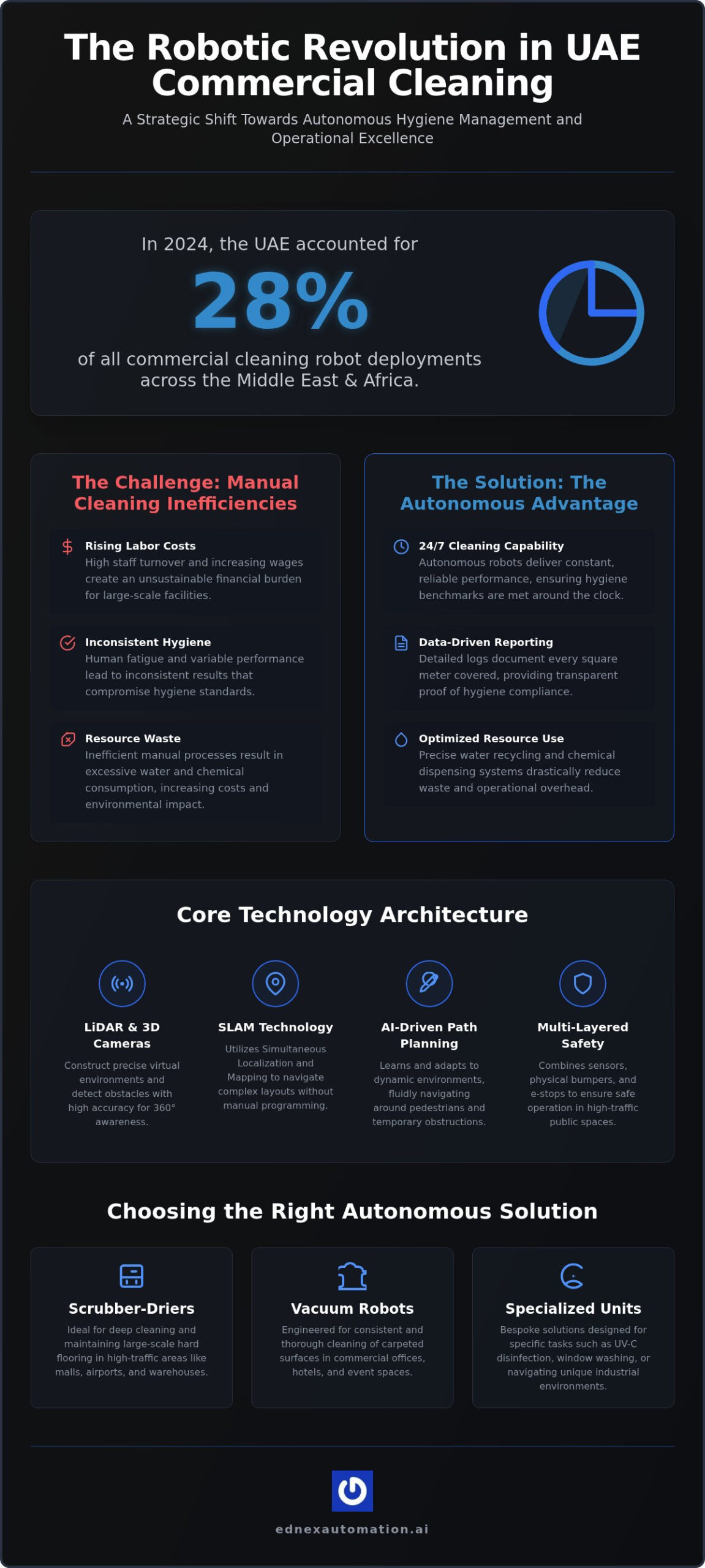
In 2024, the UAE accounted for approximately 28% of all commercial cleaning robot deployments across the Middle East and Africa, signaling a decisive shift toward high-tech facility management. Maintaining consistent hygiene standards in massive commercial spaces while managing rising labor costs and high staff turnover has become an unsustainable burden for modern enterprises. You likely recognize that manual processes often lead to inefficient water usage and inconsistent results that compromise long term business viability.
This 2026 strategic guide demonstrates how advanced robotic cleaning solutions for commercial properties UAE are transforming the sector by delivering unprecedented efficiency and measurable ROI. By adopting these autonomous systems, your organization gains 24/7 cleaning capability and detailed data reporting for strict hygiene compliance. We’ll examine the technical framework required to integrate these robots into your existing infrastructure, ensuring a significant reduction in operational overhead and resource waste through controlled, deliberate innovation. This transition represents more than a simple equipment upgrade; it’s a necessary evolution for any organization wishing to remain competitive in the region’s rapidly modernizing industrial landscape.
Key Takeaways
- Analyze the economic shift toward autonomous platforms to address labor scarcity and ensure long-term business viability within the UAE’s commercial sector.
- Examine how integrating LiDAR, SLAM, and AI-driven mapping allows robotic cleaning solutions for commercial properties UAE to master complex layouts without manual programming.
- Utilize a technical evaluation framework to select the appropriate hardware, comparing scrubber-driers and vacuum robots based on precise operational performance metrics.
- Implement a “Robot-First” operational workflow that synchronizes autonomous deep cleans with human-led maintenance for maximum facility hygiene.
- Learn how bespoke automation consulting and PLC/SCADA integration bridge the gap between global technological breakthroughs and local industrial requirements.
The Strategic Shift: Why Robotic Cleaning is Essential for UAE Commercial Properties
Transitioning to robotic cleaning solutions for commercial properties UAE represents a fundamental realignment of facility management rather than a simple hardware acquisition. These systems are defined as autonomous mobile platforms engineered to maintain large-scale hygiene with surgical precision. The economic imperative is undeniable. As regional enterprises face rising operational costs and a tightening labor market, the need for stable, scalable automation becomes critical. By integrating these systems, facility managers align their operations with the national vision for smart, autonomous infrastructure, ensuring their assets remain competitive in a rapidly evolving economy.
From Manual to Autonomous: The Evolution of Hygiene
Traditional manual scrubbing in high-traffic environments like airports or massive shopping malls often fails to meet the rigorous demands of 24/7 operation. Human teams are subject to fatigue and variable performance, which compromises the consistency of hygiene standards. Utilizing Autonomous Mobile Robots (AMRs) allows for constant readiness, shifting the facility strategy from reactive cleaning to a data-driven, proactive model. These intelligent systems don’t just clean; they document every square meter covered, providing a level of transparency that manual labor cannot replicate. This “consistency as a service” ensures that hygiene benchmarks are met every hour of every day, regardless of staffing fluctuations.
Sustainability and Resource Optimization
Environmental responsibility is now a core component of the UAE’s national vision for smart infrastructure. Advanced robotic cleaning solutions for commercial properties UAE integrate sophisticated filtration systems that recycle water, significantly reducing total consumption compared to manual mopping. Precise chemical dispensing systems ensure that only the exact volume of detergent is used, meeting international environmental standards while protecting the longevity of expensive commercial flooring assets. By minimizing human error in chemical mixing and application, these robots prevent the accelerated wear and tear often caused by inconsistent manual methods. This precision optimization transforms cleaning from a drain on resources into a strategic pillar of long-term asset management.
Adopting this technology allows organizations to reclaim thousands of man-hours annually. Instead of performing repetitive, low-value scrubbing, cleaning staff can be redeployed to high-touch areas that require human attention. This collaborative approach maximizes the strengths of both robotics and human labor, creating a hybrid workforce that is more efficient, more sustainable, and better equipped to handle the demands of the 2026 commercial landscape.
Technical Architecture of Modern Robotic Cleaning Solutions
The efficacy of robotic cleaning solutions for commercial properties UAE depends on a sophisticated convergence of hardware and software designed for high-stakes industrial environments. Utilizing a combination of LiDAR sensors, SLAM technology, and 3D depth cameras, these units construct precise virtual environments in real time. This technical framework allows robots to learn complex commercial layouts through AI-driven mapping; this eliminates the need for tedious manual programming. By synthesizing data from multiple sensors, these platforms maintain 360-degree situational awareness, which is essential for safe operation in the region’s densely populated transit hubs and retail centers.
Navigation and Safety in High-Traffic Environments
Ensuring safety in dynamic spaces requires more than basic obstacle detection. Advanced cleaning robots employ real-time path planning to navigate fluidly around pedestrians and temporary obstructions. These units are equipped with multi-layered safety protocols, including physical bumpers and electronic emergency stop mechanisms, ensuring they meet the electrical conformity standards set by the Ministry of Industry and Advanced Technology (MoIAT). Because these machines operate autonomously in public spaces, their ability to predict human movement and adjust their trajectory is a critical differentiator for facility managers focused on risk mitigation.
Connectivity and Data Intelligence
The true power of a robotic fleet lies in its ability to integrate with existing infrastructure. Through IoT connectivity, these robots communicate directly with elevators and automatic doors, allowing them to navigate multiple floors without human intervention. Cloud-based reporting systems transform raw operational data into actionable hygiene compliance audits, providing facility managers with transparent proof of service. Utilizing internal diagnostics, these systems also support predictive maintenance, identifying potential hardware issues before they result in downtime. For organizations seeking a seamless transition, EdNex Automation provides the intellectual framework and technical support necessary to synchronize these robots with broader PLC and SCADA systems.
Technical innovation also addresses the UAE’s critical focus on resource conservation. Modern scrubber-driers often feature advanced multi-stage filtration systems that purify and recycle water during the cleaning cycle. It’s a technical capability that directly supports national sustainability goals by drastically reducing the water footprint of large-scale maintenance. By optimizing chemical dilution through precise metering, these robots ensure that environmental standards are met while protecting the integrity of high-value flooring materials. They don’t just clean; they preserve assets through engineering precision.
Evaluation Framework: Scrubber-Driers vs. Vacuum Robots vs. Specialized Units
Selecting the optimal robotic cleaning solutions for commercial properties UAE requires a methodical analysis of floor topography and environmental demands. Strategic ROI is not solely a factor of labor reduction; it’s also measured through the mitigation of asset depreciation and the consistency of hygiene compliance across diverse surfaces. Performance metrics must prioritize square footage per hour alongside battery autonomy and fluid capacity. While standard vacuum robots excel in carpeted office environments, large-scale facilities often require a more robust, multi-functional approach to maintain international hygiene standards.
Expansive commercial perimeters and parking structures present unique challenges that standard indoor units cannot address. Outdoor cleaning robots are engineered to handle larger debris and withstand the region’s specific environmental conditions, ensuring that even the most visible entry points remain pristine. In the hospitality sector, specialized units often bridge the gap between maintenance and service, offering delivery capabilities or guest interaction alongside floor care. This dual-purpose functionality enhances the brand experience, providing a tangible return on investment through improved service ratings and operational efficiency.
All-in-One Floor Care Platforms
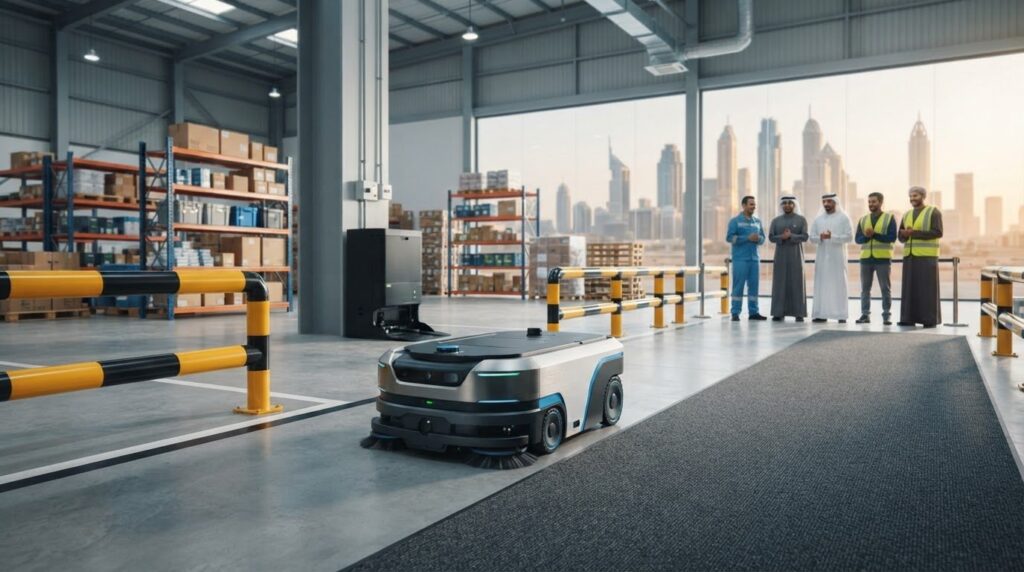
Versatility is the primary advantage of multi-functional units like the PUDU CC1 Pro. These platforms integrate sweeping, scrubbing, vacuuming, and mopping into a single pass, which is essential for retail malls and healthcare facilities where diverse surfaces coexist. By consolidating multiple cleaning stages, these robots reduce the total time required for facility readiness while maintaining a smaller footprint in high-traffic corridors. This integrated approach ensures that hard floors are scrubbed and dried instantly, eliminating the slip hazards often associated with manual mopping.
Heavy-Duty and Industrial-Grade Solutions
Logistics centers and large warehouses demand higher tank capacities and more aggressive debris management. Industrial-grade vacuum robots, such as the PUDU MT1 Vac, are engineered to handle heavy dust loads and massive layouts that would overwhelm standard commercial units. Selecting hardware for these environments involves balancing the machine’s autonomy with the specific debris types, ranging from fine industrial dust to packaging scraps. These heavy-duty solutions ensure that large-scale operations maintain a safe, dust-free environment without requiring frequent human intervention for tank refills or filter cleaning.
Determining the right fleet configuration is a technical challenge that requires expert consultation. Organizations must evaluate whether their facility benefits most from a single, high-capacity unit or a decentralized fleet of smaller, agile robots. EdNex Automation provides the intellectual framework necessary to make these decisions, ensuring that the selected hardware aligns with the facility’s long-term business viability and technical infrastructure.
Operational Integration: Merging Robotics with Facility Workflows
Successful deployment of robotic cleaning solutions for commercial properties UAE requires a fundamental shift from human-centric schedules to a “Robot-First” methodology. This strategy prioritizes autonomous systems for high-volume, repetitive tasks, allowing the facility to maintain a state of perpetual readiness without increasing headcount. Designing these schedules involves a strategic split: scheduling night-time deep cleans for unobstructed coverage and utilizing daytime maintenance modes for spot cleaning in active areas. This transition doesn’t replace human labor; rather, it elevates it. By delegating floor care to autonomous platforms, maintenance teams are freed to focus on high-touch disinfection and specialized tasks that require human dexterity and critical thinking.
System Integration and Smart Building Synergy
Achieving total facility awareness requires connecting autonomous units to the Building Management System (BMS). Utilizing specialized PLC and SCADA integration services, facility managers can track hygiene KPIs alongside energy consumption and security metrics on a single, centralized dashboard. This level of synchronization enables robots to autonomously call elevators for multi-floor operations and navigate through secure corridors without manual intervention. It transforms the cleaning robot from a standalone tool into an intelligent node within the facility’s digital nervous system, providing real-time data that informs long-term business viability.
Deployment Logistics and Staff Training
Successful fleet implementation typically begins with a phased pilot program to map specific facility nuances before full-scale deployment. During this phase, existing maintenance staff are trained to act as “robot supervisors,” overseeing the fleet’s health and managing the logistics of water and chemical refills. Establishing clear protocols for these interaction points ensures that the robotic assets remain operational with minimal downtime. Transitioning your facility requires a partner who understands the gravity of large-scale industrial transformation. To begin your modernization journey, explore the comprehensive integration support offered by EdNex Automation.
Preparing the physical environment is equally critical for long-term success. Strategic deployment involves designing dedicated charging stations and water drainage points that are easily accessible to the robots but out of the way of public traffic. This engineering-minded approach ensures that the infrastructure supports the technology, creating a seamless and efficient operational environment. By treating robotics as an integrated system rather than a peripheral utility, organizations can realize the full potential of their automation investment.
EdNex Automation: Driving the Future of Commercial Hygiene in the UAE
Acting as a high-level integrator of Industry 4.0 solutions, EdNex Automation provides the technical framework necessary for organizations to transition from manual maintenance to fully autonomous operations. We don’t merely supply hardware; we deliver bespoke automation consulting that tailors robotic fleets to the specific architectural and operational requirements of your facility. By integrating advanced robotic cleaning solutions for commercial properties UAE into your existing infrastructure, our team ensures that every deployment delivers maximum efficiency and long-term business viability. This start-to-finish expertise encompasses everything from initial hardware selection to complex PLC and SCADA software synchronization, providing a seamless path to modernization.
The EdNex Advantage: Technical Expertise and Regional Insight
Leveraging deep knowledge of advanced industrial technology, EdNex Automation serves as a bridge between global technological breakthroughs and regional industrial needs. Our status as an authorized partner for world-class robotics brands ensures that your facility receives the most sophisticated autonomous cleaning robots available on the market. We maintain a rigorous commitment to official certifications and global technology alliances, which serves as a marker of legitimacy and reliability for our partners. This authoritative approach allows us to provide a scalable roadmap for facility-wide automation, ensuring that your investment is protected against future technological shifts while maintaining peak operational uptime.
Next Steps for Facility Leadership
Transitioning to an autonomous model requires a methodical and data-driven approach to ensure a measurable return on investment. Facility leadership should begin by requesting a site-specific automation feasibility study, which identifies the precise areas where robotics can deliver the highest impact. Our engineers work closely with your team to calculate the projected ROI for your specific property type, accounting for resource savings, labor optimization, and asset preservation. By partnering with a leader in autonomous mobile robots, your organization gains more than just tools; you gain a grounded technical partner dedicated to solving complex industrial challenges through controlled and deliberate innovation.
Maintaining a competitive edge in the 2026 commercial landscape demands more than traditional cleaning methods. It requires a systematic organizer who can bring order, safety, and efficiency to complex environments. EdNex Automation provides the intellectual framework and expert technical support necessary to ensure your critical commercial operations remain at the cutting edge. Let’s position your facility for a future defined by intelligence and precision.
Future-Proofing Commercial Hygiene: The Path to Industrial Autonomy
Adopting robotic cleaning solutions for commercial properties UAE is no longer a peripheral upgrade; it’s a fundamental requirement for long-term business viability. We’ve explored how advanced navigation systems and AI-driven mapping provide 24/7 readiness while drastically reducing resource waste. By shifting from reactive manual scrubbing to data-driven proactive hygiene, your organization ensures consistent compliance with international standards. This transition allows your facility to maintain peak operational efficiency despite rising labor costs and evolving hygiene demands.
Success depends on more than hardware; it requires a systematic organizer who can bridge global technology with regional needs. As a strategic partner for PUDU and Unitree robotics, EdNex Automation provides the intellectual framework necessary for full-scale implementation. Our specialized expertise in PLC/SCADA and ASRS integration ensures your fleet operates as an intelligent node within your facility’s digital nervous system. Consult with EdNex Automation for your customized robotic cleaning strategy to secure comprehensive national support across the UAE. Transitioning to an autonomous model today positions your assets at the cutting edge of the region’s industrial transformation.
Frequently Asked Questions
How much do commercial robotic cleaning solutions cost in the UAE?
Market prices for commercial cleaning robots in the UAE typically range from approximately AED 8,000 for entry level units to over AED 52,000 for high capacity industrial models. These figures represent the initial capital expenditure for the hardware alone. Organizations often evaluate these costs against the long term reduction in labor overhead and the 15.7% global market growth projected for the sector. We recommend a feasibility study to determine the specific configuration required.
Can cleaning robots operate effectively in high-traffic malls during business hours?
Yes, modern cleaning robots utilize multi sensor fusion and AI driven path planning to navigate safely around pedestrians in high traffic environments. Integrating LiDAR and 3D depth cameras allows these units to adjust their trajectory in real time, ensuring zero interference with the guest experience. While deep cleaning is often scheduled for off peak hours, many facilities deploy these platforms for daytime maintenance to maintain consistent hygiene standards in retail corridors and transit hubs.
What is the typical ROI period for an autonomous floor scrubber in a commercial property?
Most facility managers observe a full return on investment within 12 to 24 months depending on the scale of the deployment and previous manual labor costs. By implementing robotic cleaning solutions for commercial properties UAE, organizations significantly reduce water and chemical waste through precise dispensing systems. The ROI is further accelerated by the 24/7 operational capability, which allows for higher cleaning frequencies without the incremental costs associated with human shift differentials.
How do robotic cleaners handle multi-floor facilities and elevators?
Autonomous units utilize IoT connectivity and API integration to communicate directly with smart elevator systems for multi floor operation. This technical framework allows the robot to call the lift, select the destination floor, and exit autonomously once the doors open. By synchronizing with the building’s digital infrastructure, these robots can maintain hygiene across expansive vertical properties without human intervention, ensuring a reliable transition between different levels of the facility.
Do I need to modify my building’s infrastructure to support robotic cleaning?
Minimal modifications are required, though establishing dedicated docking stations with access to power and water drainage is essential for peak efficiency. These stations allow the robots to autonomously recharge and manage fluid cycles, minimizing the need for manual oversight. We recommend an initial site audit to identify optimal placement for these infrastructure points, ensuring they don’t obstruct public traffic while remaining accessible for routine maintenance and waste disposal protocols.
What maintenance is required for a commercial-grade cleaning robot?
Routine maintenance involves daily fluid management, sensor cleaning, and periodic brush or squeegee replacement to ensure optimal performance. Most high level systems feature internal diagnostics that support predictive maintenance, alerting supervisors to potential hardware issues before they result in operational downtime. By following a structured maintenance schedule, facility managers can extend the longevity of their robotic assets and ensure that the precision of the cleaning output remains consistent over thousands of hours.
Can these robots integrate with existing Building Management Systems (BMS)?
Yes, advanced robotic cleaning solutions for commercial properties UAE are designed to synchronize with BMS and SCADA platforms through standardized communication protocols. This integration enables facility managers to monitor hygiene KPIs and fleet health alongside other critical systems like HVAC and security. Centralizing this data provides a holistic view of building performance, allowing for more informed decision making regarding resource allocation and long term operational strategy across the entire property.
How do robotic cleaning solutions contribute to LEED or sustainability certifications?
Robotic systems contribute to sustainability goals by drastically reducing water consumption through advanced multi stage filtration and recycling technologies. Precise chemical metering ensures that only the necessary volume of detergent is applied, which aligns with international environmental standards and LEED requirements for green building operations. The detailed data reporting provided by these units offers transparent proof of resource optimization, supporting your organization’s efforts to achieve and maintain prestigious global sustainability certifications.