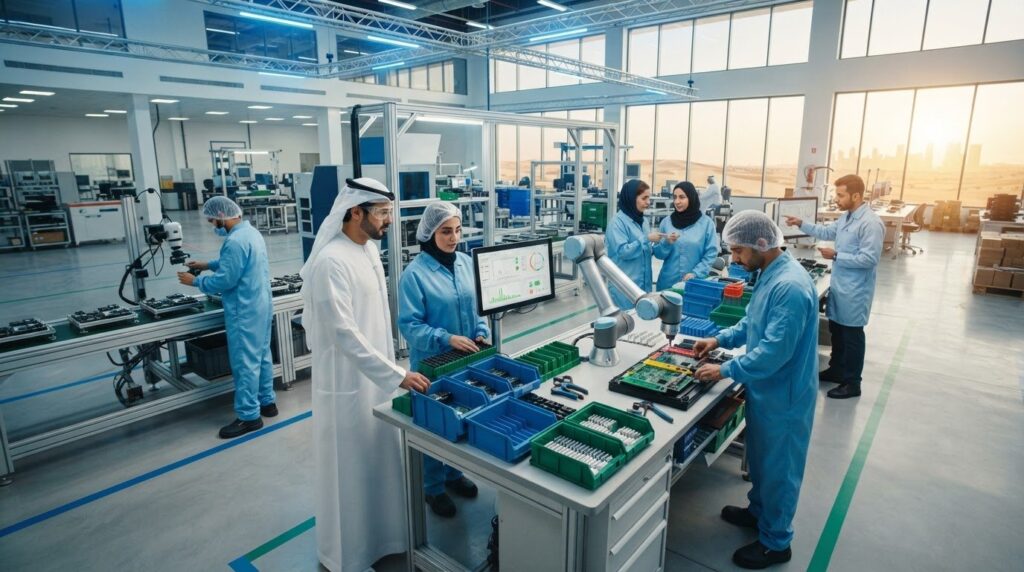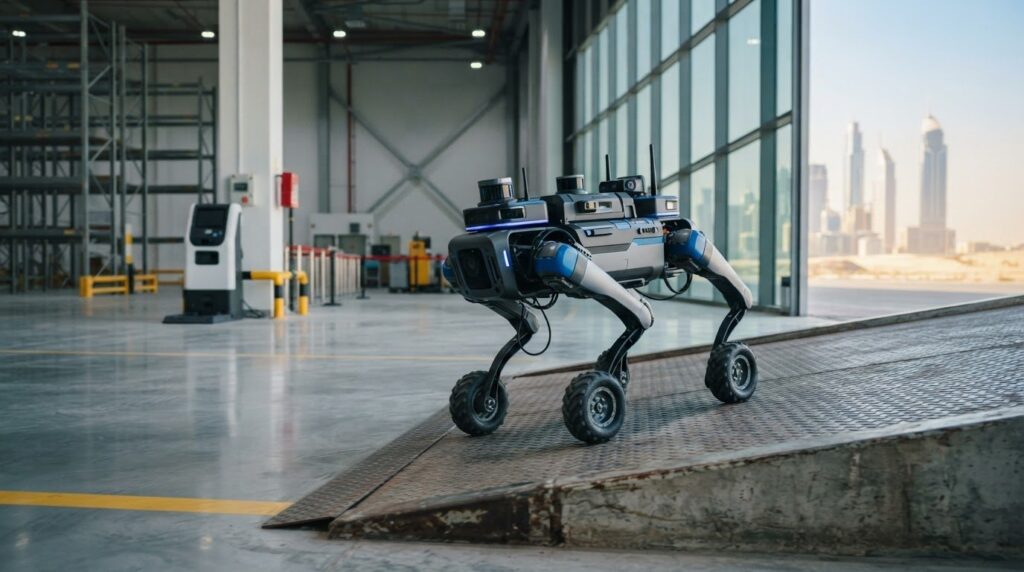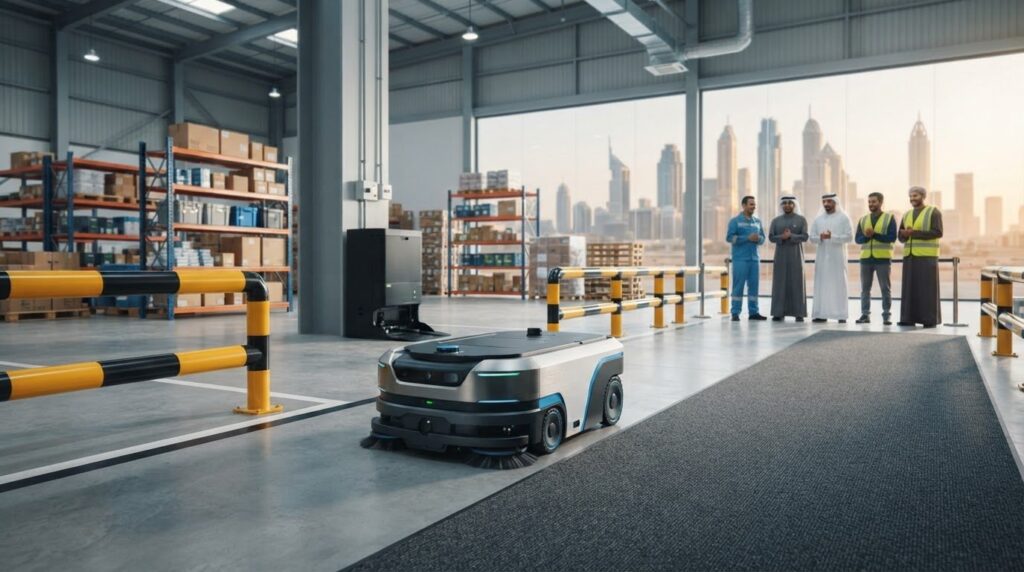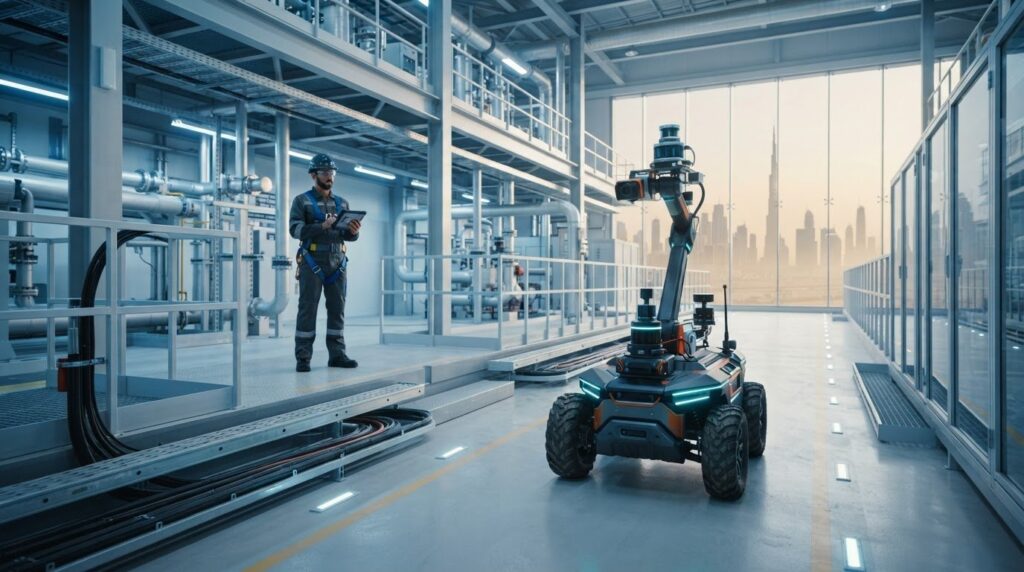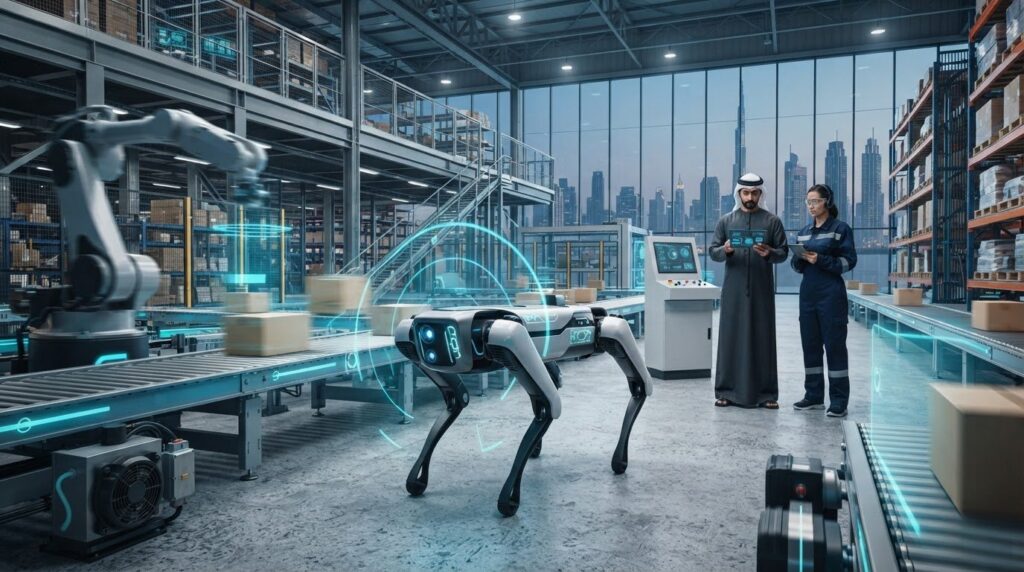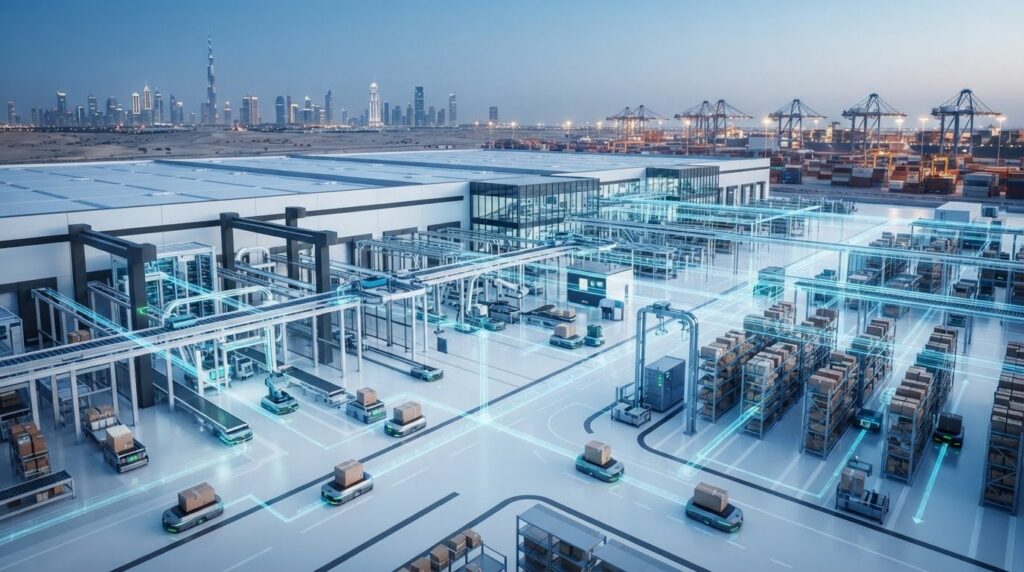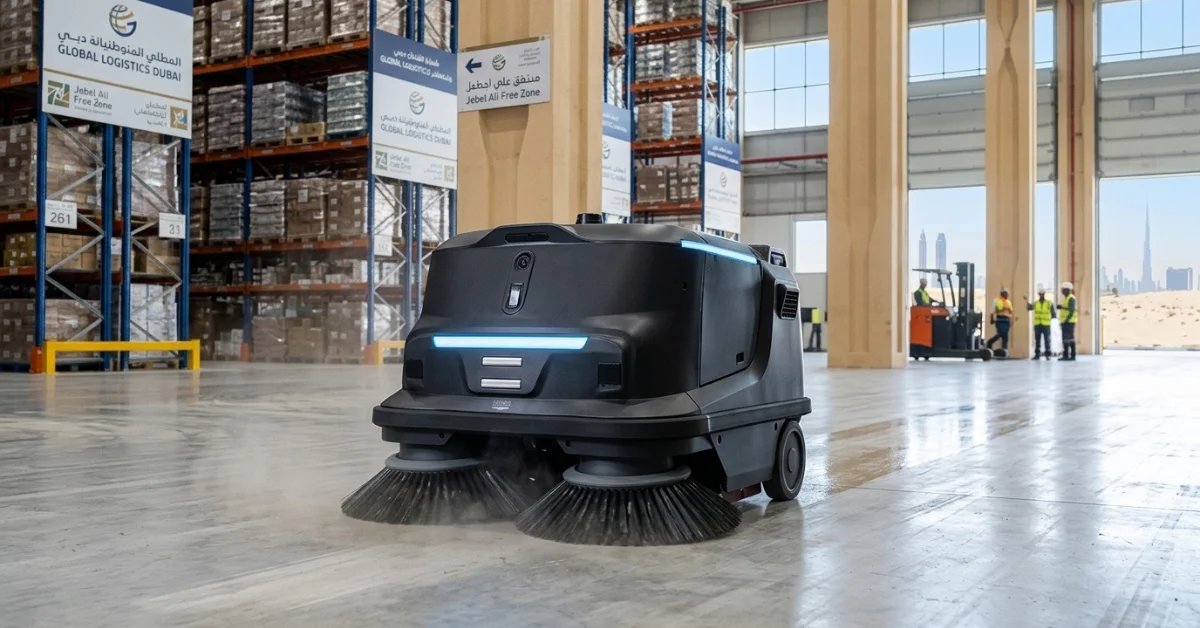
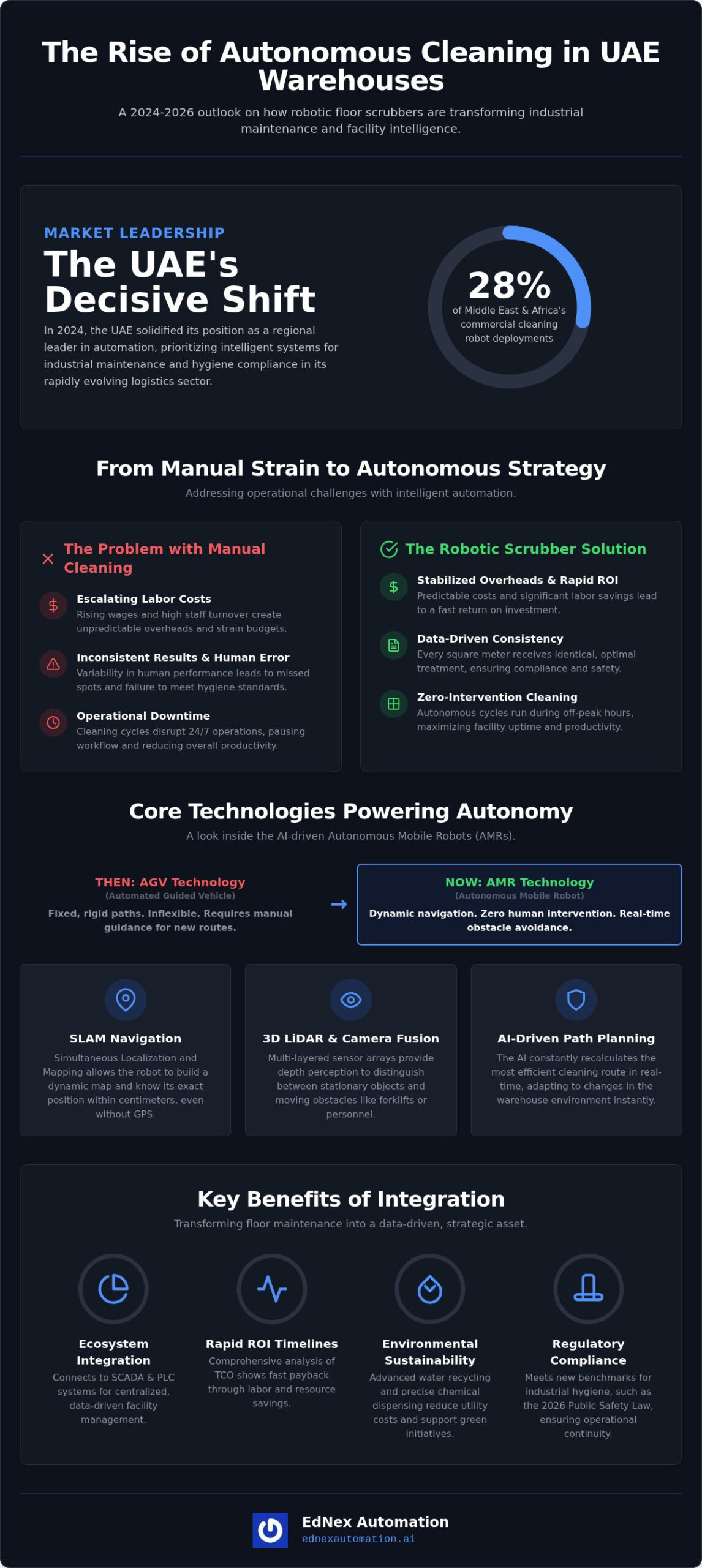
In 2024, the UAE accounted for approximately 28% of all commercial cleaning robot deployments across the Middle East and Africa, signaling a decisive shift toward autonomous industrial maintenance. You’re likely grappling with the escalating costs of manual labor and the operational strain of maintaining 24/7 hygiene standards in high-traffic environments. Recognizing that consistent cleanliness is critical for safety and compliance, many facility managers are now prioritizing the deployment of robotic floor scrubbers for warehouses UAE to eliminate human error and stabilize overheads.
Leveraging advanced 3D LiDAR and SLAM technology, these autonomous units offer a strategic path toward full facility hygiene with zero manual intervention. This 2026 guide details how integrating cleaning robots into your existing warehouse management software optimizes resource consumption and ensures long-term business viability. We’ll examine the technical evolution of AI-driven navigation, the shift toward flexible subscription models, and the measurable reduction in water usage that defines modern industrial automation. By connecting global technological breakthroughs with regional industrial needs, we provide the intellectual framework required for a seamless digital transformation.
Key Takeaways
- Understand how the fusion of SLAM and LiDAR technologies enables cleaning robots to navigate complex, high-traffic warehouse corridors with precision and safety.
- Learn to integrate autonomous units into centralized SCADA and PLC systems, transforming floor maintenance into a data-driven component of your wider industrial ecosystem.
- Discover the economic advantages of deploying robotic floor scrubbers for warehouses UAE, including a comprehensive analysis of total cost of ownership and rapid ROI timelines.
- Evaluate the impact of advanced water recycling systems on operational utility costs and long-term environmental sustainability within large-scale facilities.
- Identify the critical steps for a successful implementation, from initial technical site audits to bespoke integration that aligns with your specific facility layout.
The Strategic Shift to Autonomous Floor Scrubbers in UAE Warehouses
The UAE industrial sector is undergoing a rapid evolution, driven by the national commitment to Industry 4.0 and advanced manufacturing. Within this context, the adoption of robotic floor scrubbers for warehouses UAE represents more than a simple equipment upgrade; it’s a fundamental transition toward integrated facility intelligence. By replacing inconsistent, labor-intensive processes with predictable, data-driven systems, operators are securing their long-term business viability in a competitive global market. These systems don’t just clean; they provide the operational transparency required for modern supply chain excellence.
What Defines an Industrial Robotic Scrubber?
An industrial robotic scrubber is an AI-driven Autonomous Mobile Robot (AMR) specifically engineered for high-precision surface maintenance in complex industrial environments. While earlier iterations relied on Automated Guided Vehicle (AGV) technology that followed fixed, rigid paths, modern units utilize sophisticated sensor suites to navigate dynamically around moving obstacles. Fully autonomous units operate with zero human intervention, distinguishing themselves from semi-autonomous “driver-assist” machines that still require manual positioning. Their technical architecture combines high-capacity fluid tanks and precision brushes with LiDAR and 3D camera arrays, allowing for real-time environmental mapping and obstacle avoidance.
Why the UAE Logistics Sector is Prioritizing Automation
National initiatives focusing on digital transformation have accelerated the deployment of autonomous systems across the logistics chain. Implementing robotic floor scrubbers for warehouses UAE allows facilities to maintain rigorous hygiene benchmarks without disrupting the flow of 24/7 operations. By scheduling cleaning cycles during low-traffic windows or concurrent with shift changes, managers eliminate the downtime associated with manual maintenance. Automation ensures every square meter of a facility receives identical treatment, removing the variability inherent in human performance. Furthermore, these robots utilize precise chemical dispensing and water recycling technologies to align with the UAE’s regional sustainability goals and green building certifications.
Shifting from reactive manual cleaning to proactive autonomous hygiene cycles fundamentally alters the warehouse labor dynamic. Instead of managing high turnover and the rising costs of cleaning staff, facility leaders can reallocate human capital toward higher-value technical roles. This transition ensures that hygiene is no longer a response to visible debris but a continuous, programmed standard that supports a safer working environment. As the 2026 Public Safety Law establishes new benchmarks for industrial hygiene, the move toward autonomy has become a necessity for regulatory compliance and operational efficiency.
Core Technologies Powering Warehouse Cleaning Autonomy
The operational intelligence of modern robotic floor scrubbers for warehouses UAE relies on a sophisticated fusion of hardware and software architecture. These aren’t merely automated brushes; they’re high-performance computers on wheels designed to process massive environmental datasets in milliseconds. By leveraging advanced sensor suites and cloud-based logic, these units transform from simple tools into proactive nodes within a facility’s digital ecosystem. This technological maturity ensures that hygiene standards remain consistent regardless of shifting inventory levels or peak operational hours.
Navigation and Safety Systems in High-Density Areas
Maintaining high standards of workplace safety in automated warehouses requires multi-layered sensor arrays that go beyond basic proximity detection. Modern units utilize Simultaneous Localization and Mapping (SLAM) to build a dynamic understanding of their surroundings. This allows the robot to identify its exact position within centimeters, even in vast facilities where traditional GPS signals fail. When combined with LiDAR and 3D camera fusion, the system gains depth perception, enabling it to distinguish between a stationary pallet and a moving forklift.
- Real-time Path Planning: The AI constantly recalculates routes to avoid temporary obstacles, ensuring zero disruption to logistical workflows.
- Emergency Protocols: Integrated safety controllers trigger immediate stops if a human or vehicle enters the machine’s safety perimeter, meeting stringent national industrial standards.
- Racking Precision: Advanced mapping allows for navigation through narrow aisles without the risk of structural impact.
AI-Driven Cleaning Optimization
Efficiency in 2026 is measured by resource conservation as much as floor coverage. AI-driven algorithms now regulate water and chemical output based on real-time soil level detection. If the robot identifies a high-traffic zone with heavier staining, it automatically increases brush pressure and dosing. Conversely, it scales back in cleaner areas to preserve consumables. This precision ensures edge-to-edge cleaning, utilizing specialized side brushes to reach baseboards that manual operators often miss.
Every cleaning cycle generates a comprehensive data log, providing facility managers with verifiable proof of hygiene. These reports track “area cleaned” against “missed spots,” highlighting any zones blocked by inventory that require attention. To explore how these technical capabilities can be tailored to your specific facility requirements, you can consult with the technical experts at EdNex Automation for a comprehensive site audit.
Continuous operation is further supported by high-density lithium-ion battery technology and autonomous docking stations. When power levels drop or water tanks require replenishing, the unit navigates back to its station to recharge and purge waste. This loop eliminates the need for human monitoring, allowing the cleaning fleet to operate on a truly 24/7 basis. By linking these units to cloud-based fleet management platforms, operators can monitor multiple machines across different national sites from a single centralized dashboard.
Integrating Robotic Scrubbers with Warehouse Ecosystems
The true power of Industry 4.0 lies in the seamless orchestration of disparate systems. In the UAE’s sophisticated logistics hubs, robotic floor scrubbers for warehouses UAE are evolving from isolated utility machines into connected assets that communicate directly with the facility’s central nervous system. This connectivity is a primary driver behind the growth trends noted in the UAE floor cleaning equipment market report, which forecasts an 8.54% CAGR as enterprises seek deeper operational integration. By linking these units to a Warehouse Management System (WMS) via robust APIs, facility managers can synchronize cleaning tasks with real-time logistics throughput, ensuring hygiene never compromises speed.
The Role of PLC and SCADA in Facility Hygiene
Deploying PLC and SCADA integration services allows for a level of hygiene control that manual processes simply cannot match. Instead of adhering to rigid schedules, cleaning cycles are triggered by actual facility usage data. For instance, the system can automatically dispatch a unit to a loading dock immediately after a high-volume shipment is processed. There’s a natural technical synergy between these units and other autonomous mobile robots (AMRs) handling pallet movement. Centralizing diagnostic alerts within the main control room ensures that any mechanical issues are flagged instantly, preventing small errors from becoming operational bottlenecks. This unified approach ensures the cleaning robot respects dynamic “no-go zones” dictated by real-time logistics data, preventing any interference with active picking zones.
Data-Driven Maintenance Strategies
Integration transforms cleaning logs into a strategic asset for the enterprise. By analyzing heat maps generated by the robots, operators can identify high-traffic areas or zones prone to recurring spills, allowing for proactive floor treatment adjustments. This data also feeds into predictive maintenance models; the system alerts technicians when a brush motor shows signs of wear before an actual failure occurs. For organizations focused on long-term business viability, these logs are essential for ESG and sustainability reporting. They provide verifiable metrics on water conservation and chemical usage, aligning facility operations with national environmental standards. This level of transparency allows stakeholders to view cleaning progress alongside logistics throughput on a single, centralized dashboard, ensuring that every square meter of the facility meets the highest industrial benchmarks.
Calculating ROI: The Economics of Robotic Cleaning in the UAE
Quantifying the financial impact of robotic floor scrubbers for warehouses UAE requires a transition from viewing cleaning as a sunk cost to an optimized operational variable. While traditional procurement focuses on purchase price, a sophisticated Total Cost of Ownership (TCO) analysis reveals that autonomous systems deliver superior long-term value through resource precision and labor stability. By automating repetitive maintenance, facility managers can mitigate the financial risks associated with high staff turnover and inconsistent manual performance, ensuring a predictable hygiene standard that manual fleets can’t match.
Direct vs. Indirect Cost Savings
Achieving a measurable reduction in utility consumption is a primary driver for industrial automation in the region. Advanced cleaning robots utilize integrated water recycling and filtration systems, significantly reducing water waste compared to traditional mopping or manual scrubbers. Precision dosing algorithms ensure that chemical usage is restricted to the exact requirements of the floor condition, preventing the over-saturation that leads to accelerated surface wear and increased consumable spending.
- Risk Mitigation: Consistent floor drying sequences significantly lower the likelihood of slip-and-fall incidents, potentially reducing insurance premiums for high-traffic logistics hubs.
- Asset Longevity: Programmed, high-frequency maintenance cycles prevent the buildup of abrasive industrial dust, extending the operational life of expensive warehouse flooring systems.
- Consumable Control: Digital tracking of brush wear and squeegee life allows for just-in-time replacement, eliminating the waste of premature disposal often seen in manual operations.
The UAE Context: Scaling and Long-Term Viability
In the national logistics landscape, where 24/7 uptime is the standard, the value of constant availability is a critical differentiator. Implementing autonomous cleaning robots future-proofs warehouse operations against regional labor market volatility and rising recruitment costs. Most large-scale facilities in the UAE achieve a full return on investment (ROI) within 12 to 18 months, as the system offsets the expense of multiple manual shifts and specialized training requirements.
Transitioning staff from repetitive floor maintenance to high-value logistics roles, such as inventory management or technical oversight, improves overall facility productivity. This strategic reallocation ensures that human intelligence is applied where it’s most effective, while machines handle the predictable, labor-intensive hygiene cycles. The ability to maintain hygiene standards without pausing logistics throughput translates directly into higher warehouse efficiency. To determine the specific payback period for your facility, you can book an industrial efficiency audit with our automation consultants to see the impact on your operational bottom line.
Partnering with EdNex Automation for Industrial Excellence
Positioning itself at the forefront of regional industrial transformation, EdNex Automation serves as a strategic technical partner rather than a simple equipment vendor. We understand that the deployment of robotic floor scrubbers for warehouses UAE is a critical component of a broader Industry 4.0 strategy, requiring precise integration with existing infrastructure. By bridging global technological breakthroughs with the specific needs of the national logistics sector, we ensure that every autonomous unit contributes directly to long-term business viability and operational excellence. Our full-service approach guarantees that your investment in automation is supported by a robust intellectual framework designed for scalability and technical reliability.
Leveraging our deep expertise in complex infrastructure components, we provide bespoke integration services that adapt advanced robotics to your facility’s unique layout. Whether your operations center on traditional high-density racking or sophisticated automated storage and retrieval systems, our team ensures that cleaning cycles never interfere with picking or replenishment tasks. We prioritize the delivery of high-level solutions that meet the stringent national safety standards established by the Ministry of Industry and Advanced Technology (MoIAT), providing the necessary certifications to operate in high-traffic industrial zones safely and legally.
A Visionary Approach to Warehouse Automation
Adopting a forward-looking perspective allows EdNex to focus on the transformative power of integrated systems rather than standalone tools. We don’t merely deliver hardware; we act as a systematic organizer that brings order and efficiency to complex environments. We maintain a comprehensive portfolio of service robots, ranging from specialized cleaning units to surveillance and delivery platforms, providing a single point of contact for your entire automation journey. Our role as a bridge-builder ensures that you’ve access to the latest global innovations, tailored specifically for the national economic context. This commitment to modernization helps your organization remain competitive in an increasingly automated global supply chain.
Seamless Implementation and Professional Partnership
Following a logical and hierarchical deployment rhythm, our team guides you through every stage of the integration process. We begin with a methodical technical site audit to map your warehouse environment and identify potential navigational challenges before any equipment is deployed. Once integrated, we provide comprehensive training and ongoing technical support to ensure your cleaning fleet maintains maximum uptime and peak performance. It’s our goal to ensure that your transition to autonomous hygiene is as seamless as possible. To begin your transition toward a more efficient, data-driven maintenance model, contact EdNex Automation to modernize your warehouse cleaning operations today.
Securing Long-Term Viability Through Industrial Automation
Transitioning to an autonomous maintenance model is no longer a luxury but a strategic necessity for logistics leaders. By deploying robotic floor scrubbers for warehouses UAE, facilities achieve a level of hygiene precision and resource optimization that manual fleets simply can’t replicate. Integrating these systems with existing PLC/SCADA frameworks and ASRS infrastructure optimizes operational throughput while delivering a measurable ROI. This digital transformation addresses the critical pains of labor turnover and escalating utility costs, grounding your warehouse operations in a framework of efficiency and safety.
As an industry pioneer with expertise in comprehensive national support, EdNex Automation provides the technical framework required for successful implementation. Request a Technical Consultation for Your Warehouse Automation to begin your journey toward Industry 4.0 excellence. It’s time to transform your facility into a data-driven environment where hygiene and productivity coexist seamlessly. We’re ready to help you navigate this transition with confidence.
Frequently Asked Questions
How do robotic floor scrubbers handle obstacles like forklifts and staff in a busy warehouse?
Robotic systems utilize a sophisticated fusion of 3D LiDAR and depth-sensing cameras to identify dynamic obstacles in real-time. When a forklift or staff member enters the machine’s safety perimeter, the onboard AI immediately recalculates a new path or initiates a controlled emergency stop. This ensures that robotic floor scrubbers for warehouses UAE maintain peak productivity without compromising safety standards. These units are engineered to operate seamlessly alongside human workers in high-traffic logistics environments.
Can an autonomous cleaning robot operate on different floor surfaces within a single facility?
Industrial autonomous units are engineered to recognize and adapt to various floor surfaces, including polished concrete, epoxy coatings, and industrial tiling. Utilizing integrated sensors, the system automatically adjusts brush pressure and vacuum suction to provide optimal cleaning performance for each specific material. This versatility allows a single robot to transition between storage aisles and office corridors without manual reconfiguration. Such adaptability ensures consistent hygiene across diverse facility zones while protecting sensitive floor finishes from excessive wear.
What is the typical battery life and charging time for an industrial robotic scrubber?
Most enterprise-grade cleaning robots offer an operational runtime of four to six hours on a single charge, depending on the cleaning intensity and surface type. Utilizing advanced lithium-ion technology, these units feature autonomous docking capabilities that initiate a recharge cycle when power levels reach a predefined threshold. A full charge typically requires two to four hours, allowing for multiple deployments within a 24-hour window. This automated energy management ensures that the fleet remains ready for continuous industrial operation.
How does the robot map a warehouse, and what happens if the layout changes?
Initial mapping is achieved through a technical site audit where the robot utilizes SLAM technology to create a comprehensive digital twin of the facility. If temporary obstacles like pallets are moved, the AI identifies these as dynamic changes and navigates around them in real-time. For permanent structural modifications, such as new racking installations, the system allows for rapid re-mapping to update the facility’s master layout. This flexibility ensures the robot’s navigational logic remains accurate as your warehouse evolves.
Is it possible to monitor the cleaning progress of the robot remotely?
Facility managers can monitor the entire fleet remotely through centralized cloud-based dashboards accessible via mobile or desktop interfaces. These platforms provide real-time heat maps of cleaned areas, battery status, and diagnostic alerts to ensure total operational transparency. By reviewing these digital cleaning logs, operators can verify that robotic floor scrubbers for warehouses UAE have met specific hygiene benchmarks. This data-driven approach allows for precise oversight of facility maintenance from any location within the national network.
What kind of maintenance does a robotic floor scrubber require from facility staff?
While the cleaning process is fully autonomous, facility staff must perform basic daily maintenance to ensure long-term mechanical reliability. This typically involves emptying the recovery tanks, replenishing clean water and chemicals, and inspecting the brushes and squeegees for debris buildup. Staff should also ensure that the high-precision sensor arrays are kept clean and free from industrial dust. These simple tasks take only a few minutes each day and are essential for maintaining the robot’s technical performance.
Do robotic scrubbers save water and chemicals compared to traditional walk-behind machines?
Autonomous units significantly reduce resource consumption by utilizing precision dosing systems that apply the exact amount of water and chemical required for the floor’s soil level. Many modern models also incorporate advanced filtration systems that recycle water during the cleaning cycle, often reducing total water usage by up to 70% compared to traditional manual machines. This efficiency supports regional sustainability goals while lowering the operational costs associated with consumables. It’s a critical component of achieving green building certifications.
Can these robots be integrated with my existing Warehouse Management System (WMS)?
Integration with an existing Warehouse Management System (WMS) is achieved through robust APIs that allow for bidirectional data exchange. This connectivity enables the WMS to trigger cleaning cycles based on real-time logistics events, such as the completion of a high-volume picking shift. By linking hygiene data with logistics throughput, managers can ensure that cleaning tasks are prioritized in high-traffic zones. This level of synchronization transforms a standalone tool into a connected node within your facility’s digital ecosystem.