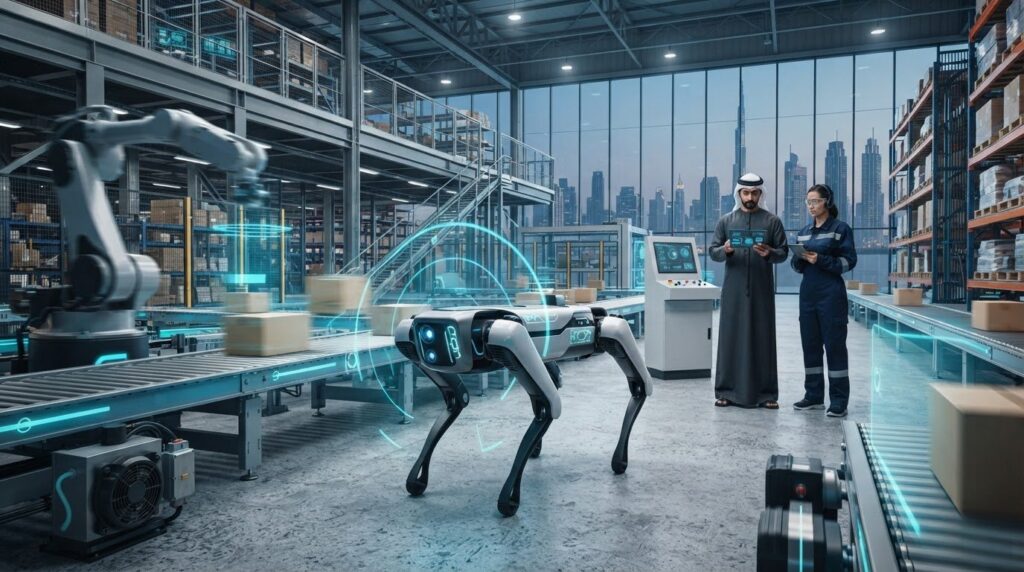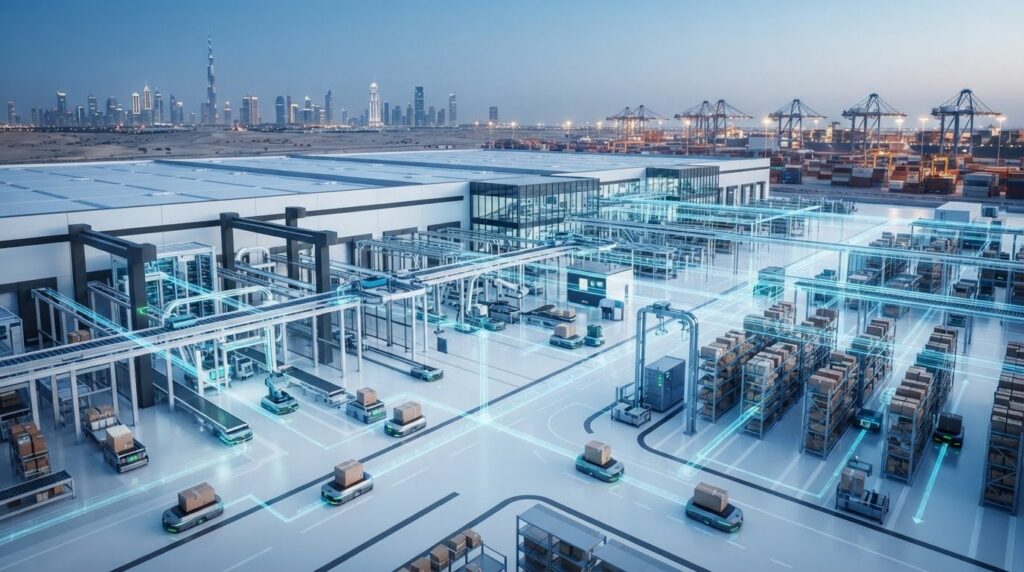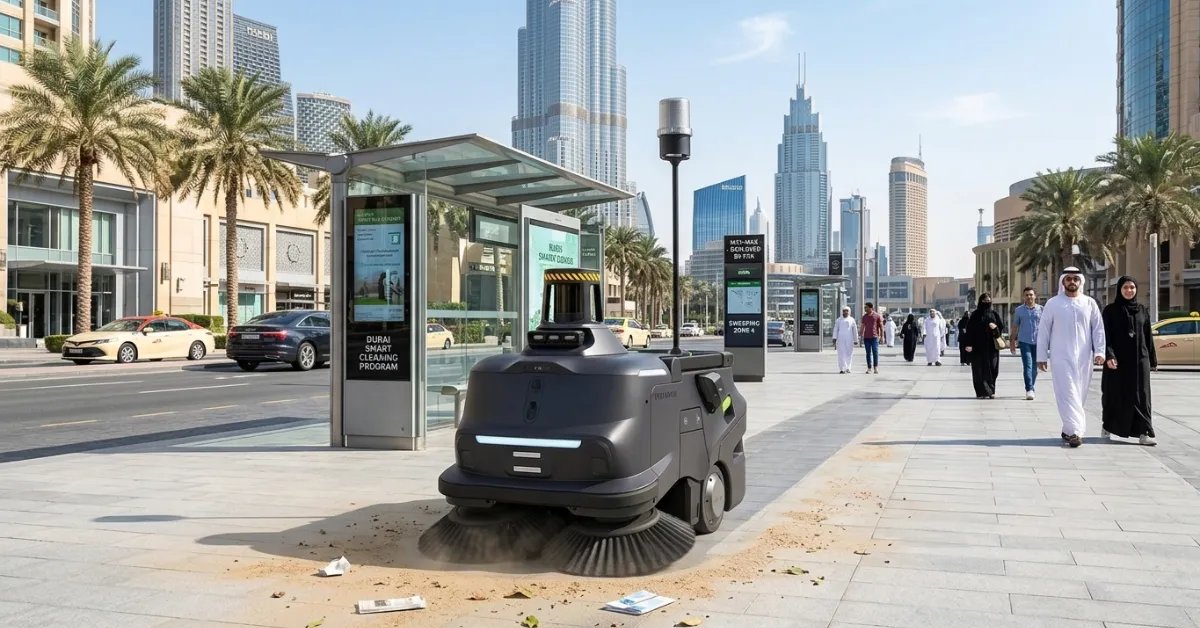
Recognizing that the UAE’s National Artificial Intelligence Strategy 2031 sets a rigorous benchmark for global leadership, facility managers are increasingly turning to outdoor cleaning robots UAE to navigate the region’s unique environmental pressures. As summer afternoon work restrictions limit human labor during peak heat, the necessity for autonomous systems that maintain productivity becomes undeniable. You likely recognize the difficulty of sustaining consistent hygiene standards in large-scale facilities while facing high turnover and the logistical constraints of extreme weather.
This strategic guide details how autonomous outdoor cleaning technology transforms facility maintenance across the UAE’s extreme environments and sophisticated smart city landscapes. By implementing these intelligent systems, you can secure a more resilient maintenance framework and achieve significant reductions in long-term operational overhead. We will provide a comprehensive overview of the current technological capabilities, regulatory requirements, and the specific economic advantages of urban automation in 2026.
Key Takeaways
- Analyze the strategic transition toward autonomous urban services and why these systems are now essential for the UAE’s Smart City infrastructure.
- Identify the critical engineering specifications, including advanced thermal management, required for outdoor cleaning robots UAE to operate reliably in desert environments.
- Quantify the operational advantages of autonomous systems by comparing coverage efficiency and 24/7 uptime against traditional human-led maintenance frameworks.
- Establish a methodical deployment strategy that utilizes centralized fleet management software and terrain mapping to optimize multi-unit performance across large facilities.
- Explore the integration of cleaning robotics into wider industrial ecosystems through PLC and SCADA systems to ensure a unified and scalable automation architecture.
The Evolution of Urban Maintenance: Why Outdoor Cleaning Robots are Essential in the UAE
Outdoor cleaning robots represent a sophisticated category of autonomous industrial machinery engineered specifically to manage large-scale environmental maintenance without direct human oversight. These systems aren’t merely automated sweepers; they’re high-performance assets that integrate seamlessly into the UAE’s “Smart City” architecture. As urban centers like Dubai and Abu Dhabi evolve into hyper-connected hubs, the reliance on traditional, labor-intensive cleaning methods is rapidly diminishing. By prioritizing outdoor cleaning robots UAE, facility managers align their operations with the National Artificial Intelligence Strategy 2031, which emphasizes the transition toward a highly digitalized and sustainable industrial landscape. This strategic alignment ensures that maintenance frameworks remain resilient against the region’s unique geographical and economic pressures.
From Manual Labor to Autonomous Resilience
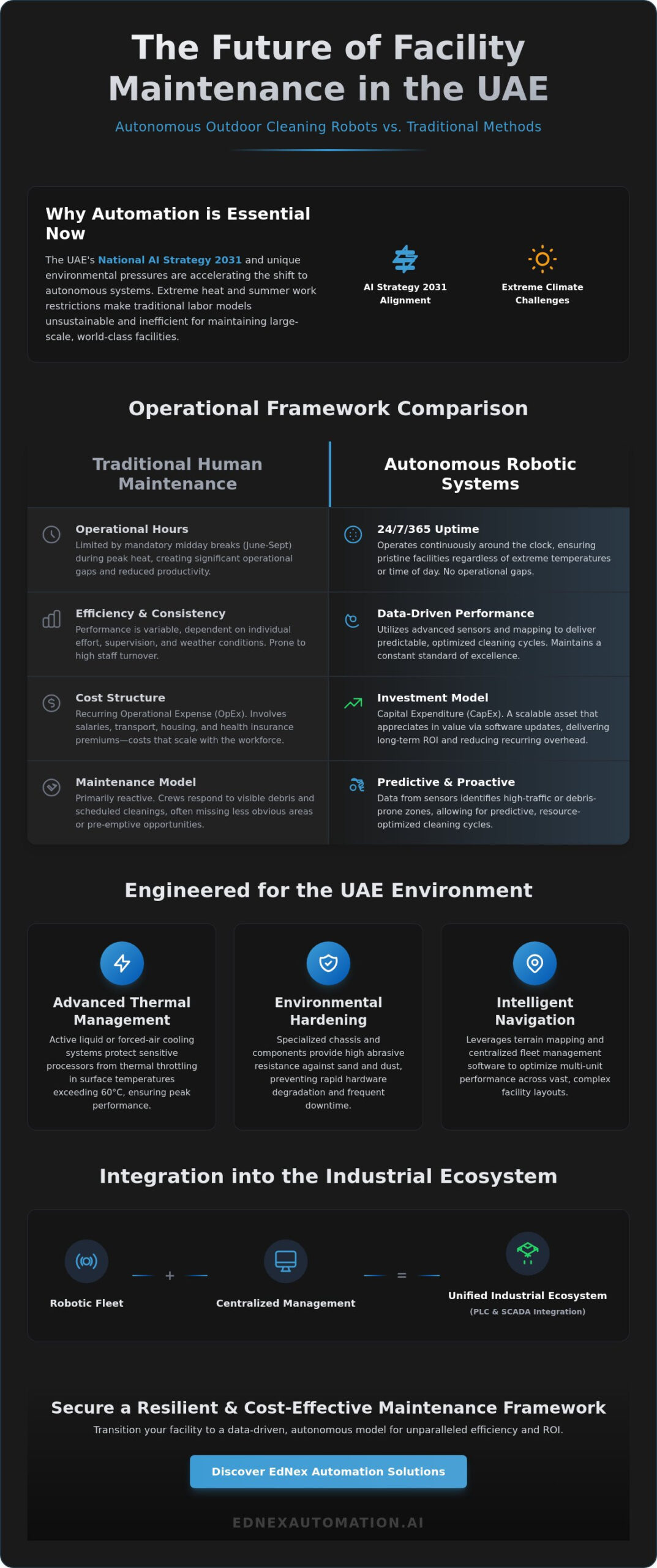
Relying on traditional cleaning crews during the peak summer months presents significant logistical and ethical challenges. Between June and September, the UAE’s mandatory midday break laws rightfully restrict outdoor labor during peak heat, creating an operational gap that frequently compromises facility hygiene. Integrating autonomous robot technology allows for 24/7 operational consistency, ensuring that large-scale facilities remain pristine regardless of external temperatures or human labor availability. This shift enables a transition from reactive cleaning, where crews respond to visible debris, to predictive, data-driven maintenance models that optimize resource allocation. These robots utilize advanced sensors to identify high-traffic zones, allowing for targeted cleaning cycles that maintain a constant standard of excellence across the entire facility footprint.
Economic Drivers of Outdoor Automation
Transitioning to robotic fleets offers a compelling long-term cost-benefit profile compared to traditional manual labor contracts. Beyond the obvious salary considerations, automation eliminates the “hidden costs” associated with large human workforces, such as transport logistics, staff housing, and comprehensive health insurance premiums. When outdoor cleaning robots UAE are combined with PLC and SCADA integration services, they become part of a unified industrial ecosystem that maximizes operational efficiency. This level of technical synergy allows for centralized monitoring and real-time performance adjustments, significantly reducing the frequency of manual interventions. By 2026, outdoor cleaning robots serve as a primary driver of facility ROI by converting recurring operational expenses into a scalable, high-performance capital asset that appreciates in value through continuous software optimization.
Engineering for Extremes: Technical Requirements for the UAE Environment
Engineering for the Arabian Peninsula requires a fundamental departure from standard industrial specifications, as surface temperatures frequently exceed 60°C during peak summer months. While generic automated systems might suffice in temperate climates, outdoor cleaning robots UAE must possess specialized environmental hardening to maintain operational integrity. The rapid expansion of the UAE’s robotics and automation sector has driven the development of hardware that prioritizes thermal resilience and abrasive resistance. Selecting a system without these specific protections leads to rapid hardware degradation and frequent downtime, undermining the strategic goals of urban automation.
Thermal Stability and Cooling Systems
Implementing active cooling architectures is essential for protecting sensitive internal processors from thermal throttling. Unlike passive heat sinks, which fail when ambient temperatures rise above 50°C, active liquid or forced-air systems ensure that AI navigation modules continue to function at peak capacity. Utilizing heat-reflective coatings and UV-resistant polymers further mitigates solar gain, preventing the internal chassis from reaching critical failure points. These material choices don’t just protect the robot; they extend the lifecycle of expensive electronic components, ensuring a reliable long-term investment for facility managers.
Abrasive Resistance and Filtration
Protecting optical sensors from the pervasive, fine-grained sand of the desert requires engineering that goes far beyond standard IP65 ratings. Fine dust acts as an abrasive, quickly clouding camera lenses and LiDAR covers if not managed through specialized airflow or self-cleaning mechanisms. High-efficiency particulate filtration systems are necessary to prevent ingress into internal cooling ducts, where dust buildup can cause catastrophic electrical failures. Mechanical durability is equally vital, as brushes and suction components must withstand constant contact with abrasive particles without losing structural integrity. If you’re exploring how to harden your facility’s infrastructure against these stressors, reviewing the custom configurations available at ednexautomation.ai provides a foundation for choosing the right hardware.
Effective navigation in wide-open, high-glare environments relies on multi-sensor fusion, combining LiDAR, GPS, and ultrasonic sensors to maintain spatial awareness. This redundancy is critical when intense sunlight or dust storms potentially obscure a single sensor type. Powering these systems requires battery technology specifically rated for high-ambient heat, as standard lithium-ion cells lose efficiency and safety margins when exposed to extreme thermal stress. By prioritizing these technical requirements, organizations ensure their robotic fleets remain operational assets rather than maintenance liabilities.
Comparative Analysis: Human Maintenance vs. Autonomous Outdoor Systems
Analyzing the operational delta between manual labor and autonomous systems reveals a fundamental shift in facility management capabilities. While human crews are inherently limited by biological constraints and regional labor regulations, outdoor cleaning robots UAE provide a tireless alternative that thrives in conditions where human productivity falters. These machines don’t just replace labor; they redefine the standards of coverage efficiency by maintaining a constant, high-velocity output across expansive industrial landscapes. By removing the variability of human performance, facility managers can guarantee a level of cleanliness that remains consistent regardless of the time of day or the severity of the climate.
Providing verifiable cleaning logs through integrated telemetry, these systems offer a level of audit compliance that manual reporting simply cannot match. Every square meter processed is recorded, timestamped, and mapped, creating a digital twin of the maintenance history. This transparency is crucial for high-traffic facilities that must adhere to strict hygiene and safety protocols. Shifting to an autonomous model mitigates the risks associated with human error and ensures that no area of a large facility is overlooked during a cleaning cycle.
Even as technology evolves, the benchmark for meticulous care remains the standard set by premier service providers; for instance, AlphaLux Cleaning offers the type of comprehensive commercial and residential cleaning expertise that facility managers strive to replicate through automation.
Performance Metrics and Consistency
Utilizing precision SLAM (Simultaneous Localization and Mapping) technology, autonomous units eliminate the “missed spots” common in manual operations. These systems standardize cleaning quality across thousands of square meters, ensuring that every inch of a plaza or industrial yard receives the same level of attention. A single industrial-grade autonomous unit maintains a higher hourly output than a three-person manual crew by operating at a constant velocity without the requirement for rest or environmental shielding. This precision allows for the optimization of cleaning paths, reducing energy consumption while maximizing the visual appeal of the facility.
Health, Safety, and Environment (HSE) Benefits
Deploying outdoor cleaning robots UAE significantly enhances a facility’s HSE profile by removing personnel from hazardous, high-heat environments. Reducing the incidence of heat-related illnesses among staff isn’t just an ethical priority; it’s a strategic move that lowers insurance liabilities and improves workforce retention. Beyond human safety, these robots contribute to national sustainability targets through precision chemical application and water-saving technologies. Many industrial scrubbers now feature advanced filtration systems that recycle water, ensuring that large-scale maintenance doesn’t come at an unsustainable environmental cost. This methodical approach to waste management and resource conservation positions the facility as a leader in responsible urban automation, and for those looking to further preserve their infrastructure, you can check out The Solution for specialized damage repair and restoration services.
Strategic Implementation: Deploying Robotic Fleets in Large Facilities
A successful transition to automated maintenance requires a methodical approach to site assessment and infrastructure readiness. When deploying outdoor cleaning robots UAE, facility managers must first evaluate terrain complexity and connectivity density to ensure seamless operation across expansive industrial zones. This process involves establishing rigorous safety protocols, including the definition of digital “No-Go” zones and clear rules for human-robot interaction in shared spaces. By aligning these efforts with existing autonomous cleaning robots strategies, organizations create a unified hygiene framework that spans both indoor and outdoor environments. This level of strategic planning ensures that the robotic fleet operates as a high-performance extension of the facility’s existing maintenance team.
Phase 1: Environmental Mapping and Infrastructure
Utilizing SLAM (Simultaneous Localization and Mapping) technology provides the intellectual foundation for a robot’s spatial awareness during initial site setup. This phase requires ensuring reliable 5G or Wi-Fi 6 coverage across the entire facility footprint to facilitate real-time telemetry and remote monitoring. Strategic placement of autonomous docking ports is vital for maintaining operational continuity, as these stations allow units to recharge and resume duties without human intervention. Identifying these locations early in the planning process prevents logistical bottlenecks and maximizes the duty cycle of each unit. High-speed connectivity is particularly crucial in the UAE’s smart city context, where data must flow between robots and centralized management hubs without latency.
Phase 2: Fleet Orchestration and Scaling
Managing the transition from a single pilot unit to a full-facility robotic fleet demands a sophisticated orchestration of schedules and maintenance windows. Scheduling unit deployment to avoid peak pedestrian traffic in commercial zones ensures safety while maintaining high aesthetic standards during daylight hours. This transition also involves training on-site staff to transition from manual cleaners to robotic supervisors who oversee fleet health and performance via a centralized dashboard. Empowering your workforce to manage these advanced systems improves job satisfaction and operational efficiency simultaneously. To begin your facility’s transformation into an automated hub, you can explore the deployment frameworks available at ednexautomation.ai.
Overseeing multiple units from a centralized dashboard allows for real-time adjustments based on environmental changes or facility events. This centralized control is the hallmark of a mature automation strategy, enabling managers to reallocate robotic resources instantly to high-priority areas. By 2026, the ability to scale these fleets quickly will be a defining characteristic of competitive facility management in the region. Organizations that master this orchestration today will secure a significant lead in urban automation and long-term facility resilience.
The EdNex Vision: Integrating Outdoor Robots into the Industrial Ecosystem
EdNex positions itself at the intersection of global technological breakthroughs and the specific economic requirements of the Middle East. While retail vendors offer standalone equipment, we provide a comprehensive intellectual framework that embeds outdoor cleaning robots UAE into your broader industrial ecosystem. This visionary approach ensures that automation isn’t a siloed activity but a synchronized component of your facility’s operational intelligence. By tailoring robotic payloads to handle specific industrial waste or challenging regional terrains, we transform standard machinery into bespoke assets designed for long-term business viability. It’s about building a bridge between advanced autonomous systems and the practicalities of regional industrial needs.
The future of autonomous mobile robots extends far beyond simple maintenance; it’s about creating a unified logistics and facility management network. This evolution requires a partner who understands the gravity of large-scale industrial transformation and possesses the technical expertise to bridge the gap between hardware and high-level control systems. Our role is to act as a systematic organizer who brings order, safety, and efficiency to complex environments through controlled and deliberate innovation.
Data Integration and SCADA Connectivity
Realizing the full potential of robotic fleets requires the seamless visualization of performance data within your existing industrial control room. By linking your assets to PLC and SCADA integration services, you gain real-time insights into coverage efficiency and resource consumption. This connectivity allows managers to use cleaning data to optimize facility energy and water usage, contributing directly to national sustainability targets. Our predictive maintenance models analyze telemetry to identify potential hardware fatigue before it causes a disruption, ensuring that your outdoor cleaning robots UAE maintain an uninterrupted operational cycle without unexpected downtime.
Consultative Partnership and Support
Transitioning to autonomous systems is a journey that requires more than just equipment supply; it demands a full-service partner for lifecycle support and technical integration. EdNex provides the intellectual framework necessary for implementation rather than just the tools, ensuring your investment is scalable and resilient. Our official certifications and global alliances serve as markers of legitimacy, reassuring you that your facility is backed by world-class standards. We don’t just deliver machinery; we provide the strategic roadmap necessary for your organization to remain competitive in an increasingly automated world. To secure your position at the cutting edge of urban automation, contact EdNex Automation for a facility assessment and discover how our bespoke solutions can modernize your maintenance framework.
Securing the Future of Urban Facility Management
Integrating outdoor cleaning robots UAE into your operational framework represents a necessary evolution for organizations aiming to remain competitive within the region’s ambitious smart city landscape. By addressing the critical challenges of extreme thermal stress and labor constraints, these autonomous systems provide a level of resilience that traditional maintenance models simply cannot replicate. You’ve seen how precision engineering and sophisticated fleet orchestration convert recurring operational expenses into high-performance capital assets that appreciate through continuous optimization. Securing this technological advantage ensures your facility remains at the forefront of urban automation while meeting rigorous national sustainability standards.
As an official integrator for leading global robotics brands, EdNex provides the intellectual framework and technical expertise required to bridge the gap between global innovation and regional industrial needs. Our expertise in high-heat industrial automation and comprehensive SCADA and PLC integration capabilities ensure that your robotic fleet operates as a synchronized, data-driven component of your facility. It’s time to move beyond simple equipment acquisition and embrace a full-service approach to industrial transformation. Consult with our Automation Experts for a customized facility assessment to begin your journey toward a more efficient, scalable, and sustainable urban future.
Frequently Asked Questions
Are outdoor cleaning robots durable enough for the UAE summer heat?
Industrial-grade outdoor robots are specifically engineered with active cooling architectures to withstand surface temperatures that frequently exceed 60°C. These systems utilize heat-reflective coatings and UV-resistant polymers to prevent thermal throttling of internal processors. This specialized hardening ensures continuous operation during peak summer hours when human labor is restricted by mandatory midday break laws, maintaining facility standards without interruption.
How do autonomous robots handle sand and fine dust accumulation?
Autonomous systems utilize specialized ingress protection and self-cleaning sensor technology to mitigate the abrasive effects of fine desert dust. High-efficiency filtration systems prevent particulate buildup in internal cooling ducts, preserving the integrity of sensitive electronic and mechanical components. This engineering approach ensures that LiDAR and camera systems remain clear, allowing for precise navigation even in environments prone to sand accumulation.
What is the typical ROI for an industrial outdoor cleaning robot in the UAE?
The ROI for outdoor cleaning robots UAE is realized through the conversion of recurring operational expenses into a scalable, high-performance capital asset. By eliminating hidden labor costs such as transport, housing, and health insurance while providing 24/7 uptime, facilities achieve a significant reduction in long-term overhead. The intellectual framework provided by these systems ensures that maintenance becomes a predictable and measurable component of the facility budget.
Can these robots operate safely in high-traffic public areas like malls?
These robots utilize sophisticated multi-sensor fusion, combining LiDAR, 3D perception, and ultrasonic sensors to navigate safely around pedestrians in high-traffic environments. Their advanced obstacle-avoidance algorithms allow them to adjust their path in real-time, maintaining a safe buffer zone without disrupting visitor flow. This fail-safe technology ensures that the machines operate as a non-intrusive and protective presence in shared commercial spaces.
Do I need to upgrade my facility’s Wi-Fi to use outdoor robots?
While robots can operate autonomously using pre-mapped SLAM data, reliable 5G or Wi-Fi 6 coverage is necessary for real-time telemetry and centralized fleet management. High-speed connectivity ensures that performance data and status updates are transmitted instantly to your control hub for continuous monitoring and remote intervention if required. This infrastructure is essential for organizations wishing to fully integrate their fleet into a wider smart city ecosystem.
How much maintenance do the robots themselves require in desert conditions?
Maintenance cycles in desert conditions focus primarily on routine filter replacement and sensor calibration to ensure peak performance against sand ingress. Because these units are built for industrial durability, their mechanical components require less frequent intervention than the intensive logistics involved in managing large human crews. Predictive maintenance software identifies potential hardware fatigue before it causes a disruption, ensuring maximum uptime for the entire fleet.
Can outdoor cleaning robots be integrated with my existing SCADA system?
Yes, industrial-grade robots can be fully integrated with existing SCADA and PLC systems to provide a unified view of your facility’s automation. This connectivity allows for centralized data visualization, enabling managers to coordinate cleaning cycles with other industrial processes for maximum efficiency. Linking these systems ensures that maintenance data contributes directly to broader facility energy and water optimization strategies.
What happens if a robot encounters an unexpected obstacle or pedestrian?
If an unexpected obstacle or pedestrian is detected, the robot’s safety protocols trigger an immediate halt or a calculated detour. The system uses a combination of ultrasonic sensors and AI-powered vision to identify dynamic objects in real-time, ensuring a fail-safe response that prioritizes human safety. These protocols are established during the initial site assessment to ensure that the robot’s logic remains consistent with the facility’s safety standards.