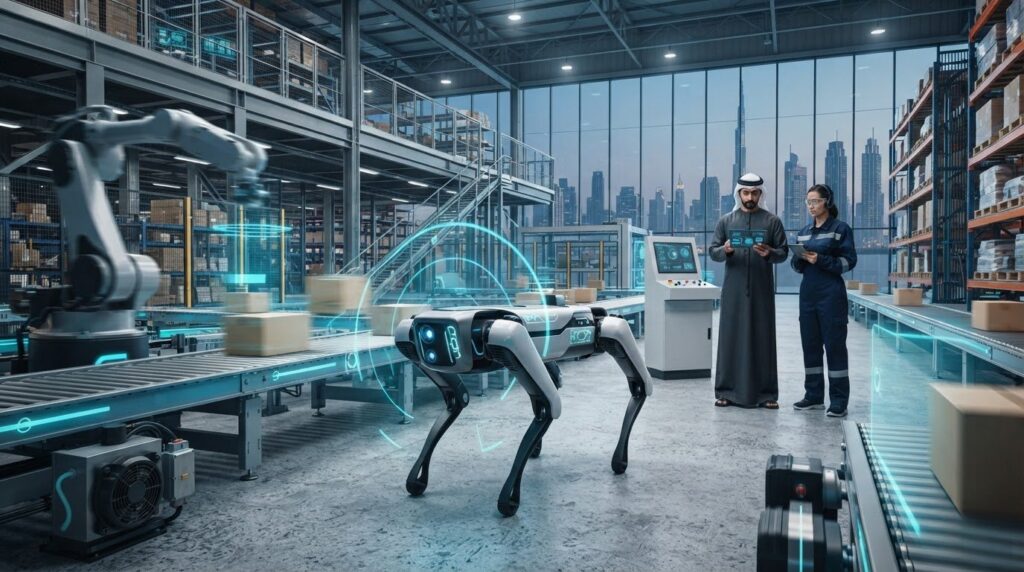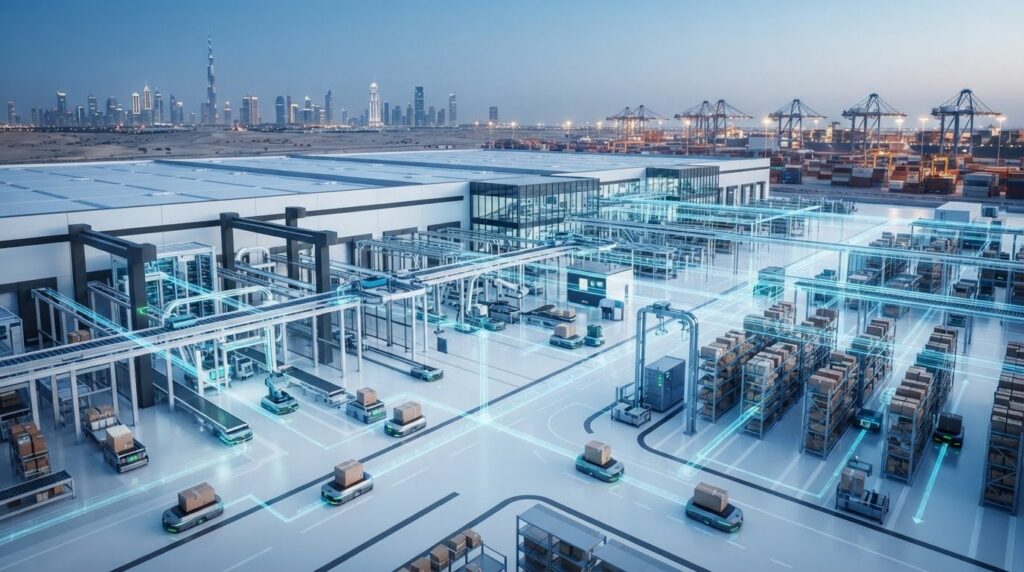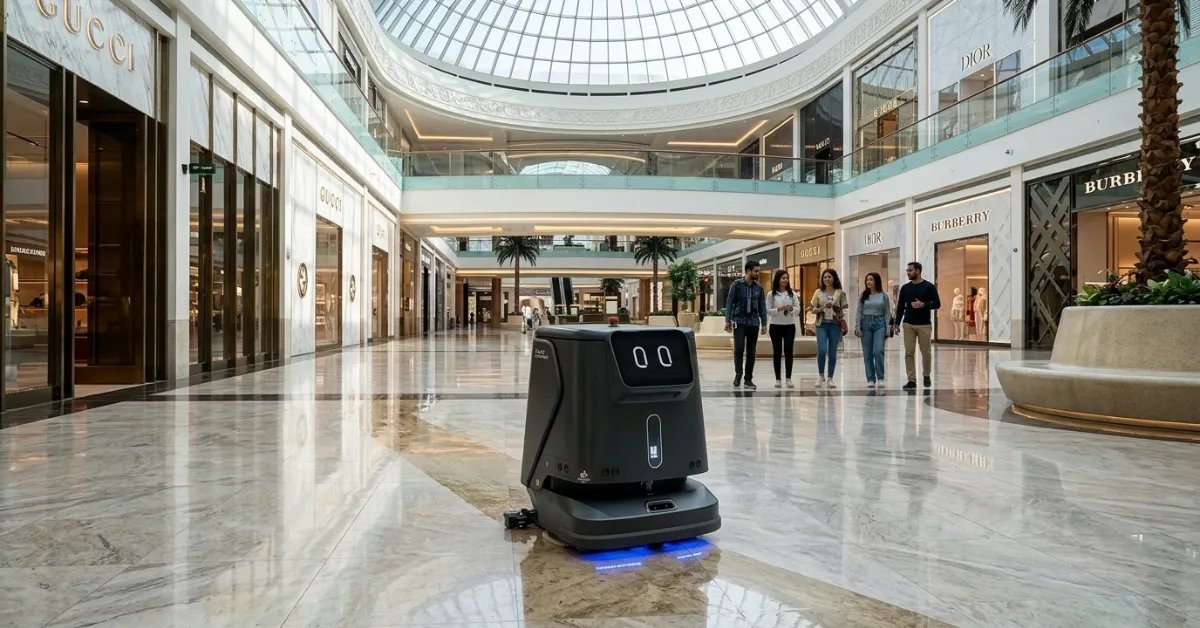
With the UAE cleaning robot market projected to reach a valuation of 820 million AED by 2030, the transition from manual janitorial models to autonomous systems has become a baseline requirement for competitive retail operations. Maintaining a five-star visitor experience across multi-million square foot footprints is a complex challenge, especially when navigating persistent sand ingress and the high turnover of traditional staff. You’re likely aware that consistent cleanliness is the foundation of brand reputation, yet achieving it through human labor alone has become increasingly cost-prohibitive and logistically difficult.
Recognizing the shift toward mandatory automation, this guide clarifies how implementing robotic cleaning for shopping malls UAE optimizes facility management by shifting human capital toward high-value service roles while ensuring 24/7 operational consistency. We’ll explore the integration of autonomous mobile robots into existing building management systems, the influence of 2026 autonomous vehicle regulations, and the data-driven reporting necessary for total hygiene compliance. By adopting these advanced systems, you’ll secure a roadmap for achieving industrial-grade efficiency that future-proofs your asset against the evolving demands of the UAE retail sector.
Key Takeaways
- Identify the strategic shift from manual janitorial cycles to demand-driven hygiene protocols required to maintain five-star brand standards in 2026.
- Analyze how advanced SLAM and LiDAR technologies enable autonomous mobile robots to safely navigate complex, high-traffic retail environments.
- Discover the advantages of integrating robotic cleaning for shopping malls UAE with existing PLC and SCADA systems for centralized facility oversight and real-time hygiene data.
- Learn to evaluate the Total Cost of Ownership and conduct high-impact zone audits to ensure a sustainable return on investment compared to traditional labor.
- Explore the necessity of a holistic maintenance strategy that bridges indoor and outdoor cleaning to future-proof large-scale retail infrastructure.
The Evolution of Retail Facility Management: Why Robotics Matter in 2026
Integrating advanced automation into the UAE’s high-traffic retail environments represents a fundamental shift in operational philosophy. As we move through 2026, robotic cleaning for shopping malls UAE has evolved from an experimental luxury into a critical component of facility resilience. This transition is driven by the necessity to maintain impeccable hygiene standards across expansive, multi-level architectures that define the regional landscape. Because these structures often operate on 24/7 cycles for maintenance and logistics, the window for traditional cleaning has vanished, necessitating a solution that works alongside the mall’s heartbeat.
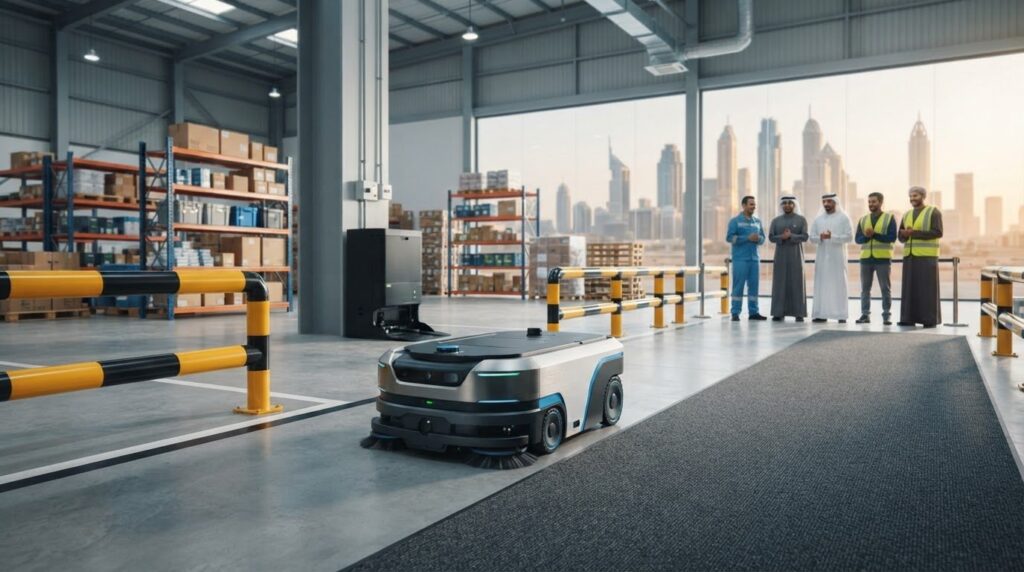
Modern systems aren’t just simple vacuum units; they’re sophisticated ecosystems. An Autonomous mobile robot (AMR) equipped with multi-modal sensor arrays provides a multifaceted solution that adapts to real-time environmental changes. These units utilize SLAM (Simultaneous Localization and Mapping) to navigate around dynamic obstacles, ensuring that cleaning protocols are demand-driven rather than tethered to rigid, inefficient manual schedules. By moving away from static janitorial cycles, mall operators can address spills and dust ingress immediately, maintaining a pristine floor surface even during the highest footfall periods.
Challenges of Manual Maintenance in Mega-Malls
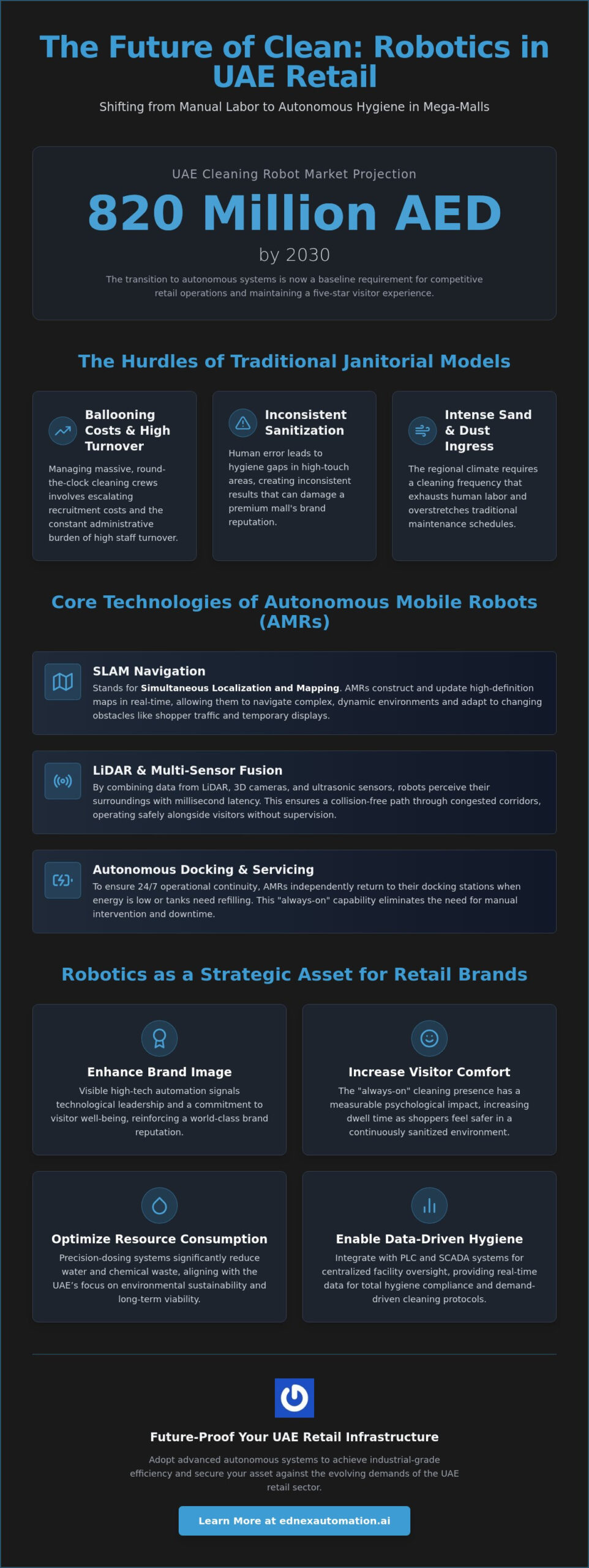
Maintaining a multi-million square foot footprint presents logistical hurdles that traditional janitorial models can’t realistically solve. Human error often leads to inconsistent sanitization, creating hygiene gaps in high-touch areas that can damage a mall’s reputation. Managing massive cleaning crews across round-the-clock cycles involves ballooning recruitment costs and the administrative burden of high staff turnover. Along with this, the regional climate introduces intense sand and dust ingress, requiring a frequency of cleaning that exhausts human labor. Manual chemical handling in public-facing zones also introduces health and safety risks for both employees and visitors, particularly during peak weekend hours when congestion is highest.
Robotics as a Strategic Asset for Retail Brands
Deploying visible, high-tech automation serves as a powerful signal of technological leadership and a commitment to visitor well-being. Visitors in the UAE expect a world-class experience; the presence of autonomous systems reinforces a brand’s status as a visionary entity. This “always-on” cleaning presence has a measurable psychological impact, increasing visitor comfort and dwell time as shoppers feel safer in a continuously sanitized environment. As malls increasingly evolve into entertainment destinations, the availability of high-quality digital services like Nexys further complements this modern visitor experience. Beyond aesthetics, these robots optimize resource consumption. They align with the UAE’s national focus on environmental sustainability by using precision-dosing systems that significantly reduce water and chemical waste. This data-driven approach ensures every liter of water is utilized with maximum efficiency, supporting long-term business viability.
Technical Capabilities of Autonomous Cleaning AMRs for Retail
The technical sophistication of robotic cleaning for shopping malls UAE relies on a synergy of high-precision sensors and intelligent processing. This intelligence is powered by robust software architecture, often developed by specialists like LuxNeva who focus on AI-driven applications and digital solutions. Unlike basic automated sweepers, these units function as sophisticated IoT nodes that perceive and react to their environment with millisecond latency. Utilizing LiDAR and SLAM technology, they construct high-definition maps of the retail floor in real-time. This capability allows them to operate safely alongside shoppers, navigating the ebb and flow of foot traffic without human supervision. By employing multi-sensor fusion, these machines combine data from 3D cameras, ultrasonic sensors, and tactile bumpers to ensure a collision-free path through even the most congested corridors.
Modern autonomous mobile robots feature modular designs to address specific hygiene challenges within the UAE’s unique environment. Industrial-grade floor scrubbers are engineered to handle heavy sand ingress and dust accumulation, while specialized UV-C disinfection modules can be deployed for high-touch surfaces in restrooms and food courts. These systems prioritize operational continuity through autonomous docking stations. When energy levels deplete or water tanks require servicing, the robot independently returns to its base for charging and waste-water exchange. This level of autonomy ensures 24/7 availability, allowing facility managers to maintain prestige standards without manual intervention.
Aligning with global trends in retail robotics, UAE mall operators are increasingly viewing these machines as critical data-gathering assets. As you evaluate the shift toward intelligent facility management, reviewing the capabilities of modern autonomous cleaning robots provides a clear perspective on the future of retail hygiene.
Navigation and Safety in Dynamic Retail Environments
Ensuring safety in high-traffic commercial zones requires more than simple obstacle avoidance. These robots utilize predictive pathfinding algorithms to adjust cleaning patterns based on real-time footfall density. If a temporary kiosk or promotional display is erected, the system’s 3D cameras immediately update the internal map to prevent navigation errors. Every unit is equipped with fail-safe mechanisms and emergency stop protocols that meet international safety standards, providing peace of mind in high-security environments where shopper safety is the primary mandate.
Data-Driven Hygiene and Fleet Reporting
A significant advantage of robotic integration is the move toward transparent, verifiable hygiene. Fleet management software generates real-time heatmaps that visualize cleaned areas and identify missed zones for manual follow-up. These systems integrate with cloud platforms, allowing centralized monitoring of multiple units across different levels or locations. Automated compliance logging simplifies health audits and regional regulatory reporting, providing mall operators with the empirical data needed to prove adherence to UAE hygiene standards. This transition from “perceived clean” to “data-verified clean” represents the new benchmark for retail excellence.
Holistic Maintenance: Integrating Indoor and Outdoor Cleaning Solutions
Achieving a truly pristine retail environment requires extending hygiene protocols far beyond the main concourse. In the UAE, the battle against sand ingress begins at the perimeter, necessitating a strategy that addresses every entry point. Effective robotic cleaning for shopping malls UAE must incorporate specialized outdoor units to intercept debris before it reaches the interior glass doors. By deploying outdoor cleaning robots across parking structures and transit walkways, facility managers create a defensive hygiene barrier. This coordinated approach ensures that the visitor journey remains seamless from the moment they exit their vehicle to the time they enter a luxury boutique.
Coordinating indoor and outdoor units requires a high-level technical framework that views the mall as a single, interconnected ecosystem. When these systems operate in silos, the efficiency gains of automation are often lost to logistical gaps. A unified maintenance ecosystem ensures that exterior sweepers and interior scrubbers work in tandem, preventing the cross-contamination of dust and allergens. This holistic perspective is essential for maintaining the prestige standards expected in the region’s premium retail destinations.
Outdoor Cleaning Automation for Mall Perimeters
Outdoor cleaning robots are engineered to withstand the regional climate’s extreme heat and humidity. These weather-resistant units autonomously patrol parking decks and exterior plazas, removing the heavy dust loads that typically migrate indoors via foot traffic. Aggressive exterior maintenance significantly reduces the strain on indoor filtration systems and floor scrubbers. These robots are not merely standalone tools; they’re the first line of defense in a unified facility ecosystem designed for high-traffic resilience. By mitigating sand ingress at the source, operators protect their interior assets and reduce the frequency of deep-cleaning cycles.
SCADA Integration for Intelligent Facility Management
The true power of automation is realized when fleet operations are centralized. Leveraging PLC and SCADA integration services, mall operators can oversee their entire robotic infrastructure through a single, unified dashboard. This connectivity enables intelligent triggering of cleaning cycles based on real-time environmental data. For instance, increased restroom traffic or a sudden spike in food court occupancy can automatically dispatch autonomous mobile robots to high-impact zones. Linking these units to predictive maintenance schedules ensures that the fleet remains operational without the risk of unexpected downtime. The strategic implementation of robotic cleaning for shopping malls UAE relies on this high-level integration to transform individual machines into a responsive, data-driven workforce.
Operational Implementation: ROI and Lifecycle Management
Transitioning to an automated hygiene model requires a rigorous operational framework that prioritizes fiscal transparency and long-term asset viability. Implementing robotic cleaning for shopping malls UAE is a strategic investment that replaces unpredictable labor costs with a fixed, data-driven operational model. Conducting a comprehensive technical audit of the facility allows operators to map high-impact zones where sand ingress and foot traffic density are highest. By identifying these critical areas, managers can deploy resources with surgical precision, ensuring that the most visible parts of the mall remain pristine throughout the day.
Developing a phased rollout strategy minimizes disruption to retail tenants and visitors while allowing for technical fine-tuning. Managers can introduce units to specific wings during low-traffic periods, ensuring the navigation systems refine their SLAM maps before full-scale integration. This controlled deployment guarantees that the transition to a tech-first environment is seamless and professional. By reallocating human labor to complex sanitization tasks that require manual dexterity, such as cleaning intricate glass displays or escalator handrails, operators maximize the productivity of their entire workforce.
Calculating ROI in the Retail Context
Evaluating the financial impact of automation goes beyond simple headcount reduction. True ROI factors in the drastic reduction of water and chemical waste, which often amounts to substantial annual savings in large-scale UAE facilities. Additionally, the value of uptime is significant. Robots enable continuous cleaning during peak hours without blocking traffic or requiring breaks, maintaining a consistent standard that manual teams struggle to match. ROI in robotic cleaning is defined as the net value derived by comparing the initial CAPEX and maintenance costs against the projected five-year OpEx savings generated through reduced labor overhead and resource optimization. To begin your financial transition, you can consult with our technical specialists to develop a bespoke implementation roadmap.
Staff Training and Human-Robot Collaboration
Success in the era of Industry 4.0 depends on the synergy between human intelligence and machine precision. Upskilling existing janitorial staff is a critical step in this evolution, transforming traditional cleaners into fleet supervisors and technical managers. These team members transition from manual labor to overseeing the deployment and health of autonomous cleaning robots. Establishing clear collaboration protocols ensures that human teams focus on high-touch customer service roles while the robots handle repetitive, large-scale floor care. This cultural shift fosters a more professional, tech-savvy workforce that’s better equipped for the future of UAE retail infrastructure.
The EdNex Advantage: Future-Proofing UAE Retail Infrastructure
Positioning EdNex Automation as a visionary pioneer in Industry 4.0, our approach to retail automation transcends simple equipment procurement. We provide a comprehensive technical framework for robotic cleaning for shopping malls UAE that ensures every autonomous unit functions as a synchronized component of the facility’s digital nervous system. By leveraging strategic alliances with global technology leaders, we deliver certified, high-performance solutions that are specifically optimized for the rigorous environmental and operational demands of the Emirates. This authoritative standing allows us to act as a bridge-builder, connecting global breakthroughs with the specific needs of regional mall operators.
Delivering bespoke integration services remains a cornerstone of our philosophy. We recognize that every retail destination possesses a unique architectural and technical footprint that requires a tailored approach. Our engineering teams ensure that robotics work in harmony with existing mall systems, from elevator controls to automated access points, creating a seamless operational flow. This level of technical depth distinguishes EdNex Automation as a grounded, reliable partner capable of managing the gravity of large-scale industrial transformation while maintaining the highest standards of safety and efficiency.
A Visionary Approach to Retail Automation
Bridging the gap between global technological breakthroughs and regional commercial needs, EdNex Automation acts as a systematic organizer in complex retail environments. We don’t just provide tools; we deliver the intellectual framework necessary for successful automation. Our commitment to long-term business viability is reflected in our scalable robotic ecosystems, which allow mall operators to expand their automated fleet as their infrastructure evolves. This forward-looking perspective positions our partners at the cutting edge of innovation, ensuring they remain competitive in an increasingly automated regional economy.
Partnering for Large-Scale Transformation
Engaging with EdNex Automation means securing full-service support that spans the entire lifecycle of the automation project. Our methodology focuses on delivering measurable results through a structured implementation process. Our comprehensive support includes:
- Conducting detailed technical audits to determine optimal deployment zones and high-impact areas.
- Facilitating seamless integration with centralized SCADA and Building Management Systems for total oversight.
- Ensuring total compliance with UAE national safety standards and regional building codes for autonomous operation.
- Providing ongoing system optimization and technical monitoring to maintain peak operational efficiency.
As the UAE retail sector moves toward mandatory technological integration, the choice of a technical partner becomes a defining factor in long-term operational success. Scheduling a technical consultation for mall-wide automation is the first step toward securing your facility’s future and optimizing your hygiene protocols. By choosing EdNex Automation, you’re not just acquiring autonomous cleaning robots; you’re investing in a sophisticated, future-proof infrastructure designed for the next generation of retail excellence.
Securing Retail Leadership Through Autonomous Innovation
Adopting robotic cleaning for shopping malls UAE isn’t just a futuristic concept; it’s a fundamental shift toward data-verified hygiene and operational resilience. By integrating autonomous mobile robots into your facility’s SCADA framework, you transition from reactive manual cycles to a demand-driven ecosystem that protects brand reputation while optimizing resource consumption. This strategic evolution ensures that your retail asset remains competitive within the UAE’s rapidly advancing digital landscape. Maintaining a five-star visitor experience now depends on the seamless synergy between human oversight and machine precision.
As a specialized division of the EdNex group focused on Industry 4.0, we provide the technical expertise necessary to bridge global breakthroughs with regional commercial needs. Our deep experience in PLC, SCADA, and AMR integration, supported by global technology alliances, ensures your mall receives a certified, high-performance solution with full national coverage across the UAE. Partner with EdNex Automation for your mall’s digital transformation to achieve industrial-grade efficiency and a measurable return on investment. The future of retail hygiene is autonomous, and we’re ready to help you lead that transformation.
Frequently Asked Questions
Are cleaning robots safe to use in crowded malls during peak shopping hours?
Yes, autonomous units are engineered for safety in high-density environments. Utilizing a combination of LiDAR and 3D depth cameras, these robots perceive dynamic obstacles with millisecond latency to ensure they navigate around shoppers and temporary kiosks without incident. They adhere to international safety standards such as IEC 63327, making robotic cleaning for shopping malls UAE a secure choice for daytime operations in prestigious retail spaces.
How do robotic cleaning systems handle different types of flooring like marble and polished stone?
These systems feature intelligent brush pressure controls and precision chemical dosing tailored for delicate surfaces. Whether managing high-gloss marble or polished granite, the robots adapt their cleaning parameters to prevent abrasion while maintaining a mirror-like finish. This bespoke approach protects the massive capital investment in mall flooring while ensuring consistent hygiene across expansive, multi-level footprints.
Can these robots be integrated with existing mall Building Management Systems (BMS)?
Integration is fully achievable through advanced PLC and SCADA protocols. By connecting the robotic fleet to a central Building Management System, operators can trigger cleaning cycles based on real-time occupancy data or sensor inputs from high-traffic zones. This connectivity transforms standalone machines into a responsive, facility-wide hygiene network that aligns with Industry 4.0 standards and regional smart-city initiatives.
What is the typical battery life and charging protocol for a mall-grade cleaning robot?
Industrial cleaning robots typically offer four to six hours of continuous operation per charge depending on the cleaning mode. They utilize autonomous docking stations for “opportunity charging,” returning to base independently when power levels reach a predefined threshold. This ensures the fleet remains available for 24/7 duty cycles without requiring manual intervention for energy management or water exchange.
How do autonomous cleaning robots handle elevators or multiple mall levels?
Modern AMRs navigate multiple levels by integrating directly with IoT-enabled elevator systems. Utilizing secure wireless communication, the robot calls the lift, selects the target floor, and exits autonomously once the doors open. This capability is essential for the multi-level retail structures common in Dubai and Abu Dhabi, allowing a single unit to service diverse zones without human assistance.
What happens if a robot encounters a liquid spill or a hazardous material in the food court?
Advanced sensors allow the robot to identify anomalies such as large liquid spills or hazardous debris immediately. Depending on the specific configuration, the unit can either initiate a localized deep-clean mode or pause operation to alert a human supervisor via a cloud-based dashboard. This proactive response prevents slip-and-fall accidents and ensures rapid resolution in high-risk areas like food courts or restroom entrances.
How much water and chemical solution can be saved by switching to robotic scrubbers?
Switching to autonomous scrubbers can reduce water and chemical consumption significantly compared to manual mopping or traditional ride-on scrubbers. These machines utilize precise filtration and recycling systems to maximize the utility of every liter. This efficiency supports the UAE’s national sustainability initiatives while delivering a measurable reduction in operational expenses for large-scale retail assets through resource optimization.
What is the expected lifespan of an industrial cleaning robot in a 24/7 mall environment?
The expected lifespan of a mall-grade cleaning robot is generally five to seven years when supported by a rigorous maintenance schedule. Achieving this longevity requires regular software updates and hardware inspections to ensure the navigation and cleaning modules remain at peak performance. This long-term durability is a critical factor in calculating the total cost of ownership for robotic cleaning for shopping malls UAE.