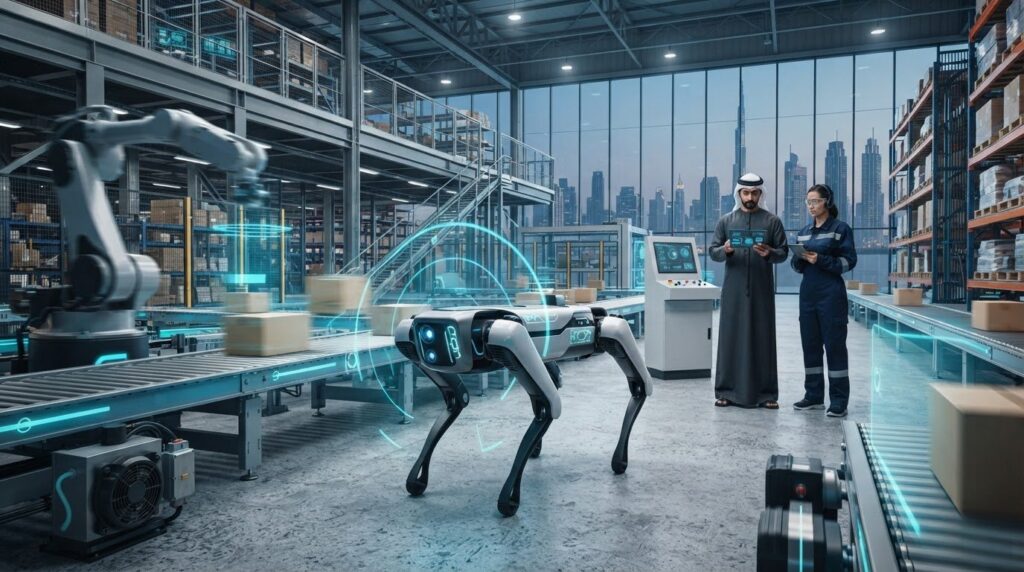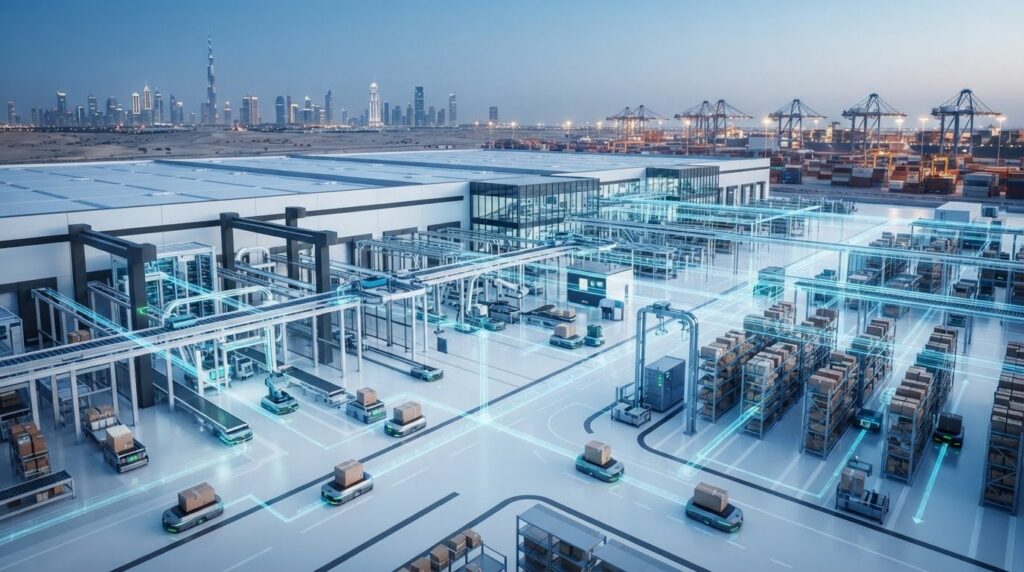
Manual industrial inspection in hazardous zones is no longer a necessary risk but a legacy liability that forward-thinking enterprises can no longer afford. You likely recognize that human-led audits often result in inconsistent data quality and prohibitive operational costs; this is particularly evident when monitoring the vast, inaccessible infrastructure typical of the Emirates’ energy and manufacturing sectors. Deploying sophisticated robotic inspection solutions UAE represents the strategic pivot required to transition from reactive maintenance to a state of total industrial autonomy. By integrating these intelligent systems, your organization can achieve zero-risk inspection environments while maintaining real-time asset health monitoring through high-fidelity digital twins. This 2026 guide explores the rapidly evolving landscape of autonomous systems, detailing how to align your operations with UAE safety regulations and the “Operation 300bn” initiative to secure long-term competitive viability. We’ll examine the integration of autonomous mobile robots and surveillance units as critical data-nodes within your existing industrial control architecture, ensuring your facility remains at the cutting edge of global innovation.
Key Takeaways
- Learn how the synergy between LiDAR mapping and AI-driven anomaly detection facilitates high-precision monitoring of complex industrial assets.
- Discover why deploying robotic inspection solutions UAE is the most effective method for achieving zero-risk environments in hazardous or inaccessible work zones.
- Understand the technical necessity of integrating inspection robotics with existing PLC and SCADA infrastructure to ensure seamless, real-time data flow.
- Explore the transition from traditional reactive maintenance to proactive, data-driven asset management strategies tailored for the UAE’s industrial landscape.
- Gain insights into the consultative framework required to successfully implement start-to-finish industrial automation and long-term operational viability.
The Strategic Shift to Robotic Inspection Solutions in the UAE
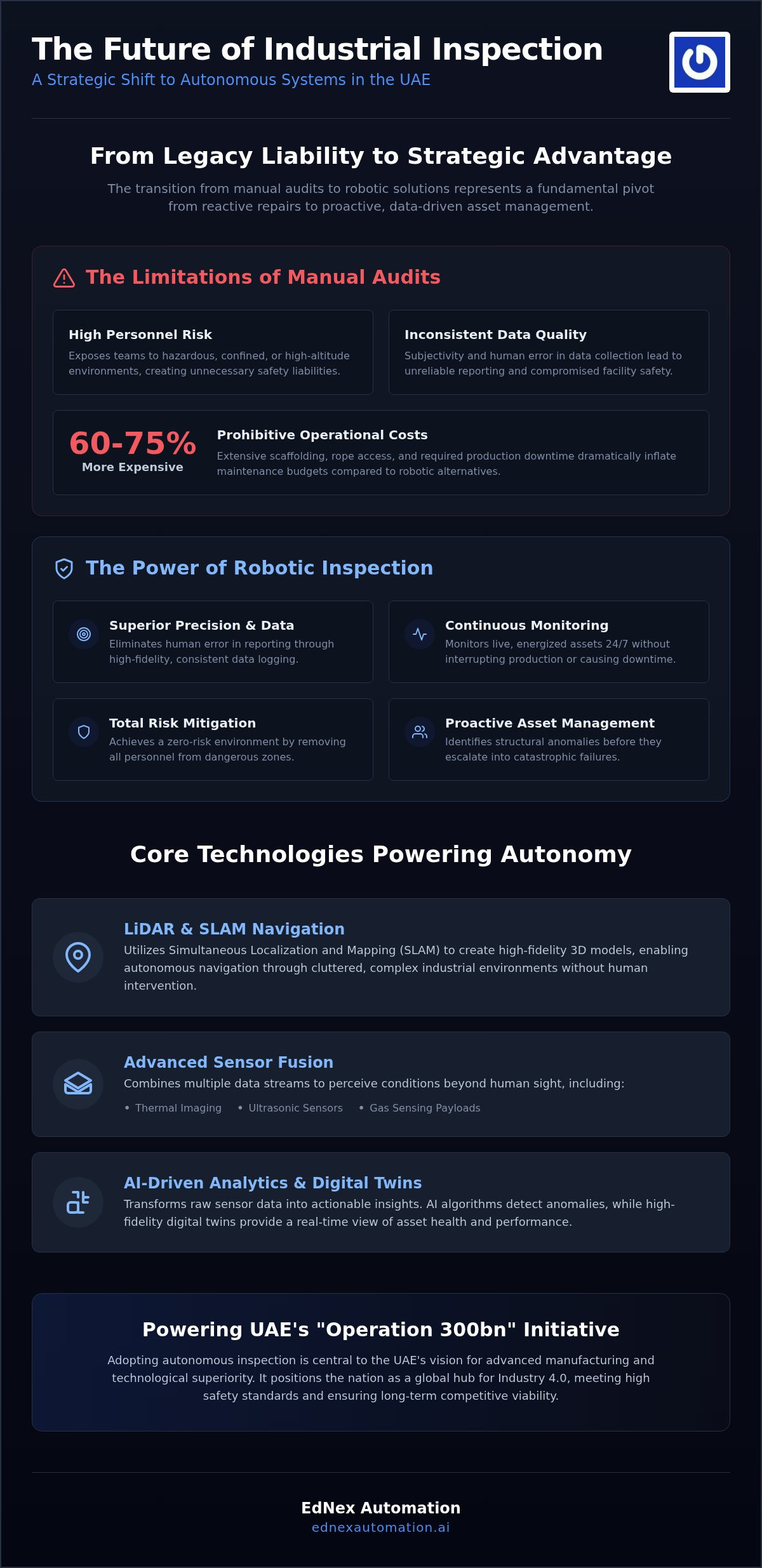
Leading the charge toward industrial autonomy, the integration of high-fidelity sensors and machine learning has transformed the industrial robot into a vital tool for continuous asset monitoring. This strategic transition represents a departure from reactive maintenance cycles, which historically relied on after-the-fact repairs and periodic, manual checks. By deploying robotic inspection solutions UAE, facility managers establish a proactive, data-driven framework that identifies structural anomalies before they escalate into catastrophic failures. This intelligence-led approach ensures that complex infrastructure remains resilient, providing a grounded technical foundation for large-scale industrial transformation.
Addressing the Limitations of Manual Audits
Traditional manual audits are increasingly viewed as a legacy liability due to their inherent risks and high operational costs. Human-led data collection frequently suffers from subjectivity, leading to inconsistent reporting that can compromise the safety of the entire facility. Beyond data quality, manual processes often require extensive scaffolding or rope access, which can be 60-75% more expensive than drone-based or robotic alternatives. Utilizing autonomous systems allows operators to achieve:
- Superior precision in data logging, effectively eliminating human error in reporting.
- Continuous monitoring of live, energized assets without interrupting production or causing downtime.
- Total risk mitigation by removing personnel from confined spaces, high-altitude zones, or toxic environments.
The Role of Inspection in UAE’s Industrial Vision
The UAE’s “Operation 300bn” initiative mandates a rapid shift toward advanced manufacturing and technological superiority. Adopting robotic inspection solutions UAE is central to this vision, positioning the nation as a global hub for Industry 4.0. This national strategy doesn’t just encourage innovation; it sets a high bar for compliance with regional safety and environmental standards. Organizations that implement these autonomous systems demonstrate a commitment to long-term business viability and official certification requirements. It’s a calculated move that connects regional industrial goals with global technological breakthroughs, ensuring the Emirates remains at the cutting edge of industrial efficiency and safety.
Core Technologies Powering Autonomous Industrial Inspection
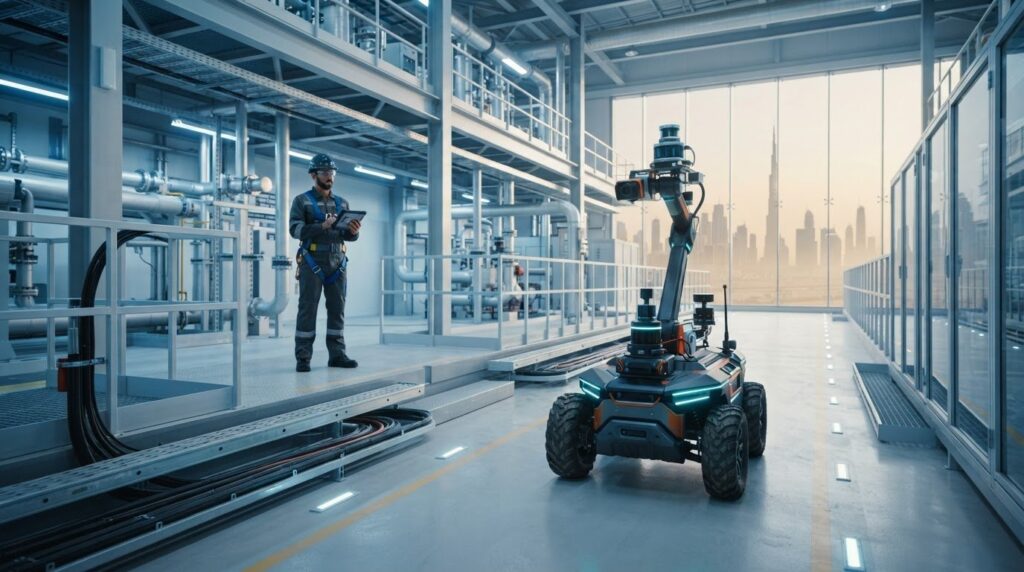
Achieving full industrial autonomy requires a sophisticated technological architecture that transcends basic camera feeds. By combining high-definition visual sensors with LiDAR mapping, modern robotic inspection solutions UAE create high-fidelity 3D spatial models of complex industrial environments. These systems utilize simultaneous localization and mapping (SLAM) to navigate cluttered refinery floors or vast logistics hubs without human intervention. To ensure immediate responsiveness, edge computing modules process sensor data on-board, allowing for instantaneous decision-making that avoids the latency of cloud-only architectures. This localized intelligence is what differentiates a simple remote-controlled tool from a truly autonomous asset.
Sensor Fusion: Beyond Simple Visuals
Relying on multiple data streams allows these robots to perceive what the human eye cannot. Thermal imaging payloads detect minute temperature variances, identifying potential electrical faults or insulation leaks before they trigger a system shutdown. In sectors like oil and gas, ultrasonic sensors measure material thickness and subsurface corrosion with sub-millimeter precision. Integrating gas sensing payloads further enhances safety by monitoring for volatile organic compounds or hazardous leaks in real-time. For organizations seeking to implement these advanced capabilities, partnering with a specialized automation consultant ensures that the hardware is precisely calibrated for specific regional environmental challenges.
AI-Driven Analytics and Digital Twins
The true value of autonomous inspection lies in transforming raw sensor data into actionable maintenance insights. Artificial intelligence algorithms analyze thousands of data points per second to identify anomalies that deviate from established baselines. This process facilitates the creation of live digital twins, providing facility managers with a comprehensive, real-time mirror of their physical assets. These digital models streamline regulatory compliance by automatically generating audit trails and detailed reports that meet UAE industrial standards. By bridging the gap between ground-based AMRs and aerial drones within a single data ecosystem, these solutions provide a holistic view of asset integrity that standalone systems simply cannot replicate.
Strategic Applications Across the UAE Industrial Landscape
Deploying robotic inspection solutions UAE across diverse economic sectors requires a nuanced understanding of regional infrastructure and environmental stressors. In the oil and gas sector, autonomous units monitor offshore platforms and subsea pipelines, identifying corrosion and structural fatigue without risking human divers. These specialized robots perform high-precision scanning of storage tanks, ensuring compliance with local safety standards while significantly reducing inspection-related downtime. By replacing manual rope-access methods with autonomous climbing units, facility managers can maintain a continuous overview of asset integrity in challenging environments, while still utilizing specialized mobile platforms from Cherry Pickers Global for necessary manual repairs.
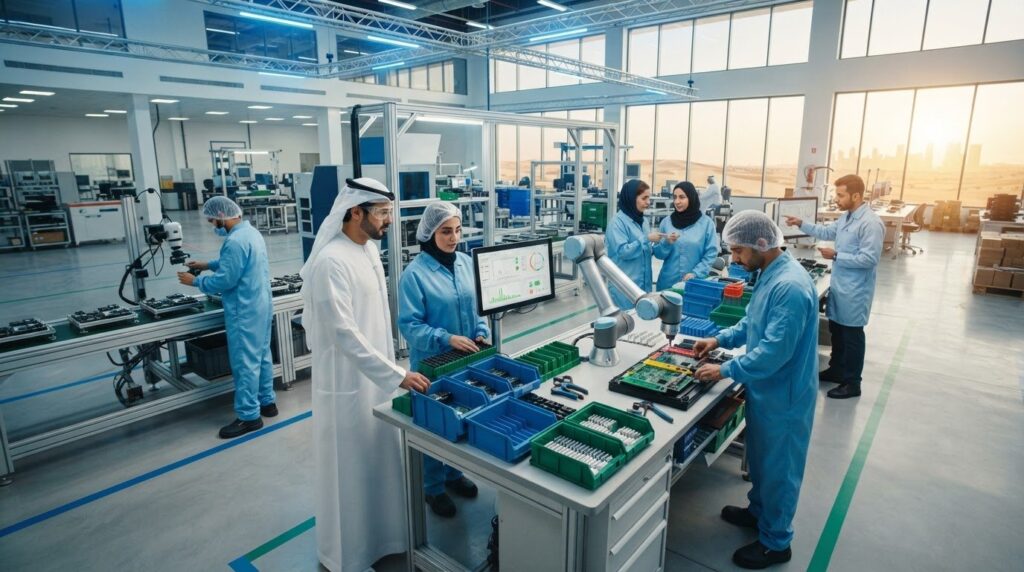
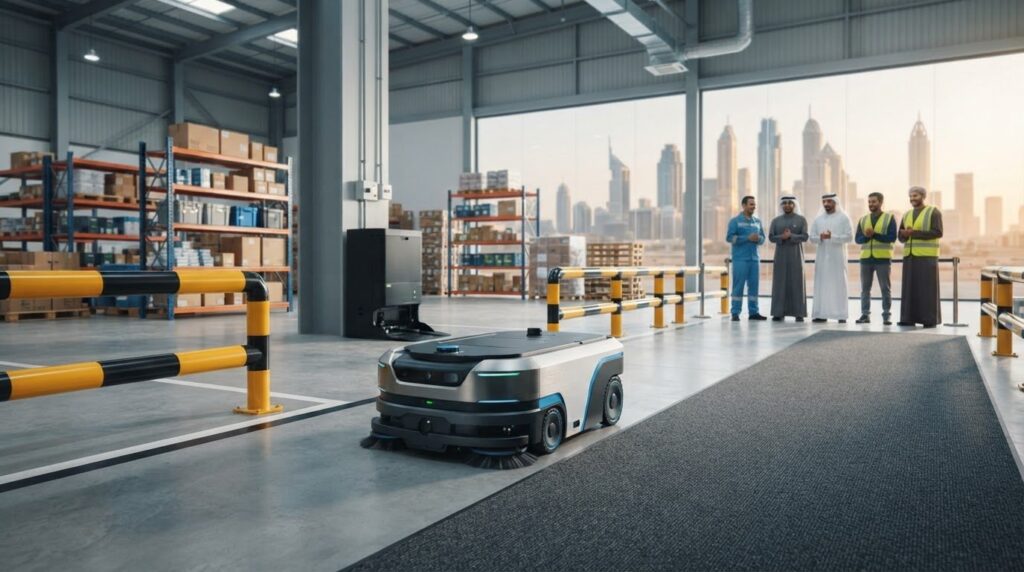
Within the manufacturing sector, integrating collaborative robots UAE allows for continuous quality control on the assembly line, where cobots work alongside technicians to verify component integrity. Similarly, the logistics industry utilizes autonomous mobile robots to ensure the structural safety of massive automated storage and retrieval systems. These units navigate dense racking environments to detect misalignments or mechanical wear, preventing catastrophic system failures in high-throughput distribution hubs. For civil infrastructure, autonomous systems are now deployed for bridge and tunnel inspections, utilizing LiDAR to map structural shifts that are often invisible to the naked eye.
Energy and Utilities Inspection
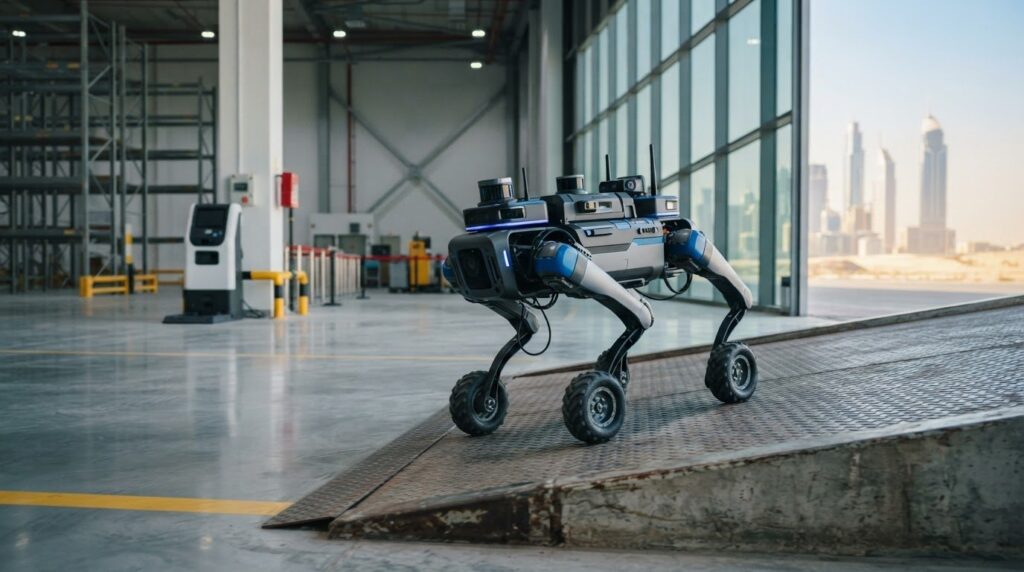
The UAE’s commitment to renewable energy has accelerated the adoption of autonomous mobile platforms for solar farm monitoring. These systems conduct thermal audits across thousands of photovoltaic panels, identifying hotspots that indicate cell degradation or dust accumulation. For the utilities sector, autonomous units perform substation inspections and power grid audits, utilizing thermal sensors to prevent overheating and potential blackouts. In high-radiation zones of nuclear facilities, specialized inspection robots provide a vital layer of safety, gathering critical data where human presence is physically impossible.
Large-Scale Facility Surveillance
Integrating Inspection Robotics with PLC and SCADA Infrastructure
Eliminating the technical friction between mobile hardware and fixed control systems is the final frontier of industrial autonomy. While many organizations deploy robotic inspection solutions UAE as isolated tools, this fragmented approach inevitably creates data silos that hinder real-time responsiveness. True operational intelligence is only achieved when autonomous robots function as integrated nodes within the broader industrial control architecture. By establishing a direct link between robotic sensors and the factory’s PLC (Programmable Logic Controller) layer, facility managers can transform passive data collection into active, automated interventions. Utilizing professional PLC and SCADA integration services ensures that when a robot detects a thermal anomaly or structural defect, the system can automatically adjust process parameters or trigger emergency safety protocols without human delay.
The Integration Workflow
Establishing a seamless integration workflow begins with selecting secure communication protocols that bridge the gap between robotic operating systems and legacy industrial hardware. Mapping inspection alerts directly to SCADA alarm management systems allows for a unified dashboard view, centralizing data for executive-level decision support. This hierarchical flow ensures that every data point gathered by an autonomous fleet contributes to a comprehensive overview of facility health. To begin your journey toward a unified industrial ecosystem, contact our experts at EdNex Automation for a bespoke integration roadmap.
Cybersecurity in Robotic Networks
Protecting the integrity of robotic data streams is paramount as industrial networks become increasingly interconnected. Implementing a zero-trust architecture for autonomous fleets ensures that every device and data packet is verified before gaining access to the core network. This security-first approach involves deploying robust encryption for all wireless communications between robots and control rooms, mitigating the risk of external interference. By hardening these digital pathways, organizations can confidently scale their autonomous operations while maintaining full compliance with UAE’s stringent industrial cybersecurity standards. This methodical focus on data security frames autonomous systems not just as a current acquisition, but as a necessary evolution for long-term business viability.
EdNex Automation: Your Strategic Partner for Inspection Transformation
Transitioning toward a fully autonomous industrial ecosystem requires more than just the acquisition of advanced hardware; it demands a comprehensive intellectual framework for implementation. Positioned as a visionary industry leader, EdNex Automation acts as a high-level consultant that bridges the gap between global technological breakthroughs and the specific requirements of the regional industrial landscape. We don’t merely supply tools. We provide the technical expertise necessary to integrate robotic inspection solutions UAE into your core operational fabric, ensuring that every deployment serves as a critical data-node within your facility. Our consultative approach focuses on the transformative power of intelligence-led systems to solve complex challenges, from risk mitigation to the optimization of large-scale infrastructure.
Leveraging a diverse portfolio that includes specialized inspection units and autonomous mobile robots, we offer end-to-end expertise that spans from initial hardware selection to custom system integration. Our engineering-minded team understands the gravity of large-scale industrial transformation, providing the steady, methodical oversight required for successful adoption. By aligning our robotic inspection solutions UAE with your specific business outcomes, we ensure that your investment delivers measurable improvements in safety and precision. Beyond the initial setup, we provide ongoing technical support and system optimization to maintain long-term ROI and operational resilience.
Bespoke Integration Solutions
Recognizing that every industrial environment presents unique challenges, we specialize in customizing robotic payloads to meet specific sensory and mobility requirements. Whether you’re navigating the high-heat environments of a refinery or the dense racking of a logistics hub, we provide the bespoke engineering necessary for success. Our team excels at upgrading legacy systems with modern autonomy, allowing organizations to modernize their infrastructure without the need for a complete overhaul. As your operational demands grow, our scalable fleet management solutions ensure that your robotic workforce evolves alongside your business needs.
Regional Expertise and Global Standards
Grounding our high-tech aspirations in a clear geographic context, we maintain a deep understanding of the UAE’s industrial economic territory and its evolving regulatory landscape. Our alliances with global technology leaders and our commitment to official certification status serve as markers of legitimacy, reassuring our partners of a reliable and methodical approach. By aligning your automation strategy with national initiatives like “Operation 300bn,” we help you secure a future-proof foundation for competitive growth. This full-service approach frames our partnership not just as a current acquisition, but as a necessary evolution for any organization wishing to remain a leader in the global industrial arena.
Securing Long-Term Viability through Industrial Autonomy
Transitioning to an autonomous framework is no longer a choice but a necessity for organizations seeking to maintain a competitive edge in the Emirates’ industrial landscape. By adopting advanced robotic inspection solutions UAE, you move beyond the limitations of manual audits and embrace a future defined by zero-risk environments and real-time asset health monitoring. Integrating these systems with your existing PLC and SCADA infrastructure ensures that every data point translates into actionable intelligence, effectively future-proofing your operations against mechanical failure and regulatory non-compliance.
As a strategic Industry 4.0 advisor and a certified regional partner for global robotics brands, EdNex Automation provides the intellectual framework and full-service PLC/SCADA integration required for a seamless transition. We don’t just supply hardware; we act as a grounded technical partner dedicated to your long-term success. Partner with EdNex Automation for your robotic inspection transformation to optimize your facility’s efficiency and safety. Let’s build a more resilient industrial future together.
Frequently Asked Questions
What are the primary benefits of robotic inspection over manual methods in the UAE?
Robotic inspection solutions UAE eliminate human error and safety risks in hazardous zones. Beyond protecting personnel, these systems provide high-fidelity data that manual audits cannot replicate. By utilizing autonomous units, facilities reduce operational downtime and inspection costs significantly. This transition ensures continuous compliance with UAE safety regulations while maintaining a clear, digital record of asset health for long-term audit trails and predictive maintenance strategies.
Can robotic inspection solutions integrate with my existing SCADA system?
Autonomous inspection systems are designed to integrate seamlessly with existing SCADA and PLC infrastructure. This connectivity allows robotic sensors to trigger automated responses or process adjustments directly within the control layer. Bridging the gap between mobile hardware and fixed systems eliminates data silos, providing facility managers with a unified dashboard for real-time decision support. Professional integration ensures that every anomaly detected is immediately logged and prioritized by the central management system.
How do inspection robots handle the extreme temperatures of the UAE industrial environment?
Industrial robots deployed in the UAE feature specialized thermal management systems and high IP ratings to withstand extreme heat and dust. Many robotic inspection solutions UAE are engineered with active cooling or heat-resistant materials that allow for continuous operation in temperatures exceeding 50 degrees Celsius. These hardware specifications ensure reliability in desert environments and high-heat manufacturing zones. Selecting robots with localized environmental certifications is essential for maintaining operational integrity during peak summer months.
What industries in the UAE benefit most from autonomous inspection?
The oil and gas, energy, and manufacturing sectors derive the most significant benefits from autonomous inspection. In the energy sector, solar farms utilize autonomous platforms for thermal audits of photovoltaic panels to identify cell degradation. Manufacturing facilities implement collaborative robots for quality control on assembly lines. Additionally, the logistics sector uses mobile units to monitor the structural integrity of automated storage and retrieval systems, ensuring high-throughput reliability in regional distribution hubs.
Is it possible to use inspection robots for non-destructive testing (NDT)?
Robotic platforms are highly effective for non-destructive testing, utilizing ultrasonic sensors to measure material thickness and subsurface corrosion. These systems can also carry thermal imaging and gas sensing payloads to identify leaks or overheating without damaging the asset. By automating NDT, organizations achieve consistent, high-precision measurements that are difficult to attain manually. This capability is particularly vital for monitoring pipelines and storage tanks in the UAE’s energy and utility sectors.
What is the typical ROI for implementing a robotic inspection system?
Implementing a robotic inspection system typically yields a rapid return on investment through reduced labor costs and minimized facility downtime. Organizations often see a reduction in inspection-related expenses by 60-70% when replacing traditional rope-access or scaffolding methods. Beyond direct cost savings, the predictive maintenance capabilities enabled by real-time data extend asset lifespan and reduce the frequency of catastrophic failures. This long-term business viability is a core driver for automation adoption in the region.
How do autonomous mobile robots navigate complex industrial sites?
Autonomous mobile robots navigate complex industrial sites using a combination of LiDAR mapping and SLAM technology. These systems create 3D spatial models in real-time, allowing the robot to detect and avoid obstacles without human intervention. Sensor fusion combines visual data with depth sensing to ensure precise localization in cluttered or changing environments. This high-tech navigation capability is essential for patrolling vast infrastructure or navigating dense manufacturing floors with absolute reliability and safety.
What cybersecurity measures are necessary for robotic inspection networks?
Protecting robotic inspection networks requires a multi-layered cybersecurity strategy centered on zero-trust architecture. All data streams between the autonomous units and the central control room must be encrypted to prevent external interference. Implementing secure communication protocols and regular firmware updates hardens the system against potential vulnerabilities. These measures ensure that critical industrial data remains confidential and that robotic fleets operate within the secure boundaries of the organization’s existing digital infrastructure.