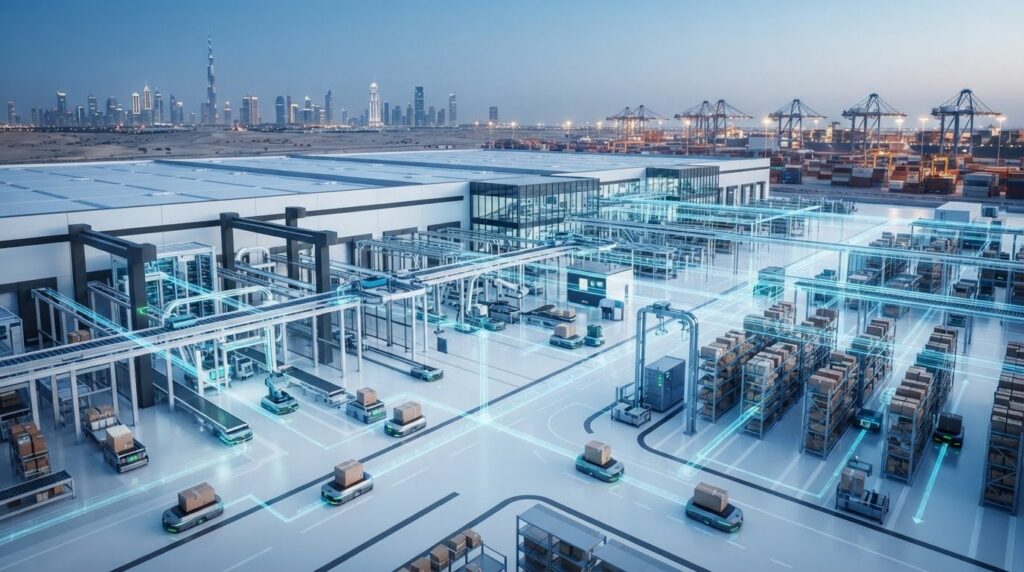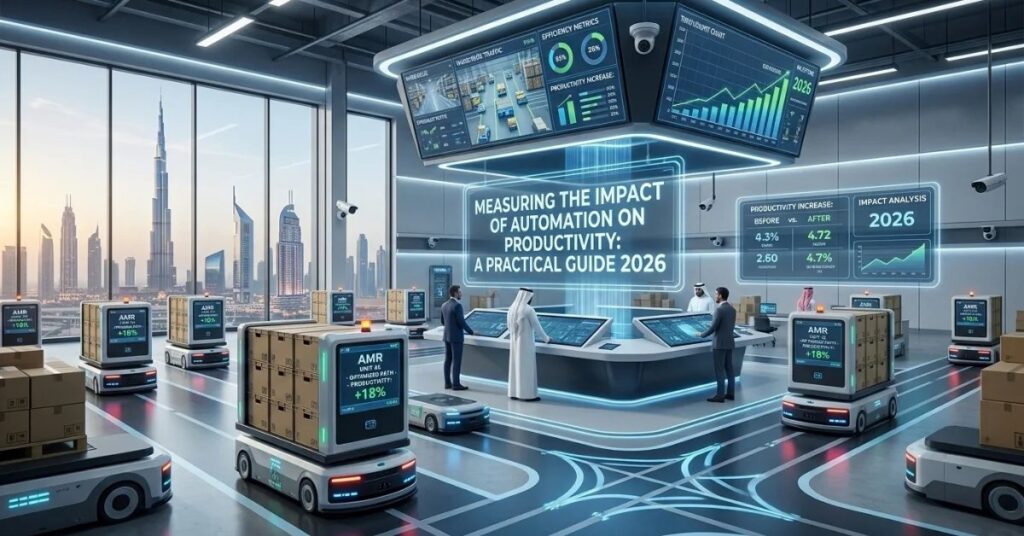
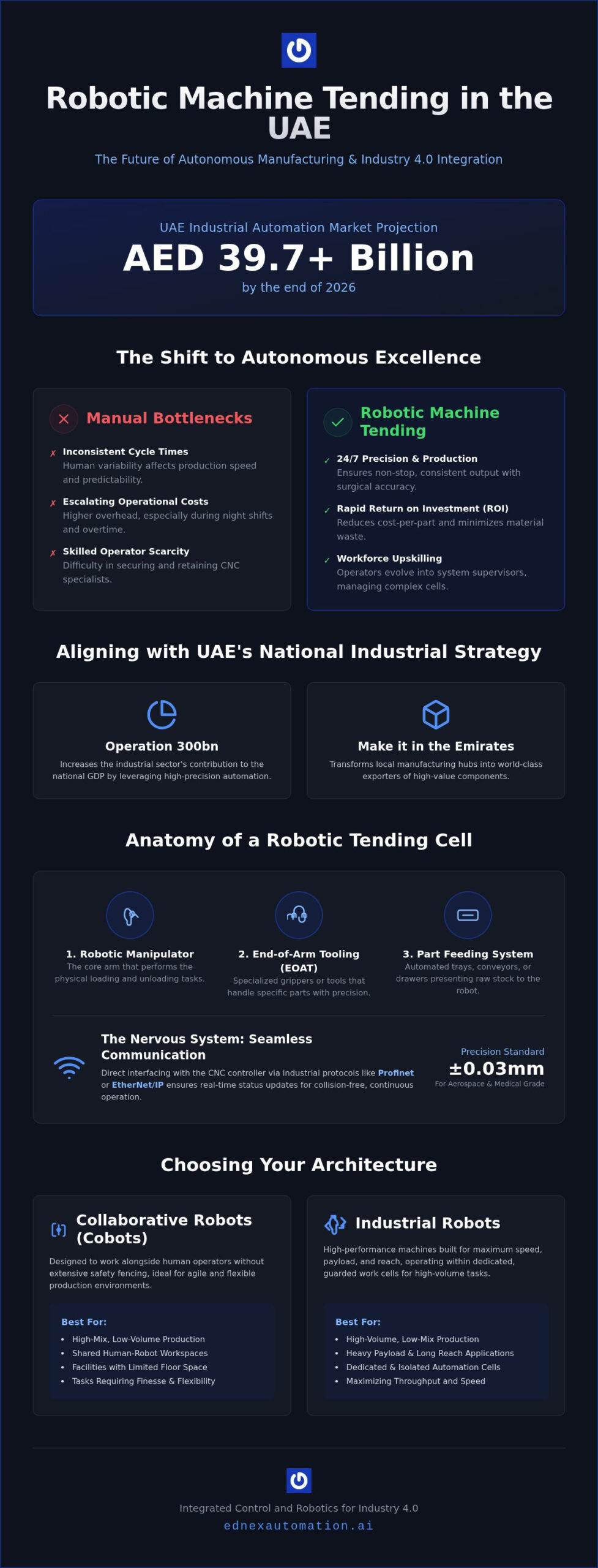
By the end of 2026, the UAE industrial automation market is projected to reach a valuation exceeding AED 39.7 billion, marking a pivotal era where autonomy defines market leadership. You likely recognize that manual CNC loading often results in inconsistent cycle times and escalating operational costs, especially as the scarcity of skilled operators persists across the region. Embracing robotic machine tending UAE systems offers a sophisticated resolution to these bottlenecks, ensuring your production line remains active with 24/7 precision.
This strategic guide details how autonomous integration delivers a rapid return on investment and a measurable reduction in cost-per-part through controlled innovation. By leveraging advanced collaborative robots and SCADA-ready infrastructure, you can future-proof your facility against the complexities of modern manufacturing. We’ll explore the technical framework necessary for seamless Industry 4.0 transformation, providing the intellectual foundation to align your operations with the UAE AI Act 2026 and the ambitious goals of Operation 300bn. Through a methodical approach to PLC integration and bespoke automation, your facility can transition from manual dependency to a state of optimized, repeatable excellence.
Key Takeaways
- Understand how autonomous manufacturing aligns with the UAE’s “Operation 300bn” industrial goals for 2026 to enhance national production capacity.
- Identify the core technical components of a high-performance tending cell, including specialized end-of-arm tooling and automated part feeders.
- Evaluate the strategic benefits of robotic machine tending UAE solutions by comparing collaborative robots and industrial arms to match your specific payload requirements.
- Learn the essential steps for conducting feasibility studies and designing ergonomic cell layouts that prioritize both safety and machine accessibility.
- Discover how synchronizing robotic cells with SCADA systems and automated storage and retrieval systems creates a fully integrated Industry 4.0 ecosystem.
The Evolution of Autonomous Manufacturing in the UAE
The industrial sector is currently navigating a profound transformation as manufacturers pivot from traditional manual processes toward high-intelligence autonomous cells. This transition represents more than a simple equipment upgrade; it’s a fundamental reimagining of how production floors operate within the national landscape. By integrating robotic machine tending UAE systems, facilities are effectively bridging the gap between isolated CNC machinery and fully synchronized Industry 4.0 ecosystems. Utilizing advanced robotics to handle the repetitive tasks of loading and unloading ensures that precision remains constant, regardless of shift duration or environmental conditions.
Addressing the Skilled Labour Gap
Relying on manual operators for high-volume CNC tending has become a critical bottleneck for facilities aiming to maintain global competitiveness in 2026. The difficulty in securing and retaining highly skilled CNC specialists often leads to inconsistent cycle times and increased operational overhead during night shifts. Implementing machine tending automation allows organizations to bypass these human-centric limitations, enabling 24/7 production cycles that meet aggressive deadlines with surgical accuracy.
Transitioning to autonomous systems doesn’t eliminate the need for human expertise; rather, it facilitates a vital upskilling of the regional workforce. Current operators are moving away from the physical strain of manual loading, evolving into system supervisors who manage complex collaborative robots UAE and integrated control architectures. This evolution stabilizes production output while creating a more resilient industrial infrastructure capable of handling high-mix, low-volume orders without sacrificing efficiency.
Strategic Alignment with National Industrial Goals
Adopting robotic machine tending UAE solutions serves as a primary driver for the “Make it in the Emirates” initiative, directly contributing to the nation’s economic diversification. As Operation 300bn progresses toward its 2031 targets, the integration of high-precision automation becomes essential for increasing the industrial sector’s contribution to the national GDP. These systems provide the technical backbone required to transform local manufacturing hubs into world-class exporters of high-value components.
The economic impact of this shift is measurable, as automation reduces the cost-per-part and minimizes material waste through superior repeatability. Within this framework, autonomous machine tending functions as the operational heartbeat of a modern UAE smart factory, pumping consistent data and physical throughput into the wider industrial ecosystem. By aligning technological investment with federal mandates, manufacturers aren’t just improving their bottom line; they’re securing their position within the UAE’s future-focused industrial identity.
Technical Mechanics: How Robotic Machine Tending Works
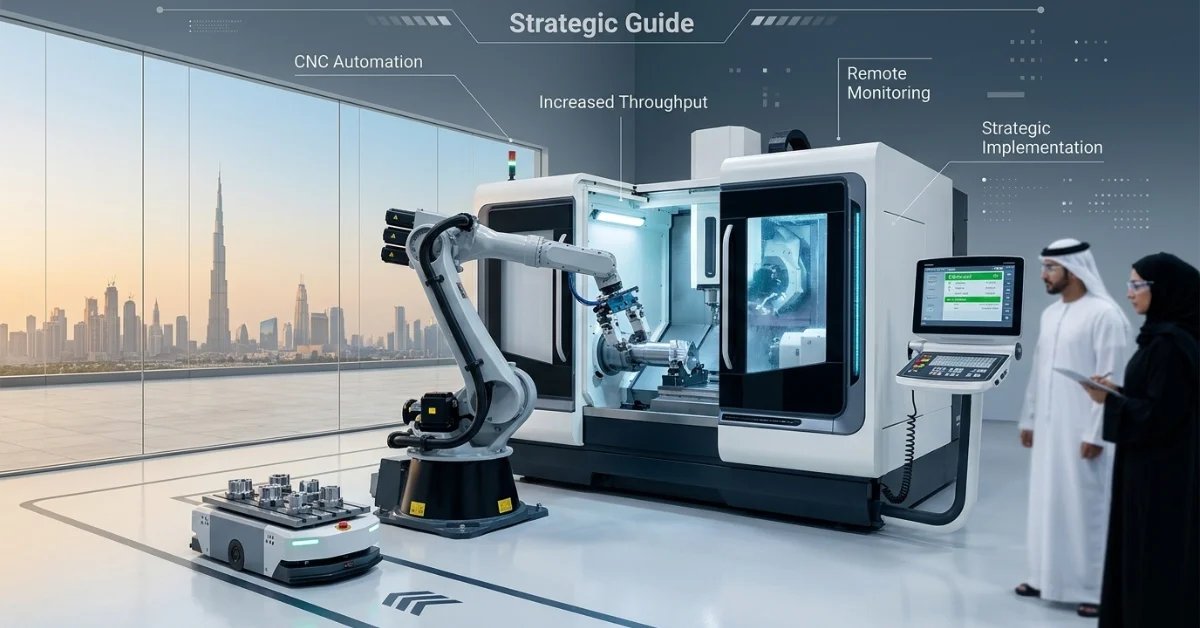
Executing a successful deployment requires a deep understanding of the underlying technical mechanics that govern autonomous production. Robotic machine tending is the sophisticated process of loading raw stock into a CNC machine and extracting finished components with surgical precision. At its core, a robotic machine tending UAE cell consists of three primary pillars: the robotic manipulator, the End-of-Arm Tooling (EOAT), and the part feeding system. These elements must function in perfect harmony to achieve the high-repeatability standards, often reaching ±0.03mm, required for aerospace and medical grade manufacturing.
Communication serves as the nervous system of the entire cell. Unlike basic hardware kits that offer limited functionality, professional integration involves direct interfacing with the CNC controller via discrete I/O signals or advanced industrial protocols. By utilizing standards like Profinet or EtherNet/IP, the robot receives real-time status updates regarding cycle completion, door positioning, and chuck readiness. This seamless dialogue prevents collisions and ensures the machine remains in a state of constant, productive motion. Exploring these technical control architectures ensures your facility transitions from simple automation to a fully intelligent production environment.
End-of-Arm Tooling (EOAT) and Gripper Technology
Selecting the correct gripper is a technical decision based on part geometry and material properties. Pneumatic grippers offer high force-to-weight ratios for heavy lifting; electric variants provide precise stroke control for varied part sizes; vacuum systems excel with flat or delicate surfaces. To maximize throughput, we often deploy dual-gripper configurations. These setups allow the robot to unload a finished part and load a new blank in a single motion, significantly reducing idle machine time. For high-value materials, integrated force-feedback sensors prevent deformation by monitoring gripping pressure in real-time, ensuring the integrity of every component.
The Role of Vision Systems in Part Orientation
Modern 2D and 3D vision systems act as the eyes of the autonomous cell, providing the intelligence needed to handle non-uniform part arrivals. These sensors eliminate the need for rigid, expensive precision fixtures by identifying the exact coordinates and orientation of randomly placed parts on a conveyor or tray. Beyond simple positioning, vision systems perform critical pre-loading inspections to detect material defects or surface irregularities before they reach the spindle. They also facilitate autonomous adjustments for environmental variables such as thermal expansion, ensuring that your robotic machine tending UAE infrastructure maintains its ±0.03mm precision even as ambient temperatures fluctuate throughout the day.
Choosing Your Architecture: Cobots vs. Industrial Robots
Selecting the appropriate robotic architecture is a critical strategic decision that dictates the long-term viability of your robotic machine tending UAE investment. Plant engineers must evaluate the complex interplay between operational speed, payload capacity, and safety requirements to determine which system aligns with their specific production volume. While the initial focus often lands on hardware costs, a comprehensive Total Cost of Ownership (TCO) analysis reveals that the choice between traditional industrial arms and collaborative systems significantly impacts facility layout and infrastructure needs. As we navigate the industrial landscape of 2026, understanding these trade-offs ensures that your automation strategy provides a scalable foundation for future growth.
Collaborative Robots (Cobots) for Flexible Tending
Utilizing collaborative robots UAE allows small-to-medium enterprises (SMEs) to implement automation without the extensive footprint of safety fencing. These systems prioritize flexibility, featuring no-code programming environments that drastically reduce setup times for high-mix, low-volume production runs. Because they incorporate safety-rated monitored stops and power-limiting technology, cobots can operate in close proximity to human technicians, providing a modular solution that adapts to changing floor requirements. This ease of deployment makes them the ideal entry point for facilities looking to automate existing manual stations with minimal disruption.
High-Performance Industrial Arms
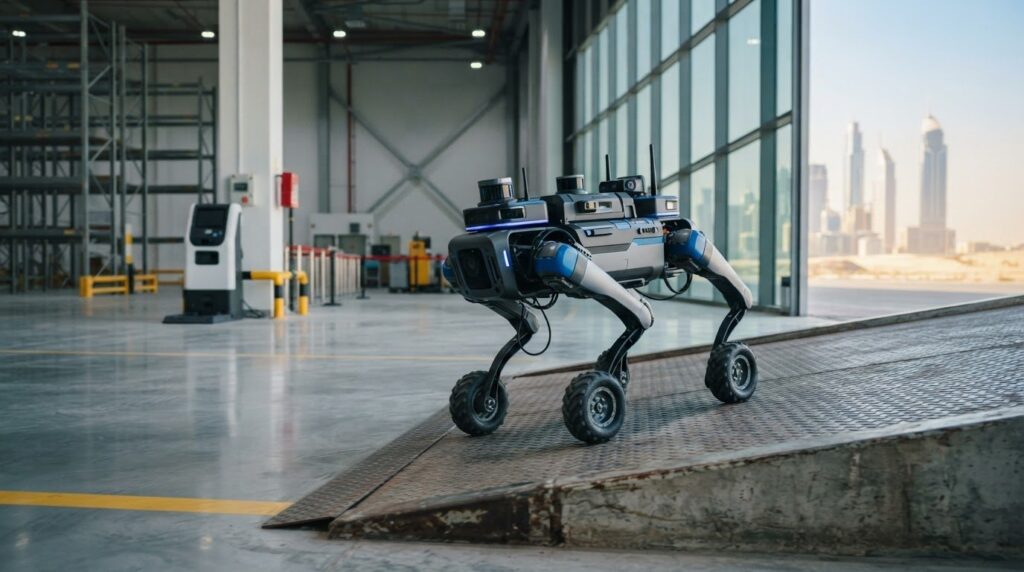
Facilities operating in high-volume sectors, such as oil and gas or automotive parts manufacturing, typically require the raw power and velocity of high-performance industrial arms. These 6-axis machines are engineered to handle high-payload components exceeding 20kg, maintaining relentless throughput in demanding industrial environments. Although they require physical safety barriers or advanced laser-based sensor protection, their ability to sustain rapid cycle times makes them indispensable for large-scale operations. Handling heavy-duty stock requires the structural rigidity found in dedicated industrial manipulators, ensuring that precision is never compromised during high-speed transfers.
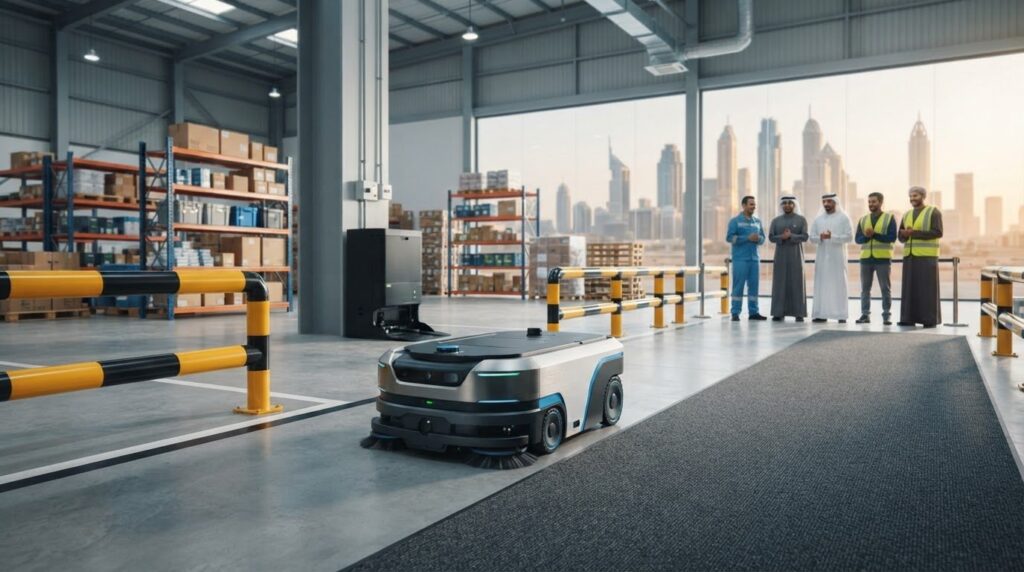
Advancing toward full industrial autonomy often involves integrating these high-capacity arms with autonomous mobile robots to create mobile tending units. This synergy allows a single robotic asset to service multiple CNC stations, effectively maximizing utilization rates across the facility. Evaluating the TCO requires looking beyond the purchase price to include the logistical costs of safety integration. Industrial robots often demand dedicated floor space and physical barriers, while cobots leverage integrated sensors to minimize their physical footprint. By choosing the architecture that matches your specific throughput demands, you ensure that your robotic machine tending UAE strategy remains a scalable and efficient component of your Industry 4.0 roadmap.
Implementation Strategy: From ROI Calculation to Safety
Deploying a high-performance cell requires a systematic transition from conceptual design to physical reality. Successful robotic machine tending UAE projects follow a structured five-step integration framework to mitigate risk and maximize throughput. This methodical approach ensures that the technology aligns with your facility’s unique operational constraints while adhering to international best practices. Success isn’t accidental; it’s the result of rigorous planning and technical precision.
- Step 1: Feasibility and Cycle Analysis. Identifying high-volume parts and calculating precise cycle times to ensure the robot can keep pace with the CNC spindle.
- Step 2: Cell Layout Design. Organizing the workspace to optimize robot reach while maintaining clear access for manual machine maintenance and tool changes.
- Step 3: System Synchronization. Utilizing professional PLC and SCADA integration services to link the robotic cell with the factory’s central nervous system for real-time data acquisition.
- Step 4: Safety Commissioning. Validating the installation against ISO 10218-2 standards to ensure the cell meets all global and national safety requirements.
- Step 5: Performance Optimization. Establishing a regime of ongoing monitoring and predictive maintenance to prevent unplanned downtime and sustain peak efficiency.
Calculating the Real ROI of Machine Tending
Determining the financial viability of an automation project requires looking beyond simple labor replacement. Advanced systems contribute to capital recovery through tool life extension, as robotic precision reduces the mechanical stress caused by improper manual loading. Energy savings and significant scrap reduction also bolster the bottom line. Transitioning to 24/7 “lights-out” manufacturing significantly accelerates capital recovery by maximizing spindle uptime during hours that previously yielded zero revenue. In a digitized global market, these efficiencies are not just advantages; they’re requirements for long-term business viability.
Safety and Compliance in UAE Facilities
Navigating the requirements for guarded versus unguarded robotic cells is a critical step in the implementation process. Every robotic machine tending UAE installation must undergo a comprehensive risk assessment to define human-robot collaboration zones. While cobots offer inherent safety features, industrial arms often require physical barriers or advanced light curtains to ensure technical compliance with national safety regulations. We prioritize the creation of a secure environment where technology and personnel coexist without compromising productivity. To begin your facility’s transformation, consult with our automation experts to develop a bespoke implementation roadmap.
The EdNex Advantage: Integrated Control and Robotics
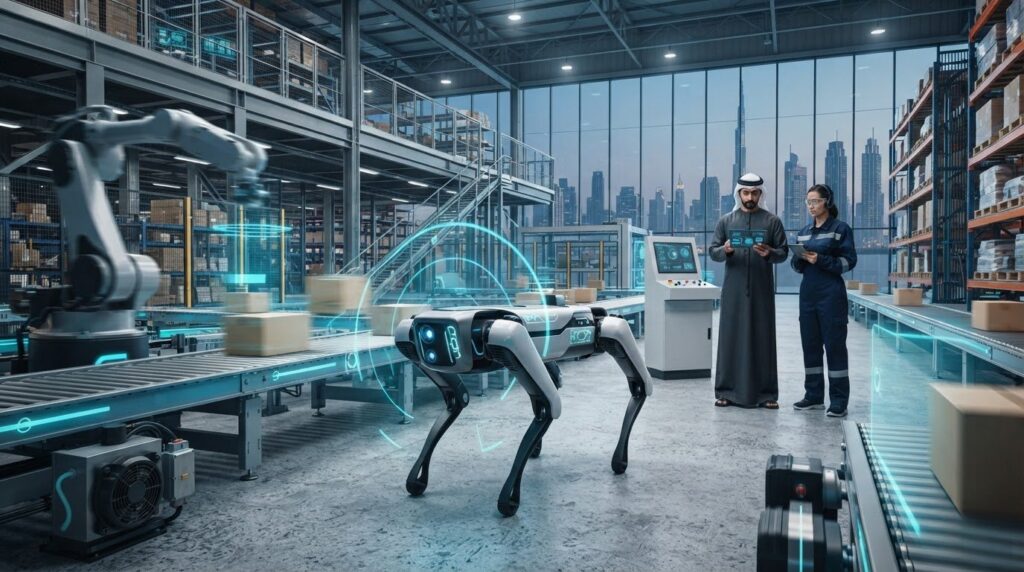
While hardware provides the physical capability for robotic machine tending UAE, the true intelligence of an autonomous cell resides within its control architecture. EdNex Automation positions itself as a high-level integrator, focusing on the sophisticated synchronization required between robotic manipulators and the wider factory ecosystem. By linking machine tending cells with automated storage and retrieval systems, we eliminate the logistical lag between raw material housing and the CNC spindle. This holistic approach ensures that your production line doesn’t just work faster; it works smarter through a unified digital framework.
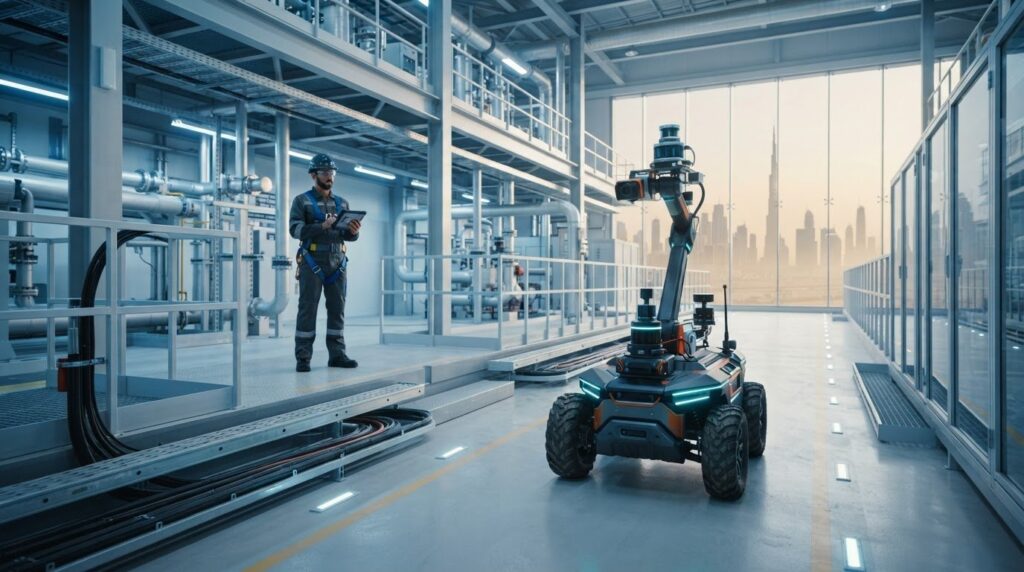
Real-time data acquisition serves as the foundation for measuring Overall Equipment Effectiveness (OEE). Integrating SCADA systems allows facility managers to monitor every vibration, cycle time, and energy spike across the production floor. This level of transparency transforms raw data into actionable intelligence, allowing for immediate adjustments that maintain peak throughput. Our start-to-finish expertise covers the entire industrial transformation journey, from initial infrastructure assessment to the final handover of a fully integrated Industry 4.0 facility.
Bespoke Integration and PLC Programming
Achieving a seamless handshake between a robot and a CNC machine requires custom PLC logic tailored to specific machine protocols. We utilize advanced simulation and digital twin technology to map out these interactions before a single piece of hardware is installed, effectively minimizing commissioning downtime. Our reliance on official certifications and global alliances provides a marker of technical legitimacy that distinguishes EdNex from simple equipment vendors. It’s about providing the intellectual framework necessary for long-term operational success rather than just providing tools.
Future-Proofing with Autonomous Systems
Staying competitive in the 2026 market involves looking beyond current 6-axis capabilities. Integrating humanoid robots for sale UAE offers new possibilities for complex service and inspection tasks that traditional arms can’t perform. These advanced systems, coupled with AI-driven predictive maintenance, ensure that your robotic machine tending UAE infrastructure remains viable as technology evolves. Machine learning algorithms analyze historical performance data to predict component failure before it happens, securing your investment against unplanned interruptions. Consult with EdNex Automation experts to design your autonomous CNC cell and lead the next wave of industrial innovation.
Securing Your Position in the UAE’s Autonomous Industrial Future
Transitioning to automated CNC operations is no longer a peripheral upgrade; it’s a fundamental requirement for facilities aiming to remain competitive in the 2026 industrial landscape. By implementing robotic machine tending UAE solutions, manufacturers successfully eliminate the bottlenecks of manual loading, ensuring stable cycle times and significantly reduced cost-per-part. This strategic evolution aligns your production floor with the national goals of Operation 300bn, transforming isolated machinery into a synchronized, SCADA-integrated ecosystem.
As an Official Industry 4.0 Integration Partner, EdNex Automation provides the bespoke PLC/SCADA and robotics synergy needed to bridge the gap between global innovation and regional requirements. Our national UAE technical support ensures that your investment remains a reliable, high-performance asset through every stage of its lifecycle. Partner with EdNex Automation for your Industrial Transformation and establish a legacy of precision and efficiency. The path to a fully autonomous smart factory starts with a controlled, deliberate step toward modernization.
Frequently Asked Questions
What is the average ROI for robotic machine tending in the UAE?
Payback periods typically range from 12 to 24 months depending on shift frequency and production volume. In the UAE, where 24/7 “lights-out” operation is increasingly common for 2026, capital recovery is accelerated through increased spindle uptime and reduced scrap. By eliminating manual inconsistencies, robotic machine tending UAE systems ensure a stable cost-per-part that remains predictable over long-term production cycles, providing a measurable advantage in high-output environments.
Can robotic arms tend multiple CNC machines simultaneously?
A single robotic arm can service multiple CNC machines by utilizing linear rails or mobile platforms. Integrating a robot with an autonomous mobile robot (AMR) allows the system to navigate between different stations, effectively maximizing the utilization rate of the robotic asset. This multi-machine architecture is particularly efficient in facilities where cycle times are long enough to allow the robot to travel between various spindles without causing production delays.
How long does it take to install a robotic machine tending cell?
A standard robotic tending cell typically takes between four and twelve weeks to fully deploy. This timeline includes the initial site assessment, hardware integration, and the critical phase of PLC synchronization. While collaborative systems might be operational faster due to simpler safety requirements, high-payload industrial cells require more extensive commissioning to ensure technical compliance with national safety regulations and seamless handshake protocols with the CNC controller during the final setup.
Do I need a safety fence for a cobot machine tending system?
Not necessarily, but a formal risk assessment is mandatory for all robotic machine tending UAE installations. Collaborative robots use power-limiting features and monitored stops to operate near humans, yet high-speed applications or sharp workpieces might still require physical guarding. The decision depends on the specific application’s speed and the nature of the end-of-arm tooling, ensuring that the final configuration meets international safety standards for human-robot interaction.
What types of CNC machines can be automated with robotics?
Robotics can automate a wide variety of machinery, including CNC lathes, mills, grinders, and Swiss-turn centers. Modern integration techniques allow for seamless communication with various controller brands through standardized industrial protocols. Whether your facility utilizes vertical machining centers or complex multi-axis turn-mill machines, a robotic cell can be engineered to handle the specific loading and unloading requirements of almost any subtractive manufacturing process currently used in the industry.
What happens if a part is loaded incorrectly by the robot?
Advanced cells utilize force-feedback sensors and vision systems to detect misalignments before the machining cycle begins. If the robot encounters resistance or identifies a part orientation error, the integrated PLC logic triggers an immediate safety stop or an attempt at re-alignment. This proactive error handling prevents damage to the spindle and ensures that the machine never attempts to cut a part that isn’t seated with absolute precision within the fixture.
Can EdNex integrate robots with my existing PLC and SCADA network?
EdNex specializes in the high-level integration of robotics with established factory networks. We develop custom PLC logic that enables real-time data exchange between the tending cell and your central SCADA system. This connectivity facilitates comprehensive monitoring of OEE and allows for predictive maintenance alerts, ensuring that your new robotic assets are fully synchronized with your existing Industry 4.0 infrastructure for a unified, data-driven production environment that enhances overall facility performance.
Is robotic machine tending suitable for small-batch production?
Collaborative robots are exceptionally well-suited for high-mix, small-batch manufacturing due to their flexible programming environments. Modern software allows for rapid changeovers between different part geometries, reducing the downtime typically associated with re-tooling. By utilizing modular grippers and quick-change fixtures, SMEs can achieve the benefits of automation even for short production runs that were previously considered too complex or expensive for traditional industrial robotics to handle efficiently.