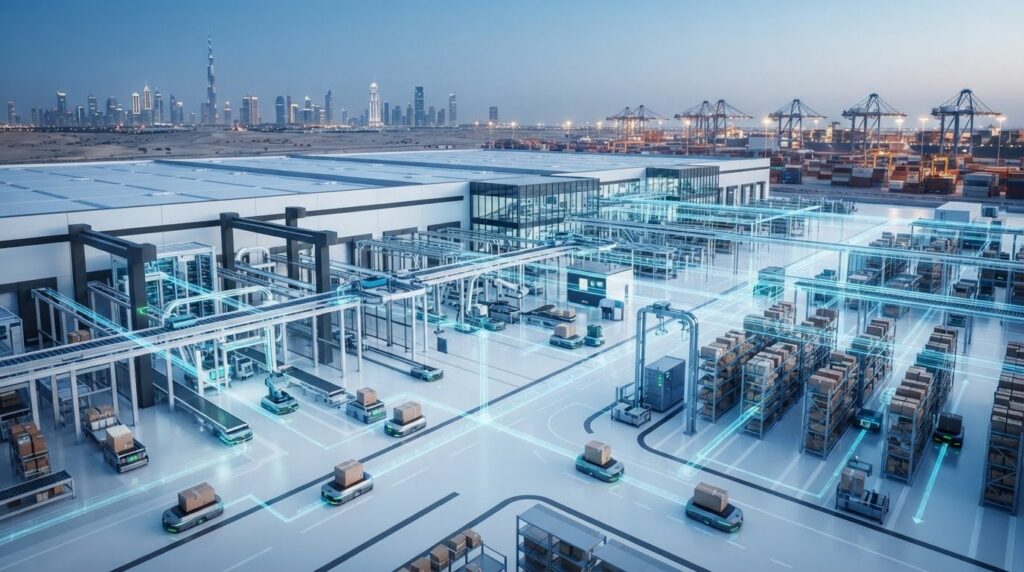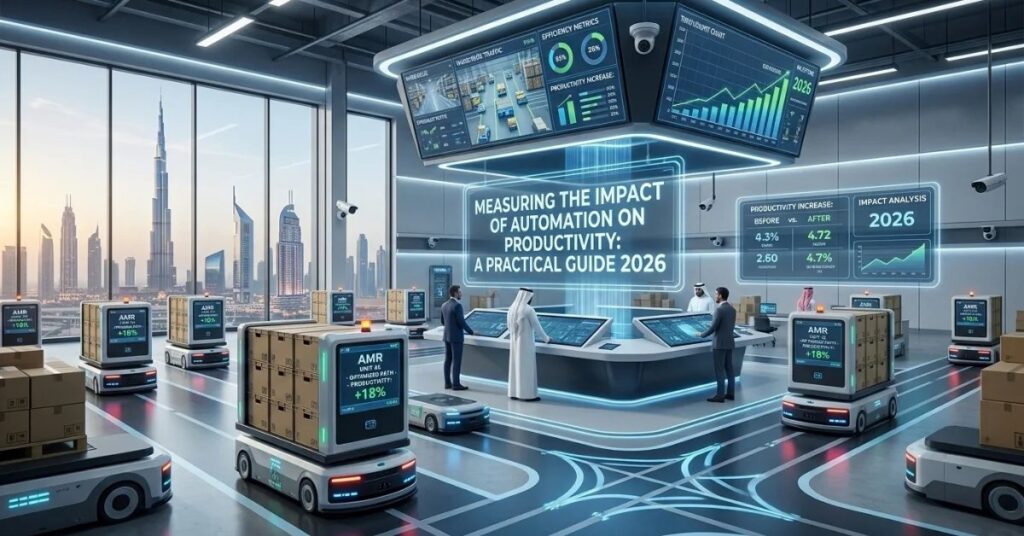
What if your perimeter security wasn’t just a recurring expense, but a sophisticated data engine that grew more efficient every day? As industrial sites expand across the Emirates, relying solely on human personnel for 24/7 surveillance has become an increasingly unsustainable model because of rising labor costs and the inherent risks of environmental fatigue. Integrating security patrol robots UAE into your facility’s operational framework represents a critical shift from reactive monitoring to a state of predictive, autonomous intelligence.
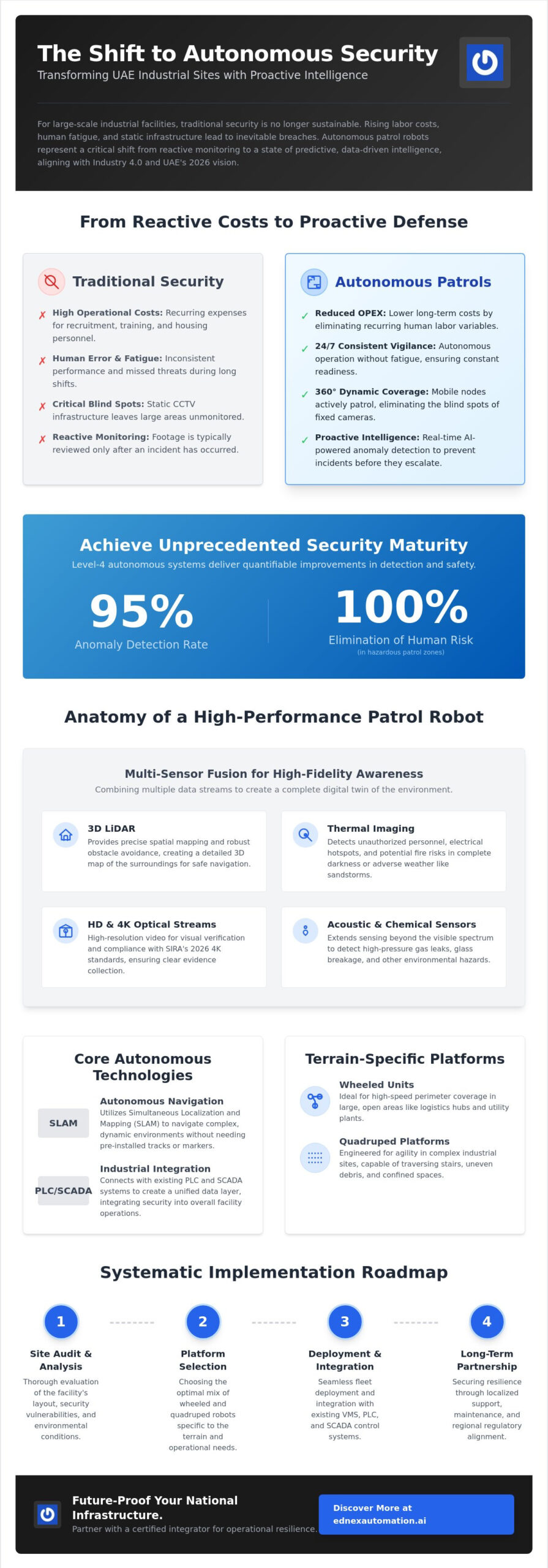
You understand that manual patrols in expansive or hazardous zones inevitably lead to missed breaches and safety oversights. This guide demonstrates how autonomous surveillance robotics transform these reactive cost centers into a proactive, data-driven infrastructure layer. We’ll examine the path to Industry 4.0 maturity through SIRA’s 2026 4K standards, compliance with UAE Federal Decree-Law No. 45, and the strategic deployment of Level-4 autonomous systems to achieve a 95% anomaly detection rate while eliminating human risk.
Key Takeaways
- Transition from passive monitoring to proactive intelligence by deploying mobile nodes that eliminate the inherent blind spots of static CCTV infrastructure.
- Understand the critical role of sensor fusion and SLAM navigation in maintaining high-fidelity situational awareness within dynamic, large-scale industrial environments.
- Learn the strategic methodology for integrating security patrol robots UAE with existing PLC and SCADA systems to create a unified data layer for facility operations.
- Follow a systematic implementation roadmap that prioritizes thorough site audits and the selection of terrain-specific robotic platforms to ensure seamless deployment.
- Secure long-term operational resilience by partnering with a certified integrator capable of providing localized technical support and regional regulatory alignment.
The Strategic Shift: Why Large Facilities Are Adopting Security Patrol Robots
The industrial landscape of the Emirates is undergoing a radical transformation as facility managers move beyond traditional guarding methods. Large-scale sites, often exceeding 100,000 square meters, present logistical challenges that static infrastructure simply cannot meet. Implementing security patrol robots UAE allows organizations to deploy mobile intelligence nodes that navigate complex environments autonomously. These systems represent the pinnacle of modern mobile robot technology, providing a dynamic presence where static CCTV fails.
While traditional cameras offer a fixed view, they frequently suffer from blind spots and the passive monitoring trap where footage is only reviewed after an incident has occurred. Autonomous robots bridge this gap. They provide active, 360-degree coverage, ensuring that every corner of a sprawling utility plant or logistics hub remains under constant, intelligent scrutiny. This shift aligns perfectly with the UAE’s national vision for industrial digitalization, positioning security not as a peripheral cost but as a core component of a facility’s Industry 4.0 maturity.
From Reactive Monitoring to Proactive Intelligence
Autonomous mobile robots (AMRs) redefine the security paradigm by focusing on anomaly detection rather than simple video recording. Instead of just documenting history, these units use advanced AI to identify unauthorized personnel, thermal leaks, or left-behind objects in real time. This immediate data streaming empowers facility managers to respond to threats before they escalate into costly breaches. Robotic surveillance acts as a critical force multiplier that extends the operational reach and sensory capabilities of existing security personnel without increasing headcount.
Economic Drivers of Robotic Security in 2026
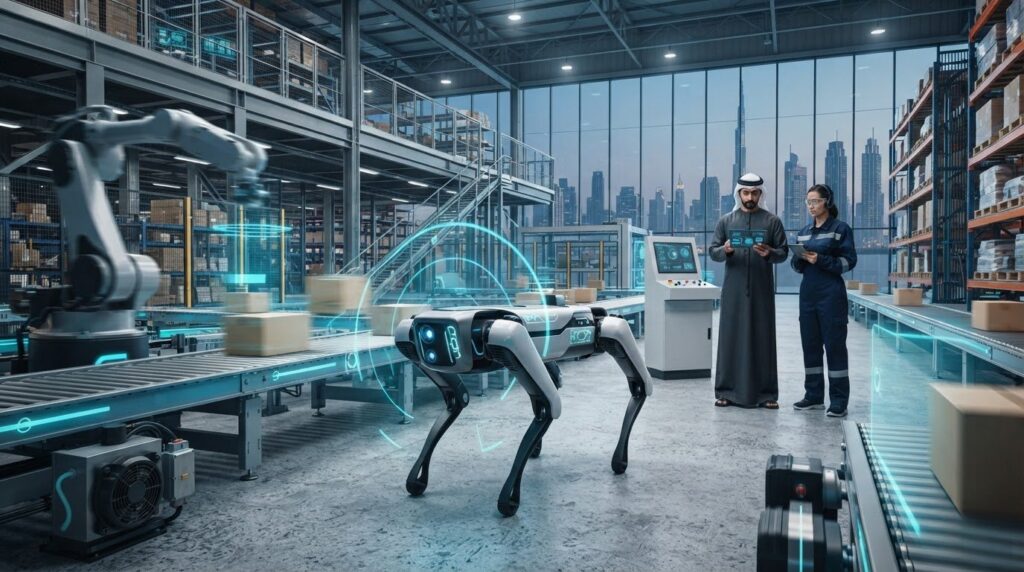
Deploying a robotic fleet offers a clear path to reducing Operational Expenditure (OPEX) over a typical three-year horizon. Human guarding requires continuous investment in recruitment, training, and housing; these costs are compounded by high turnover rates in the security sector. Robots eliminate these variables, providing consistent performance without fatigue or human error. By integrating these units with collaborative robots UAE, enterprises create a unified, automated workplace where safety and productivity are managed through a single, cohesive technological framework. This integration ensures long-term viability in an increasingly competitive industrial market.
The Anatomy of High-Performance Surveillance Robots
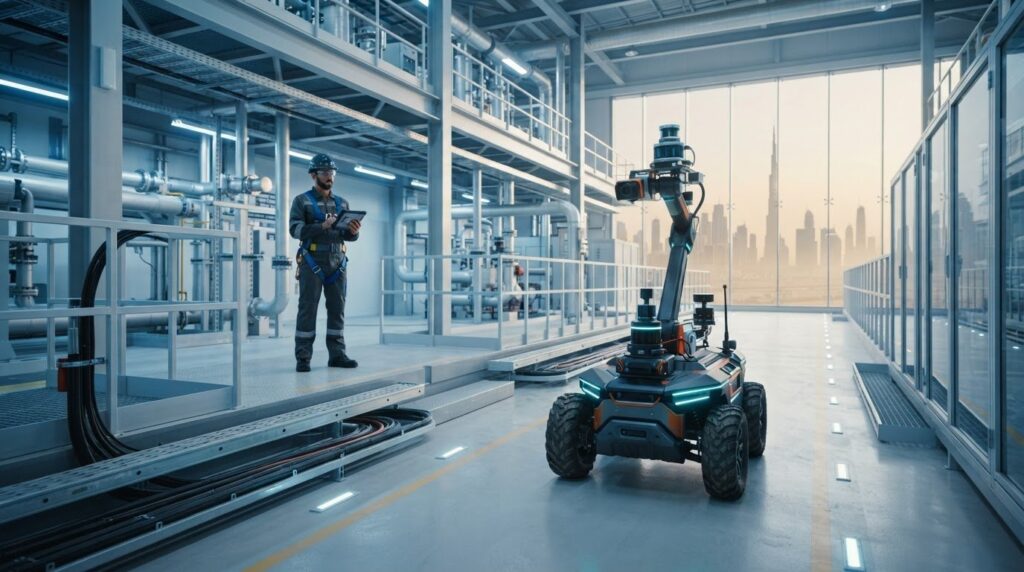
High-performance security patrol robots UAE are not merely mobile cameras; they’re sophisticated multi-sensor platforms designed for constant vigilance. Utilizing sensor fusion, these units synchronize 3D LiDAR for precise spatial mapping with thermal imaging and HD optical streams. This technical synergy allows for 24/7 operation in total darkness or through heavy sandstorms, providing a level of situational awareness that far exceeds human capabilities. By combining these inputs, the robot creates a high-fidelity digital twin of its surroundings, ensuring that no anomaly goes undetected.
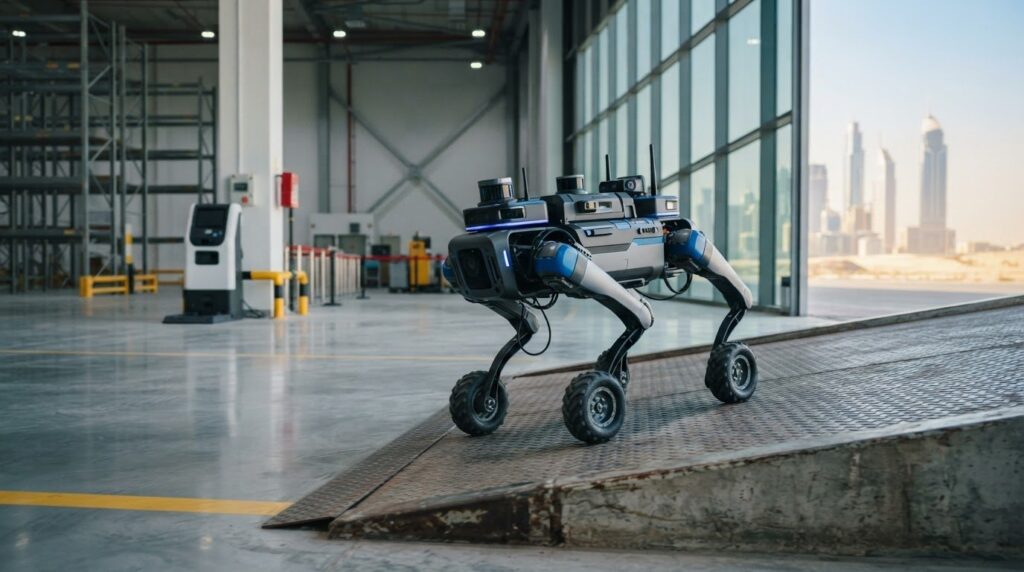
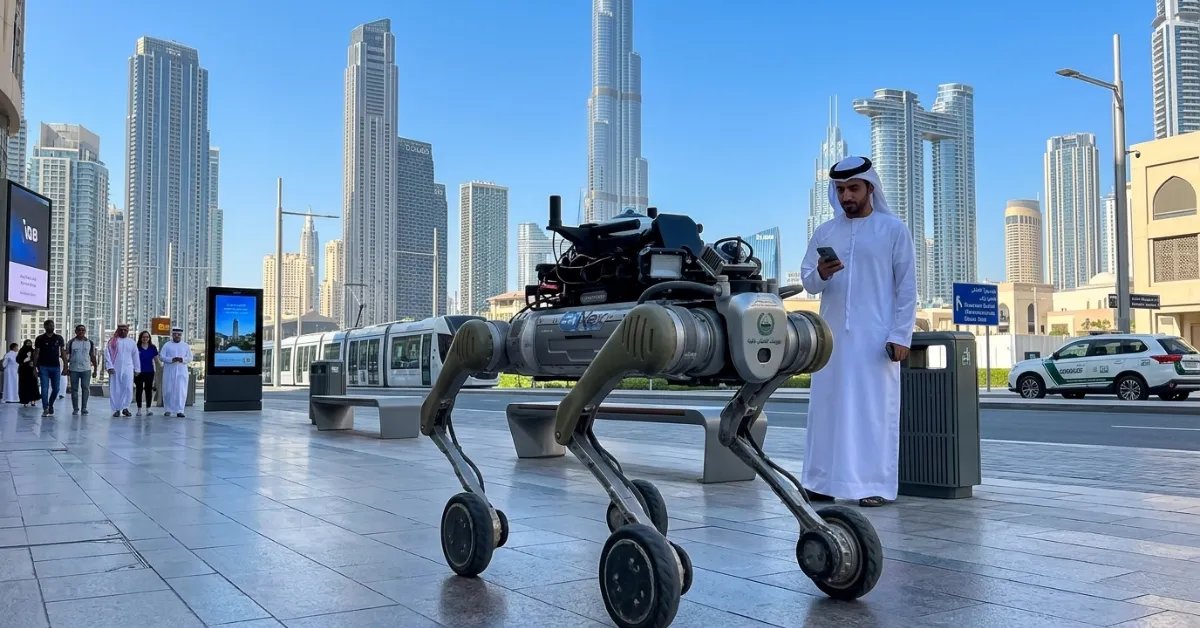
Implementing Simultaneous Localization and Mapping (SLAM) enables these robots to navigate dynamic facility environments without pre-installed tracks or markers. This autonomy is vital for the rapidly expanding Security Robots Market, where flexibility in deployment is a key competitive advantage for national infrastructure. Engineering for the UAE requires IP-rated enclosures that withstand temperatures exceeding 50°C and pervasive fine dust. While wheeled units provide high-speed perimeter coverage, complex industrial sites often require the agility of quadruped platforms like the Unitree B2 to traverse stairs or uneven debris.
Sensing Beyond the Visible Spectrum
Thermal imaging provides early fire detection by identifying electrical hotspots before ignition occurs, a critical feature for power plants and data centers. Acoustic sensors add another layer of protection, detecting high-pressure gas leaks or glass breakage that optical systems might miss. Integrating chemical sensors directly into standard security patrols transforms these robots into comprehensive environmental safety tools. This multi-layered approach ensures that the robotic fleet serves as the first line of defense against both security breaches and industrial accidents.
AI at the Edge: Real-Time Threat Detection
Processing data locally via edge computing eliminates the latency associated with cloud-based analysis, allowing for instantaneous incident response. Onboard computer vision handles facial recognition and behavioral analysis, such as detecting loitering or a fallen worker, without the need for constant high-bandwidth streaming. This localized processing is a core feature of advanced autonomous mobile robots, as it significantly reduces data transmission costs while maintaining strict privacy standards. If you’re looking to upgrade your facility’s safety infrastructure, exploring bespoke robotic integration is the next logical step for future-ready operations.
Integrating Robotics with Industrial Control Systems
Achieving true operational excellence requires the seamless convergence of security infrastructure and industrial control systems. By bridging the gap between mobile intelligence and PLC and SCADA integration services, enterprises transform their security patrol robots UAE from isolated observers into active components of the industrial network. This integration allows the robotic fleet to communicate directly with factory floor controllers, enabling a unified response to environmental or security events. As highlighted in a study on the future of robotic surveillance in the UAE, this strategic alignment is essential for managing the complex regulatory and operational demands of the region’s high-tech sectors.
Establishing a unified command center provides stakeholders with a holistic view of facility health by overlaying robot telemetry onto real-time industrial data. When a static fire or intrusion sensor triggers an alarm, the system automatically dispatches the nearest robot to the coordinates for visual verification. This automated response loop reduces the need for human intervention in potentially dangerous situations while ensuring rapid assessment of the threat. Safeguarding these mobile nodes requires sophisticated encryption and network segmentation. Protecting the robotic fleet from industrial network intrusion is a non-negotiable requirement for national infrastructure projects, ensuring that autonomous assets remain resilient against evolving cyber threats.
Robots as Mobile SCADA Nodes
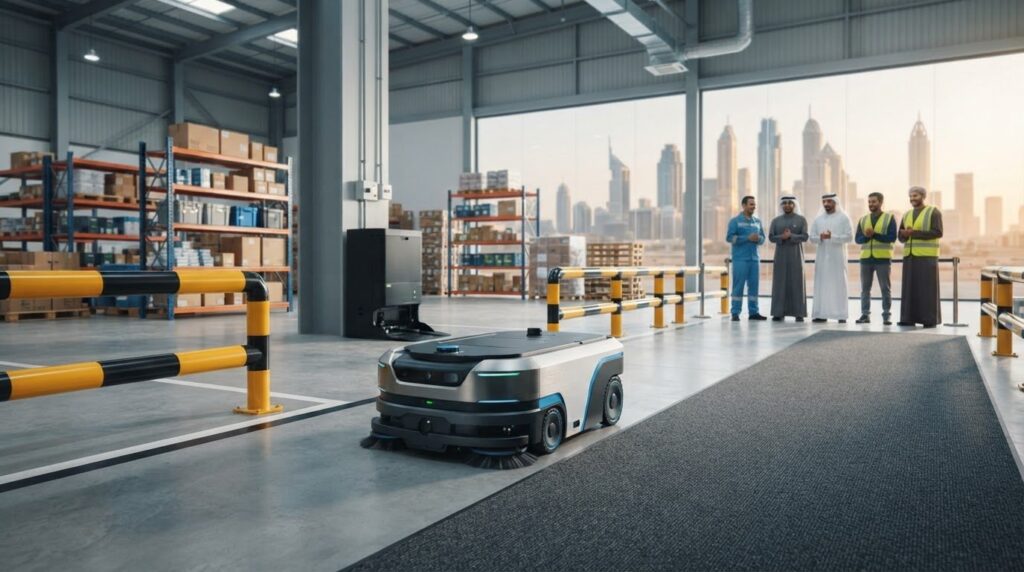
Operating as mobile SCADA nodes, robots verify sensor data in remote or hazardous areas where human entry is restricted or dangerous. They provide an immutable audit trail of facility inspections, ensuring compliance with national safety standards through rigorous data logging and encrypted storage. In logistics environments, these units interact with automated storage and retrieval systems to monitor aisle safety and identify obstructions that could impede high-speed machinery. This cooperation ensures that high-density storage zones remain secure and operational without requiring constant human oversight.
Interoperability and Middleware
The adoption of Robot Operating System (ROS) and API-first architectures ensures that robotic platforms remain interoperable with existing Video Management Systems (VMS) and Enterprise Resource Planning (ERP) software. These open frameworks allow for bespoke customization, enabling the fleet to adapt to evolving facility needs without requiring a total infrastructure overhaul. By utilizing standardized communication protocols, robots can share telemetry with global monitoring centers or local security hubs simultaneously. Centralized control through these integrated systems significantly reduces the technical burden on on-site facility managers by streamlining data flows and simplifying fleet orchestration across multiple zones.
Implementation Roadmap: Deploying a Robotic Fleet
Transitioning from a traditional guarding model to a hybrid, automated infrastructure requires a methodical framework to ensure operational continuity. Deploying security patrol robots UAE involves more than just hardware acquisition; it’s a strategic integration process that aligns technological capabilities with specific site vulnerabilities. By following a structured roadmap, enterprises can mitigate implementation risks and ensure that their robotic assets deliver immediate value upon activation.
- Step 1: Facility Audit – Identifying high-risk zones, critical infrastructure points, and potential connectivity dead spots across the site to establish a digital map of the patrol environment.
- Step 2: Platform Selection – Choosing between high-speed wheeled units for perimeter fence lines or agile quadruped platforms for navigating stairs and complex industrial terrain.
- Step 3: Pilot Phase – Running a controlled deployment to establish baseline KPIs for detection accuracy, ensuring the system meets the 95% anomaly detection benchmark required for high-security environments.
- Step 4: Systems Integration – Syncing the robotic fleet with central command and control infrastructure, including existing VMS and emergency response protocols.
- Step 5: Full Deployment – Empowering human guards to work alongside humanoid robots and AMRs to create a multi-layered, resilient security posture.
Overcoming Connectivity Challenges in Large Sites
Maintaining seamless robot-to-cloud communication in steel-heavy industrial environments requires a robust network backbone. While industrial Wi-Fi serves smaller zones, the deployment of private 5G networks has become the standard for large-scale security patrol robots UAE, providing the low-latency bandwidth necessary for real-time 4K video streaming. For areas where signals are temporarily obstructed, advanced autonomy stacks allow robots to continue their patrols and record data locally, syncing with the central server once connectivity is restored. Strategic placement of autonomous docking stations ensures 24/7 uptime, allowing the fleet to manage its own power cycles without human intervention; similarly, the udoq German design multiple charging station for any mobile device ensures that the mobile devices used by the security team remain organized and fully charged.
Measuring Success: KPIs for Robotic Surveillance
Quantifying the impact of robotic integration focuses on both operational efficiency and risk mitigation. A primary metric is the reduction in mean time to detect (MTTD) security incidents, as mobile nodes identify breaches faster than static sensors or intermittent human patrols. Furthermore, multi-sensor verification significantly decreases nuisance alarms, ensuring that human responders only engage with verified threats. A comprehensive Total Cost of Ownership (TCO) analysis typically reveals that robotic fleets offer superior scalability compared to human guard forces, especially when considering the long-term costs of recruitment and training in the Emirates. If you’re ready to modernize your facility’s defense, consult with our integration experts to design a bespoke robotic security strategy.
The EdNex Vision: Future-Proofing National Infrastructure
EdNex Automation functions as a comprehensive, full-service integrator for autonomous mobile and surveillance robotics, bridging the gap between global technological breakthroughs and the specific industrial needs of the Emirates. Recognizing that national infrastructure requires more than just off-the-shelf hardware, we provide the intellectual framework necessary for successful implementation. By deploying security patrol robots UAE, enterprises ensure their security architecture remains resilient against the region’s unique environmental and operational challenges. Our approach emphasizes bespoke solution engineering, where robot payloads are meticulously tailored to meet the rigorous demands of the oil, gas, and logistics sectors. We don’t just supply equipment; we act as a systematic organizer that brings order, safety, and efficiency to complex environments through controlled and deliberate innovation.
Comprehensive Lifecycle Support
Delivering end-to-end expertise, EdNex Automation manages the entire robotic lifecycle from initial site surveys to long-term firmware optimization and fleet scaling. We understand that localized technical support and certified maintenance are non-negotiable for national industrial operations. Our certified training programs empower on-site facility teams to manage their robotic colleagues effectively, ensuring seamless integration into daily workflows. By offering modular upgrades and sensor swaps, we guarantee long-term business viability. This allows your fleet to evolve alongside emerging security threats without requiring total hardware overhauls. Every deployment is backed by our commitment to global standards and regional expertise, providing the reliability required for 24/7 mission-critical surveillance.
The Human-Robot Collaboration Future
The integration of collaborative units and surveillance robots fosters a safer, more efficient work environment where human personnel are shielded from hazardous inspections and environmental risks. This evolution isn’t just about replacing static sensors. It’s about maintaining a competitive advantage in a rapidly modernizing market where data-driven visibility is the new benchmark for excellence. Aligning with national industrial transformation goals, EdNex Automation provides the tools and strategic guidance necessary for facilities to reach Industry 4.0 maturity. We act as a reliable technical partner who understands the gravity of large-scale industrial transformation. Contact EdNex Automation for a bespoke facility security audit to begin your transition toward an autonomous, proactive, and data-driven security infrastructure.
Leading the Evolution of Industrial Security
Adopting autonomous surveillance represents a fundamental paradigm shift in how national infrastructure is protected and maintained. By transitioning from reactive monitoring to proactive intelligence, facilities can effectively eliminate the blind spots inherent in static systems while simultaneously mitigating the escalating costs associated with manual guarding. Integrating security patrol robots UAE into your operational framework ensures that your organization remains at the forefront of Industry 4.0 maturity, leveraging unified data from PLC and SCADA systems to drive informed, real-time decision-making. It’s a necessary evolution for any enterprise seeking to maintain a competitive advantage in a digital-first economy.
Acting as an official integrator for world-leading robotic platforms, EdNex Automation provides the intellectual framework and technical expertise necessary for seamless facility integration. Our specialized focus on PLC/SCADA and ASRS synchronization, reinforced by comprehensive national technical support and maintenance, ensures that your robotic fleet delivers consistent, high-fidelity results across every sector. The path to a safer, more efficient industrial future starts with a deliberate commitment to controlled innovation.
Request a Strategic Facility Audit and Robotic Demo to secure your facility’s long-term operational resilience today.
Frequently Asked Questions
Can surveillance robots operate in outdoor industrial environments with high heat?
Surveillance units are specifically engineered with IP65-rated enclosures and advanced thermal management systems to withstand the extreme UAE climate. These robots operate reliably in temperatures exceeding 50°C, utilizing active cooling to protect sensitive onboard electronics and high-definition sensors. This durability ensures consistent perimeter protection during the most intense summer months without the risk of hardware failure or performance degradation.
How do surveillance robots handle obstacles or moving machinery in a busy warehouse?
Utilizing 3D LiDAR and Simultaneous Localization and Mapping (SLAM), robots navigate busy industrial environments by creating real-time spatial maps. They identify moving machinery, forklifts, and personnel instantly, adjusting their trajectory to avoid collisions without stopping their patrol. This dynamic path planning ensures that security patrol robots UAE maintain their schedule while operating safely alongside complex warehouse automation.
Is it possible to integrate robotic video feeds into our existing VMS?
Integration into existing Video Management Systems (VMS) is achieved through API-first architectures and standardized protocols like RTSP or ONVIF. This allows security teams to view live robotic feeds and telemetry directly within their current command center interface alongside static cameras. Centralizing these data streams simplifies the monitoring process and ensures that robotic assets enhance, rather than complicate, your established security infrastructure.
What happens if the robot loses its Wi-Fi or 5G connection during a patrol?
Robotic platforms feature advanced edge computing capabilities that allow them to continue autonomous operations even if Wi-Fi or 5G connectivity is temporarily interrupted. The units record all surveillance data to encrypted local storage and sync with the central server immediately upon reconnection. If a signal loss persists beyond a defined threshold, the robot follows pre-programmed safety protocols to return to a designated base station.
How long does the battery last, and do the robots charge themselves?
Modern surveillance robots typically offer 8 to 12 hours of continuous operational uptime depending on their sensor payload and terrain complexity. They’re programmed to monitor their own power levels and autonomously navigate to specialized docking stations for rapid recharging when necessary. This self-sufficient power management cycle ensures 24/7 facility coverage without requiring manual intervention from on-site staff.
Can these robots detect hazards like gas leaks or fires, or just intruders?
These platforms are designed as multi-functional hazard detection nodes capable of identifying thermal anomalies, gas leaks, and chemical spills. By integrating specialized sensor payloads, robots provide early warning for industrial accidents that traditional security systems might overlook. This comprehensive sensing capability transforms the unit from a simple intruder deterrent into a vital layer of your facility’s environmental health and safety infrastructure.
Are surveillance robots safe to operate around human workers?
Safety is maintained through strict adherence to international standards like ISO 10218 for human-robot collaboration. The units utilize redundant sensor arrays to detect human proximity, automatically reducing speed or coming to a complete halt to prevent contact. These built-in safety buffers ensure that autonomous patrols can be deployed in shared workspaces without posing a risk to your workforce or visitors.
What is the typical ROI timeframe for a robotic surveillance fleet?
Enterprises typically realize a full return on investment within 18 to 36 months of deployment through significant reductions in security-related Operational Expenditure (OPEX). By automating routine patrols and reducing the need for a large, 24/7 human guard force, organizations lower their long-term costs associated with recruitment, training, and housing. This scalable model provides a predictable cost structure while enhancing the overall security posture of the facility.