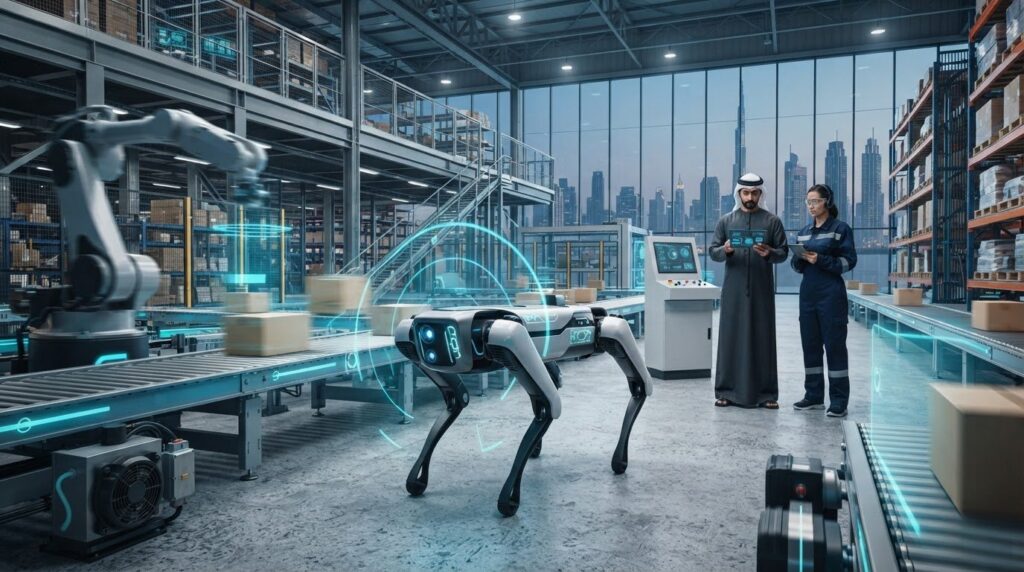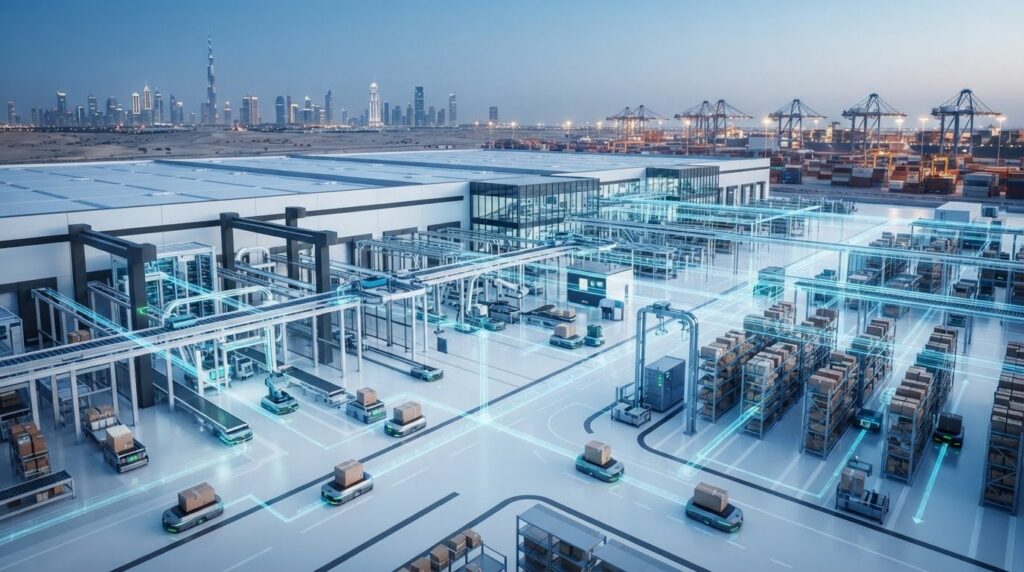
The traditional model of manual room service is reaching a critical inflection point where human-led delivery often represents a failure in both operational efficiency and guest privacy. As the hospitality sector faces unprecedented labor cost increases, the ability to maintain seamless service during peak hours determines the long-term viability of high-end establishments. Integrating autonomous delivery robots for hotels UAE has transitioned from a futuristic experiment to a fundamental infrastructure requirement for brands aiming to define the next era of luxury. You understand that staying competitive requires more than just high-quality amenities; it demands a systematic overhaul of internal logistics to ensure 24/7 availability without inflating overhead.
This strategic guide explores how advanced robotics deliver measurable ROI by optimizing routine tasks and providing an intellectual framework for modern hospitality management. You’ll discover the technical nuances of SLAM-based navigation and the specific ways these intelligent systems enhance the guest experience through discreet, contactless interaction. We provide the roadmap for a comprehensive transformation that bridges global technological breakthroughs with the unique demands of the regional market. From reducing operational bottlenecks to securing your reputation as a tech-forward destination, this analysis prepares your facility for the sophisticated landscape of 2026.
Key Takeaways
- Learn how the UAE’s national digital transformation goals accelerate the adoption of intelligent AMRs to mitigate rising labor costs and operational bottlenecks.
- Understand the technical requirements for integrating autonomous delivery robots for hotels UAE into existing infrastructure, including secure IoT protocols for elevator and automatic door control.
- Discover how to leverage robotic data logs to optimize room service timing and menus while reducing the cost-per-delivery compared to manual methods.
- Master a phased implementation framework that begins with comprehensive facility audits to identify robotic-friendly zones and back-of-house logistics.
- Explore strategies for scaling automation by creating synergy between delivery units and other essential systems like cleaning and surveillance robots.
The Paradigm Shift: Why UAE Hotels are Adopting Autonomous Delivery in 2026
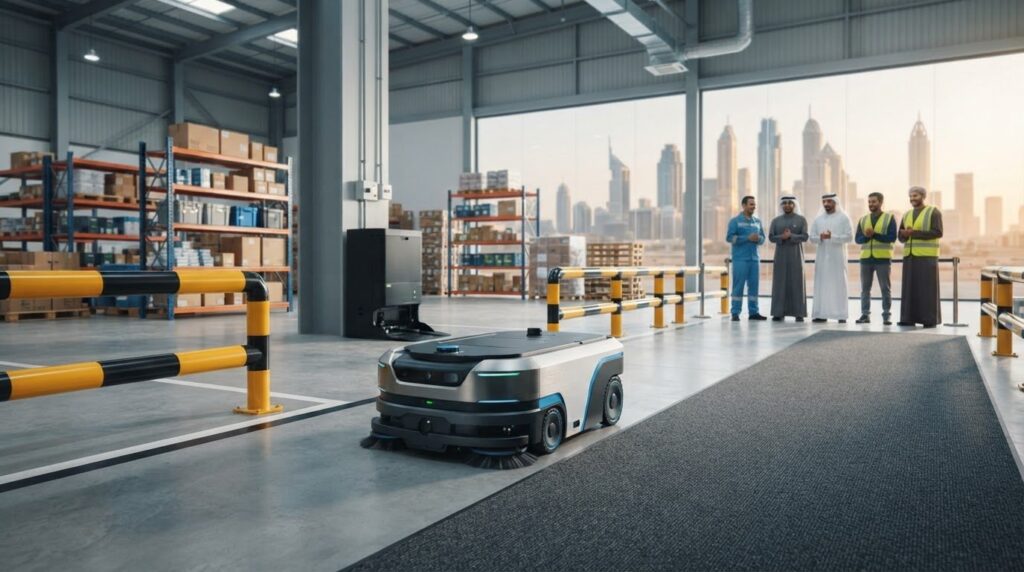
The integration of autonomous delivery robots for hotels UAE represents a fundamental departure from traditional service models, moving beyond experimental novelties into essential infrastructure. These systems are technically classified as a delivery robot, specifically an Autonomous Mobile Robot (AMR) designed for secure, multi-story navigation within complex hospitality environments. Aligning with the UAE’s national digital transformation goals, these units utilize advanced sensor suites to navigate dynamic corridors without human intervention. By 2026, the shift from pilot programs to standardized deployment reflects a broader industry recognition that automation is the primary driver of long-term operational resilience. Establishing a reliable technical foundation is no longer optional for organizations wishing to remain competitive in the future. These robots act as systematic organizers that bring order and efficiency to high-traffic lobbies and guest floors through controlled innovation. Automation isn’t just a technical upgrade; it’s the intellectual framework for a modernized facility. This evolution ensures that luxury standards are maintained through precision, creating synergy with existing automated cleaning and surveillance systems.
Addressing the Labor and Efficiency Gap
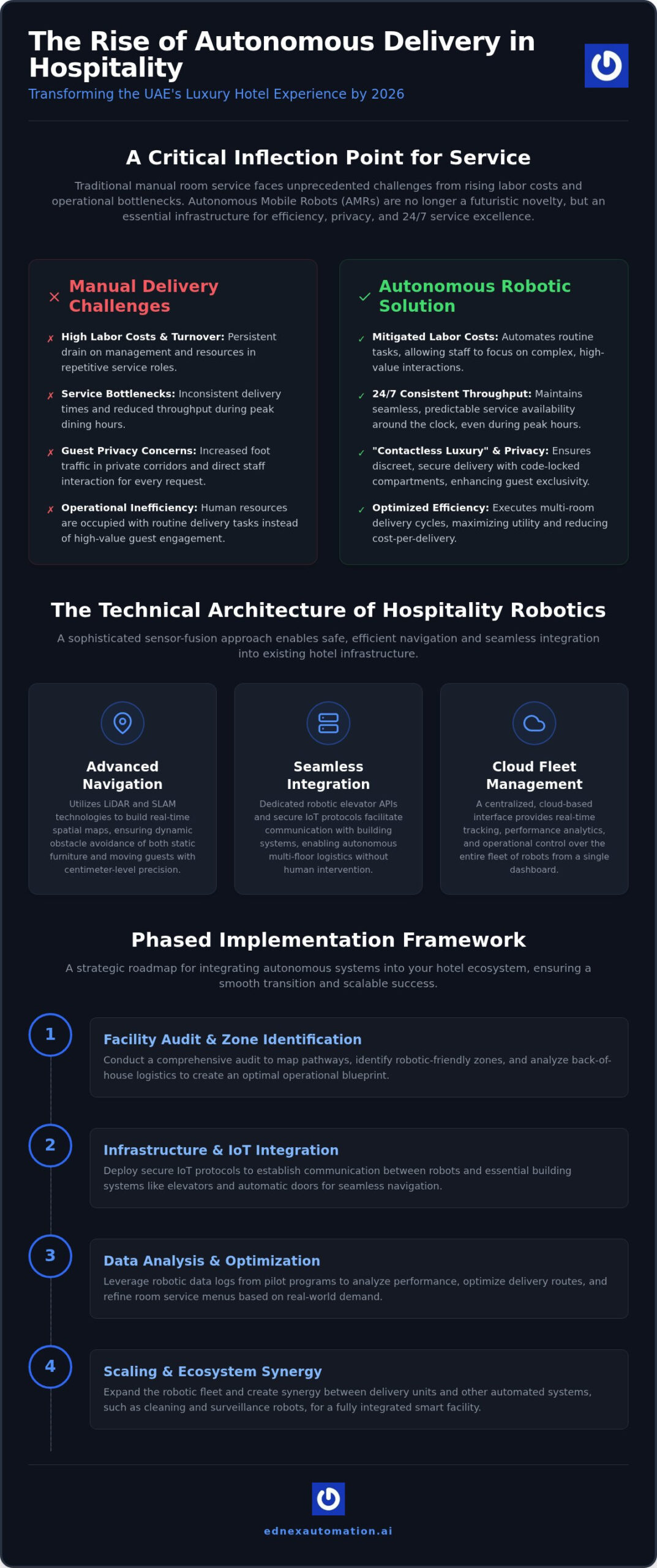
The hospitality sector continues to grapple with high staff turnover in repetitive service roles, creating a persistent drain on management. Utilizing autonomous mobile robots allows hotels to mitigate these challenges by automating routine room service. This strategic reallocation enables human personnel to focus on high-value guest interactions. During peak dining hours, robotic fleets maintain consistent operational throughput, ensuring that guest requests don’t suffer from the bottlenecks typical of manual labor models.
The Privacy and Security Advantage
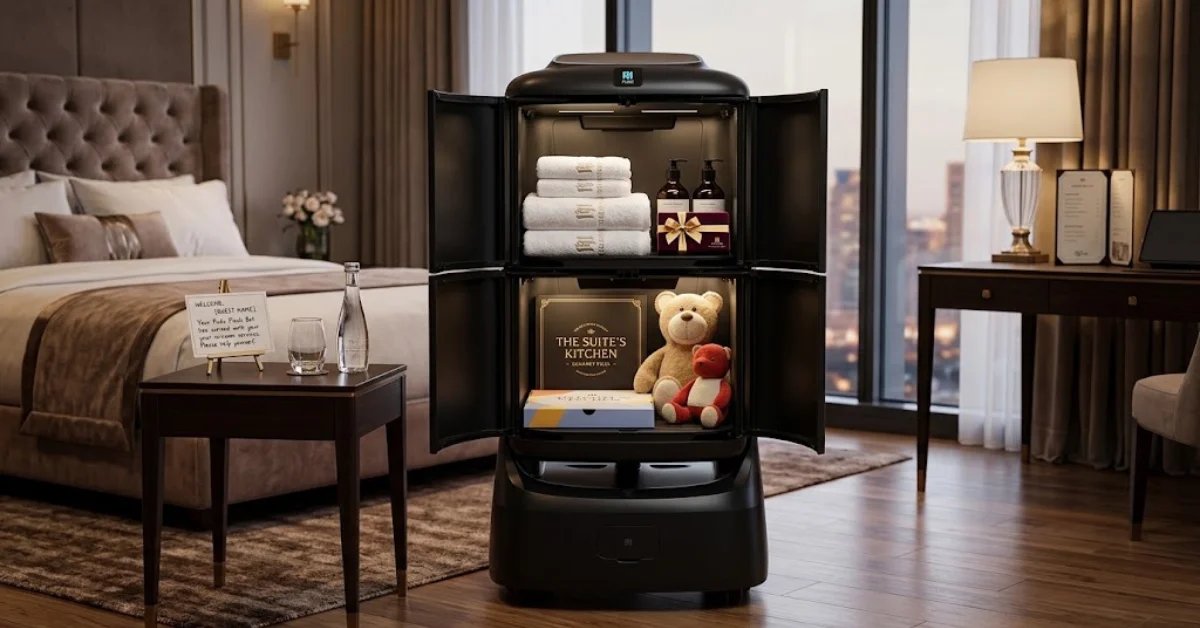
Modern guests increasingly equate luxury with discretion, driving the “contactless luxury” trend across the nation. Autonomous delivery robots for hotels UAE provide a secure, code-locked transport mechanism for sensitive items, ensuring that only the intended recipient accesses the payload. This technical solution effectively reduces unnecessary foot traffic in guest corridors, enhancing the atmosphere of exclusivity premium brands demand. These systems provide 24/7 service availability, eliminating the need for increased night-shift staffing while maintaining high responsiveness.
The Technical Architecture of Hospitality Robotics
Leveraging a sophisticated sensor fusion approach, autonomous delivery robots for hotels UAE utilize advanced LiDAR and SLAM to construct high-definition spatial maps in real-time. This technical foundation allows for dynamic obstacle avoidance, ensuring the unit can differentiate between static furniture and moving guests. Implementing these high-tech systems requires a grounded understanding of indoor logistics, where every sensor input translates into a safe and efficient delivery path. Efficiency is paramount. Cloud-based fleet management systems provide the necessary intellectual framework for real-time tracking, allowing operators to monitor entire fleets from a centralized interface. Through the use of multi-compartment designs, these units execute simultaneous multi-room delivery cycles, maximizing the utility of every operational hour.
Navigation in Complex Indoor Environments
Centimeter-level precision is achieved through the processing of real-time data, allowing these robots to navigate crowded lobbies and narrow corridors safely. Managing multi-floor logistics is achieved through dedicated robotic elevator APIs, which facilitate secure IoT communication between the robot and the building’s vertical transport systems. This ensures operational continuity even in high-traffic scenarios or low-light conditions where human-led service might falter. Precision drives luxury. Utilizing these specialized machinery components, hotels can maintain a steady rhythm of service that meets modern luxury standards. For facilities aiming for this level of technical sophistication, partnering with a bespoke robotic integrator ensures that hardware and infrastructure work in perfect harmony.
Integration with Hotel Management Systems (PMS)
The deployment of autonomous delivery robots for hotels UAE is most effective when the robotic fleet is fully integrated with the Property Management System. It’s about data, not just hardware. Syncing robot tasking with guest orders via the PMS eliminates manual data entry and reduces the risk of service errors. Automating billing and inventory updates upon successful delivery ensures that every transaction is recorded with surgical accuracy, providing management with granular data on guest preferences. System interoperability is defined as the seamless exchange of data between disparate software and hardware platforms, serving as the cornerstone of 2026 robotic efficiency. By integrating with existing PLC and SCADA systems, the delivery fleet becomes a data-driven extension of the hotel’s core operations. This comprehensive approach ensures that every robotic mission contributes to a measurable improvement in facility-wide throughput and guest satisfaction.
Strategic Operational Benefits: Beyond the Novelty Factor
Moving beyond the initial “wow” factor, the deployment of autonomous delivery robots for hotels UAE functions as a strategic financial investment that fundamentally alters the cost structure of room service. Calculating the reduction in cost-per-delivery requires a comprehensive look at total lifecycle management versus the escalating costs of human recruitment and training. These intelligent units maintain a consistent performance profile regardless of the hour, eliminating the variables of human fatigue. By analyzing the granular data insights extracted from robot logs, management can identify precise trends in guest requests to optimize room service menus and staffing levels. This level of operational visibility ensures that resources are allocated with surgical precision, directly contributing to the organization’s long-term business viability. Strengthening brand equity through a visible commitment to cutting-edge technology positions the facility as an industry leader in a competitive regional market.
Measurable ROI and Long-Term Viability
Evaluating the payback period for autonomous delivery fleets in 5-star environments typically reveals a rapid return on investment through the elimination of low-value, repetitive manual tasks. Reducing the physical strain on human staff by automating long-distance walking across sprawling properties extends the career longevity of your most valuable employees. Reducing operational downtime is achieved through integrated predictive maintenance, ensuring 24/7 uptime that manual teams struggle to match during peak holiday seasons. Scaling hospitality operations no longer requires a linear, expensive increase in human resource expenditure; instead, it involves the systematic addition of robotic units to the existing fleet. This approach allows hotels to expand their service capacity while keeping fixed costs under control. It’s a method that provides the intellectual framework necessary for sustainable growth.
Enhanced Guest Experience and Personalization
Enhancing the guest experience through technology creates a new standard for personalized luxury that modern travelers demand. Offering “on-demand” amenities via seamless mobile app integration empowers guests to request essentials without the friction of a traditional phone call. Reducing delivery wait times for items like towels or refreshments ensures that guest needs are met with a speed that manual service often can’t achieve during high-occupancy periods. Autonomous delivery robots for hotels UAE provide a reliable, contactless service that prioritizes guest privacy above all else. Beyond the functional benefits, these units provide a unique visual element that drives organic social media engagement, effectively turning a logistics solution into a powerful marketing asset. It’s about meeting expectations before the guest even realizes they have them.
Implementation Framework: Integrating Robots into Hotel Ecosystems
Successful integration of autonomous delivery robots for hotels UAE requires more than just hardware procurement; it demands a systematic audit of the physical and digital environment. Identifying robotic-friendly zones and potential architectural barriers ensures that the deployment remains efficient and safe. This process begins with a meticulous evaluation of floor transitions, elevator compatibility, and Wi-Fi signal strength across the property. Establishing these baseline parameters allows for a controlled rollout that prioritizes high-impact areas without disrupting guest comfort. It’s about building a reliable technical foundation that supports long-term business viability and operational excellence.
Site Preparation and Mapping
Utilizing advanced LiDAR scanning, technical partners create high-fidelity digital twins of the hotel layout to facilitate precise pathing. Installing IoT beacons or signal boosters in identified dead zones prevents communication lapses that could stall delivery cycles. Optimizing the placement of charging stations is equally critical. These hubs must be accessible for the fleet without obstructing guest pathways or staff work zones. This technical groundwork provides the necessary infrastructure for a fleet to operate with total autonomy and consistent uptime, ensuring the system functions as a systematic organizer of internal logistics.
Staff and Guest Onboarding
Reframing robots as collaborative tools rather than workforce replacements is essential for maintaining staff morale and operational synergy. Designing intuitive guest interfaces ensures that item retrieval is a seamless, friction-less experience for travelers of all technical backgrounds. Monitoring initial interactions allows management to refine robot behavior and voice prompts. This process involves tailoring the machine’s “personality” to match the hotel’s specific luxury brand standards. This data-driven approach transforms a technical tool into a sophisticated service ambassador that enhances the guest’s perception of the brand as a tech-forward destination.
Developing a phased rollout strategy starting with back-of-house logistics allows the team to master the system before it enters the public eye. Establishing rigorous safety protocols ensures that every robotic mission for autonomous delivery robots for hotels UAE adheres to the highest standards of guest protection. For organizations ready to lead this industrial transformation, engaging a specialized robotics integrator provides the start-to-finish expertise required for a successful deployment.
Scaling Hospitality Automation with EdNex Automation
Providing bespoke robotic integration services tailored to the UAE’s unique luxury standards, EdNex Automation acts as a bridge between global technological breakthroughs and regional industrial needs. The deployment of autonomous delivery robots for hotels UAE requires more than a simple equipment purchase; it demands an intellectual framework that ensures long-term business viability. Leveraging a comprehensive portfolio of autonomous mobile robots and specialized delivery units, we deliver high-level solutions that address the specific operational bottlenecks of the hospitality sector. Our approach is grounded in technical expertise, ensuring that every system is optimized for the complex infrastructure of a modern facility. By offering start-to-finish consulting, we guide organizations through the initial audit phase to a successful nationwide scaling of their robotic fleets.
The EdNex Advantage: High-Tech Reliability
Ensuring industrial-grade performance relies on official certifications and strategic alliances with global technology leaders. We prioritize reliability by providing the intellectual framework necessary for seamless implementation, rather than just the tools themselves. EdNex Automation acts as the systematic organizer of complex hotel automation, bringing order and efficiency to environments where manual processes have reached their limit. This authoritative standing allows us to integrate advanced machinery that meets the rigorous demands of the UAE market. Every deployment is a controlled and deliberate innovation designed to mitigate risk and improve operational throughput.
A Holistic Approach to Facility Automation
Integrating autonomous delivery robots for hotels UAE is most effective when viewed as part of a broader facility-wide automation strategy. Combining delivery units with autonomous cleaning robots allows for total floor management, ensuring hygiene and service standards are maintained without increasing labor costs. Long-term viability is further secured through expert PLC and SCADA integration services, which link disparate robotic systems into a unified operational ecosystem. To further enhance guest interaction and front-desk efficiency, we offer humanoid robots for sale UAE that serve as sophisticated service ambassadors. This holistic methodology future-proofs hotel assets, transforming them into high-tech, luxury destinations capable of competing in the 2026 landscape. We provide the comprehensive expertise required to evolve your organization into a leader of the Industry 4.0 transformation.
Defining the Future of Regional Hospitality Excellence
Transitioning into 2026 requires more than a reactive response to labor challenges; it necessitates a proactive investment in systematic automation. The deployment of autonomous delivery robots for hotels UAE has evolved into a critical operational standard that ensures 24/7 service availability while significantly reducing overhead. By leveraging advanced LiDAR navigation and seamless Property Management System integration, your facility can achieve a measurable ROI that manual service models simply can’t match. This technical evolution doesn’t just solve current bottlenecks but provides the intellectual framework for long-term business viability in a competitive regional market.
Realizing this level of industrial transformation requires a partner with the specialized expertise to bridge the gap between global breakthroughs and local infrastructure. Acting as a regional leader in Industry 4.0 transformation, EdNex Automation provides the start-to-finish consulting and technical integration necessary for nationwide scaling. As an official integrator of advanced AMR systems, we ensure your facility benefits from a holistic approach to complex multi-system automation. Consult with EdNex Automation for your hospitality robotics strategy to secure your position at the cutting edge of modern luxury. The future of hospitality is autonomous, and the time to organize your facility for success is now.
Frequently Asked Questions
How do autonomous delivery robots navigate elevators in UAE hotels?
Utilizing secure IoT protocols, these units communicate directly with building elevator controllers via specialized APIs. This allows the robot to call the lift, select the destination floor, and navigate the doors without human assistance. The integration ensures that vertical logistics are as autonomous as horizontal travel, maintaining consistent service delivery across multi-story facilities. Such systematic organization is essential for maintaining 24/7 room service availability without staff intervention.
Can delivery robots operate on carpeted floors in luxury guest corridors?
High-performance delivery units are engineered with high-torque drivetrains and specialized wheels to handle standard hotel carpeting. These systems maintain navigational precision on various surfaces, including the thick-pile carpets often found in luxury guest corridors. By optimizing the motor output, the robot ensures a smooth glide that prevents any disruption to the guest environment. This capability is a fundamental requirement for autonomous delivery robots for hotels UAE operating in high-end establishments.
What happens if a robot encounters a guest or an obstacle in a narrow hallway?
Integrating advanced LiDAR and SLAM sensors, the robot processes real-time spatial data to detect and circumvent dynamic obstacles. If a narrow corridor is blocked, the system will pause and politely request passage or calculate an alternative route. This ensures safety and prevents operational bottlenecks. These intelligent systems are programmed to prioritize guest movement, ensuring that the automation remains a discreet and respectful presence within the facility corridors.
Are these robots secure enough to deliver high-value items or room keys?
Security is maintained through electronically locked compartments that only open upon the entry of a unique guest PIN or QR code. This technical solution ensures that high-value items, such as room keys or sensitive documents, remain protected during transit. The system logs every interaction, providing management with a detailed audit trail of the delivery cycle. This level of security is a cornerstone of maintaining guest trust in a tech-forward luxury environment.
How much does it cost to implement a fleet of delivery robots in a hotel?
Implementation costs are determined by the specific requirements of the facility, including fleet size and the complexity of Property Management System integration. Organizations typically evaluate the investment based on the long-term reduction in labor overhead and the measurable improvement in delivery throughput. While initial capital expenditure varies, the rapid payback period in high-occupancy 5-star environments makes these systems a necessary evolution for any organization wishing to remain competitive in 2026.
What is the typical battery life and charging time for a hospitality delivery robot?
Modern hospitality robots typically offer between 8 and 12 hours of continuous operational life on a single charge. Utilizing autonomous docking stations, the units return to power hubs during low-demand periods to ensure maximum fleet availability. A full recharge is usually achieved within 3 to 4 hours, depending on the specific battery chemistry and hardware specifications. This self-sustaining cycle ensures that 24/7 service remains uninterrupted without requiring manual oversight or charging assistance.
Do guests find robots intrusive in a high-end luxury environment?
Guests in high-end environments often perceive the presence of autonomous delivery robots for hotels UAE as a hallmark of modern luxury and efficiency. The discreet nature of robotic delivery enhances privacy by eliminating the need for staff-to-guest contact at the room door. By providing a silent and efficient service, these units contribute to an atmosphere of exclusivity. Many luxury brands report that these systems are viewed as a value-added amenity rather than an intrusion.
Can delivery robots be integrated with existing hotel mobile apps?
Seamless integration with existing hotel mobile applications is achieved through robust API frameworks. This allows guests to request amenities directly from their personal devices, which then triggers the robotic dispatch system automatically. By syncing guest orders with the central Property Management System, the entire lifecycle from request to delivery is fully digitized. This holistic approach to facility automation ensures that the guest experience remains fluid, personalized, and entirely modern.