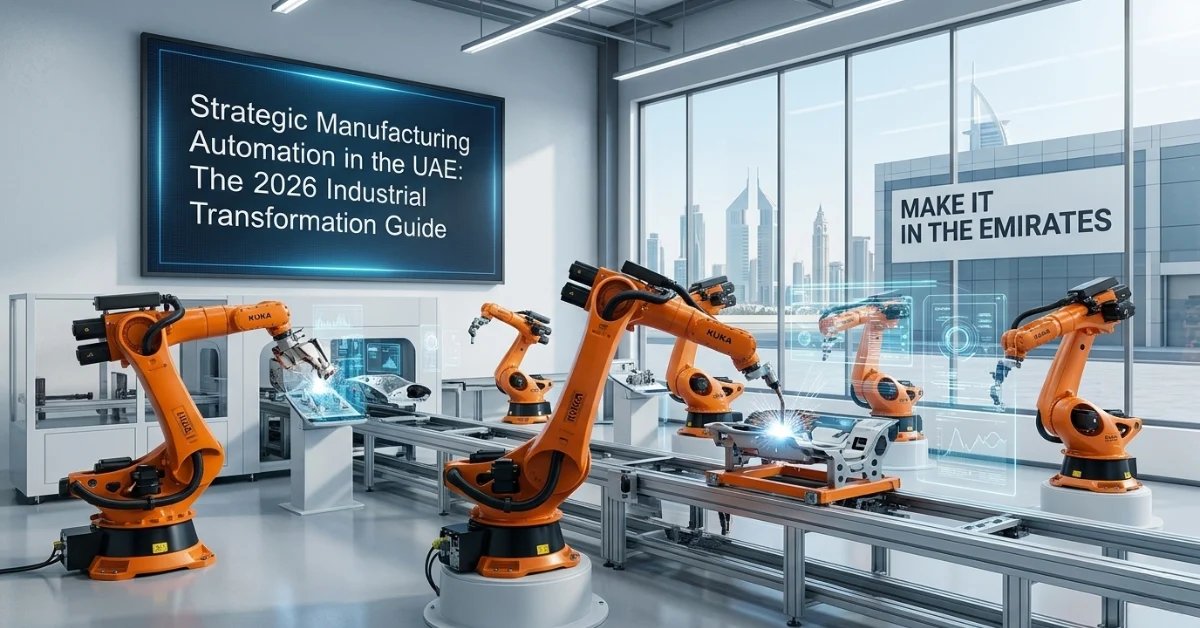
With the UAE’s industrial sector contribution to GDP surging by 70 percent since 2021 to reach AED 200 billion, the window for traditional manual operations is rapidly closing. You likely recognize that high operational costs and a heavy dependence on manual labor for repetitive tasks are no longer sustainable in a market moving toward the ambitious goals of Operation 300bn. Implementing strategic manufacturing automation UAE is no longer an optional upgrade; it’s a fundamental necessity for organizations that intend to remain competitive within the national Industry 4.0 framework. Leveraging advanced robotics and integrated control systems allows facilities to redefine industrial efficiency while aligning with government-backed initiatives like Make it in the Emirates.
Discover how advanced robotics and integrated control systems are redefining industrial efficiency across the UAE’s manufacturing landscape. By prioritizing the deployment of autonomous mobile robots and collaborative systems, your organization can achieve significant gains in production throughput. This guide provides a comprehensive roadmap for the 2026 industrial climate, detailing how seamless SCADA and PLC integration can eliminate machine-level data silos. We will analyze the technical frameworks required for bespoke automation, ensuring your transition to a smarter factory model is both systematic and highly profitable.
Key Takeaways
- Strategic alignment with the Operation 300bn initiative is essential for future-proofing industrial assets within the UAE’s evolving high-tech economic landscape.
- Modernization requires a decisive shift from rigid, manual assembly to flexible, intelligent systems such as Collaborative Robots (Cobots) and Autonomous Mobile Robots (AMRs).
- Establishing a centralized control architecture through PLC and SCADA integration is the vital backbone for achieving high-performance manufacturing automation UAE and eliminating operational data silos.
- Successful transformation depends on a methodical roadmap, beginning with a facility-wide audit to identify throughput bottlenecks before selecting the appropriate tier of autonomy.
- Long-term industrial viability relies on securing a technical partner who provides comprehensive, start-to-finish expertise in system design and sophisticated hardware integration.
The Evolution of Manufacturing Automation in the UAE: Aligning with Vision 2031
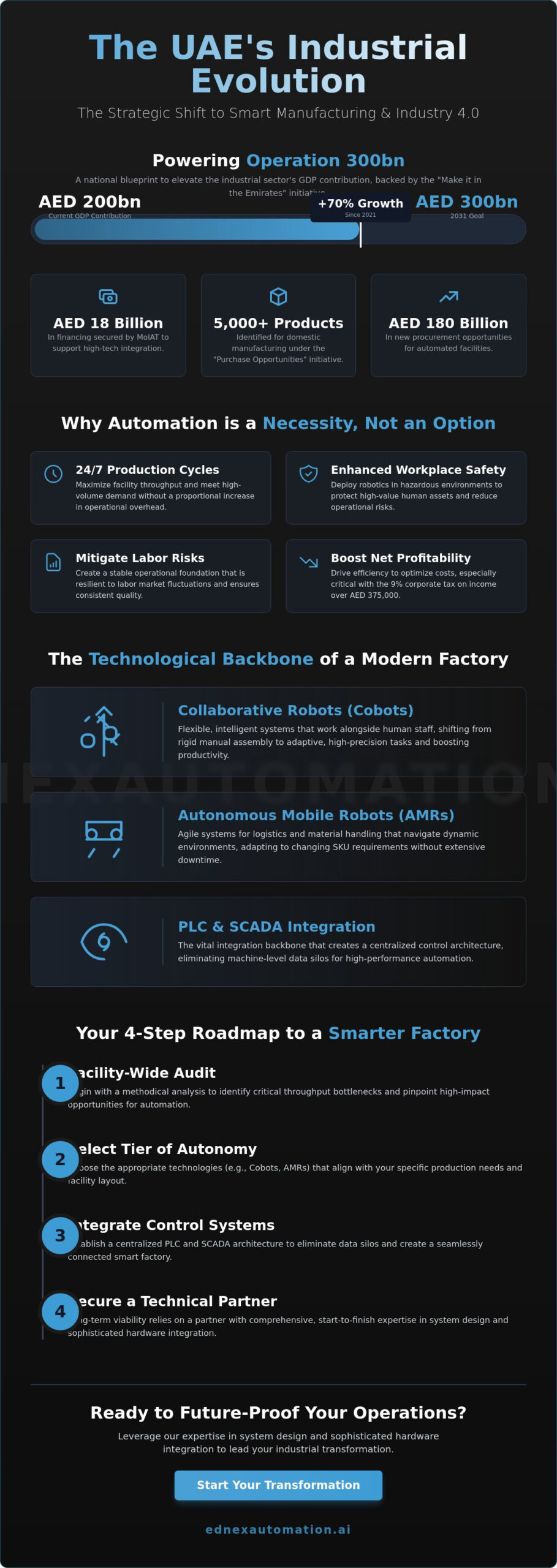
The industrial landscape within the Emirates is currently undergoing a systemic transition, moving beyond traditional production methods toward a future defined by intelligence and autonomy. Driven by the national mandate to diversify the economy, Industrial Automation has become the primary mechanism for scaling output without expanding physical footprints. The UAE is uniquely positioned for this rapid adoption, benefiting from world-class digital infrastructure and a regulatory environment that actively incentivizes high-tech integration. Implementing manufacturing automation UAE allows facilities to transcend the limitations of manual labor, ensuring they remain competitive in a global market that increasingly demands speed and precision. With the industrial sector’s GDP contribution already reaching AED 200 billion, representing a 70 percent increase since 2021, the push for modernization is backed by tangible economic momentum.
National Strategy: Operation 300bn and Make it in the Emirates
Operation 300bn serves as the comprehensive blueprint for this transformation, aiming to elevate the industrial sector’s contribution to the national GDP to AED 300 billion by 2031. Recognizing the potential of high-productivity industries, the Ministry of Industry and Advanced Technology (MoIAT) has secured AED 18 billion in financing to support the “Make it in the Emirates” initiative. These resources specifically target sectors like pharmaceuticals, food tech, and aerospace, where precision and reliability are non-negotiable. Manufacturers who adopt advanced robotics and AI-driven systems gain access to these capital pools, facilitating the acquisition of sophisticated machinery that aligns with the UAE Strategy for Industry 4.0. The “Purchase Opportunities” initiative has identified over 5,000 products for domestic manufacturing, creating AED 180 billion in new procurement opportunities for automated facilities that can meet high-volume demand.
The Economic Imperative for Automation
Relying on human labor for repetitive, high-volume tasks introduces significant risks, including variability in quality and vulnerability to labor market fluctuations. Transitioning to autonomous systems mitigates these risks, providing a stable operational foundation that remains unaffected by external demographic shifts. Utilizing robotic intervention in hazardous industrial environments significantly enhances workplace safety, protecting high-value human assets while maintaining peak efficiency. These systems enable 24/7 production cycles, allowing factories to maximize throughput without a proportional increase in overhead or administrative complexity. With the UAE’s robotics market projected to reach USD 333 million by 2028, the shift toward full-scale industrial autonomy is no longer a future prospect but a current operational requirement. Optimizing costs through technology is particularly vital given the 9 percent corporate tax rate for taxable income exceeding AED 375,000, making efficiency the ultimate driver of net profitability.
Core Technologies Driving UAE Factory Modernisation: Cobots, AMRs, and ASRS
The shift from rigid, fixed automation to modular, intelligent robotics represents the next phase of manufacturing automation UAE. Traditional systems often required massive footprints and permanent safety barriers, limiting a facility’s ability to pivot production lines in response to market demands. Modern factories now prioritize agility, integrating systems that can adapt to changing SKU requirements without extensive downtime. This evolution is central to the national Smart Manufacturing initiative, which encourages the adoption of technologies that enhance both productivity and flexibility. Achieving world-class manufacturing automation UAE requires more than just hardware acquisition; it demands a strategic rethink of the workspace itself to allow for seamless interaction between human intelligence and machine precision.
Collaborative and Humanoid Robotics
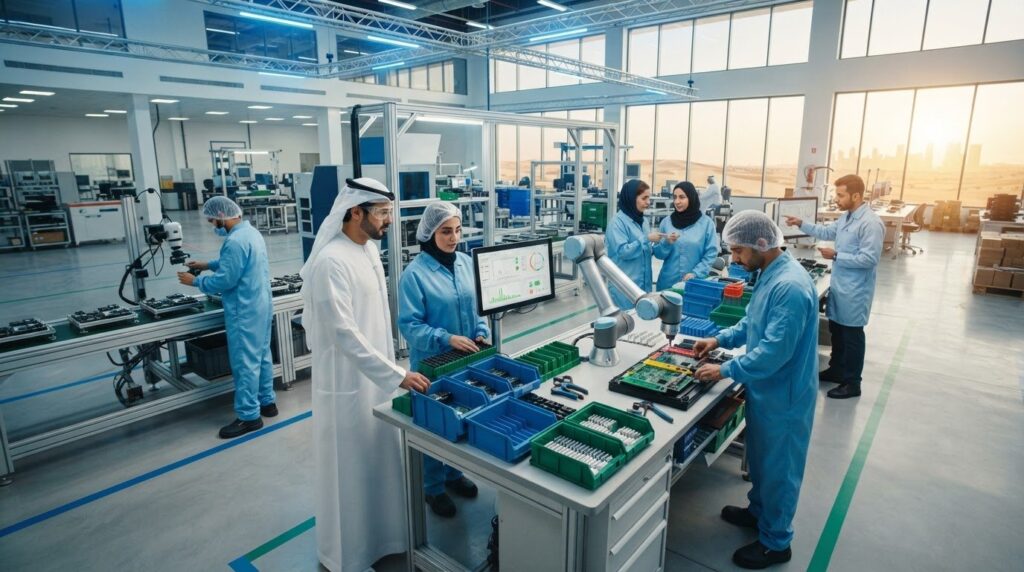
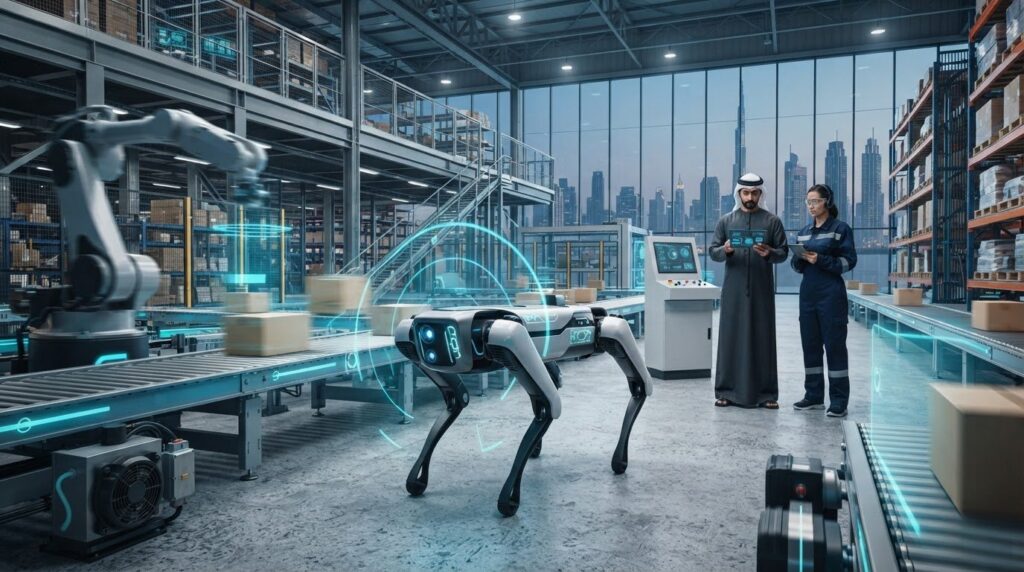
Implementing collaborative robots UAE serves as the foundational step for facilities looking to achieve human-robot synergy on the assembly line. Cobots are tools designed for direct interaction with humans within a shared workspace. Unlike their industrial predecessors, these systems possess advanced force-sensing capabilities that allow them to operate without safety cages, significantly reducing the required floor space and installation costs. While cobots handle high-precision, repetitive tasks, humanoid robots are increasingly emerging to manage complex, multi-tasking roles that require human-like dexterity and movement. This combination ensures that the workforce is augmented rather than replaced, focusing human talent on high-level decision-making while robots manage the mechanical execution of production.
Intelligent Logistics and Warehousing
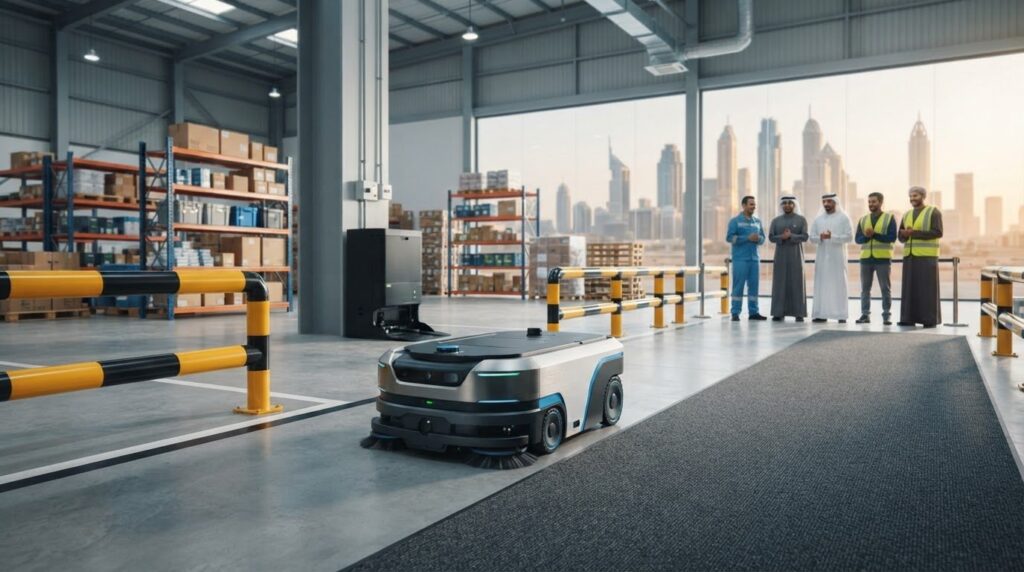
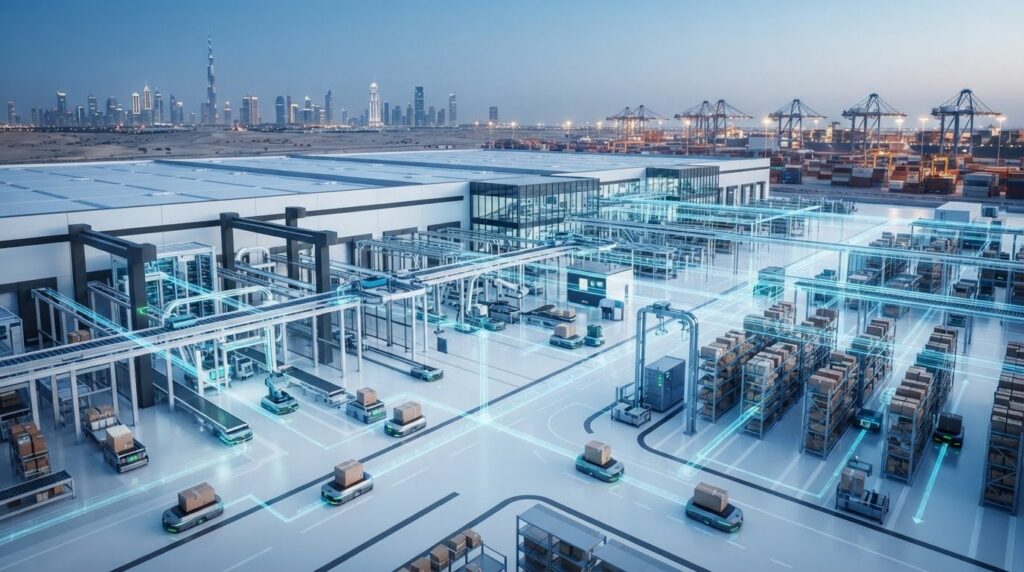
Internal logistics often represent a significant bottleneck in industrial throughput, but the deployment of autonomous mobile robots (AMRs) is transforming material handling from a manual chore into a streamlined, data-driven process. AMRs offer superior navigation-based autonomy compared to traditional Automated Guided Vehicles (AGVs), which typically rely on fixed tracks or magnetic tape. Because AMRs utilize LiDAR and sophisticated mapping software, they can navigate dynamic UAE plant floors safely, recalculating routes in real-time to avoid obstacles or personnel.
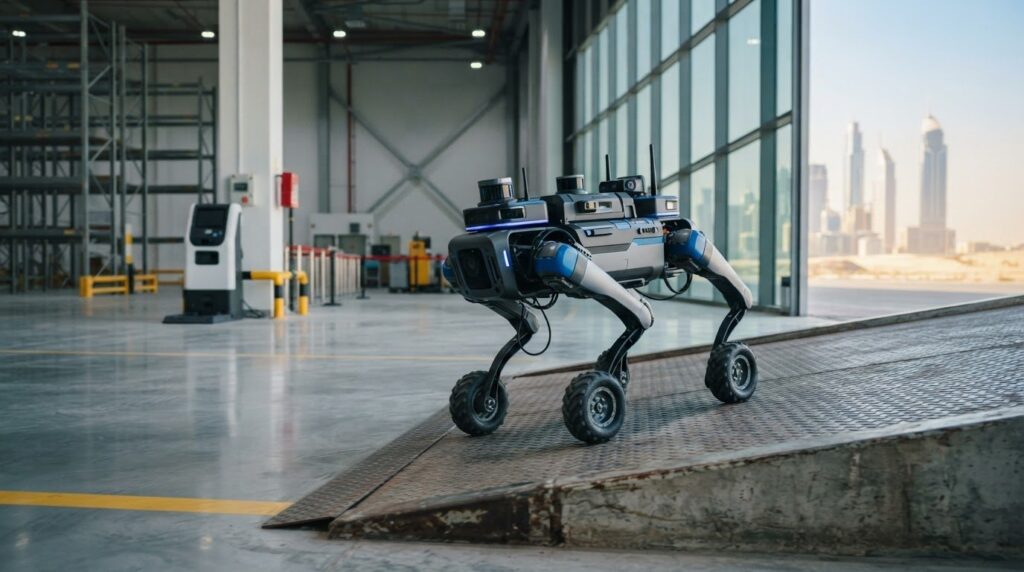
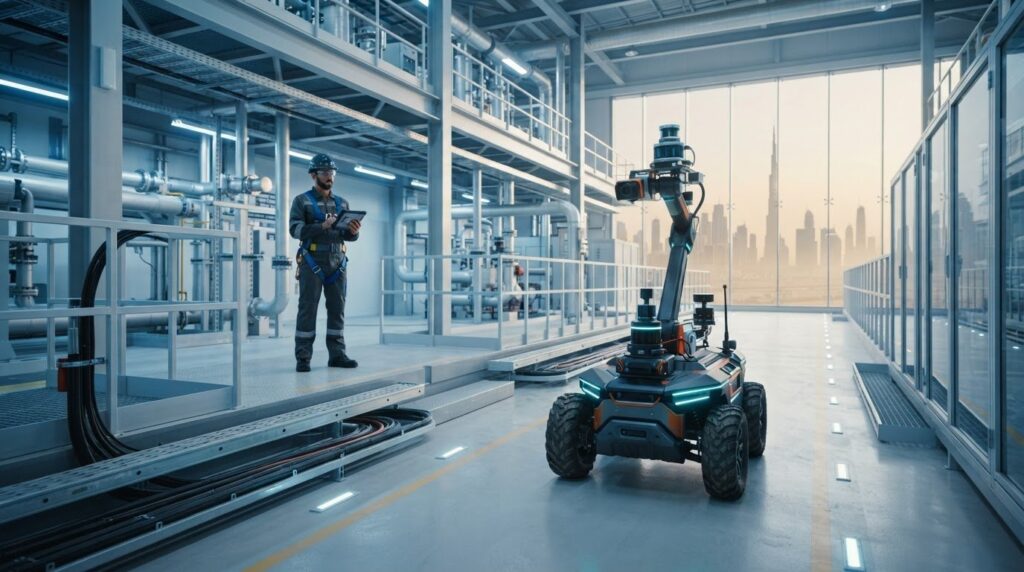
Complementing this mobility, automated storage and retrieval systems (ASRS) optimize vertical space and inventory management. These systems allow for high-density storage, ensuring that every square meter of a facility is utilized to its maximum potential. Integrating inspection robots and surveillance robots into this ecosystem further enhances operational integrity by providing continuous monitoring of equipment and perimeters. To see how these technologies can be integrated into your specific workflow, you might explore the latest robotic integration strategies designed for the regional industrial market.
The Integration Backbone: Why PLC and SCADA Systems are Critical
Achieving a high-performance industrial environment requires more than the physical installation of robotic arms or mobile platforms. It demands a sophisticated centralized control architecture that orchestrates every movement within the plant. By utilizing professional PLC and SCADA integration services, manufacturers bridge the critical gap between floor-level machinery and high-level management systems. This integration ensures that data no longer exists in silos but flows as actionable intelligence, allowing for rapid decision-making and precise operational control. Within the context of manufacturing automation UAE, these systems provide the real-time visibility necessary to monitor national industrial operations at scale, transforming raw production data into a strategic asset.
Industrial Control Systems (ICS) Architecture
The hierarchy of a modern automated facility begins at the physical layer, where sensors and actuators interface directly with the production line. These components feed data into Programmable Logic Controllers (PLCs), which act as the localized intelligence for specific tasks. Supervisory Control and Data Acquisition (SCADA) systems then sit atop this hierarchy, aggregating data to provide a comprehensive overview of the entire facility. This structured approach to Data Acquisition (DAQ) is fundamental for predictive maintenance, as it allows engineers to identify potential equipment failures before they cause costly downtime. Ensuring system resilience against external threats is equally paramount; therefore, modern industrial networks must incorporate robust cybersecurity protocols to protect sensitive production data and maintain operational continuity.
Customised PLC Programming and Support
Generic control logic often fails to account for the unique operational demands of specialized UAE manufacturing sectors. Tailoring PLC programming to specific workflows ensures that every cycle is optimized for maximum throughput and minimum waste. This bespoke approach allows for the integration of remote monitoring tools, enabling rapid diagnostics and technical support without the need for immediate on-site intervention. By establishing a flexible software foundation, facilities future-proof their operations for the eventual integration of AI and machine learning modules. Overcoming the common objection of legacy system incompatibility is a hallmark of strategic integration; bespoke solutions can often bridge the gap between older machinery and modern control networks, preserving existing capital investments while enabling Industry 4.0 capabilities. This systematic modernization is a core pillar of successful manufacturing automation UAE, providing the intellectual framework necessary for long-term industrial viability.
Strategic Implementation: A Roadmap for Automating UAE Industrial Facilities
Initiating a transition toward a fully autonomous facility requires a methodical, multi-phased approach that prioritizes long-term viability over immediate, fragmented upgrades. Achieving successful manufacturing automation UAE depends on a disciplined roadmap that aligns technical capabilities with specific business objectives. By following a structured implementation path, organizations can mitigate the risks associated with large-scale technological shifts while ensuring every investment delivers a measurable return on capital.
Phase 1: Facility Audit and Bottleneck Identification. Identifying the most impactful entry points for technology, a structured audit serves as the baseline for all subsequent investment. This phase involves pinpointing exactly where manual processes cause delays or quality variability, allowing engineers to focus their efforts on high-impact zones.
Phase 2: Selecting the Appropriate Automation Tier. Deciding between partial and full autonomy is a strategic choice influenced by current production volumes and future growth targets. Many organizations find that a hybrid model, where robots handle specific repetitive tasks while humans manage complex assembly, provides the fastest path to modernization.
Phase 3: Pilot Testing and Proof-of-Concept (PoC). Validating the performance of robotic units in a controlled environment is essential before a factory-wide rollout. A successful PoC for a single AMR or cobot demonstrates technical feasibility and helps stakeholders visualize the tangible benefits of the proposed system.
Phase 4: Full-Scale Integration and Staff Training. Moving from the pilot phase to full integration, the deployment team must ensure every node is correctly mapped within the SCADA environment. This final phase includes the critical task of human-robot collaboration training, ensuring the workforce can safely and effectively operate alongside new autonomous assets.
Assessing Automation Readiness
Evaluating current power infrastructure and network capabilities is a prerequisite for any large-scale robotic deployment. High-performance systems require stable, high-bandwidth connectivity to communicate with centralized control platforms in real-time. Organizations should identify “low-hanging fruit”—repetitive, low-skill tasks that offer the fastest ROI when automated. When calculating the Total Cost of Ownership (TCO), stakeholders must account for maintenance, energy consumption, and periodic software updates beyond the initial hardware purchase. To begin your facility’s transformation, consult with an industrial automation specialist to evaluate your current infrastructure readiness.
Managing the Human Element
Upskilling the workforce is perhaps the most critical component of a successful transformation. Employees must be trained to manage and maintain the very robotic systems that augment their roles. Adhering to international safety standards, such as ISO 10218-1 and ISO/TS 15066 for collaborative operation, ensures a secure environment for human-robot interaction. Establishing a culture of continuous digital transformation encourages staff to view manufacturing automation UAE as a tool for professional empowerment rather than a threat to job security. This cultural shift ensures that the organization remains agile and ready to adopt the next wave of industrial innovation.
Partnering for Progress: How EdNex Automation Executes Industrial Transformation
Navigating the complexities of large-scale industrial transformation requires a partner who understands that hardware is only one component of a successful ecosystem. EdNex Automation functions as a high-level consultant, providing the strategic foresight necessary to implement manufacturing automation UAE within the framework of the nation’s 2031 vision. By adopting an end-to-end approach, we guide organizations from the initial visionary design phase through to the final technical integration of complex control systems. This comprehensive methodology ensures that every deployed asset contributes to long-term business viability and remains scalable as Industry 4.0 technologies continue to evolve. Our team bridges global technological breakthroughs with regional industrial needs, acting as a systematic organizer that brings order, safety, and efficiency to the plant floor.
Our Comprehensive Robotics Portfolio
Our specialized robotics portfolio is designed to address the unique challenges of the regional market, offering bespoke solutions for sectors ranging from oil and gas to high-volume logistics. We deploy a diverse array of autonomous units, including industrial cleaning robots, delivery robots, and high-precision inspection robots that maintain operational integrity in demanding environments. For facilities requiring the highest level of dexterity, our humanoid robots provide the capabilities needed for multi-tasking industrial roles, while our outdoor cleaning robots and surveillance robots ensure that every aspect of the facility remains secure and maintained. EdNex provides the intellectual framework necessary for successful automation. By integrating these units with automated storage and retrieval systems (ASRS) and sophisticated PLC and SCADA integration, we create a unified, high-performance environment that maximizes throughput and eliminates the data silos that often hinder growth.
The EdNex Advantage in the UAE
Operating within the UAE’s specific regulatory and economic landscape, EdNex leverages deep local expertise to ensure every project adheres to national safety standards and industrial mandates. Our status is solidified through official certifications and strategic alliances with global technology leaders, serving as a marker of legitimacy and reliability for our partners. We don’t just supply equipment; we provide the architectural foundation for a modern factory. This structured approach mitigates the risks associated with rapid modernization while positioning our partners at the cutting edge of global industrial competition. Aligning your facility with the “Make it in the Emirates” initiative is a complex undertaking, but with a reliable technical partner, it becomes a clear path to sustainable growth. We focus on delivering high-level solutions that transform current challenges into long-term competitive advantages.
Consult with EdNex Automation to start your industrial transformation and secure your organization’s future within the UAE’s high-tech industrial economy.
Securing Your Position in the UAE’s Industrial Future
Adopting a visionary approach to production is the only way to ensure long-term viability within a rapidly modernizing economy. Establishing a robust technical foundation through manufacturing automation UAE allows your organization to transcend manual limitations and align with the ambitious targets of Operation 300bn. This transformation relies on the seamless integration of PLC and SCADA systems to provide real-time visibility, alongside a structured implementation roadmap that identifies and eliminates operational bottlenecks. By prioritizing these strategic elements, facilities can achieve unprecedented levels of efficiency and throughput.
As a specialized division of the EdNex group founded in 2018, we offer the comprehensive expertise in ASRS and robotic control systems required for a successful Industry 4.0 transition. Our team acts as a reliable partner, connecting global technological breakthroughs with the specific needs of the regional market. Partner with EdNex Automation for your facility’s Industry 4.0 evolution to begin your journey toward systemic optimization. It’s time to transform your industrial challenges into a sustainable competitive advantage that will define your success for decades to come.
Frequently Asked Questions
What are the primary benefits of manufacturing automation for UAE-based companies?
Implementing manufacturing automation UAE provides a decisive increase in production throughput while simultaneously reducing high operational costs associated with manual labor. These systems enable facilities to maintain 24/7 production cycles, ensuring consistent quality and mitigating the risks of labor market fluctuations. By adopting autonomous technologies, organizations align themselves with national economic goals, gaining a significant advantage in global market competitiveness.
How do collaborative robots (cobots) differ from traditional industrial robots?
Collaborative robots are designed with advanced force-sensing technology that allows them to operate safely alongside human workers without the need for restrictive safety cages. Traditional industrial robots typically require isolated environments due to their high speeds and lack of proximity sensors. Cobots offer a modular and flexible solution that’s easily repurposed for different tasks, making them ideal for dynamic assembly lines that require human-robot synergy.
Is it possible to integrate new automation systems with existing legacy machinery?
Yes, achieving connectivity between legacy hardware and modern control networks is a standard practice in industrial modernization. Through bespoke PLC and SCADA integration services, engineers can bridge the gap between older equipment and high-level management systems. This approach preserves existing capital investments while enabling real-time data acquisition and predictive maintenance capabilities across the entire facility.
What role does SCADA play in modern manufacturing facilities?
Supervisory Control and Data Acquisition (SCADA) systems act as the centralized intelligence hub for the entire production environment. They aggregate data from various sensors and PLCs to provide management with real-time visibility into every operational node. This centralized architecture is essential for identifying throughput bottlenecks and ensuring that the facility operates at peak efficiency without unexpected downtime.
How can autonomous mobile robots (AMRs) improve warehouse efficiency?
Autonomous mobile robots utilize LiDAR and sophisticated mapping software to navigate plant floors dynamically without the need for fixed tracks or magnetic tape. This autonomy allows them to recalculate routes in real-time to avoid obstacles, ensuring a steady flow of materials between production zones. By automating internal logistics, facilities significantly reduce the time spent on manual material handling, leading to faster overall cycle times.
What is the typical ROI timeline for an ASRS implementation in the UAE?
The return on investment for an Automated Storage and Retrieval System (ASRS) is primarily driven by the optimization of vertical space and the elimination of inventory errors. While specific timelines vary based on facility scale, the reduction in total cost of ownership (TCO) is achieved through maximized storage density and rapid retrieval speeds. Organizations often see a measurable improvement in profitability as they scale their manufacturing automation UAE to meet the demands of the regional market.
Does EdNex Automation provide training for facility staff after installation?
Yes, providing the intellectual framework for operation is a core component of our end-to-end approach to industrial transformation. We offer comprehensive upskilling programs that ensure your workforce can safely manage, monitor, and maintain the newly integrated robotic systems. This focus on human-robot collaboration ensures that your staff becomes an empowered part of your digital transformation journey.
How does automation align with the UAE’s national industrial strategy?
Automation serves as the primary mechanism for achieving the goals set forth in the Operation 300bn strategy and the Make it in the Emirates initiative. By increasing the industrial sector’s contribution to the national GDP, these technologies help the UAE transition toward a high-productivity, knowledge-based economy. Adopting advanced robotics and AI-driven systems ensures that local manufacturers can meet the rigorous standards required for high-growth sectors like aerospace and pharmaceuticals.