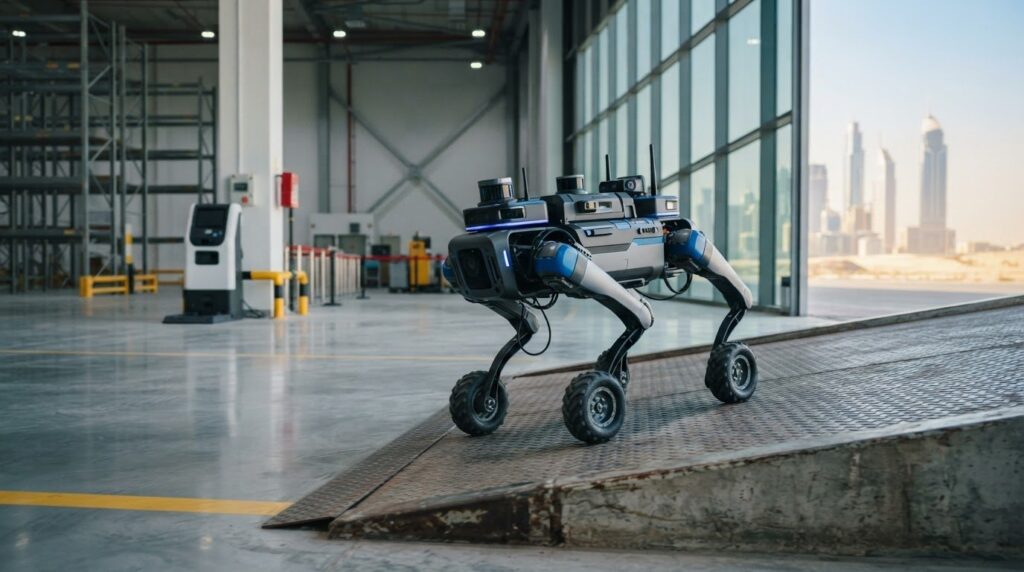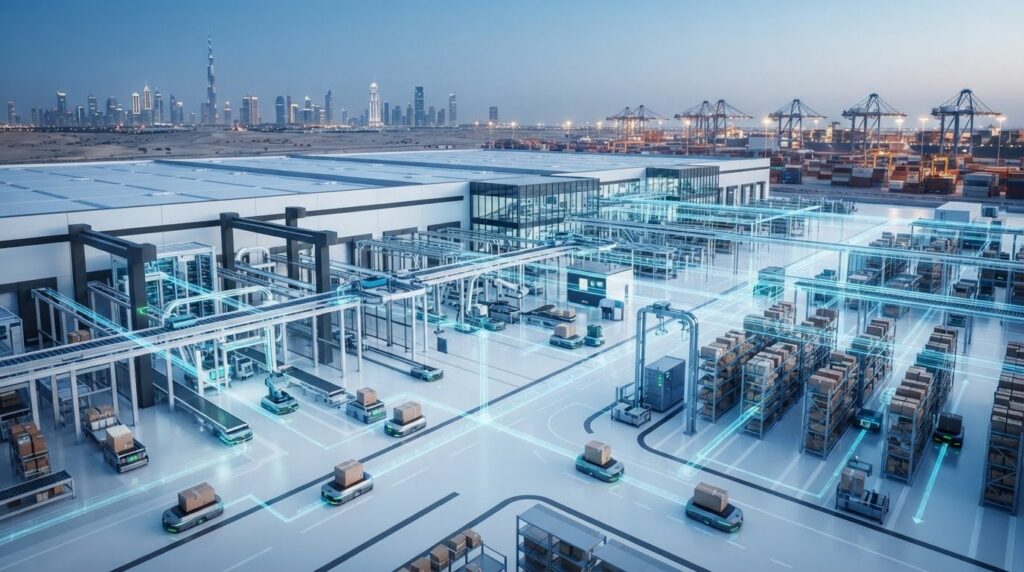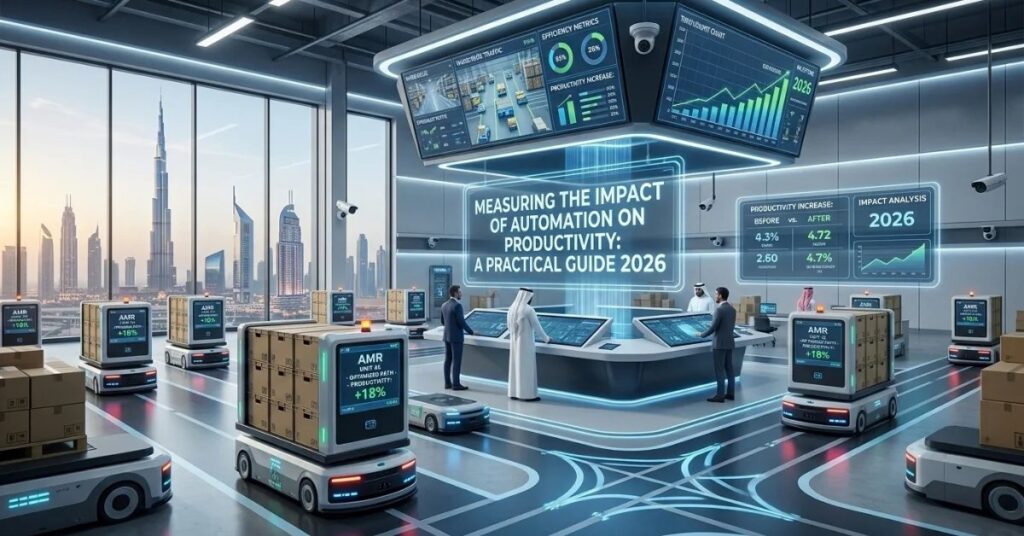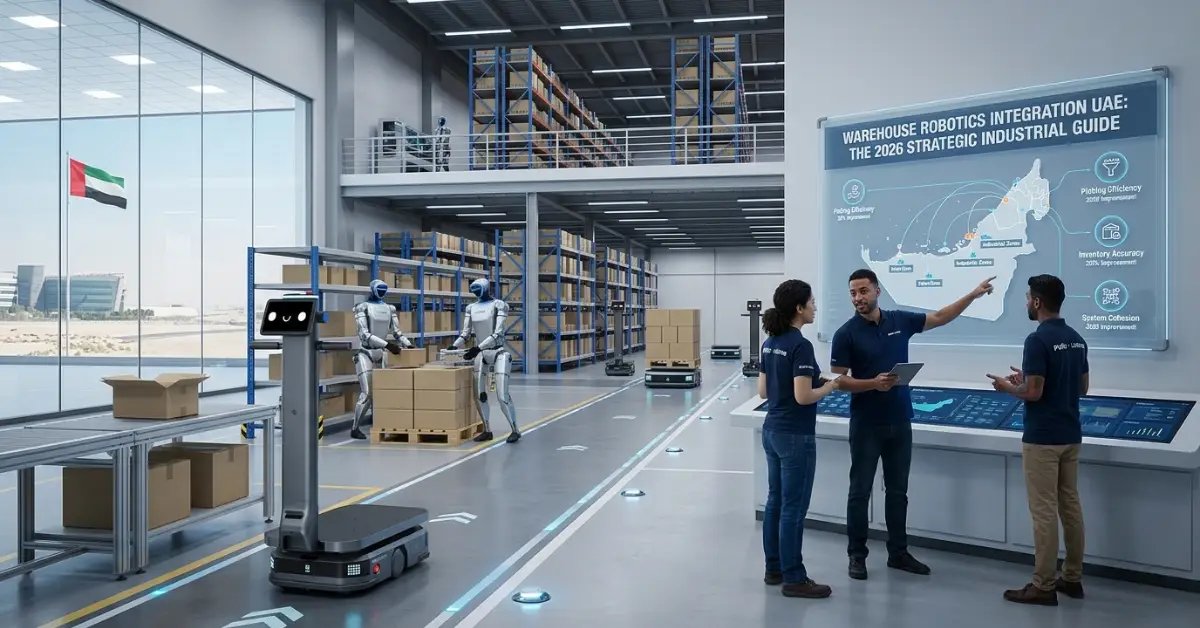
By September 2026, every major industrial entity in the Emirates must complete mandatory self-assessments under the UAE AI Act, signaling a definitive shift from optional modernization to regulated digital transformation. Facing persistent labor shortages and the technical friction of syncing autonomous units with legacy infrastructure, logistics leaders are finding that warehouse robotics integration UAE strategies require more than just hardware procurement. It demands a unified control architecture that bridges disparate systems with industrial intelligence.
You likely recognize that traditional manual workflows can’t sustain the throughput required by a market projected to grow at a CAGR of 13.4 percent through 2026. This guide promises to show you how to architect a high-performance, automated warehouse using advanced robotics and integrated control systems that align with Operation 300bn and national Industry 4.0 standards. We’ll explore the sophisticated deployment of AMRs and ASRS, the role of PLC and SCADA integration in maintaining ISA/IEC 62443 cybersecurity compliance, and the emerging impact of humanoid robots on operational accuracy.
Key Takeaways
- Align your facility with the UAE National AI Strategy to ensure full compliance with upcoming 2026 regulatory mandates.
- Evaluate how autonomous mobile robots and ASRS maximize vertical space while solving high-demand logistics labor shortages.
- It’s vital to implement PLC and SCADA systems as the technical foundation for successful warehouse robotics integration UAE to ensure seamless hardware orchestration.
- Follow a structured 5-step roadmap to transition from manual workflows to autonomous operations with a clear focus on ROI.
- Learn to architect a unified control environment that bridges new robotic units with your existing legacy infrastructure.
The Evolution of Smart Warehousing: Robotics in the UAE Industrial Landscape (2026)
Defining warehouse robotics integration UAE as the convergence of autonomous hardware and centralized software is essential for understanding modern supply chain resilience. As the UAE advances toward the 2031 National AI Strategy, the industrial sector is moving beyond simple mechanization. The transition from manual sorting to AI-driven autonomous fulfillment isn’t merely a trend; it’s a strategic necessity mandated by the increasing complexity of regional distribution networks. By adopting Logistics automation technologies, enterprises ensure their operations remain competitive within the framework of Operation 300bn, which seeks to elevate the industrial sector’s contribution to the national GDP. Industry 4.0 serves as the primary catalyst for this evolution, providing the technical standards required to maintain regional dominance in 2026.
Drivers of Automation in the National Logistics Sector
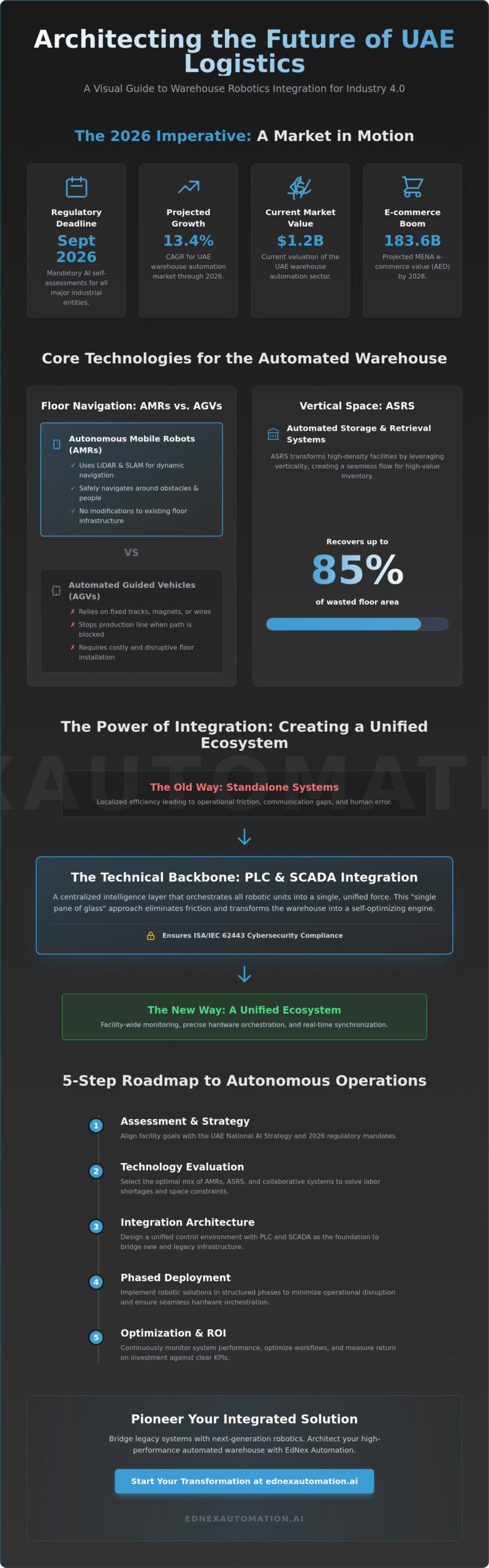
The UAE warehouse automation market, currently valued at USD 1.2 billion, is propelled by a projected 13.4 percent CAGR through 2026. Rapid e-commerce expansion across the MENA region, expected to reach AED 183.6 billion by 2028, necessitates a shift toward high-density, automated supply chains. Government incentives for high-tech manufacturing empower businesses to replace legacy manual processes with sophisticated robotic solutions. These initiatives provide the financial and regulatory tailwinds needed for organizations to invest in the future of autonomous logistics. It’s no longer about whether to automate, but how quickly a facility can scale its throughput to meet these surging fulfillment requirements.
Defining the Integrated Robotic Ecosystem
Distinguishing between standalone robots and integrated automation systems is a critical step for any technical leader. While a single robotic arm or AMR provides localized efficiency, a truly integrated ecosystem utilizes PLC and SCADA frameworks to orchestrate multiple units as a unified force. This “single pane of glass” approach offers facility-wide monitoring, allowing operators to oversee everything from ASRS performance to collaborative robot synchronization in real time. Implementing warehouse robotics integration UAE protocols ensures that every component, from delivery robots to inspection units, communicates through a centralized intelligence layer. This high-level orchestration eliminates operational friction and human error, transforming the warehouse into a precise, self-optimizing engine of industrial output.
Core Technologies: AMRs, ASRS, and Collaborative Systems
Achieving high-performance industrial outcomes requires a meticulous selection of hardware that complements your broader warehouse robotics integration UAE strategy. According to the Agility Emerging Markets Logistics Index, the UAE’s high ranking in digital readiness underscores the necessity for adopting advanced autonomous systems. By deploying a combination of AMRs, ASRS, and collaborative units, facilities can achieve end-to-end automation that scales with market demand while maintaining strict compliance with national safety standards.
Autonomous Mobile Robots (AMRs) vs. AGVs
Evaluating autonomous mobile robots reveals their status as the primary drivers of dynamic floor navigation in 2026. Unlike traditional Automated Guided Vehicles (AGVs) that rely on fixed tracks or floor magnets, AMRs utilize sophisticated LiDAR and SLAM-based navigation to map environments in real time. This technical capability allows them to navigate safely around human workers and unexpected obstacles without stopping the entire production line. Organizations can scale their AMR fleets without modifying existing floor infrastructure, providing a flexible path to industrial autonomy.
Maximizing Vertical Space with ASRS
For high-density facilities, the space-saving benefits of automated storage and retrieval systems are transformative. These systems utilize shuttle technology and mini-load units to maximize vertical warehouse space, often recovering up to 85 percent of wasted floor area. Integrating ASRS with conveyor systems creates a seamless flow for high-value or temperature-controlled goods, ensuring inventory integrity while drastically reducing retrieval times. This technology is particularly vital for the UAE’s growing e-commerce sector, where rapid throughput is the primary metric for success.
Synergy Through Collaborative Robotics
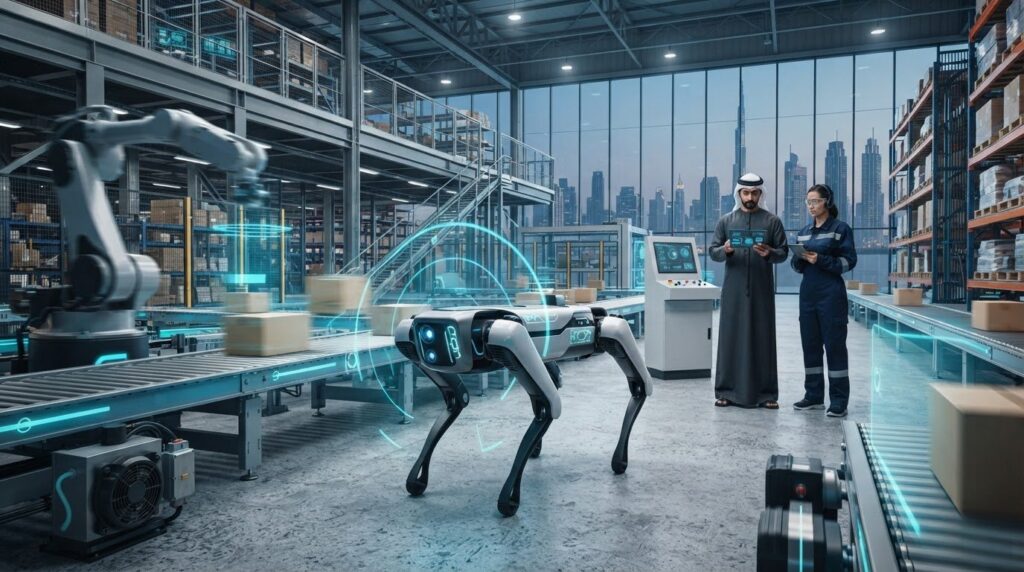
Implementing collaborative robots UAE allows facilities to augment human labor in high-precision packing and palletizing zones. These cobots operate under strict safety protocols, using force-sensing technology to work in close proximity to human employees without the need for safety cages. In 2026, we’re also seeing the emergence of humanoid robots in versatile service and delivery roles, handling complex tasks that require human-like dexterity. To explore how these technologies can be tailored to your specific facility, consider reviewing our integrated automation solutions. This transition from fixed automation to flexible, robot-assisted workstations ensures long-term business viability in an increasingly competitive regional market.
The Technical Backbone: PLC and SCADA System Integration
Positioning complex machinery within a unified network requires more than just high-speed connectivity; it demands a robust logical framework that translates high-level commands into precise physical movements. While the AMRs and ASRS discussed previously provide the physical muscle of the facility, warehouse robotics integration UAE strategies rely on PLC and SCADA integration services to act as the essential nervous system. This technical backbone ensures that disparate robotic units, conveyors, and sorting systems operate as a synchronized industrial force. Without this underlying orchestration, even the most advanced hardware remains an isolated silo, incapable of achieving the end-to-end efficiency required by 2026 standards.
Orchestrating Hardware with PLC Logic
Programmable Logic Controllers (PLCs) serve as the localized intelligence for specific warehouse zones, managing the real-time logic necessary for conveyor and robotic arm synchronization. Programming custom logic for multi-robot workflows allows for the seamless hand-off of goods between autonomous mobile units and fixed automation stations. By ensuring low-latency communication between sensors and actuators, PLCs prevent bottlenecks and collision risks in high-speed environments. Standardizing communication protocols across heterogeneous robotic fleets is critical; it enables a PUDU delivery robot to interact effectively with an AgileX mobile platform, regardless of the original manufacturer’s proprietary software.
Operational Intelligence via SCADA
Supervisory Control and Data Acquisition (SCADA) systems transform raw sensor data into actionable operational intelligence, providing the “single pane of glass” visibility mentioned earlier. Real-time monitoring of robotic health and battery status ensures that maintenance teams can intervene before a component failure halts production. Historical data logging facilitates predictive maintenance, allowing facility managers to extend the lifecycle of expensive warehouse assets through data-driven scheduling. Integrating SCADA with Enterprise Resource Planning (ERP) systems bridges the gap between the warehouse floor and the boardroom, ensuring that inventory levels and throughput rates are reflected in the company’s broader financial planning.
Ensuring the integrity of these industrial control networks is paramount as facilities become increasingly connected. Adhering to the ISA/IEC 62443 series provides a comprehensive framework for safeguarding Industrial Automation and Control Systems (IACS) against evolving cyber threats. It’s no longer sufficient to focus solely on physical safety; digital security is now a core component of operational reliability. Implementing robust firewalls and encrypted communication channels protects the proprietary logic that drives your warehouse robotics integration UAE, ensuring that your transition to Industry 4.0 is both productive and secure.
Strategic Roadmap for Robotic Implementation and ROI
Developing a structured roadmap for warehouse robotics integration UAE is critical for ensuring that high-tech investments translate into tangible market advantages. Aligning your facility with the ‘UAE Robotics Strategy’ ensures long-term viability by connecting global technological breakthroughs with regional industrial needs. This transition is not a singular event but a systematic progression that prioritizes order, safety, and efficiency through controlled innovation. Selecting a technical partner who provides the intellectual framework for implementation, rather than just the physical tools, remains the most significant decision for national-scale deployment. Just as industrial leaders require specialized platforms, Nexus Legal Group provides the growth infrastructure necessary for elite plaintiff law firms to scale their operations.
Phase 1: Facility Assessment and Simulation
Conducting a digital twin simulation allows operators to predict robotic performance and identify bottlenecks in material handling processes before a single unit arrives on site. Utilizing these virtual replicas mitigates risk by validating warehouse designs against real-world throughput requirements. The Audit Phase serves as the foundational analytical layer for all 2026 automation projects, ensuring that hardware selection is dictated by data rather than conjecture. By analyzing the flow of high-demand logistics sectors, enterprises can pinpoint exactly where AMRs or ASRS will deliver the highest impact.
Phase 2: Pilot Deployment and System Tuning
Implementing small-scale AMR or cobot fleets provides a controlled environment to test logic integration and refine PLC code. During this stage, SCADA dashboards are optimized based on live telemetry to ensure that facility-wide monitoring is both accurate and responsive. Training staff on robotic safety and collaborative workflows is equally essential; it bridges the gap between human expertise and machine precision. Refining these systems in a pilot phase prevents costly errors during full-scale rollout, securing the technical foundation for autonomous fulfillment.
Calculating the Real Cost of Automation
Moving beyond initial CAPEX to evaluate Total Cost of Ownership (TCO) reveals the true financial impact of industrial modernization. Payback periods for industrial-scale automated storage systems in the UAE typically range between 3 and 5 years, a timeline significantly shortened by labor savings and increased throughput. Accounting for energy efficiency and reduced product damage further enhances the ROI profile of integrated systems. Leveraging national grants or incentives for digital transformation, such as those under the Operation 300bn initiative, can further offset upfront costs. To begin your journey toward a fully optimized facility, consult with our industrial automation experts to design a bespoke implementation plan.
EdNex Automation: Pioneering Integrated Solutions in the UAE
Positioning itself at the vanguard of industrial innovation, EdNex Automation serves as the visionary architect for organizations pursuing comprehensive digital transformation. We don’t just supply machinery; we provide the systemic framework required to bridge global technological breakthroughs with the specific economic needs of the Emirates. By maintaining strategic alliances with global robotics leaders, we offer an elite portfolio of AMRs, collaborative robots, and humanoid robots for sale UAE. Our deep technical expertise in PLC and SCADA integration ensures that every robotic unit operates as a synchronized component of your facility’s ASRS infrastructure, guaranteeing long-term business viability in a rapidly evolving market.
Bespoke Integration for Diverse Industrial Sectors
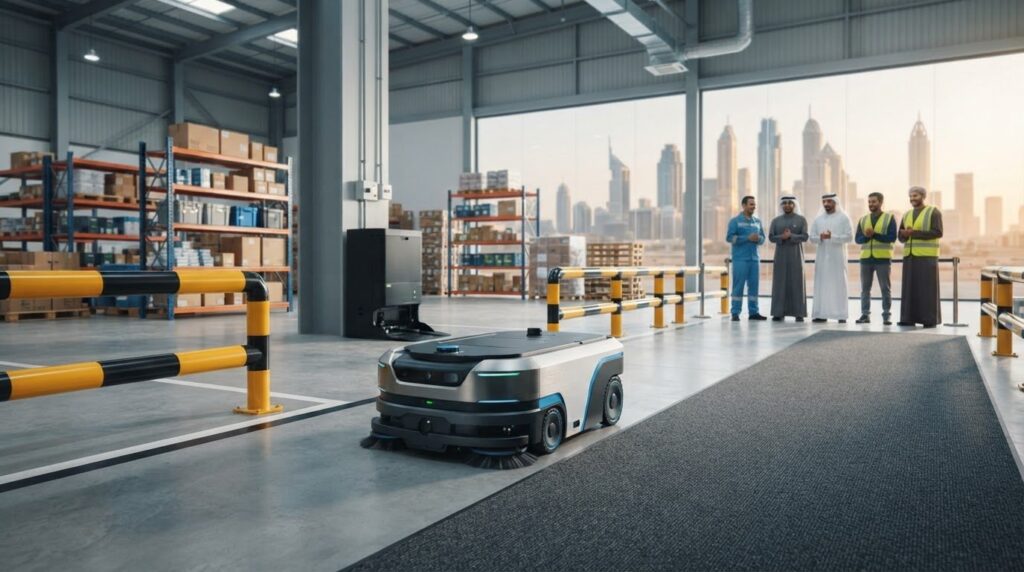
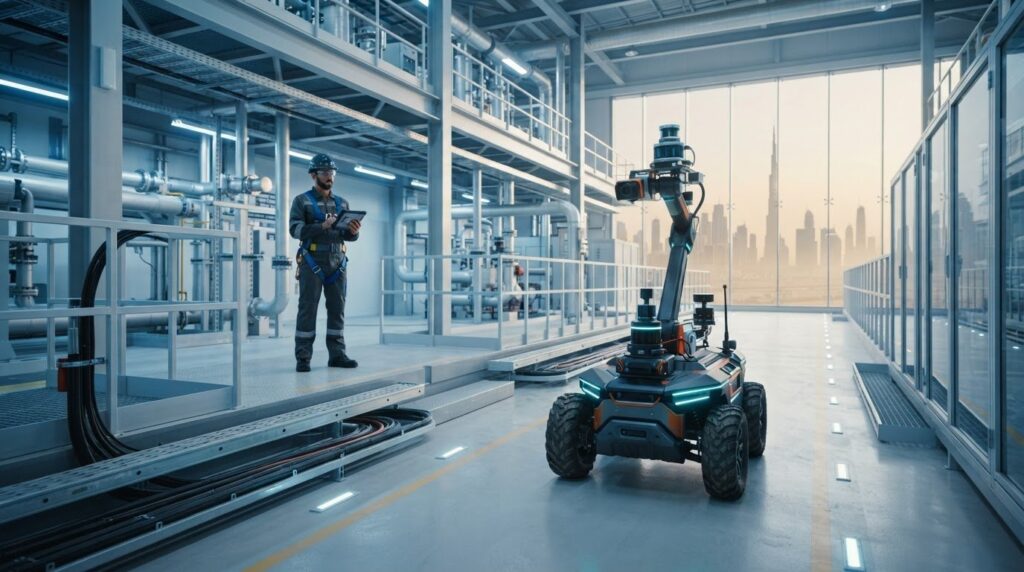
Recognizing that every facility faces unique operational challenges, we specialize in customizing robotic solutions for retail, cold storage, and heavy industry. For facilities requiring high standards of industrial hygiene, we integrate specialized autonomous cleaning robots to maintain floors without disrupting primary workflows. High-security environments benefit from our deployment of surveillance and inspection robotics, providing constant oversight through autonomous sensor networks. This sector-specific approach ensures that your warehouse robotics integration UAE strategy addresses the precise bottlenecks of your industry, from vertical space optimization to end-to-end material flow.
Consultative Partnership and Technical Excellence
Ensuring the success of large-scale industrial transformation requires a partner who understands the gravity of the 2026 regulatory environment. We offer the intellectual framework necessary for implementation, guiding your organization through the complexities of the UAE AI Act and national Industry 4.0 standards. Our commitment to technical excellence is reflected in our adherence to official certifications and global automation protocols, providing a level of reliability that simple equipment vendors can’t match. By acting as a systematic organizer, we bring order and efficiency to complex warehouse environments through controlled, deliberate innovation. It’s time to secure your competitive position in the national logistics landscape. Contact our specialists to architect your warehouse robotics integration UAE and begin your transition to a high-performance, autonomous future.
Architecting the Future of Autonomous Logistics
Transitioning to an autonomous warehouse environment represents a necessary evolution for any organization wishing to remain competitive in the Emirates’ high-demand logistics sector. By prioritizing a unified control architecture through specialized PLC and SCADA integration, facility managers can bridge the gap between global technological breakthroughs and regional operational needs. This strategic approach ensures that your warehouse robotics integration UAE project delivers tangible business outcomes while maintaining full compliance with the UAE National AI Strategy and Industry 4.0 standards. Success in 2026 depends on more than just hardware; it requires a systematic organizer who brings order, safety, and efficiency to complex environments through controlled and deliberate innovation. From deploying agile AMRs to integrating advanced humanoids, the path to industrial modernization is paved with technical excellence and strategic alignment. Partner with EdNex Automation to engineer your Industry 4.0 future and leverage our comprehensive portfolio to secure your facility’s long-term viability. It’s time to transform your facility into a high-performance engine of industrial output and lead the next era of national industrial growth.
Frequently Asked Questions
What is the primary difference between AGVs and AMRs for UAE warehouses?
Autonomous Mobile Robots (AMRs) utilize LiDAR and SLAM-based navigation to move independently of fixed infrastructure, whereas Automated Guided Vehicles (AGVs) rely on predefined paths like floor magnets or wires. This technical distinction allows AMRs to navigate around unexpected obstacles and adapt to changing facility layouts without costly floor modifications. Using AMRs provides the flexibility required for modern, high-throughput logistics operations that must scale rapidly to meet shifting market demands.
How does the UAE Robotics Strategy 2023 affect my automation plans in 2026?
The UAE Robotics Strategy establishes a regulatory framework that requires industrial entities to align their automation roadmap with national Industry 4.0 standards. By September 2026, major organizations must complete mandatory AI self-assessments to ensure compliance with the UAE AI Act. This strategy ensures that your technological investments support the broader national goal of economic diversification while maintaining global competitiveness through standardized, high-tech infrastructure that’s designed for long-term viability.
Can robotic systems be integrated with my existing WMS or ERP?
Robotic systems utilize specialized middleware and API layers to sync directly with your Warehouse Management System (WMS) or Enterprise Resource Planning (ERP) platform. Successful warehouse robotics integration UAE relies on PLC and SCADA frameworks to ensure that real-time robotic telemetry is accurately reflected in your high-level business software. Robotic systems don’t operate in isolation; they create a unified ecosystem that provides precise visibility into inventory levels, order status, and overall facility throughput.
What are the safety requirements for collaborative robots in high-traffic zones?
Collaborative robots must comply with ISO/TS 15066 safety standards, which mandate power and force limiting capabilities to protect human workers. These systems utilize advanced proximity sensors to detect human presence, triggering an immediate reduction in speed or a complete halt. This ensures that cobots can operate in high-traffic zones without the need for safety cages, allowing for a more flexible and interactive warehouse floor that doesn’t compromise on employee safety.
How long does it typically take to see a return on investment for ASRS?
Return on investment for automated storage and retrieval systems is typically achieved within a 3 to 5 year period for industrial-scale operations. This timeline is accelerated by the recovery of vertical space and a 35 percent increase in operational efficiency through AI-driven logistics. By reducing labor dependencies and minimizing product damage, ASRS provides a clear path to financial stability for facilities managing high volumes of inventory in the competitive regional market.
Is PLC and SCADA integration necessary for small robotic fleets?
PLC and SCADA integration is critical for small robotic fleets to ensure centralized orchestration and prevent the development of isolated automation silos. Even for small fleets, it’s vital to have a logical framework for hardware synchronization and real-time data visualization across the entire facility. Implementing this technical backbone allows you to monitor robotic health and battery status from a single interface, ensuring that even minor deployments contribute to overall operational intelligence.
What maintenance support is available for industrial robots within the country?
Maintenance support for industrial robots is provided through regional technical partners who offer specialized expertise in brands like PUDU, AgileX, and Unitree. These services include preventative maintenance schedules, on-site repairs, and spare parts management to ensure maximum system uptime. Adhering to these support protocols helps facilities remain compliant with the Occupational Safety and Health Abu Dhabi System Framework (OSHAD-SF) while protecting their high-tech assets from unexpected operational failures.
How do autonomous cleaning robots improve warehouse hygiene standards?
Autonomous cleaning robots improve hygiene standards by providing consistent, high-frequency sanitation that eliminates the variability of manual cleaning. These units utilize programmed paths to ensure 100 percent floor coverage, which is essential for maintaining the sterile environments required in pharmaceutical and food-grade logistics. By automating facility maintenance, you’re reallocating human labor to more complex tasks while ensuring that your warehouse meets the most stringent regional health regulations and global hygiene protocols.