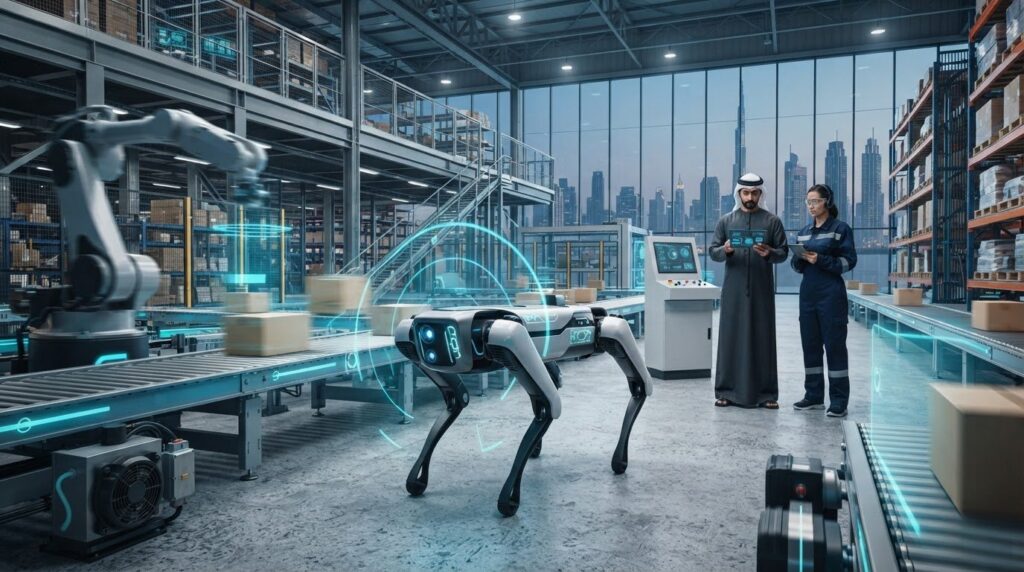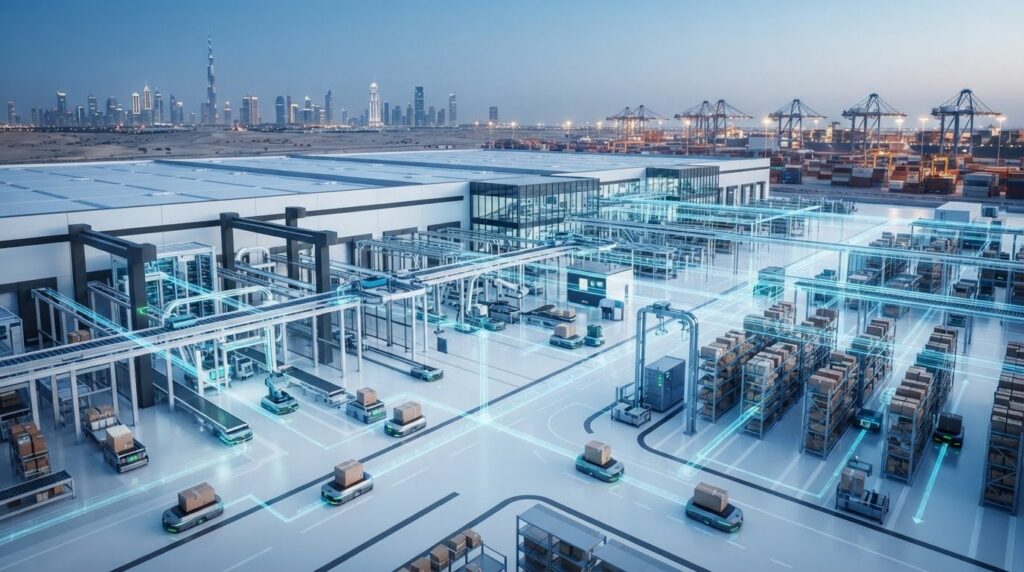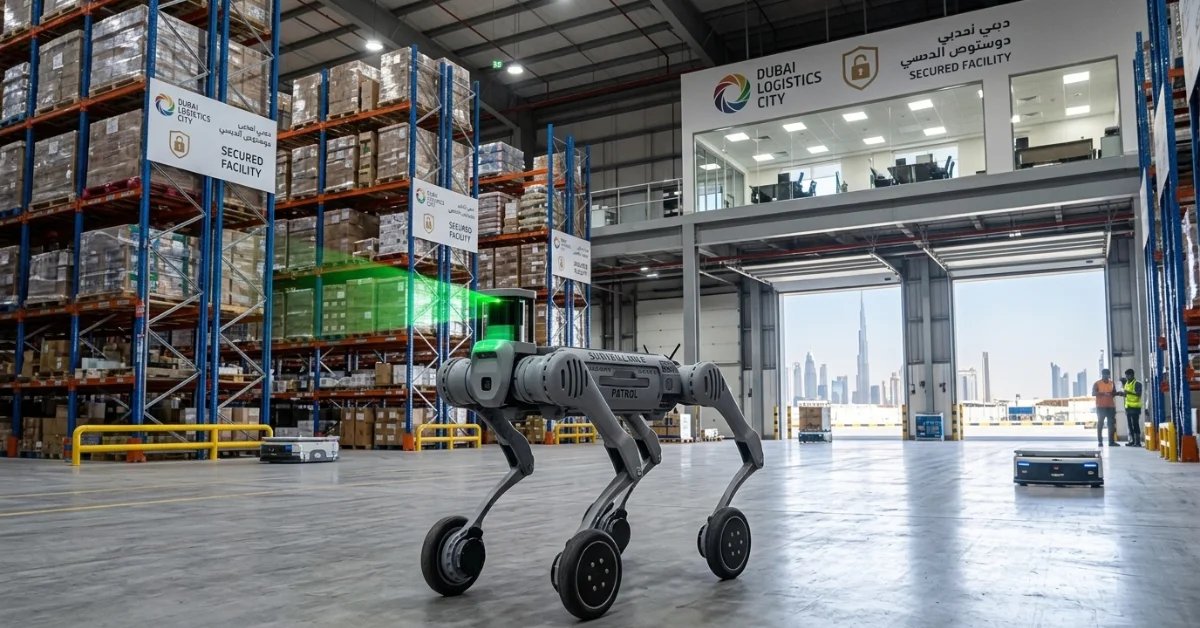
Traditional human-centric security models are no longer sufficient to safeguard the high-velocity logistics hubs defining the Emirates’ economic future. You’ve likely noticed that manual patrols often leave critical gaps in massive industrial zones, particularly when you’re managing hazardous materials or trying to eliminate persistent blind spots. Integrating robotic security for warehouses UAE creates a sophisticated layer of industrial intelligence that operates without fatigue or inconsistency. By deploying these autonomous systems, you can transform your security posture from a reactive expense into a proactive asset that ensures long-term business viability.
This strategic guide explores how autonomous surveillance and inspection robots are redefining asset protection and operational resilience within the regional logistics sector. Leveraging advanced sensor arrays and real-time data processing, these machines provide comprehensive thermal monitoring and full facility visibility to drastically reduce security-related downtime. You’ll learn how to achieve seamless integration with national industrial standards while positioning your warehouse at the forefront of the UAE’s technological evolution. Through systematic innovation, we’ll examine the intellectual framework necessary to transition your facility into a secure, fully automated environment.
Key Takeaways
- Transitioning from manual guarding to autonomous systems equipped with LiDAR and thermal sensors ensures comprehensive asset protection while eliminating persistent operational blind spots.
- Implementing robotic security for warehouses UAE optimizes the total cost of ownership by replacing inconsistent human patrols with a 24/7 intelligent surveillance layer.
- Utilizing SLAM-based navigation and high-speed wireless connectivity facilitates real-time data transmission and rapid response to hazardous material incidents.
- Conducting a structured facility audit allows for the strategic prioritization of high-risk zones, ensuring maximum efficiency during the deployment of autonomous robotic fleets.
- Establishing a holistic automation framework through PLC and SCADA integration provides the long-term resilience required to meet evolving national industrial standards.
Table of Contents
- The Paradigm Shift: Why Robotic Security is Essential for UAE Warehouses
- Core Technologies Powering Autonomous Surveillance and Inspection
- Strategic Comparison: Robotic Systems vs. Traditional Security Guarding
- Best Practices for Deploying Security Robotics in Industrial Environments
- Future-Proofing Your Facility with EdNex Automation Security Solutions
The Paradigm Shift: Why Robotic Security is Essential for UAE Warehouses
Deploying autonomous systems equipped with AI, LiDAR, and thermal sensors marks a definitive departure from legacy security methods. Robotic security for warehouses UAE represents a convergence of physical protection and industrial intelligence designed for the 2026 landscape. These machines don’t just record footage; they interpret complex environments to provide comprehensive facility protection. By transitioning from reactive manual guarding to proactive autonomous surveillance, logistics leaders are ensuring operational resilience in an increasingly high-stakes market.
Aligning with the UAE National Strategy for AI 2031, the adoption of industrial robotics is accelerating across the Emirates’ logistics hubs. Facilities situated in desert-adjacent zones face unique environmental pressures. High ambient temperatures and pervasive dust can compromise both traditional hardware and human endurance. Modern inspection and surveillance robots are engineered with specialized ingress protection and thermal management systems to maintain peak performance where traditional methods fail. This technological evolution isn’t merely a trend but a strategic necessity for maintaining global competitiveness.
Overcoming the Limitations of Traditional Guarding
Relying on human guards for 24/7 coverage introduces significant operational liabilities, including fatigue-induced error and escalating overhead costs. It’s nearly impossible for personnel to maintain consistent vigilance during long shifts, especially in hazardous or high-temperature zones. Robotic systems provide a persistent, “always-on” presence that operates without degradation in performance. By utilizing robotic security for warehouses UAE, operators can address several critical vulnerabilities:
- Elimination of blind spots: Precise, programmed patrol routes ensure every square meter is monitored.
- Risk mitigation: Removing humans from high-risk or toxic environments reduces workplace liability.
- Cost efficiency: Autonomous units provide consistent coverage at a lower long-term total cost of ownership compared to large personnel teams.
Security as a Data-Driven Industrial Asset
Moving beyond passive video recording, autonomous units provide real-time anomaly detection and predictive alerting. These robots act as mobile sensor nodes that feed live telemetry into the “Digital Twin” of a modern warehouse. This capability allows operators to visualize security risks alongside operational data for more informed decision-making. Robotic security functions as a converged, intelligent layer within the broader Industry 4.0 ecosystem to protect assets and optimize operational flow simultaneously. By treating security as a data stream, facilities can move from simply recording incidents to preventing them entirely through advanced spatial awareness and thermal monitoring.
Core Technologies Powering Autonomous Surveillance and Inspection
Harnessing the power of Simultaneous Localization and Mapping (SLAM) alongside high-precision LiDAR sensors, modern security units navigate complex, high-density warehouse environments with surgical precision. These technologies allow for the creation of real-time spatial maps, enabling robotic security for warehouses UAE to bypass obstacles and adapt to floor plan changes without human intervention. By establishing a robust navigational framework, these systems provide a level of reliability that static camera installations simply can’t match. This autonomous mobility ensures that critical assets remain under constant observation, even in facilities with dynamic inventory rotations or shifting storage configurations that would otherwise create temporary blind spots.
Advanced sensor suites, including 360-degree 4K cameras and specialized night vision, provide high-fidelity monitoring across all lighting conditions. Integrated thermal imaging plays a vital role in fire prevention by identifying heat signatures that precede actual combustion, a critical feature for facilities handling volatile goods. Beyond visual data, AI-powered algorithms facilitate facial recognition and Automated License Plate Recognition (ALPR) to enforce stringent perimeter control at loading docks and entry points. Humanoid robots are also emerging as versatile agents within this ecosystem, offering a multi-functional presence that can interact with physical interfaces designed for human operators while maintaining a high-tech security vigil that never wavers.
Inspection Robots for Preventative Maintenance
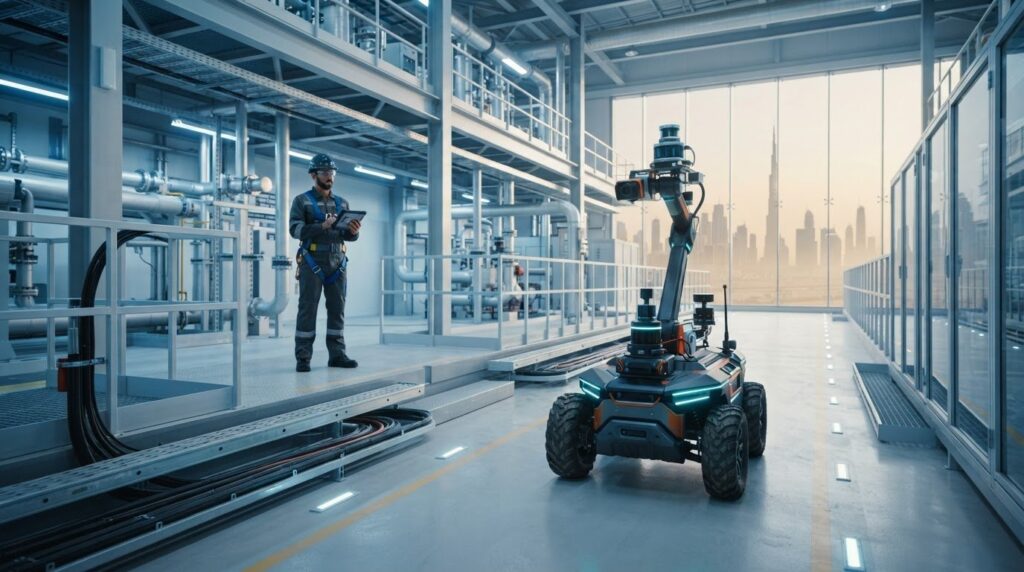
Utilizing thermal sensors to monitor battery storage areas and electrical panels, inspection robots identify potential failures before they escalate into costly emergencies. These units are particularly effective for auditing high-reach shelving and structural integrity in complex automated storage and retrieval systems where manual inspection is often dangerous or impractical. By providing deep-aisle monitoring, they ensure that every component of the ASRS remains within safe operational parameters, effectively bridging the gap between security and maintenance. This dual-purpose functionality maximizes the utility of your robotic fleet, turning a security asset into a comprehensive risk mitigation tool.
Collaborative Intelligence: Robots Working Together
Synchronized operational environments emerge when surveillance units communicate directly with autonomous mobile robots to ensure the facility remains efficient and secure. When a security robot identifies a blockage or a safety hazard, it can instantly alert logistics AMRs to reroute, preventing bottlenecks and potential collisions. Achieving this level of synergy requires unified control via PLC and SCADA integration services, which centralize command and harmonize disparate automated systems into a single operational interface. Processing data at the edge ensures instantaneous decision-making, removing the latency risks associated with cloud-only architectures. For organizations seeking to build this converged infrastructure, consulting with automation integration specialists is the first step toward a truly intelligent facility.
Strategic Comparison: Robotic Systems vs. Traditional Security Guarding
Evaluating the long-term viability of facility protection requires a shift from viewing security as a recurring labor expense to recognizing it as a strategic capital investment. While traditional guarding remains a staple of industrial operations, the total cost of ownership (TCO) over a five-year period reveals a stark contrast between human-led and automated models. Human guarding costs scale linearly with inflation and wage mandates, whereas robotic security for warehouses UAE offers a stabilized cost structure after the initial deployment phase. This predictability allows financial directors to forecast security expenditures with greater precision while simultaneously improving the quality of surveillance data.
Analyzing response times further underscores the technical superiority of autonomous systems. Manual patrol reporting often suffers from delays between incident discovery and centralized notification, creating windows of vulnerability. In contrast, automated alerts from robotic units are instantaneous, providing real-time telemetry and visual verification to command centers within milliseconds. This rapid data transmission is essential for mitigating high-stakes risks, such as unauthorized perimeter breaches or early-stage thermal anomalies. By leveraging these high-speed capabilities, facilities can ensure that every second is utilized in the mitigation of potential threats.
Robots don’t entirely replace the human element; rather, they augment the capabilities of security professionals by handling the repetitive and dangerous aspects of surveillance. This human-in-the-loop model ensures that while robots provide the data and persistence, human experts remain the final decision-makers for complex incident resolution. This synergy creates a more resilient security posture that combines machine precision with human intuition.
ROI and Long-Term Value Realization
Capitalizing on automated surveillance leads to tangible financial benefits beyond simple labor reduction. Many industrial operators find that robotic security ROI is typically achieved within 18-24 months in UAE industrial settings through a combination of reduced insurance premiums and minimized asset loss. Scaling a security presence with human staff requires extensive recruitment and training cycles, whereas expanding a robotic fleet involves simple software integration and hardware provisioning. This agility ensures that security infrastructure can grow in lockstep with facility expansion without the administrative burden of managing a large workforce.
Reliability in Extreme Environments
Maintaining a consistent security presence in high-temperature warehouse zones presents a significant challenge for human personnel, particularly during the peak summer months in the Emirates. Robotic units operate with unwavering consistency, providing a permanent patrol frequency that isn’t dictated by environmental conditions or physical fatigue. These systems generate exhaustive data logs for every patrol, ensuring absolute audit compliance for international safety standards. The visionary role of humanoid robots is particularly relevant here, as they provide a versatile interface capable of managing complex security interactions in environments where human presence is restricted. By augmenting human oversight with robotic endurance, facilities achieve a level of reliability that was previously unattainable.
Best Practices for Deploying Security Robotics in Industrial Environments
Establishing a robust implementation framework requires more than just hardware procurement; it demands a systematic alignment of technology with existing industrial processes. Prioritizing high-risk zones during a comprehensive facility audit allows for the strategic deployment of robotic security for warehouses UAE where it’s needed most, such as hazardous material storage or isolated perimeter corridors. By identifying these critical areas early, you can ensure that your autonomous fleet delivers maximum value from the first day of operation. This methodical approach transforms security from a general utility into a targeted, high-performance industrial asset.
Leveraging 5G or Wi-Fi 6 infrastructure provides the low-latency backbone required for real-time video transmission, ensuring that your Security Operations Centre (SOC) receives instantaneous data for immediate action. Integrating these robotic alerts into your existing SOC architecture allows for a unified response strategy where automated units and human supervisors work in concert. Training your personnel on safe interaction protocols is equally vital, ensuring that autonomous mobile security units coexist effectively with the human workforce without disrupting the flow of logistics. When staff understand the operational logic of these machines, safety becomes a collaborative effort rather than a technical hurdle.
Compliance and Regulatory Alignment
Adhering to national data privacy laws regarding facial recognition and surveillance data ensures that your facility remains compliant with the UAE’s evolving legal landscape. Meeting global safety certifications, such as ISO 10218-1/2, is mandatory for robots operating in proximity to human workers, providing the intellectual and legal framework necessary for safe industrial automation. These standards align your organization with the UAE’s vision for smart, secure industrial infrastructure, positioning your warehouse as a leader in regional modernization. Maintaining rigorous documentation of these compliance measures also streamlines future audits and reinforces your status as a reliable technical partner.
Integration with Warehouse Ecosystems
Connecting security robots to collaborative robots enables a coordinated emergency response where logistics and security layers act in a single, synchronized motion. Utilizing SCADA interfaces for unified monitoring allows managers to oversee both logistics health and security status within a single, authoritative dashboard, eliminating data silos that hinder decision-making. To begin your transition toward a fully integrated security model, consult with our expert automation engineers to design a bespoke deployment strategy tailored to your facility’s unique requirements. Establishing automated charging protocols further guarantees 100% uptime, removing the risk of coverage gaps and ensuring that your assets remain under constant, intelligent protection.
Future-Proofing Your Facility with EdNex Automation Security Solutions
Positioning EdNex as a comprehensive partner, we provide start-to-finish expertise that spans from initial technical design to national-scale operational support. Implementing robotic security for warehouses UAE requires more than just high-end hardware; it necessitates a deep understanding of the regional industrial landscape. We engineer bespoke robotic security fleets tailored to the specific demands of high-stakes sectors, including the stringent safety requirements of Oil & Gas and the high-velocity throughput of E-commerce. By connecting global technological breakthroughs with local industrial needs, we ensure your facility remains at the cutting edge of innovation while maintaining total operational security.
Our commitment to your long-term business viability is reflected in our selection of modular and upgradable robotic systems. These technologies are designed to evolve alongside your organization, allowing for the integration of new sensor arrays or AI modules without requiring a complete infrastructure overhaul. This systematic approach to modernization ensures that your investment remains relevant as the 2026 strategic landscape continues to mature. We don’t just provide equipment; we deliver the intellectual framework necessary to maintain a competitive advantage in a rapidly automating world.
Comprehensive Support and Lifecycle Management
Providing national-scale maintenance and technical support, our team ensures that your autonomous systems achieve maximum uptime and reliability. We deliver continuous firmware and AI updates to keep your security protocols ahead of emerging threats, effectively hardening your facility against evolving risks. Choosing a partner with localized integration expertise is strategically important, as it guarantees a rapid response and a deep understanding of the UAE’s specific regulatory and environmental challenges. This lifecycle management approach removes the burden of technical maintenance from your internal teams, allowing them to focus on core logistics objectives while we manage the health of your robotic fleet.
Take the Next Step in Warehouse Modernization
Scheduling a technical facility assessment with our specialists is the first step toward defining your organization’s robotic security roadmap for 2026 and beyond. During this assessment, we analyze your current infrastructure to identify integration points for PLC and SCADA systems, ensuring a seamless transition to autonomous surveillance. We work closely with your leadership to customize a deployment strategy that aligns with your specific operational goals and safety requirements. To initiate this transformation, consult with EdNex Automation for a bespoke robotic security strategy and secure your facility’s future within the Emirates’ industrial ecosystem.
Commanding the Next Era of Warehouse Surveillance
Transitioning from manual guarding to autonomous systems marks a definitive shift toward a converged layer of industrial intelligence. By adopting robotic security for warehouses UAE, logistics leaders can eliminate persistent blind spots and ensure real-time thermal monitoring of hazardous materials. These technologies don’t just protect physical assets; they provide the data accuracy required to maintain 24/7 operational resilience in the most extreme environments. You’re no longer just managing a facility; you’re overseeing a sophisticated, data-driven ecosystem that values precision and foresight.
Choosing the right technical partner is essential for navigating the complexities of high-level PLC, SCADA, and ASRS integration. As a specialized division of the established EdNex group, we leverage official alliances with global robotics leaders to deliver bespoke, start-to-finish solutions. Our expertise ensures that your facility remains compliant with national industrial standards while achieving tangible ROI through systematic automation. Partner with EdNex Automation to secure your national logistics infrastructure and lead the transformation of the Emirates’ industrial landscape. It’s time to build a more secure and efficient future together.
Frequently Asked Questions
How do security robots navigate complex warehouse environments with moving machinery?
High-precision LiDAR and SLAM algorithms allow these units to navigate dynamic environments by creating real-time spatial maps. They detect and bypass forklifts, personnel, and AGVs instantaneously. This autonomous path planning ensures continuous patrolling without disrupting the flow of logistics operations. It’s a level of navigational intelligence that far exceeds the capabilities of traditional static sensors.
Can robotic security systems integrate with my existing CCTV and alarm infrastructure?
Seamless integration with legacy CCTV and alarm infrastructure is achieved through unified PLC and SCADA interfaces. These robots act as mobile sensor nodes that feed live telemetry into your existing Security Operations Centre (SOC). This converged architecture allows for a centralized command structure where static cameras and autonomous units share critical data. It’s an efficient way to modernize your facility without replacing current hardware.
What is the battery life of a typical surveillance robot, and how is charging managed?
Typical surveillance robots offer 8 to 12 hours of operational endurance depending on sensor load and patrol speed. Once battery levels reach a predefined threshold, the units autonomously return to specialized docking stations for rapid induction charging. This automated protocol ensures 100% facility coverage without the need for manual intervention or downtime. It’s a self-sustaining cycle that guarantees persistent protection.
Are security robots in the UAE compliant with national data privacy and surveillance laws?
Robotic security for warehouses UAE is engineered to comply with national data privacy laws and SIRA (Security Industry Regulatory Agency) standards. These systems utilize secure, encrypted data transmission and localized storage to ensure that surveillance footage and facial recognition data are handled according to official Emirates guidelines. Maintaining this regulatory alignment is a core component of our technical design process and intellectual framework.
How do these robots handle extreme temperatures in non-climate-controlled warehouses?
Specialized industrial-grade hardware featuring advanced thermal management systems allows these robots to operate in non-climate-controlled environments. They’re built to withstand the high ambient temperatures characteristic of the UAE’s industrial zones. Ingress protection ratings ensure that sensitive electronic components remain shielded from the pervasive dust and heat found in desert-adjacent facilities. They don’t suffer from heat exhaustion like human personnel.
What happens if a security robot encounters an unauthorized person or a safety hazard?
Identifying an unauthorized individual or a safety hazard triggers an instantaneous alert to the central command center. The robot can initiate two-way audio communication and maintain a visual lock on the subject while providing real-time GPS coordinates to response teams. This proactive approach ensures that potential threats are mitigated long before they escalate into a security breach. It’s an intelligent response to complex risks.
Can security robots be used for indoor and outdoor warehouse perimeter patrolling?
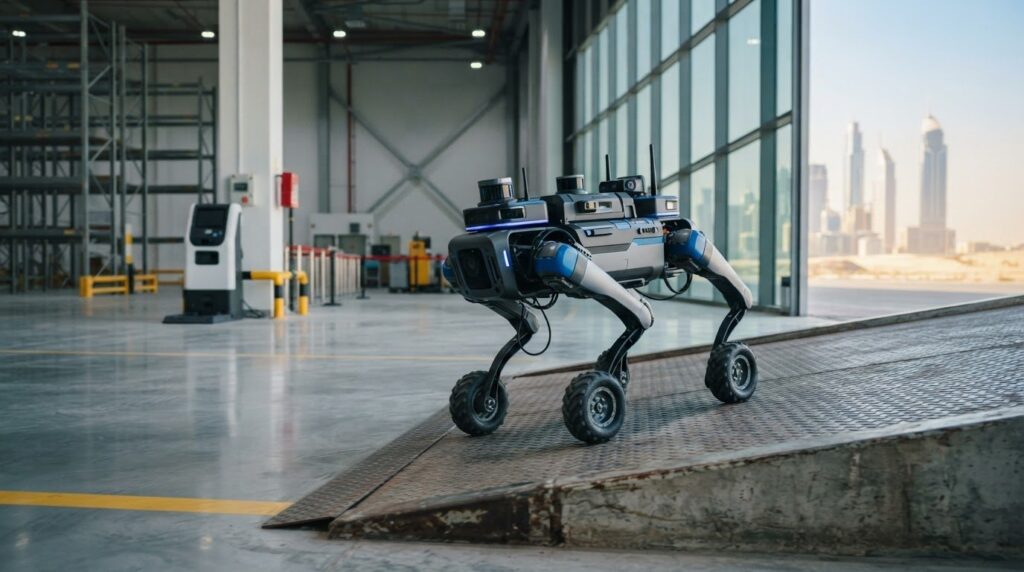
Specialized surveillance and inspection robots are available for both indoor warehouse monitoring and rugged outdoor perimeter patrolling. Outdoor units feature robust chassis designs and high-torque drivetrains to navigate uneven terrain and resist harsh weather conditions. Utilizing a mixed fleet allows for comprehensive asset protection across the entire facility footprint. This ensures that your security vigil extends from the loading bay to the outer fence line.
What is the typical ROI timeframe for a robotic security implementation in the UAE?
Organizations typically realize a full return on investment for robotic security for warehouses UAE within 18 to 24 months. This timeframe is achieved by drastically reducing reliance on manual guarding contracts and minimizing asset loss through predictive thermal monitoring. The long-term business viability of these systems is further enhanced by their modular nature; this allows for cost-effective upgrades as technology advances.