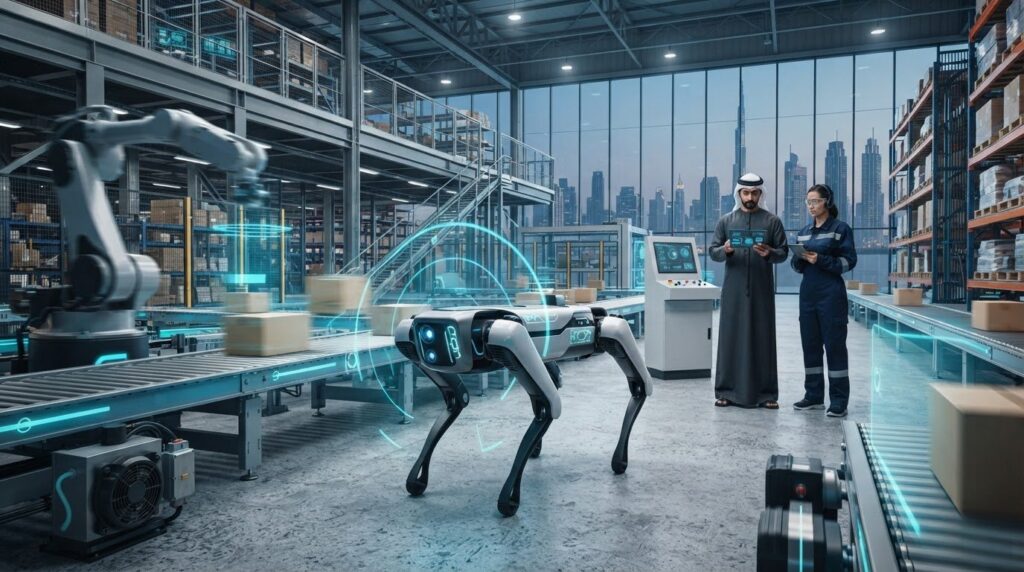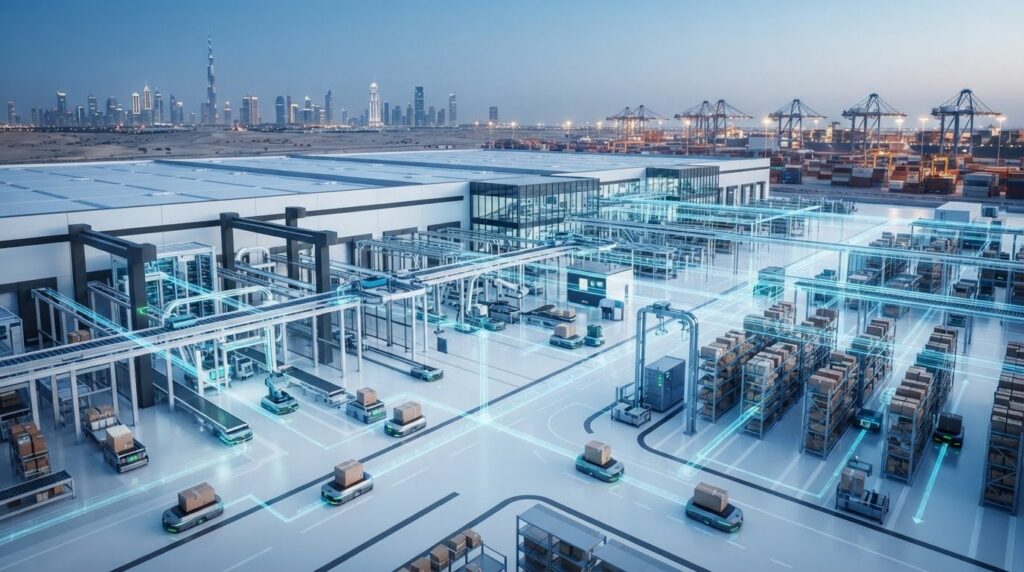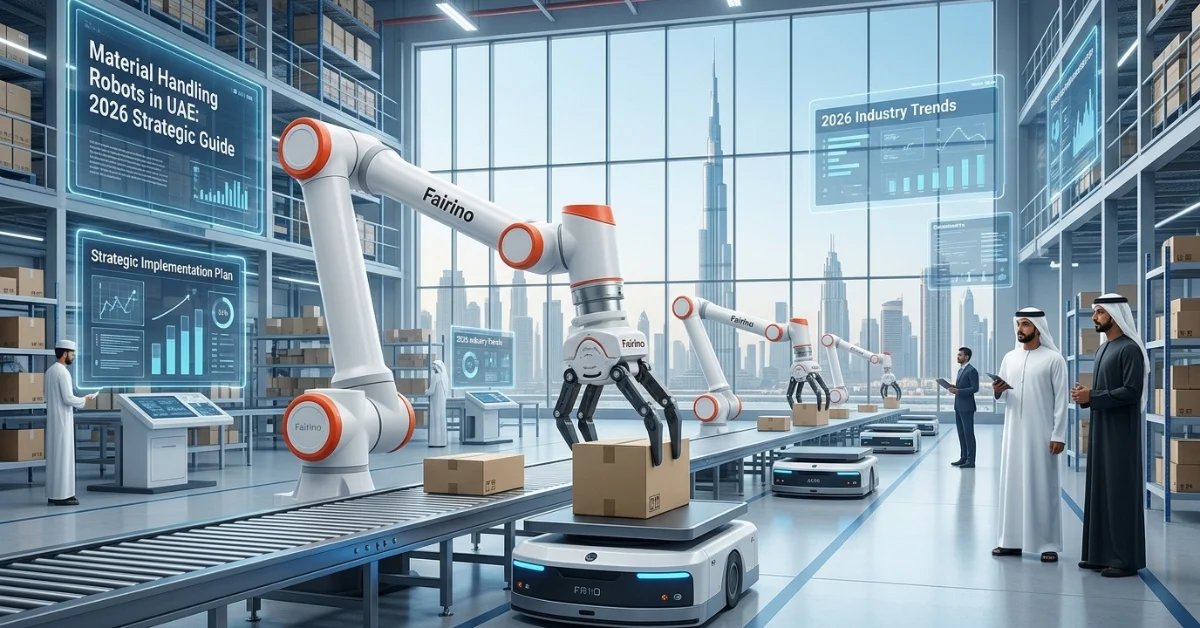
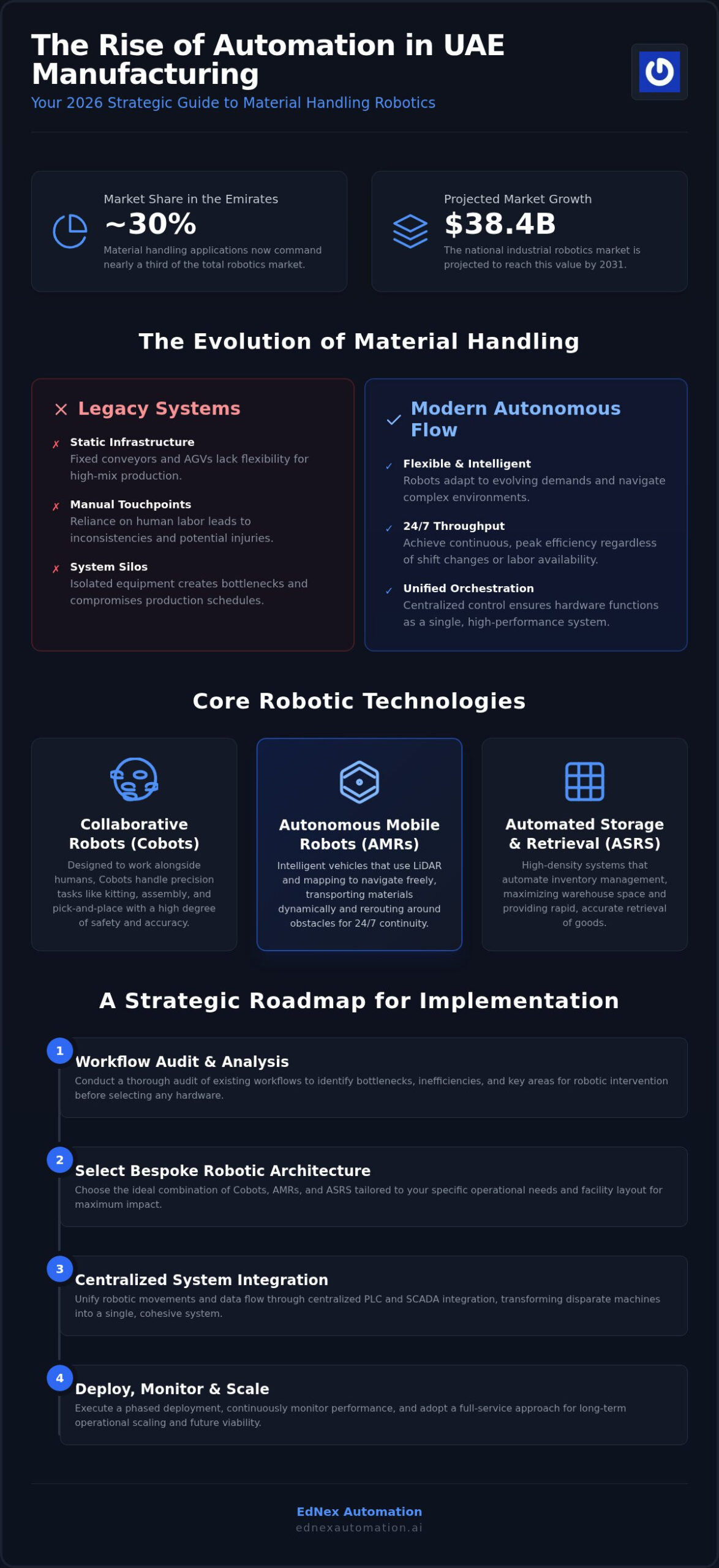
With material handling applications now commanding nearly 30% of the total robotics market share in the Emirates, the transition toward fully autonomous industrial environments has reached a critical inflection point. You likely recognize the mounting pressure of escalating operational costs and the difficulty of securing skilled labor for high-frequency, repetitive tasks. Integrating sophisticated material handling robots for manufacturing UAE is no longer a luxury for the few; it’s a strategic necessity for any facility aiming to eliminate system silos and optimize warehouse space utilization.
This 2026 strategic guide details how advanced robotics and integrated automation systems are transforming regional manufacturing efficiency while driving the next phase of industrial evolution. By examining the synergy between Autonomous Mobile Robots (AMRs) and Automated Storage and Retrieval Systems (ASRS), we’ll demonstrate how to achieve 24/7 throughput through seamless system orchestration. We’ll outline a roadmap for implementing these technologies to ensure clear ROI and the long-term business viability of your organization in an increasingly competitive global market. This analysis provides the intellectual framework you need to bridge the gap between global technological breakthroughs and your specific regional industrial requirements.
Key Takeaways
- Transition from traditional fixed infrastructure to flexible, intelligent robotic systems that adapt to the evolving demands of the modern UAE industrial sector.
- Select the ideal configuration of material handling robots for manufacturing UAE by categorizing solutions into collaborative robots, autonomous mobile robots, and automated storage systems.
- Orchestrate robotic movements through centralized PLC and SCADA integration to ensure your automation hardware functions as a unified, high-performance system rather than a collection of silos.
- Execute a strategic deployment using a proven roadmap that prioritizes thorough workflow audits before finalizing your facility’s bespoke robotic architecture.
- Position your organization for the next phase of industrial evolution by adopting a full-service approach to Industry 4.0 integration and long-term operational scaling.
The Evolution of Industrial Material Handling in the UAE Manufacturing Sector
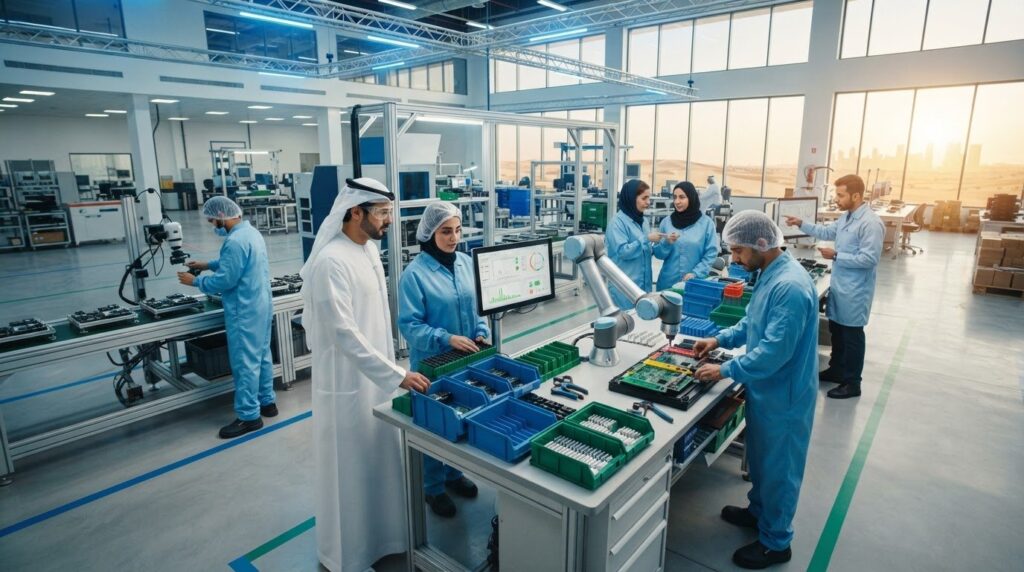
Recognizing the limitations of static infrastructure, regional manufacturers are increasingly deploying material handling robots for manufacturing UAE to secure operational agility. These systems serve as the connective tissue of the modern factory, managing the flow of raw materials and finished goods with a level of precision that far exceeds human capability. Leveraging advancements in computer vision and machine learning, Industrial robots have evolved from simple pick-and-place tools into intelligent agents capable of navigating complex environments. This transformation is central to the nation’s broader industrial strategy, where the focus has shifted from high-volume production to high-value, tech-driven output. By 2026, the transition from manual labor to autonomous systems is no longer a choice but a strategic necessity for maintaining global competitiveness.
The Economic Drivers for Automation in 2026
Rising operational overheads and a tightening market for specialized technical labor are compelling regional leaders to rethink their logistics frameworks. Implementing autonomous solutions effectively mitigates the risks associated with manual handling, such as workplace injuries and inconsistent throughput during peak periods. With the national industrial robotics market projected to reach USD 38.4 billion by 2031, the economic rationale for immediate automation is undeniable. Aligning with the mandates of the UAE National AI Strategy, manufacturers are now prioritizing systems that offer both precision and scalability. Industry 4.0 within the UAE material handling sector is the strategic integration of autonomous robotic systems with cloud-based intelligence to achieve a fully transparent and responsive industrial ecosystem.
From Manual Palletizing to Autonomous Flow
Relying on legacy infrastructure often results in localized inefficiencies that compromise the entire production schedule. While traditional conveyor systems provide reliable linear movement, they lack the spatial awareness and flexibility required for modern, high-mix production environments. Flexibility has become the primary currency for competitive factories, as fixed lines can’t easily pivot without costly downtime. Identifying bottlenecks in palletizing and sorting is the first step toward a comprehensive modernization. Material handling robots for manufacturing UAE solve these challenges by providing the intelligence needed to reroute assets dynamically. By replacing manual touchpoints with agile robotic systems, facilities can achieve a continuous, autonomous flow that maintains peak efficiency regardless of shift changes or labor availability, ensuring long-term business viability in a fluctuating market.
Advanced Robotic Technologies Powering UAE Material Handling
Identifying the core pillars of industrial modernization requires a deep understanding of how specialized hardware addresses specific logistical challenges. Material handling robots for manufacturing UAE are primarily categorized into three transformative technologies: Collaborative Robots (Cobots), Autonomous Mobile Robots (AMRs), and Automated Storage and Retrieval Systems (ASRS). While each serves a distinct function, their true value emerges when they operate in synergy. For instance, an AMR might transport raw materials from a storage zone to a workstation where a Cobot performs precision kitting, while an ASRS manages the high-density inventory overhead. This orchestration ensures that materials are always where they need to be, exactly when they are needed.
Autonomous Mobile Robots (AMRs) vs. Traditional AGVs
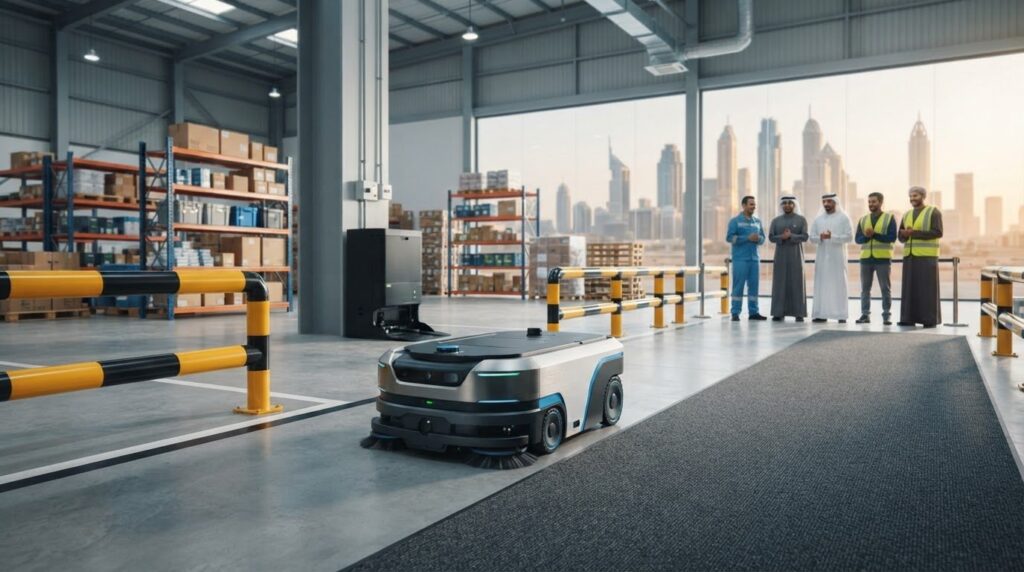
Transitioning from Automated Guided Vehicles (AGVs) to AMRs represents a shift from rigid to intelligent movement within the factory floor. Unlike traditional AGVs that rely on fixed magnetic strips or wires embedded in the floor, AMRs utilize natural feature navigation and sophisticated LiDAR sensors to map their environment in real-time. This autonomy allows them to recalculate paths instantly if an obstacle appears, ensuring 24/7 operational continuity without human intervention. For UAE plants with dynamic layouts, AMRs offer the flexibility to reconfigure workflows without the prohibitive costs of physical infrastructure modification. They don’t just follow a path; they understand the environment, making them the superior choice for complex industrial settings.
Collaborative Robots for Palletizing and Kitting
Deploying Cobots allows facilities to reclaim valuable floor space by eliminating the need for heavy, obstructive safety fencing. These robots are engineered with advanced force-torque sensors that detect human proximity, allowing for safe, human-adjacent collaboration in palletizing and sorting tasks. Their intuitive interfaces make them exceptionally well-suited for high-mix, low-volume manufacturing runs where frequent reprogramming is necessary. To understand the broader impact of these systems on regional productivity, explore our detailed analysis of Collaborative Robots in the UAE. Their ability to work alongside existing teams makes them a low-friction entry point for automation.
Maximizing vertical space is a critical priority for regional facilities facing high land costs. Automated Storage and Retrieval Systems (ASRS) provide the necessary high-density storage to optimize every cubic meter of a warehouse, a vital capability given the UAE warehouse robotics market was valued at USD 130.79 million in 2022. By integrating these storage solutions with material handling robots for manufacturing UAE, manufacturers create a closed-loop system that eliminates retrieval delays. Implementing such a sophisticated robotics ecosystem ensures your facility remains a leader in the next phase of industrial evolution.
Strategic Integration: Unifying Robotics with PLC and SCADA Systems
Deploying material handling robots for manufacturing UAE as isolated units often leads to operational bottlenecks where data cannot flow between the machine and the broader facility. True efficiency is achieved only when these robots are integrated into a cohesive industrial ecosystem. By bridging the gap between hardware and software, a facility transforms from a collection of mechanical parts into a responsive, intelligent organism. This level of orchestration is essential for facilities that require real-time adjustments to meet the fluctuating demands of the national market. Without this connectivity, even the most advanced robot remains a “silo,” unable to communicate with the surrounding infrastructure.
The “Brain” Behind the Robot: PLC and SCADA Services
Utilizing Programmable Logic Controllers (PLC) allows for the sophisticated coordination of multiple robotic assets across a single production floor. These controllers act as the local “brain,” ensuring that every movement is synchronized with upstream production changes and downstream logistics requirements. Through centralized PLC and SCADA integration services, manufacturers gain unprecedented visibility into their material flow, allowing them to identify and rectify inefficiencies in handling cycles before they impact the bottom line. SCADA systems aggregate this data, providing a high-level supervisory view that is critical for maintaining 24/7 operational capability and ensuring long-term business viability. This data-driven approach allows managers to make informed decisions based on live performance metrics rather than historical estimates.
Integrating ASRS with Mobile Autonomy
Developing a closed-loop system involves the seamless handoff of goods between transport robots and high-density storage solutions. When AMRs deliver directly to ASRS input stations without human intervention, the risk of manual handling errors is virtually eliminated. This requires a unified control interface that can manage the technical requirements of both storage and transport protocols simultaneously. Implementing professional ASRS integration reduces human error in inventory management by ensuring that every pallet or bin is tracked with 100% accuracy from the moment it enters the facility. This synergy between mobile autonomy and fixed storage is the hallmark of a truly modernized UAE manufacturing plant.
Connecting these floor-level systems to enterprise-level ERP platforms ensures that material handling robots for manufacturing UAE are aligned with broader business objectives. This vertical integration allows for automated restocking, predictive maintenance scheduling, and real-time inventory updates that reflect the actual state of the warehouse. By removing the silos between the factory floor and the boardroom, regional manufacturers can achieve a level of transparency and control that is foundational to the next phase of industrial evolution. It’s this high-level integration that transforms a simple equipment acquisition into a comprehensive strategic asset.
Implementing Material Handling Robotics: A Roadmap for UAE Manufacturers
Transitioning to a high-tech industrial environment requires a systematic approach that balances immediate operational needs with long-term business viability. Successfully deploying material handling robots for manufacturing UAE involves a multi-stage roadmap designed to mitigate risk and ensure seamless integration. This process begins with identifying specific inefficiencies and concludes with a scalable framework that supports future growth. By following a structured path, organizations can avoid the pitfalls of siloed automation and instead build a unified, high-performance ecosystem.
Feasibility and Workflow Auditing
Conducting a comprehensive workflow audit is the foundational step in any successful automation project. During this phase, technical experts identify “3D” tasks—those that are Dull, Dirty, or Dangerous—as the primary candidates for robotic intervention. By measuring current cycle times and manual error rates, facilities establish a baseline for future performance metrics. Utilizing advanced simulation software before any physical installation allows engineers to visualize material handling robots for manufacturing UAE within the existing floor plan. This virtual testing phase ensures the proposed robotic architecture can handle peak volumes without creating new bottlenecks, saving significant time and capital during the actual rollout.
Designing the robotic architecture requires a deliberate choice between mobile, collaborative, or fixed storage systems based on the specific needs identified in the audit. Once the hardware is selected, planning the PLC/SCADA integration ensures that these new assets can communicate with existing factory controls. Executing a phased deployment allows for the gradual introduction of technology, minimizing production downtime and giving staff the opportunity to adapt to new workflows. This controlled transition is essential for maintaining consistent output while modernizing critical infrastructure.
Calculating ROI and Long-Term Value
Evaluating the success of a robotics deployment extends far beyond simple labor cost reductions. Comprehensive ROI calculations must account for significantly reduced product damage, enhanced workplace safety, and the ability to maintain 24/7 operational capability. While fixed systems offer high density, Autonomous Mobile Robots often provide a faster payback period due to their lower infrastructure requirements and inherent flexibility. These mobile systems can be redeployed as production needs change, ensuring the investment remains valuable as the facility evolves toward the 2030 industrial mandates. Planning for scalability ensures that your initial deployment serves as a foundation for a broader, national-scale automation strategy.
Training your internal team to manage these advanced systems is the final step in securing long-term value. As your facility moves toward full autonomy, having a technical partner to oversee the intellectual framework of the implementation becomes a competitive advantage. To begin your transition toward a fully optimized, autonomous facility, consult with the integration experts at EdNex Automation to design your bespoke industrial roadmap.
Partnering for Progress: EdNex Automation’s Comprehensive Robotics Ecosystem
Positioning your facility at the vanguard of industrial innovation requires more than just high-performance machinery; it demands a partnership with a visionary integrator who understands the gravity of large-scale transformation. EdNex Automation serves as this critical bridge, connecting global technological breakthroughs with regional industrial needs through comprehensive, start-to-finish expertise. By deploying bespoke material handling robots for manufacturing UAE, we ensure that your investment isn’t merely an isolated acquisition but a cornerstone of a fully optimized production environment. Our role as a systematic organizer brings order and safety to complex factory floors, providing the intellectual framework necessary for successful Industry 4.0 implementation.
Beyond Hardware: The EdNex Advantage
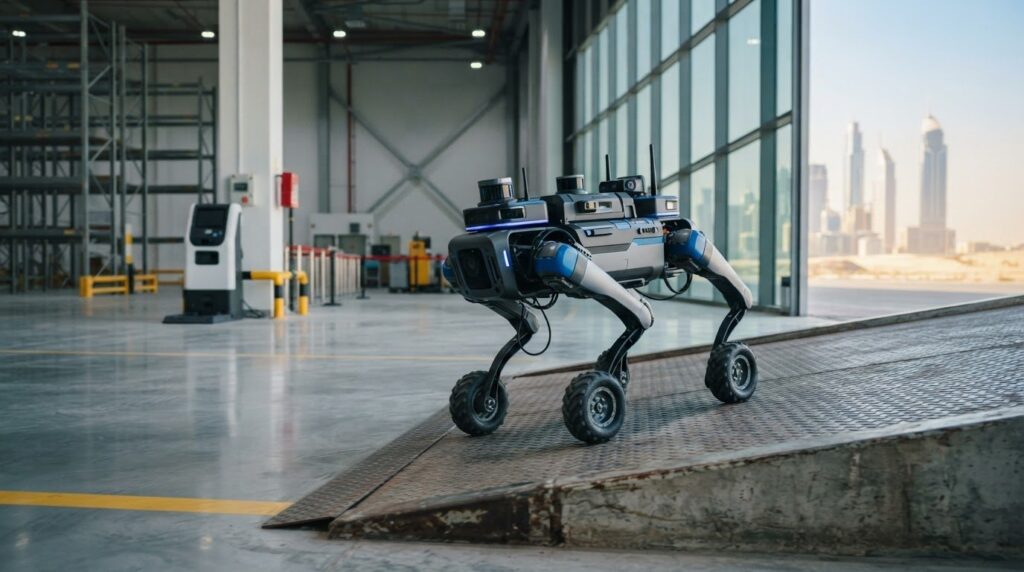
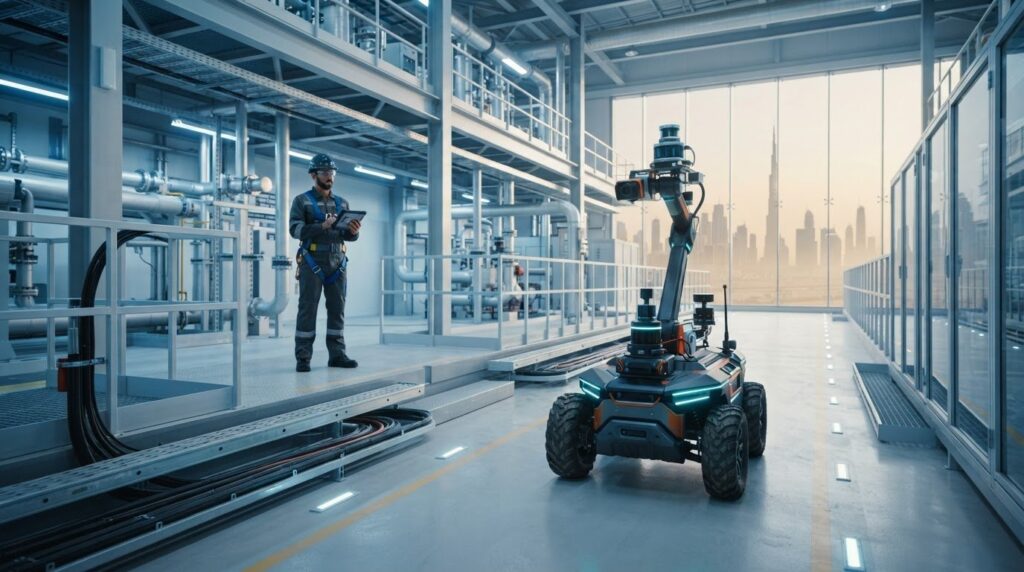
Adopting a consultancy-first approach allows us to significantly reduce implementation risks for manufacturers across the Emirates. We provide an end-to-end service model that encompasses everything from initial workflow audits to the final PLC and SCADA integration, ensuring that your robotic assets communicate fluently with existing infrastructure. While our material handling robots for manufacturing UAE optimize the movement of goods, our broader portfolio includes Humanoid Robots designed for advanced facility inspection and high-level surveillance. Choosing an integrator with national UAE coverage and established global alliances guarantees that your facility receives certified support and remains compliant with evolving industrial standards.
Future-Proofing Your Facility for 2026 and Beyond
Maintaining world-class facility standards requires a holistic view of automation that extends into every corner of the warehouse. Integrating autonomous cleaning robots allows organizations to uphold hygiene and safety protocols without diverting valuable human labor from core production tasks. This shift toward human-centric automation focuses on the synergy between advanced intelligence and specialized workers. By automating repetitive and hazardous tasks, we empower your workforce to focus on high-value roles, thereby enhancing overall operational resilience. This strategic evolution is essential for organizations wishing to remain competitive in a landscape where throughput and efficiency are the primary markers of success.
Securing long-term business viability in the 2026 industrial landscape requires a partner who provides both the tools and the strategic roadmap for their deployment. EdNex Automation remains committed to delivering high-level solutions that resolve complex industrial challenges through controlled and deliberate innovation. Our comprehensive ecosystem is designed to scale alongside your business, ensuring that your robotic architecture remains relevant as national production volumes grow. To begin your journey toward a fully integrated and autonomous industrial future, Consult with EdNex Automation experts to design your robotic future.
Securing Your Competitive Advantage in the 2026 Industrial Landscape
The successful orchestration of material handling robots for manufacturing UAE represents the definitive bridge between current operational constraints and the next phase of industrial evolution. Transitioning from traditional, fixed infrastructure to flexible, autonomous systems allows facilities to achieve 24/7 throughput while mitigating the risks of labor shortages and high operational overhead. True modernization depends on the intelligent integration of mobile autonomy with centralized control layers like PLC and SCADA, ensuring that every robotic asset functions as part of a unified, high-performance ecosystem. This strategic shift isn’t just a peripheral upgrade; it’s a fundamental requirement for long-term business viability in an increasingly competitive globalized economy.
As a Certified Industry 4.0 Integrator with National UAE Technical Support and Strategic Alliances with Global Robotics Leaders, we provide the intellectual framework necessary for large-scale industrial transformation. Our full-service approach ensures your facility moves beyond simple tool acquisition toward a bespoke, integrated future. Partner with EdNex Automation to modernize your manufacturing facility. Your organization’s journey toward total operational excellence begins with a single, deliberate step toward intelligent automation.
Frequently Asked Questions
What are the main types of material handling robots used in UAE manufacturing?
The primary categories of material handling robots for manufacturing UAE include Collaborative Robots (Cobots) for human-adjacent tasks, Autonomous Mobile Robots (AMRs) for flexible transport, and Automated Storage and Retrieval Systems (ASRS) for high-density inventory management. Each system addresses specific logistical bottlenecks, such as manual palletizing or inefficient warehouse space utilization. By integrating these units through a centralized PLC and SCADA layer, facilities achieve a unified, high-tech ecosystem that supports 24/7 operational capability.
How much space is required to install an ASRS system in a UAE warehouse?
ASRS installations are highly modular and designed to maximize vertical cubic volume rather than horizontal floor space. While the exact footprint depends on your facility’s ceiling height and pallet dimensions, these systems can reduce storage footprints by up to 40% compared to traditional racking. This optimization is critical for regional manufacturers facing high industrial land costs. We conduct a thorough spatial audit to design a bespoke architecture that fits your specific warehouse dimensions.
Can collaborative robots (cobots) safely work alongside human employees without cages?
Yes, collaborative robots are specifically engineered with advanced force-sensing technology and proximity sensors that allow them to operate safely alongside human personnel without physical safety cages. These robots automatically slow down or stop when they detect human presence, reclaiming valuable floor space previously lost to bulky safety fencing. This capability makes them ideal for high-mix, low-volume production lines where workers must frequently interact with the automation system for kitting or assembly tasks.
What is the typical ROI period for autonomous mobile robots in a manufacturing plant?
While the specific payback period varies by facility, most regional manufacturers observe a full return on investment for AMRs within 12 to 24 months. This ROI is driven by the elimination of manual material transport costs, reduced product damage, and the ability to maintain consistent throughput during peak demand. Unlike fixed infrastructure, AMRs offer faster deployment times and inherent scalability, allowing you to expand your fleet as your production volumes grow toward national industrial targets.
Do I need to replace my existing PLC systems to integrate new material handling robots?
You don’t necessarily need to replace your legacy infrastructure to modernize your facility. Professional integration services focus on bridging the gap between existing Programmable Logic Controllers (PLC) and new robotic assets through sophisticated SCADA layers and custom communication protocols. This approach allows for a phased deployment that protects your previous capital investments while introducing the intelligent orchestration needed for Industry 4.0. We ensure that new material handling robots for manufacturing UAE communicate seamlessly with your current systems.
What maintenance is required for industrial robots operating in the UAE climate?
Industrial robots operating in the UAE require specialized maintenance focused on dust mitigation and thermal management. High-performance systems should feature appropriate IP ratings to protect sensitive electronics from fine particulate matter common in the region. Regular sensor calibration and cooling system inspections are essential to prevent performance degradation in high-temperature environments. We provide comprehensive, national technical support to ensure your robotic ecosystem maintains peak efficiency throughout its operational lifecycle.
How do autonomous mobile robots navigate without magnetic floor strips?
Modern AMRs utilize Simultaneous Localization and Mapping (SLAM) technology combined with LiDAR and 3D cameras to navigate dynamically. Instead of following fixed magnetic strips or wires, these robots create a digital map of their environment and identify natural features like walls or pillars to determine their position. This autonomy allows them to recalculate paths in real-time to avoid obstacles, making them significantly more flexible than traditional AGVs in busy manufacturing settings.
Is there government support for UAE manufacturers adopting robotic automation?
The UAE government actively encourages industrial modernization through national initiatives like the UAE National AI Strategy and the Operation 300bn program. These federal programs aim to position the country as a global hub for Industry 4.0 by supporting the adoption of advanced robotics and smart manufacturing solutions. Manufacturers can often access various incentives or technical frameworks designed to accelerate the transition toward autonomous systems, ensuring the long-term business viability of the national manufacturing sector.