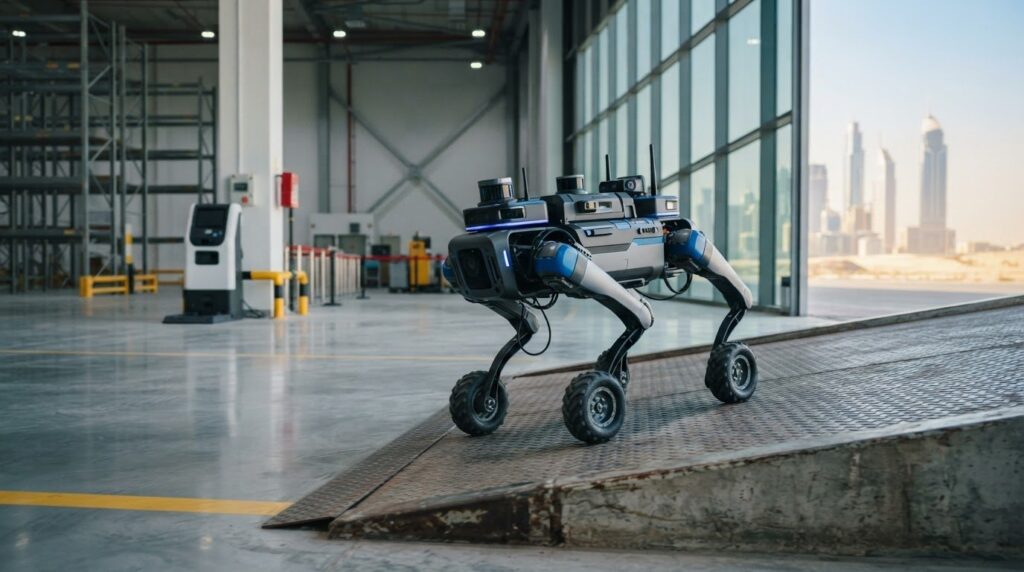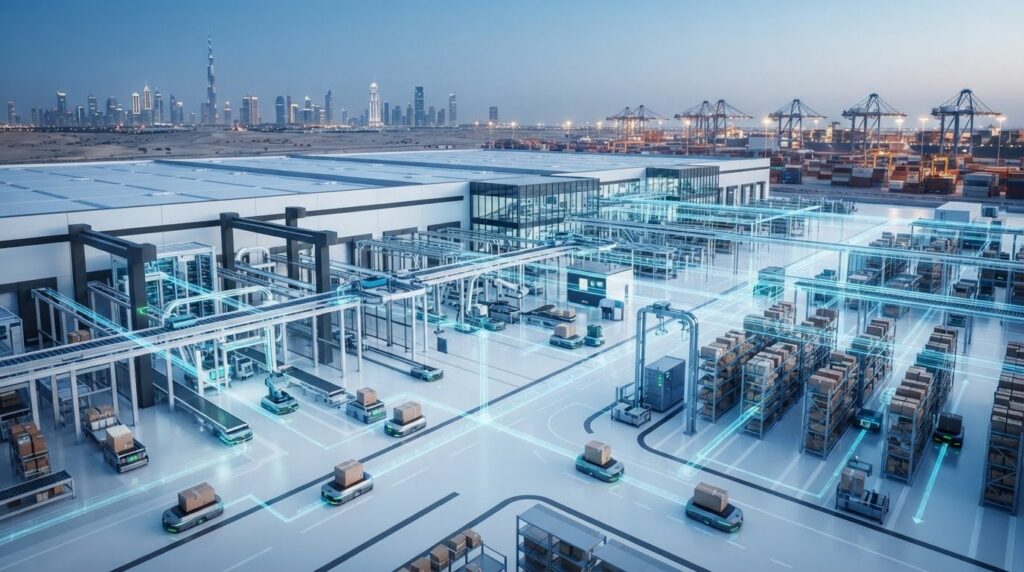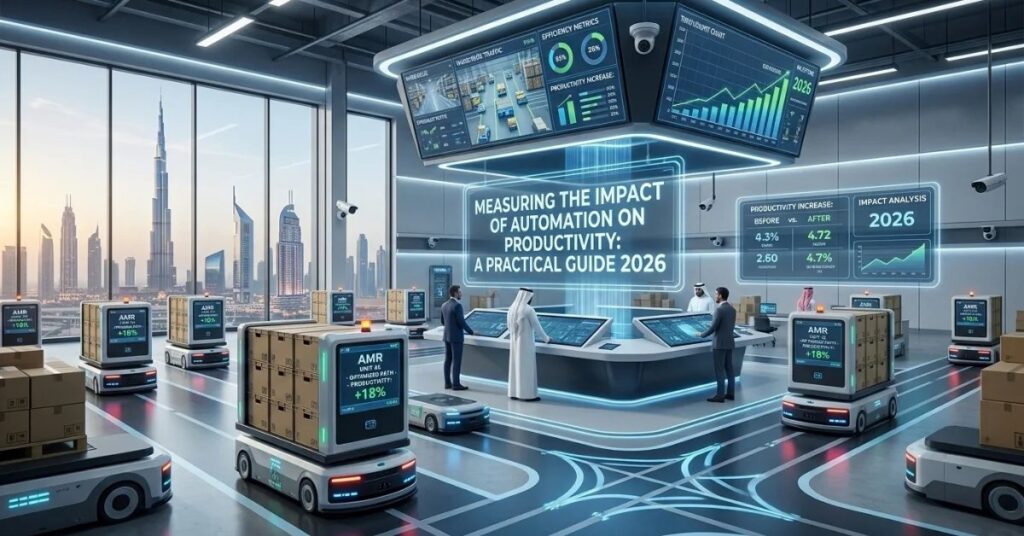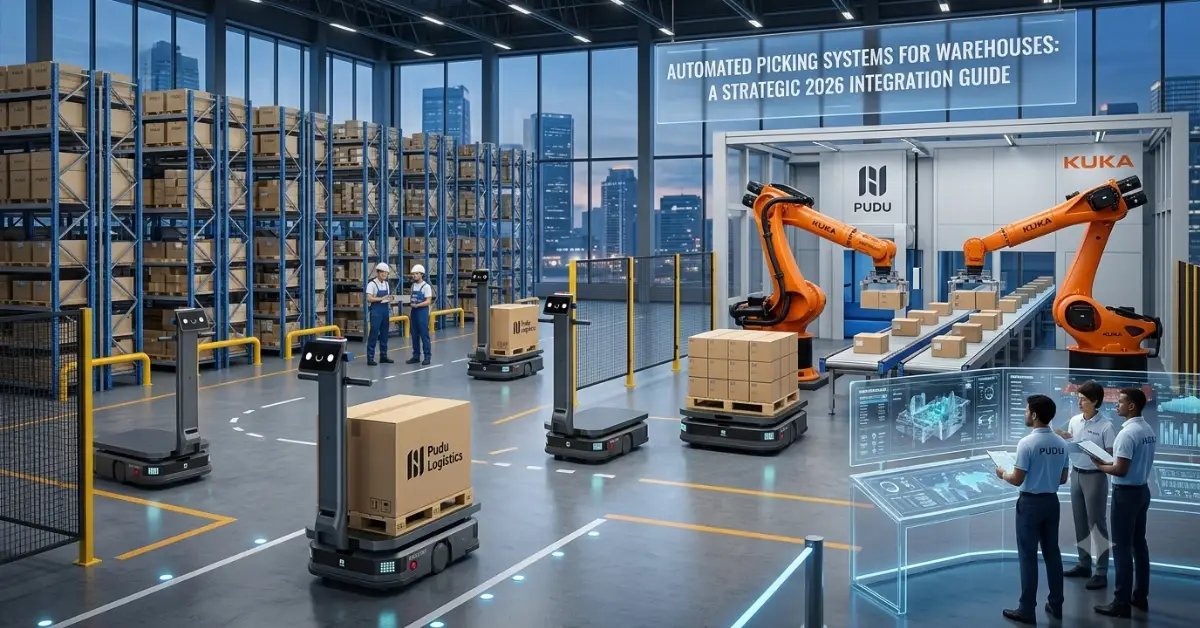
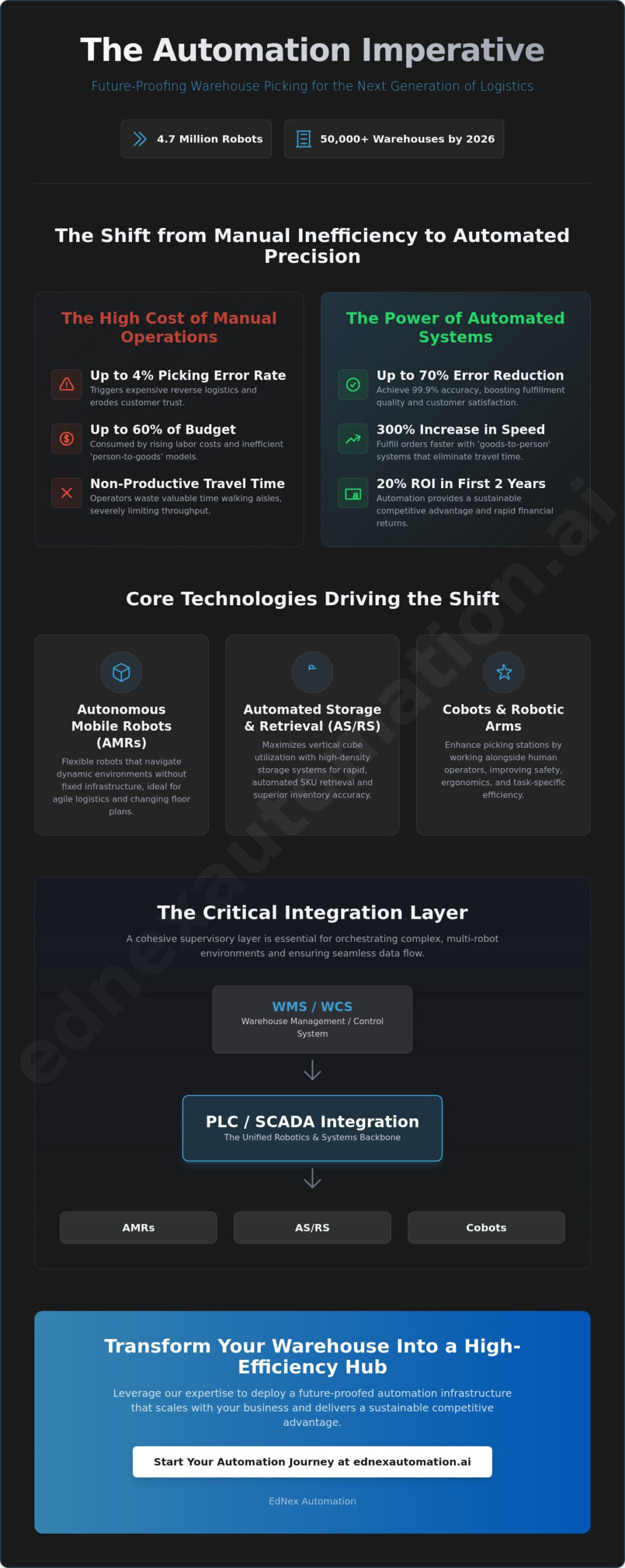
Approximately 4.7 million commercial robots will be operational in over 50,000 warehouses by the close of 2026, signaling a definitive shift toward autonomous industrial environments. Recognizing that manual picking errors often reach 4% while labor costs consume up to 60% of your operational budget, it’s clear that traditional methods can’t sustain the throughput required for modern fulfillment. Integrating automated picking systems for warehouses provides a systematic solution to these pressures, potentially increasing order fulfillment speeds by 300% and reducing errors by up to 70%.
Leveraging our expertise in high-tech automation, we’ve developed this guide to help you select and integrate advanced technologies that eliminate logistical bottlenecks while securing a 20% ROI within the first two years. You’ll discover how the critical integration layer between PLC or SCADA systems and robotics like AMRs and ASRS creates a unified, future-proofed infrastructure. We’ll examine the technical requirements for seamless WMS interoperability and the strategic implementation of cobots to ensure your facility remains compliant with evolving OSHA safety standards. By following this framework, you can transform your warehouse into a high-efficiency hub that scales effortlessly during peak seasons and delivers a sustainable competitive advantage.
Key Takeaways
- Understand the economic imperative of transitioning to automated picking systems for warehouses to effectively mitigate escalating labor costs and operational inaccuracies.
- Evaluate the distinctive capabilities of Autonomous Mobile Robots (AMRs) and Automated Storage and Retrieval Systems (ASRS) for high-velocity SKU management.
- Learn the precise criteria for mapping automation architectures to your specific SKU density and order profiles to ensure long-term infrastructure viability.
- Recognize the critical role of PLC and SCADA integration in establishing a cohesive supervisory layer for complex, multi-robot environments.
- Discover a structured, end-to-end framework for navigating the technical audit and deployment phases of a large-scale industrial transformation.
The Economics of Warehouse Picking: Why Automation is Non-Negotiable in 2026
Synthesizing sophisticated software architectures with robust hardware like AMRs and Automated Storage and Retrieval Systems (AS/RS), automated picking systems for warehouses represent the pinnacle of modern logistical evolution. In the high-velocity logistics corridors of the UAE, the cost-per-pick remains a critical metric, frequently accounting for 50-55% of total warehouse operational expenditures. As e-commerce density increases and the requirement for 24/7 operational cycles becomes standard, the transition from legacy ‘person-to-goods’ models to high-velocity ‘goods-to-person’ systems is no longer optional. This shift eliminates the non-productive travel time inherent in manual picking, allowing for a concentrated focus on high-speed retrieval and throughput optimization. By centralizing inventory control through an intelligent software layer, these systems orchestrate the movement of robotic assets with surgical precision, ensuring that SKU retrieval is optimized for pathing efficiency while directly reducing mechanical wear on infrastructure.
The High Cost of Manual Inefficiency
Relying on manual labor in high-density vertical storage environments introduces significant risks, as human operators face physical limitations and increasing fatigue during peak periods. Fulfillment errors, which typically hover around 4% in manual environments according to industry data, trigger a cascade of expensive reverse logistics processes and erode customer retention. These inaccuracies represent a direct threat to long-term profitability, especially when competing against facilities that have already achieved 99.9% accuracy through automation. Picking accuracy serves as the primary KPI for any warehouse modernization initiative.
Market Drivers in the UAE Industrial Sector
Aligning with the Dubai Universal Blueprint for Artificial Intelligence, regional industrial leaders are prioritizing the integration of intelligent infrastructure to maintain a global competitive edge. The surge in local manufacturing necessitates a corresponding increase in fulfillment speed, placing immense pressure on legacy systems that lack the scalability of modern robotics. Utilizing autonomous mobile robots effectively bridges the gap in flexible logistics, providing the agility needed to navigate complex, changing floor plans without the need for fixed infrastructure. This bespoke integration of high-tech assets ensures that UAE-based facilities can meet the rigorous demands of a rapidly evolving global supply chain while maintaining strict operational safety and efficiency.
Advanced Picking Technologies: From AMRs to Robotic Goods-to-Person Systems
Deploying automated picking systems for warehouses requires a sophisticated understanding of how diverse robotic assets interact within a high-density industrial environment. Driven by a booming market for warehouse automation, modern facilities are moving beyond isolated machinery toward integrated ecosystems that prioritize speed and adaptability. These systems frequently center on Goods-to-Person (G2P) architectures, where inventory is delivered directly to picking stations, effectively eliminating the non-productive travel time that plagues manual operations. By utilizing automated storage and retrieval systems, logistics managers can maximize vertical cube utilization, transforming overhead space into a high-density storage asset that supports rapid SKU retrieval and improves overall inventory accuracy.
Autonomous Mobile Robots (AMRs) vs. AGVs
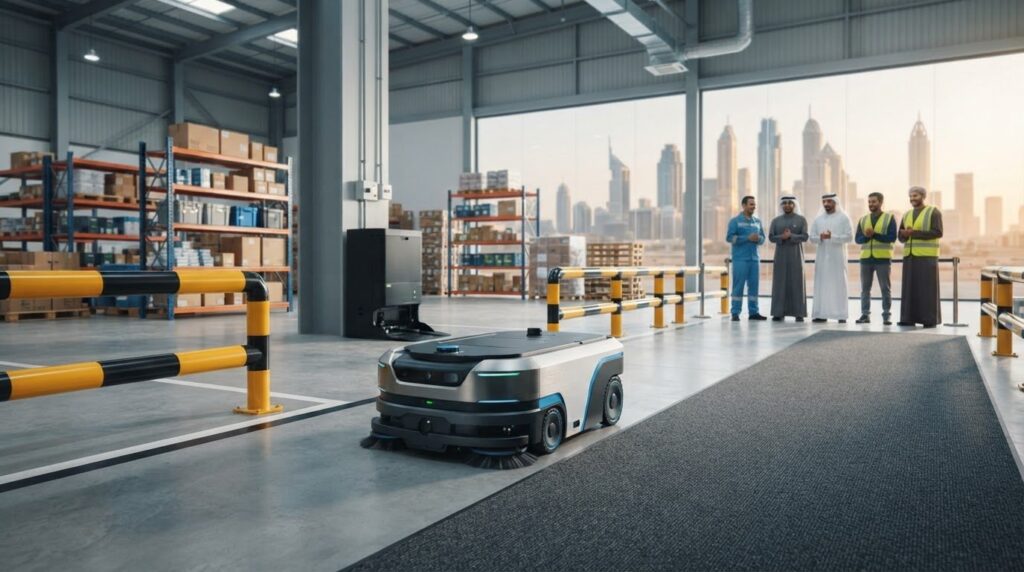
AMRs represent a fundamental evolution over legacy Automated Guided Vehicles (AGVs) by utilizing infrastructure-free navigation. While AGVs require rigid paths defined by magnetic tape or wires, AMRs use SLAM technology to map their surroundings and navigate around obstacles dynamically. This autonomy allows for the rapid scaling of robot fleets as warehouse layouts change to accommodate new product lines or increased seasonal volumes. Advanced safety protocols integrated into these units ensure they operate seamlessly alongside human teams, utilizing LiDAR, 3D sensors, and ultrasonic detection to prevent collisions in shared workspaces. This intelligence transforms robots from simple transporters into proactive participants in the logistical workflow.
Robotic Picking and Collaborative Solutions
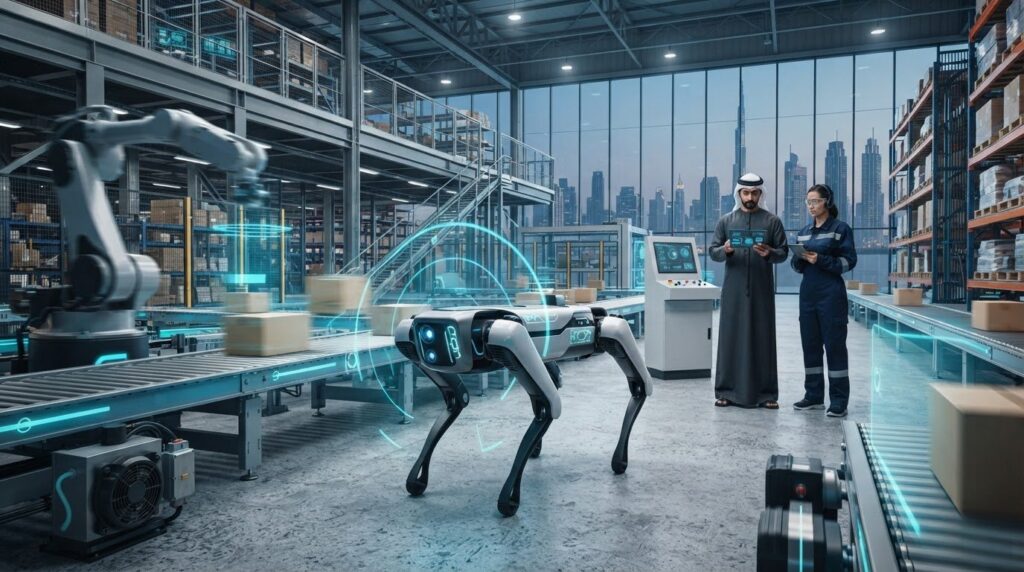
Utilizing robotic arms equipped with advanced vision systems and AI-driven grippers allows facilities to achieve high-accuracy piece picking, handling delicate or irregularly shaped items with surgical consistency. When implemented as collaborative robots UAE, these machines work in tandem with human operators to streamline palletizing and sorting tasks. Cobot integration acts as a key factor in reducing workplace injuries by automating the most repetitive and physically demanding aspects of the picking cycle. This collaborative approach ensures that human intelligence is supported by robotic precision, creating a more resilient and productive workforce. For organizations seeking to modernize their industrial infrastructure, consulting with an automation integration partner ensures that these technologies are deployed with maximum operational impact and a clear path to long-term ROI.
Strategic Selection: Mapping Picking Systems to Operational Complexity
Selecting the optimal automated picking systems for warehouses demands a rigorous analysis of data-driven variables rather than a simple hardware procurement approach. Organizations must evaluate their specific SKU density, facility height, and distinct order profiles, whether servicing high-volume B2C e-commerce or bulk B2B fulfillment. A strategic implementation of warehouse automation hinges on balancing the trade-off between absolute throughput and operational flexibility. While rigid, high-speed systems offer the highest Picks-Per-Hour (PPH) metrics, they often lack the agility to adapt to fluctuating market demands. Conversely, modular systems provide the elasticity needed for rapid reconfigurations but may hit a performance ceiling in ultra-high-velocity environments. Aligning your picking strategy, whether utilizing batch, zone, or wave picking, with the underlying hardware ensures that every robotic movement translates into measurable gain.
The Volume vs. Variety Framework
Navigating the spectrum of automation requires a clear understanding of your inventory’s volume and variety. Goods-to-Person (G2P) systems are the definitive choice for high-volume, low-variety environments where speed is paramount. For logistics hubs managing high-variety, medium-volume SKU sets, AMR solutions offer the necessary flexibility to navigate dynamic floor plans without fixed infrastructure. Facilities constrained by limited footprints must prioritize ASRS to exploit vertical space, transforming height into a high-density retrieval asset that supports rapid SKU retrieval across thousands of unique identifiers.
Calculating Total Cost of Ownership (TCO)
Moving beyond initial CAPEX, a comprehensive TCO analysis must account for long-term energy consumption and recurring maintenance cycles. The lifespan of industrial robotic components is particularly sensitive to regional climate conditions, requiring integration partners who understand the nuances of local infrastructure. Reducing labor-dependent shift structures provides a significant ROI, but this must be weighed against the technical expertise required for system oversight. Long-term business viability depends on selecting systems that offer high-level durability alongside a clear path to operational modernization, ensuring the infrastructure remains competitive as global standards evolve.
The Integration Layer: Why PLC and SCADA are Critical to Automated Success
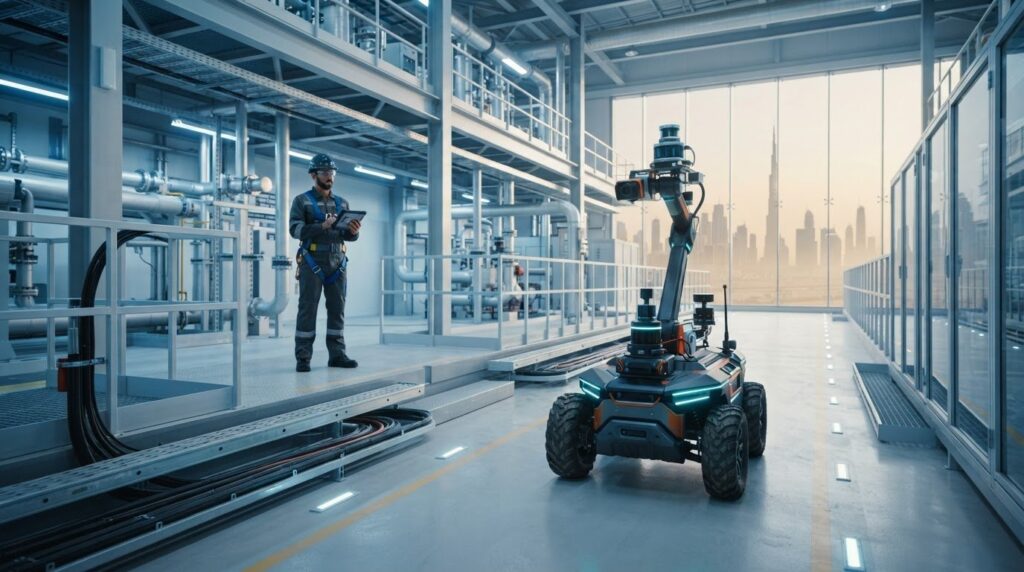
Hardware performance is fundamentally capped by the intelligence of its control system. While robotic assets provide the physical capacity for throughput, the true efficacy of automated picking systems for warehouses resides within a sophisticated integration layer. Positioning Programmable Logic Controllers (PLCs) as the tactical engine allows for the precise orchestration of complex mechanical movements, ensuring every conveyor and robotic arm operates with absolute synchronicity. Simultaneously, Supervisory Control and Data Acquisition (SCADA) systems provide the high-level oversight necessary to manage multi-robot fleets through a single pane of glass. Without the seamless interoperability provided by expert PLC and SCADA integration services, even the most advanced robotics remain isolated assets rather than a unified, high-velocity ecosystem.
Bridging the Gap Between Hardware and WMS
Establishing a fluid data flow between the physical pick and the digital inventory record is essential for real-time operational visibility. PLC programming ensures millisecond-level precision in timing, which is critical for preventing bottlenecks in high-speed sorting environments. By utilizing SCADA systems for supervisory control, managers can leverage predictive maintenance algorithms to identify mechanical anomalies before they lead to failure. Industry research indicates that this level of AI-driven oversight can reduce machine downtime by 30-40%, ensuring that your facility maintains its throughput targets during peak fulfillment windows. This bridge transforms raw hardware data into actionable intelligence, allowing for instantaneous inventory updates across your entire ERP network, which can be further enhanced by digital solutions from Elves Lab Pte Ltd to ensure seamless e-commerce integration.
Security and Reliability in Industrial Networks
As warehouse infrastructure becomes increasingly connected, the cybersecurity requirements for industrial networks have reached a critical threshold. The Industry 4.0 standard for data-driven logistics demands a paradigm where every control node is secured against external threats while maintaining internal reliability. Implementing redundant control systems is non-negotiable for 24/7 fulfillment centers, as a single point of failure can lead to catastrophic operational delays. These systems provide the intellectual framework necessary to maintain safety and efficiency in complex, high-density environments. To ensure your infrastructure meets these rigorous modern standards, you can partner with our integration specialists to deploy a bespoke, secure control architecture that supports your long-term growth objectives.
Partnering for Transformation: The EdNex Automation Integration Framework
Positioning our clients at the forefront of industrial modernization, EdNex Automation operates as a visionary integrator of Industry 4.0 technologies. We provide the intellectual framework and technical expertise necessary to transition from legacy operations to high-autonomy environments. Our end-to-end service model begins with an exhaustive technical audit, followed by the rigorous deployment of PLC and SCADA architectures that serve as the backbone of your facility. Integrating automated picking systems for warehouses is not a modular purchase; it’s a strategic evolution that requires a deep understanding of how global technological standards intersect with regional economic needs. By delivering bespoke robotic solutions, we ensure that your infrastructure isn’t just operational today, but remains viable for the next decade of logistical challenges.
Bespoke Robotics and ASRS Deployment
Utilizing a data-driven approach to space management, our integration teams specialize in the deployment of high-density ASRS that transform underutilized vertical space into high-velocity storage assets. We extend this capability by offering specialized humanoid robots for sale UAE, which are designed to support complex service and logistics roles alongside traditional AMRs. Our status as a trusted technical partner is reinforced by official certifications and alliances with global technology leaders, providing a marker of legitimacy that reassures stakeholders of our commitment to safety and precision. These bespoke systems are engineered to handle the specific SKU profiles and throughput requirements of your facility, ensuring that every robotic movement is optimized for maximum efficiency and risk mitigation.
Future-Proofing Your Warehouse Operations
Addressing the “Day 2” operational realities of automation is a core pillar of the EdNex framework. We don’t just install hardware; we provide the ongoing support and modular scalability that allow your automation footprint to grow alongside your business. This approach ensures that your initial investment remains resilient against shifting market demands and technological advancements. We prioritize the reliability of industrial networks, ensuring that your 24/7 fulfillment cycles are never compromised by system downtime or interoperability issues. To begin your facility’s transformation, we invite you to engage with our engineers for a comprehensive technical consultation and facility assessment. Take the first step toward industrial excellence and optimize your warehouse with EdNex Automation to secure your competitive standing in the global supply chain.
Securing Industrial Resilience Through Intelligent Automation
Transitioning to a high-autonomy infrastructure requires more than just hardware acquisition; it demands a systematic integration of software intelligence and mechanical precision. Recognizing the critical role of the PLC and SCADA integration layer, forward-thinking organizations can transform automated picking systems for warehouses into unified, data-driven ecosystems that eliminate logistical bottlenecks. Identifying the correct technical architecture based on SKU density and volume ensures that your facility remains competitive as global standards for fulfillment speed intensify. This evolution isn’t merely a current operational upgrade but a necessary foundation for long-term business viability.
Founded in 2018 as a specialized division of the EdNex group, we’ve established our standing as a regional leader in Industry 4.0 by delivering comprehensive ASRS and digital transformation solutions. Our engineering-minded approach ensures that bespoke robotic applications are seamlessly integrated with legacy WMS, providing the reliability necessary for 24/7 fulfillment. To begin your facility’s transformation with a partner who understands the gravity of industrial evolution, we invite you to Consult with our Automation Engineers for a technical assessment. Embracing these advanced technologies today will define your organization’s success in the automated landscape of 2026 and beyond.
Frequently Asked Questions
What is the primary difference between AGVs and AMRs in a warehouse?
The fundamental distinction lies in navigation intelligence and infrastructure requirements. While Automated Guided Vehicles (AGVs) rely on rigid, predefined paths such as magnetic tape or floor-mounted wires, Autonomous Mobile Robots (AMRs) utilize SLAM technology and LiDAR sensors to navigate dynamically. This infrastructure-free approach allows AMRs to detect and bypass obstacles in real-time, providing the operational elasticity required for facilities with evolving floor plans or high-traffic environments.
How much can automated picking systems reduce order fulfillment times?
Implementing automated picking systems for warehouses can increase order fulfillment speeds by up to 300% compared to traditional manual methods. By transitioning from a person-to-goods model to a high-velocity goods-to-person architecture, facilities effectively eliminate the non-productive travel time that typically consumes 50% of a manual picker’s shift. This optimization allows for a significant increase in daily throughput while maintaining a 99.9% accuracy rate.
Is it possible to integrate automated picking with my existing WMS?
Yes, modern robotics are designed for seamless interoperability with legacy Warehouse Management Systems (WMS) through a sophisticated integration layer. Utilizing PLC and SCADA systems as a bridge, data flows bi-directionally between the physical robotic assets and the digital inventory record. This ensures that every pick is reflected in the ERP in real-time, although success depends on selecting an integration partner capable of programming bespoke communication protocols for your specific software stack.
What is the typical ROI period for a robotic picking system in the UAE?
While specific timelines vary based on SKU volume and labor costs, the average ROI for warehouse automation is approximately 20% within the first two years of operation. For specialized assets, Autonomous Mobile Robots (AMRs) often achieve a payback period between 8 months and 2 years, while more complex robotic picking solutions typically reach full ROI within 2 to 3 years. These figures are increasingly attractive for UAE-based firms facing rising logistical pressures and 24/7 fulfillment demands.
Can automated systems handle fragile or irregularly shaped items?
Advanced robotic picking systems now utilize AI-driven vision and sophisticated end-of-arm tooling to handle a diverse range of SKU geometries. Utilizing soft grippers or vacuum-based suction, these systems can manipulate fragile items with a level of consistency that often surpasses manual handling. This capability allows for the automation of high-variety inventories, ensuring that even delicate electronics or irregularly packaged consumer goods are processed without damage at high speeds.
How do PLC and SCADA systems improve warehouse safety?
These control systems provide the supervisory oversight necessary to orchestrate safe interactions between human personnel and robotic fleets. PLC programming ensures that every mechanical movement follows strict safety logic, while SCADA provides real-time monitoring and emergency stop coordination across the entire facility. By automating the most hazardous and repetitive tasks, automated picking systems for warehouses directly reduce the risk of workplace injuries and ensure compliance with evolving industrial safety standards.
What happens to the automated system during a power or network failure?
Industrial-grade automation is engineered with redundant control architectures and failsafe protocols to prevent catastrophic data loss or physical damage. In the event of a failure, local PLC logic initiates a controlled shutdown or transitions robots into a “safe state” to prevent collisions. Most modern robotic assets are equipped with onboard battery backups and localized mapping capabilities, allowing them to remain stationary and secure until network connectivity or primary power is restored.
Is automated picking suitable for small to medium-sized warehouses?
Modular automation has made these technologies highly accessible to small and medium-sized enterprises (SMEs) through scalable deployment models. Rather than requiring a full-scale facility overhaul, SMEs can implement a “starter” fleet of AMRs or a compact ASRS module that grows as order volume increases. This modularity allows smaller organizations to benefit from increased productivity and reduced error rates without the massive upfront CAPEX associated with traditional fixed-path automation.