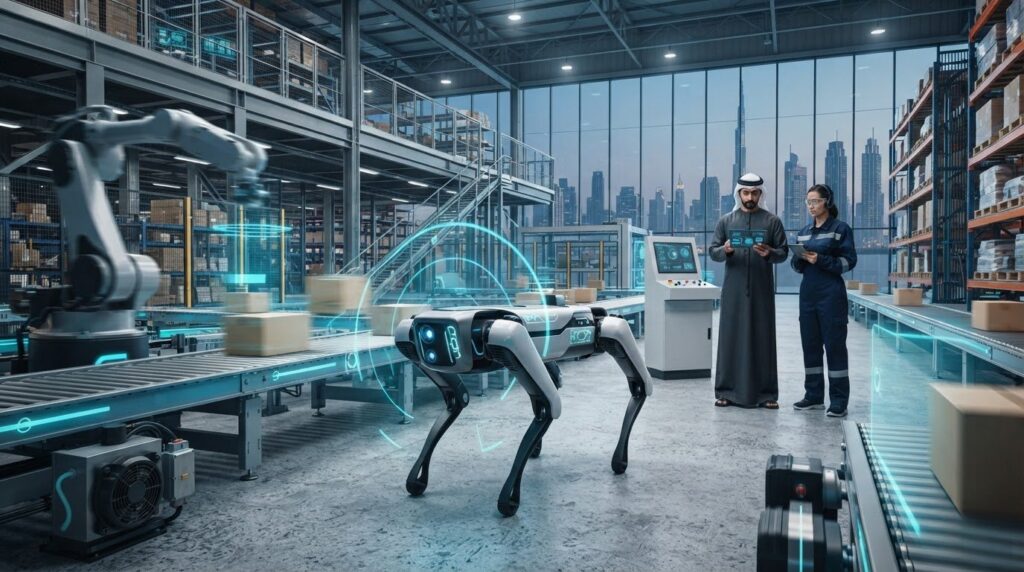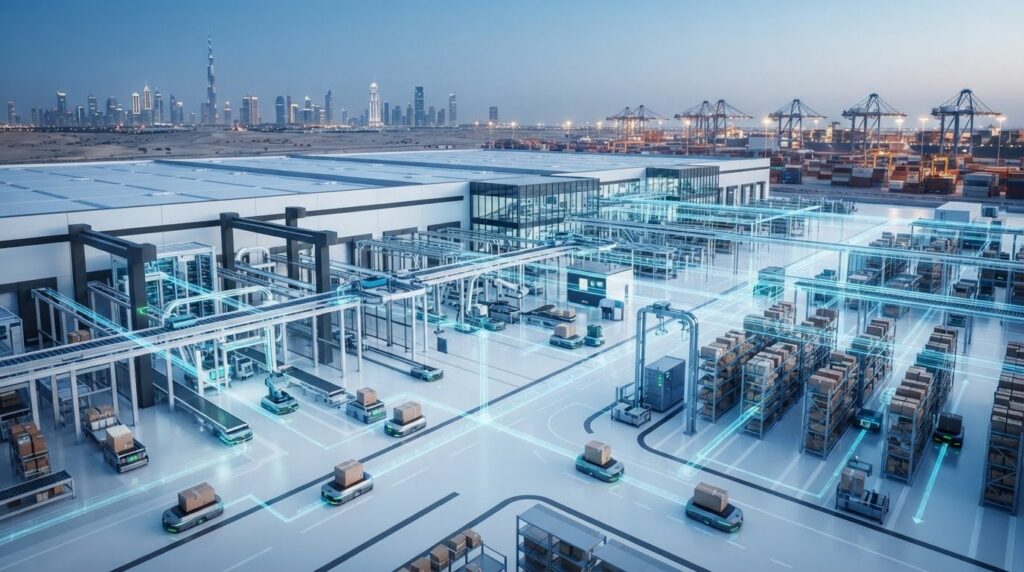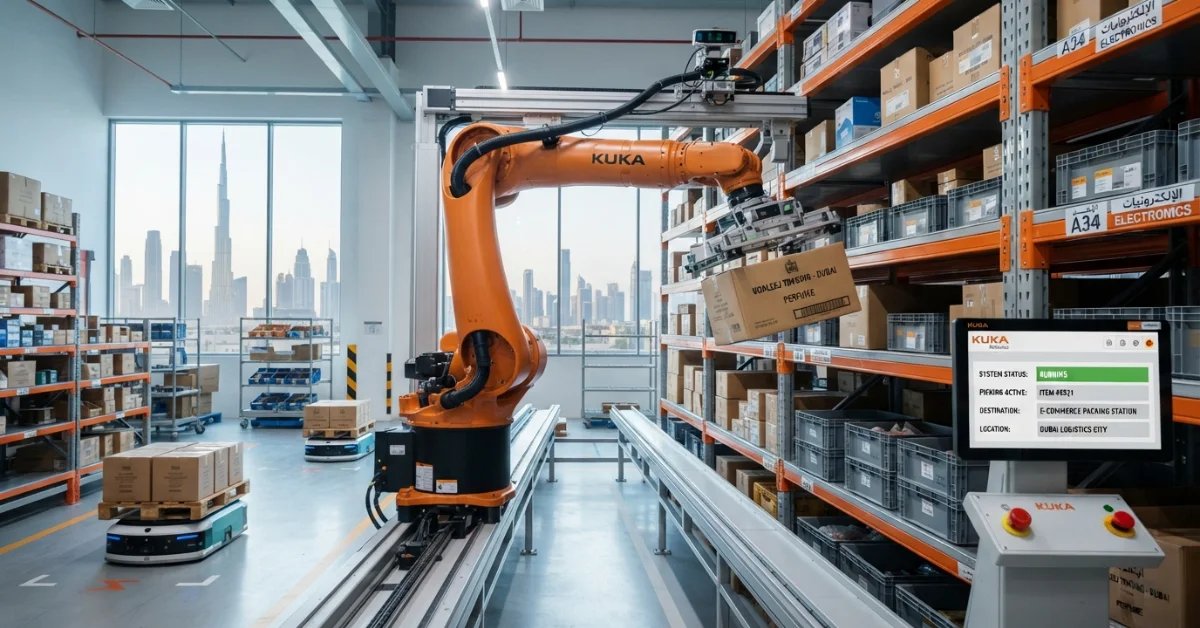
While the UAE accelerates toward a $550 million AI-driven automation market by 2026, a staggering 80% of global warehouses still rely on manual labor, leaving them vulnerable to the rising costs of human error. Implementing the robotic order picking systems UAE industry leaders now demand is no longer an optional upgrade; it’s a fundamental shift toward industrial resilience. You likely feel the pressure of high operational costs and the persistent inaccuracy that plagues manual, high-volume fulfillment, especially as regional competition intensifies.
This guide explores how to transform those challenges into competitive advantages by strategically integrating autonomous technologies into your specific fulfillment operations. We’ll outline the technical roadmap for achieving seamless connectivity between new hardware and your legacy PLC or SCADA control layers, ensuring your facility aligns with the ambitious Dubai Robotics and Automation Program. By examining the integration of Autonomous Mobile Robots and automated storage solutions, we provide the intellectual framework necessary to drive measurable increases in throughput and accuracy for the 2026 market.
Key Takeaways
- Analyze the impact of national initiatives like Operation 300bn on the rapid transition from manual processes to sophisticated, high-tech fulfillment architectures.
- Explore the technical synergy between advanced sensing and robotic order picking systems UAE facilities require to achieve autonomous precision in high-volume environments.
- Evaluate specific throughput benchmarks and payload capabilities to select the optimal picking technology for your facility’s unique operational demands.
- Master the integration roadmap for connecting robotics to legacy Warehouse Management Systems through critical middleware and PLC/SCADA control layers.
- Discover how turnkey, start-to-finish automation solutions bridge the gap between global technological breakthroughs and regional industrial needs.
The Evolution of Logistics: Why Robotic Order Picking is Essential for UAE Enterprises in 2026
Aligning with the UAE’s ambitious Operation 300bn initiative, industrial leaders are rapidly pivoting toward autonomous architectures to secure long-term viability. The transition from manual picking to robotic order picking systems UAE represents a critical milestone in the nation’s Industry 4.0 roadmap. By automating the most labor-intensive segment of the supply chain, enterprises don’t just reduce overhead; they eliminate the inherent variability of human-led processes. This evolution is essential for supporting the region’s 24/7 e-commerce demands, where delivery speed and order accuracy serve as the primary differentiators in a crowded market. Moving toward high-tech fulfillment allows companies to mitigate risks associated with operational bottlenecks, effectively future-proofing the industrial sector against labor market fluctuations.
National Strategic Alignment and Industry 4.0
The UAE Ministry of Industry and Advanced Technology (MoIAT) has established a clear mandate for digital transformation, positioning automation as the cornerstone of global competitiveness. Transitioning to ‘Lights-Out’ fulfillment centers allows firms to maintain continuous operation without the constraints of traditional shifts or human-centric infrastructure requirements. Implementing these systems provides a practical application of the broader Overview of Logistics Automation, ensuring local logistics hubs remain integrated with global trade standards. By adopting robotic order picking systems UAE, regional firms can enhance their standing as advanced technology pioneers while delivering the high-level solutions required for large-scale industrial transformation.
Economic Drivers for Automation in 2026
Evaluating the financial landscape of 2026 reveals that the cost of manual storage and retrieval in high-density urban areas like Dubai and Abu Dhabi has become a significant barrier to growth. Enterprises must scale their throughput without a proportional increase in facility footprint, a challenge that only high-density robotic systems can solve. This necessity for precision is particularly acute in cold chain and pharmaceutical logistics, where temperature-sensitive goods require rapid, error-free handling to maintain compliance. By utilizing Automated Storage and Retrieval Systems (ASRS) and Autonomous Mobile Robots (AMRs), businesses can achieve the density and speed required to thrive in the UAE’s increasingly complex industrial ecosystem. The focus remains on optimizing every cubic meter of warehouse space while ensuring that accuracy remains absolute during high-volume fulfillment cycles.
Technical Architectures of Modern Robotic Picking Systems
Defining robotic order picking as the automated selection of discrete items from storage to fulfill customer orders, modern architectures rely on a seamless synergy between sophisticated sensing, precision gripping, and intelligent navigation. Achieving this level of autonomy requires a deep understanding of the MHI Industry Roadmap, which highlights the critical role of robotics in maintaining supply chain fluidity. These robotic order picking systems UAE enterprises are deploying utilize advanced machine learning algorithms to process high-resolution visual data, allowing grippers to handle varied item geometries with human-like dexterity. By prioritizing modularity, organizations can design scalable picking cells that expand alongside business growth, ensuring that the initial technological investment remains viable for years.
Computer vision serves as the cognitive foundation for these systems, enabling real-time identification and spatial awareness in complex fulfillment environments. Utilizing multi-sensor fusion, robots navigate around obstacles and identify the optimal grasp point for each unique SKU, even in cluttered bins. This intelligence reduces the need for rigid warehouse layouts, facilitating a more dynamic and responsive approach to inventory management. For those seeking to audit their current infrastructure, exploring bespoke industrial automation services can reveal where these technical architectures offer the highest return on investment and risk mitigation.
Autonomous Mobile Robots (AMRs) in Picking
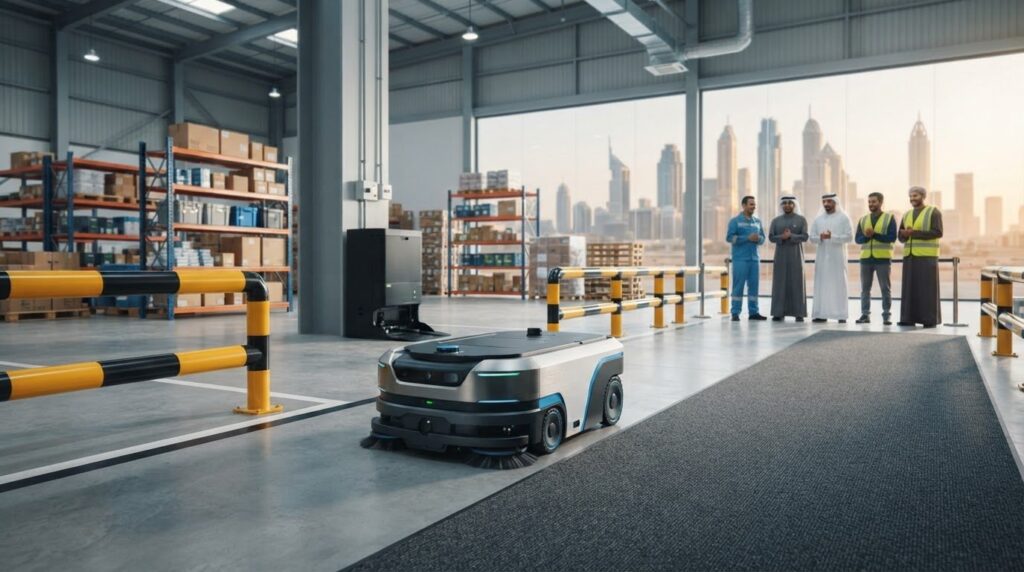
Integrating autonomous mobile robots into fulfillment workflows enables a transition from static conveyors to flexible ‘goods-to-person’ models. Leveraging SLAM (Simultaneous Localization and Mapping) navigation, these units operate safely alongside human personnel without requiring floor-embedded tracks or wires. This flexibility allows robotic order picking systems UAE to adapt to seasonal demand spikes by simply deploying additional units rather than reconfiguring physical infrastructure. Compared to traditional systems, AMRs provide a superior degree of operational agility, significantly reducing the travel time required for pickers.
Automated Storage and Retrieval Systems (ASRS)
Deploying automated storage and retrieval systems maximizes vertical space, effectively turning high-bay architectures into high-density picking engines. Shuttle technology plays a pivotal role here, facilitating the rapid consolidation of orders by moving totes or bins at speeds unattainable by manual labor. These systems act as the primary storage buffer, ensuring that items are always staged and ready for the picking robot or human operator. By optimizing the floor space through vertical integration, UAE facilities can handle larger inventories without the expense of expanding their physical footprint.
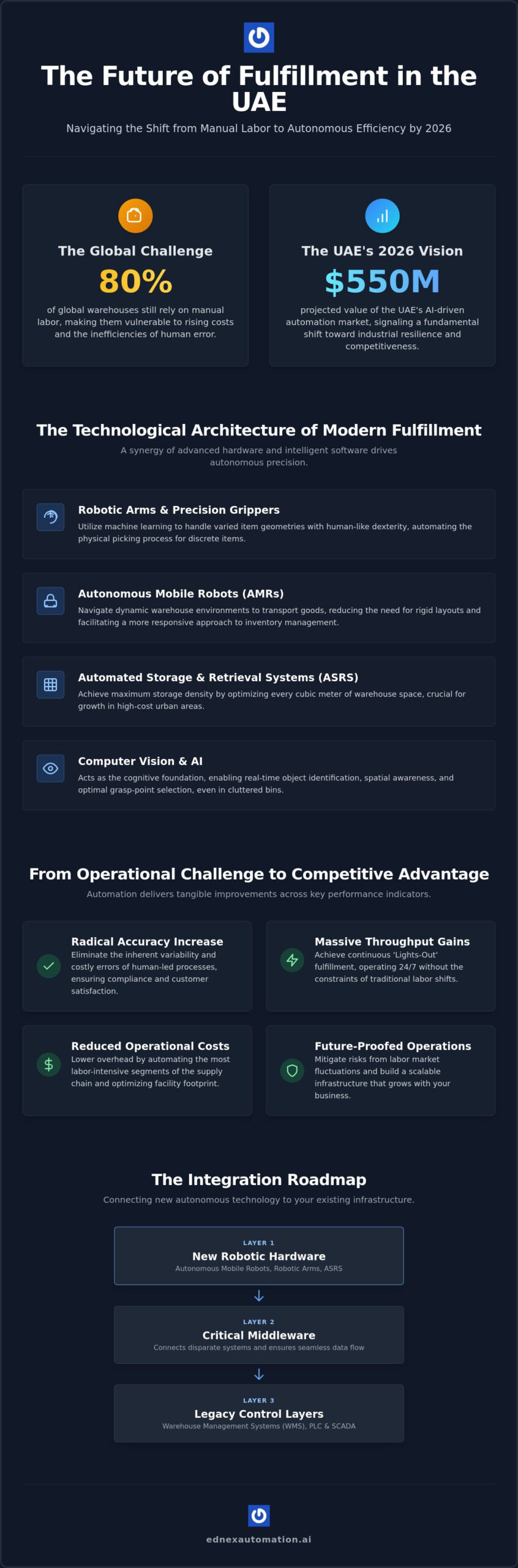
Strategic Evaluation: Comparing Picking Technologies for Your Facility
Selecting the correct hardware for robotic order picking systems UAE operations requires a rigorous analysis of payload requirements and item variability. Not every end-effector is suited for the diverse SKU profiles found in modern fulfillment centers. High-volume environments often demand specialized grippers capable of handling both rigid packaging and flexible polybags without compromising product integrity. Identifying these technical constraints early in the design phase prevents costly retrofitting and ensures the system maintains its promised throughput from day one. It’s a process of matching mechanical capability with the physical realities of your inventory.
Evaluating throughput targets necessitates a focus on Pick-per-hour (PPH) benchmarks across different system types. While manual picking often plateaus at 60 to 80 PPH in complex environments, advanced robotic solutions can achieve 300 to 500 PPH depending on the specific architecture. This surge in productivity directly informs the Total Cost of Ownership (TCO). While the initial Capex for automation is higher than traditional setups, the reduction in long-term Opex through labor optimization and error mitigation creates a compelling ROI. Safety remains a non-negotiable factor. Modern systems integrate advanced lidar and pressure sensors to ensure human-robot collaboration in shared workspaces doesn’t lead to operational downtime or safety incidents.
Cobots vs. Industrial Robots for Order Fulfillment
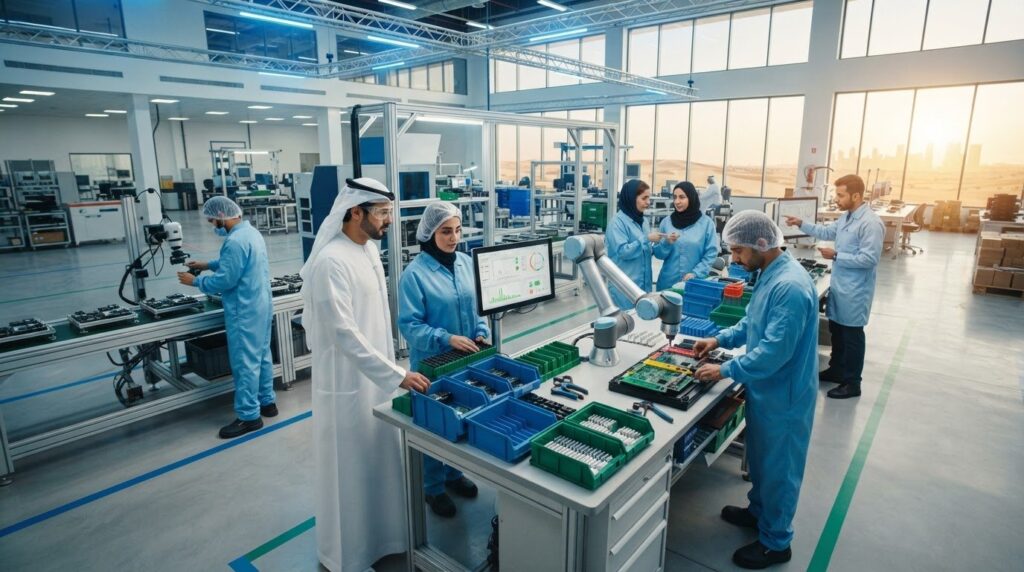
Deploying collaborative robots (cobots) is particularly effective for end-of-line picking and palletizing where frequent human proximity is required. Cobots offer a unique safety-speed trade-off; they operate at lower velocities to maintain ISO safety standards but require significantly less physical guarding. This flexibility makes them ideal for small-to-medium enterprise (SME) applications where floor space is at a premium and workflows are subject to frequent change. Unlike heavy industrial robots that require fixed cells, cobots can be redeployed across different warehouse zones as seasonal demands shift.
System Selection Framework
Choosing the right technology depends heavily on your SKU count and order profile, specifically whether you’re managing split-case picking or full-pallet movements. Split-case picking favors the high agility of AMRs, while full-pallet workflows typically demand the robust power of heavy-duty ASRS. Facility height and floor loading constraints also dictate whether high-bay vertical shuttle systems are physically viable. System interoperability is the key to long-term scalability because it ensures that disparate automation components can communicate effectively through a unified control layer. This connectivity allows for a modular expansion strategy that aligns with the UAE’s vision for integrated industrial ecosystems.
Integration and Implementation: Navigating the Transition to Automated Fulfillment
Implementing robotic order picking systems UAE enterprises require for 2026 demands a methodical automation roadmap that bridges the gap between conceptual pilot projects and full-scale industrial deployment. Developing this roadmap involves a phased approach, beginning with isolated picking cells to validate throughput assumptions before expanding into a fully synchronized facility. A critical component of this transition is the deployment of robust middleware, which acts as the essential translation layer between high-speed robotic hardware and existing Warehouse Management Systems (WMS). Without this connectivity, even the most advanced grippers remain siloed, unable to respond to real-time inventory shifts or priority order surges. To ensure a seamless rollout, consult with our technical integration experts to design a bespoke implementation strategy tailored to your facility’s specific infrastructure.
Managing the cultural shift within the UAE workforce is equally vital, as the transition to robot-centric operations necessitates a comprehensive upskilling program. Training personnel to act as system supervisors and maintenance technicians transforms potential resistance into operational synergy, fostering an environment where human intelligence complements robotic precision. During the commissioning phase, strategies for minimizing operational downtime include parallel testing and the use of digital twins to simulate workflows before physical activation. This rigorous preparation ensures that the final handover occurs with zero disruption to active fulfillment cycles, maintaining service continuity throughout the upgrade process.
The Control Layer: PLC and SCADA Integration
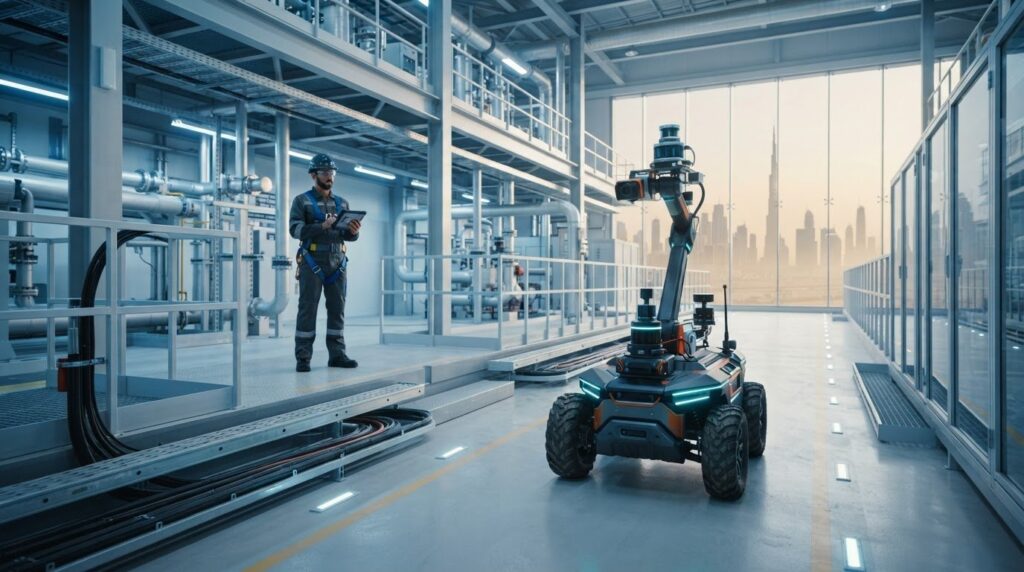
Leveraging specialized PLC and SCADA integration services allows for the precise orchestration of complex picking workflows across multi-vendor environments. This control layer provides the necessary infrastructure for real-time monitoring and data acquisition, which are fundamental for the predictive maintenance of robotic fleets. By identifying mechanical wear or sensor drift before failure occurs, facilities can maintain a constant state of readiness. Ensuring cybersecurity and industrial network resilience is a primary focus here, protecting the automated facility from external threats while maintaining the high-speed data exchange required for autonomous navigation.
Data-Driven Optimization and SCADA
Utilizing SCADA dashboards provides stakeholders with real-time visibility into picking performance, allowing for immediate adjustments to system parameters based on live throughput data. Integrating this robotic data into enterprise-level decision-making processes ensures that robotic order picking systems UAE facilities deploy operate at peak efficiency across all shifts. Adopting an open-architecture control system is a strategic necessity, as it allows for the seamless addition of future technologies, such as humanoid robots or advanced inspection units, without requiring a complete overhaul of the existing control logic. This forward-thinking approach guarantees that your investment in automation remains relevant as the UAE’s industrial landscape continues to evolve.
Future-Proofing with EdNex Automation: Comprehensive Robotic Integration Across the UAE
EdNex Automation acts as the definitive strategic architect for organizations navigating the heightened industrial requirements of 2026. We bridge the critical gap between global technological breakthroughs and the specific regulatory and logistical landscape of the Middle East. By delivering turnkey, start-to-finish solutions, we ensure that the robotic order picking systems UAE enterprises adopt are not merely equipment purchases but are foundational assets for long-term business viability. Our approach prioritizes scalable architectures that allow your facility to evolve as regional demand patterns shift. We provide the intellectual framework necessary to manage large-scale industrial transformation, ensuring your infrastructure remains at the cutting edge of global innovation.
A Partner in Industrial Transformation
We don’t just provide tools; we provide the systemic organization required to bring order and efficiency to complex environments. Supporting the UAE’s journey toward becoming a global hub for advanced manufacturing requires a partner who understands the gravity of Industry 4.0. Our extensive portfolio includes advanced humanoid robots and specialized service units designed to support diverse sectors from logistics to advanced manufacturing. By focusing on the underlying rationale of automation, we help you build a resilient infrastructure that remains competitive in a rapidly changing global economy. We act as a bridge-builder, connecting global breakthroughs with regional needs to ensure a controlled and deliberate evolution of your business model.
Next Steps for Your Automation Journey
Initiating your warehouse transformation begins with a professional consultation to design a bespoke robotic system tailored to your unique throughput targets and payload requirements. We focus on ensuring seamless PLC and SCADA interoperability, which is the cornerstone of achieving maximum ROI in automated facilities. This technical synergy allows for total visibility across your control layers, ensuring that every picking cycle is optimized for speed and accuracy. Contact our specialists today to develop a strategic roadmap that integrates robotic order picking systems UAE into your core operations, securing your position as an industry pioneer.
Securing Industrial Resilience through Advanced Robotic Integration
Adopting the robotic order picking systems UAE enterprises need for 2026 is a definitive step toward long-term operational excellence. By moving beyond isolated hardware purchases and focusing on comprehensive PLC and SCADA integration, your facility can achieve the precision and throughput required by the region’s rapid industrial expansion. This guide has detailed the technical roadmap for connecting autonomous mobile robots and ASRS into a unified, data-driven ecosystem. Leveraging our national service coverage and specialized Industry 4.0 expertise ensures that your transition to automated fulfillment remains seamless and secure. Establishing this intellectual framework today guarantees that your organization stays at the forefront of the UAE’s technological shift.
Partner with EdNex Automation for your robotic integration strategy to transform your warehouse into a high-performance fulfillment engine. We provide the end-to-end support and technical control layers necessary to maximize your return on investment in a competitive market. The future of regional logistics is autonomous, and the opportunity to lead that transformation starts now.
Frequently Asked Questions
What are the primary benefits of robotic order picking systems for UAE businesses?
Primary benefits include a significant reduction in human error and the ability to maintain 24/7 fulfillment cycles without proportional increases in labor costs. Implementing robotic order picking systems UAE enterprises favor allows for higher throughput in high-density urban hubs. These systems also align with national technology initiatives, enhancing global competitiveness through increased operational precision and consistency across every shift.
How do Autonomous Mobile Robots (AMRs) differ from traditional AGVs in picking?
Autonomous Mobile Robots (AMRs) differ from traditional Automated Guided Vehicles (AGVs) by utilizing SLAM navigation to navigate around obstacles without fixed infrastructure. While AGVs require magnetic strips or wires, AMRs offer superior flexibility in dynamic warehouse environments. This autonomy allows AMRs to recalculate paths in real-time, making them ideal for facilities with evolving layouts or frequent human interaction where safety is paramount.
Can robotic picking systems integrate with my existing Warehouse Management System (WMS)?
Modern robotic picking systems are designed for seamless integration with existing Warehouse Management Systems (WMS) through sophisticated middleware layers. This connectivity ensures real-time data synchronization between inventory levels and robotic task queues. By utilizing standardized communication protocols, facilities can orchestrate complex workflows that link disparate hardware components into a unified, responsive fulfillment engine that responds to live order data.
What is the typical ROI period for a robotic order picking implementation in the UAE?
The ROI period for robotic implementations typically ranges between 18 and 36 months, depending on the scale of the deployment and the complexity of the picking tasks. Savings are realized through reduced labor overhead, minimized product damage, and significantly higher pick-per-hour rates. While initial capital expenditure is higher, the long-term reduction in operational expenses provides a sustainable competitive advantage for regional logistics providers.
Is my warehouse facility suitable for high-density ASRS integration?
Suitability for ASRS integration depends primarily on your facility’s vertical clearance and floor-loading capacity. High-bay architectures are ideal for vertical shuttle systems that maximize cubic storage density. Facilities handling high SKU counts with consistent throughput targets benefit most from this technology, as it allows for rapid order consolidation within a minimized physical footprint, effectively doubling storage capacity in many cases.
How does PLC and SCADA integration improve the performance of robotic pickers?
PLC and SCADA integration provides the centralized control layer necessary for orchestrating multiple robotic units within a single facility. These systems offer real-time visibility into picker performance and mechanical health, facilitating predictive maintenance strategies. By capturing granular data at the machine level, SCADA dashboards allow operators to identify bottlenecks and optimize picking logic, ensuring that the entire robotic fleet operates at peak efficiency.
What maintenance is required for robotic picking systems in the UAE climate?
Are collaborative robots (cobots) safe for use alongside human pickers?
Collaborative robots (cobots) are engineered with advanced force-limiting sensors and rounded geometries to ensure they’re safe for use alongside human pickers. These units comply with rigorous ISO safety standards, allowing them to operate in shared workspaces without the need for physical safety cages. This proximity enables a hybrid workflow where human intelligence handles complex sorting while the cobot manages repetitive picking or heavy lifting, improving overall ergonomics.