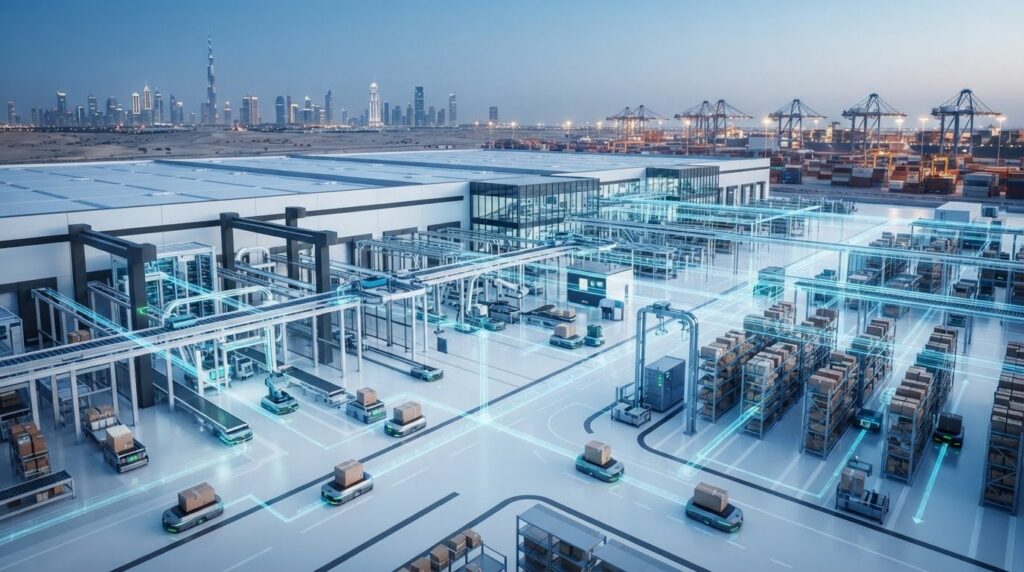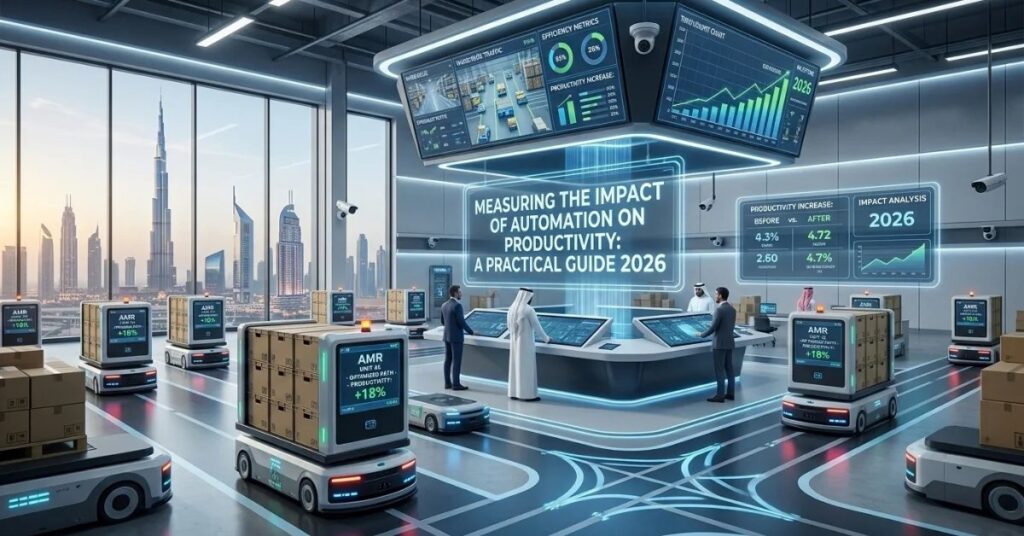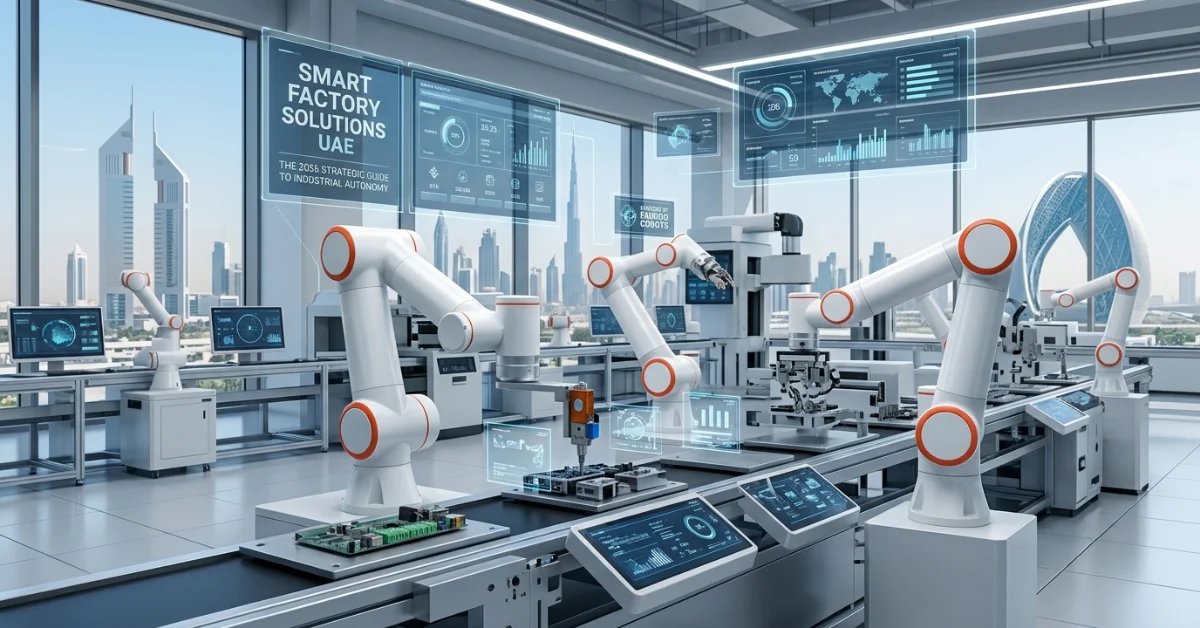
In 2026, the competitive advantage of a factory isn’t measured by its workforce size, but by the sophisticated orchestration of its autonomous systems. Addressing the rising costs of manual labor and the persistent interoperability failures between legacy PLCs and modern hardware is now a critical priority, especially as the AED 1 billion National Industrial Resilience Fund begins to reshape the local market. You’re likely feeling the weight of global production pressures while striving to meet the UAE’s ambitious Operation 300bn mandates. This guide provides the technical roadmap to mastering collaborative robot applications UAE, ensuring your facility transitions from manual dependency to high-level industrial autonomy.
Harnessing the power of Automated Storage and Retrieval Systems (ASRS) alongside full SCADA visibility allows for a significant reduction in production downtime. We’ll explore the seamless integration of robotics and control systems to foster safe human-robot collaboration. By following this strategic framework, you’ll align your operations with the nation’s latest Industry 4.0 standards and secure long-term business viability.
Key Takeaways
- Align your production facility with the UAE’s Operation 300bn strategy by evolving from simple connectivity to full industrial autonomy.
- Explore advanced collaborative robot applications UAE to enhance precision assembly while maintaining a safe, shared workspace for human operators.
- Centralize facility-wide data through SCADA and PLC integration to achieve full visibility and significantly reduce operational downtime.
- Implement a phased integration roadmap based on a comprehensive facility audit to modernize legacy systems without interrupting active production cycles.
The 2026 Vision: Defining Smart Factory Solutions in the UAE
The industrial landscape of the United Arab Emirates has moved beyond the introductory stages of digitization. In 2026, the focus has shifted toward full industrial autonomy, where physical systems operate with minimal human intervention. This evolution requires a sophisticated blend of robotics, intelligent logistics, and advanced control architectures. High-speed industrial networks, particularly those leveraging 5G and localized edge computing, now support real-time autonomous decision-making across the factory floor. By integrating Smart Factory Solutions, manufacturers aren’t just connecting machines; they’re creating self-correcting environments that adapt to supply chain fluctuations instantly. These systems represent the bridge between global technical breakthroughs and the specific economic needs of the Gulf region.
Operation 300bn and the National Mandate for Automation
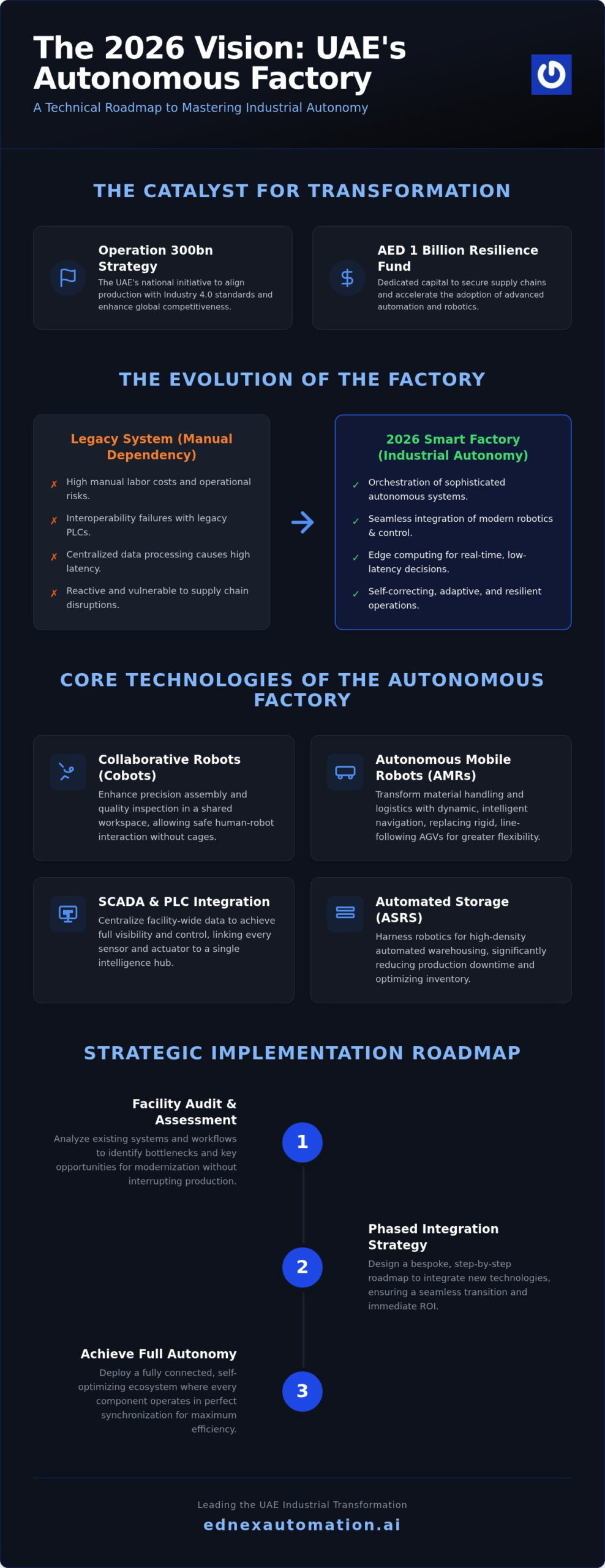
The UAE’s Operation 300bn strategy serves as the primary catalyst for this leap. With the activation of the AED 1 billion National Industrial Resilience Fund, the government has provided the framework to secure supply chains. The “Make it in the Emirates” initiative pushes producers to adopt collaborative robot applications UAE to maintain competitiveness. Digital transformation is now a prerequisite for participating in the nation’s AED 180 billion industrial procurement opportunities.
From Digitized to Autonomous: The 2026 Shift
The transition to an autonomous ecosystem represents a fundamental change. While traditional factories rely on centralized data, the 2026 model uses edge computing to process information at the source. This reduces latency for robotic systems, allowing for instantaneous adjustments. A Smart Factory is a self-optimizing system of hardware and software. These frameworks ensure production remains uninterrupted despite global logistical challenges or rising labor costs.
Achieving this level of autonomy isn’t a matter of simple equipment acquisition; it’s a systematic reorganization of the factory floor. Leading consultants in the region now focus on bespoke integration that links every sensor and actuator to a centralized intelligence hub. This ensures that every component, from the smallest PLC to the most complex humanoid robot, operates in perfect synchronization. The result is a facility that doesn’t just produce goods but actively learns and improves its own operational efficiency over time.
As these facilities become more data-centric, the need for robust digital platforms to manage information and corporate communications becomes vital. To support your enterprise’s digital evolution, learn more about Shark Matrix Technologies LLC and their custom software expertise.
The Robotics Core: Autonomous Systems Driving Production
Modern industrial facilities in the UAE are no longer defined by static machinery bolted to the floor. The shift toward true industrial autonomy requires a dynamic robotics core where hardware adapts to real-time production needs. Integrating these physical systems involves more than simple deployment; it requires a sophisticated orchestration of sensors, actuators, and localized intelligence. While software provides the logic, the physical execution relies on a fleet of diverse robotic units designed for specific operational roles. Understanding the nuances of collaborative robot applications UAE is essential for any facility manager looking to maximize throughput while adhering to the nation’s safety and efficiency standards. By Navigating the Industry 4.0 Transition with an eye toward physical hardware, manufacturers can bridge the gap between digital theory and tangible output.
Collaborative Robot Applications UAE: Enhancing Production Flexibility
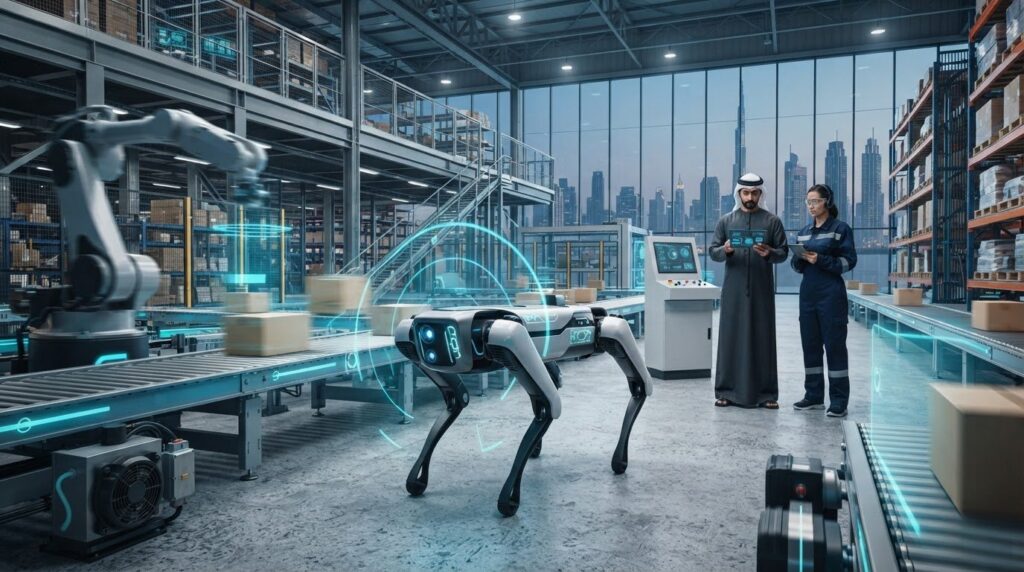
Utilizing collaborative robots UAE allows manufacturers to optimize assembly lines without the need for expansive safety cages. These units use advanced force-torque sensors to detect human presence, slowing or stopping movement instantly to prevent injury. In high-precision environments, collaborative robot applications UAE excel in tasks such as pick-and-place electronics assembly, precision welding, and automated quality inspection. This shared workspace approach increases floor space utility and allows human operators to focus on complex decision-making while robots handle repetitive, high-strain tasks. The result is a hybrid workforce that remains agile enough to pivot production cycles in response to market demand shifts.
AMRs and the Transformation of Material Handling
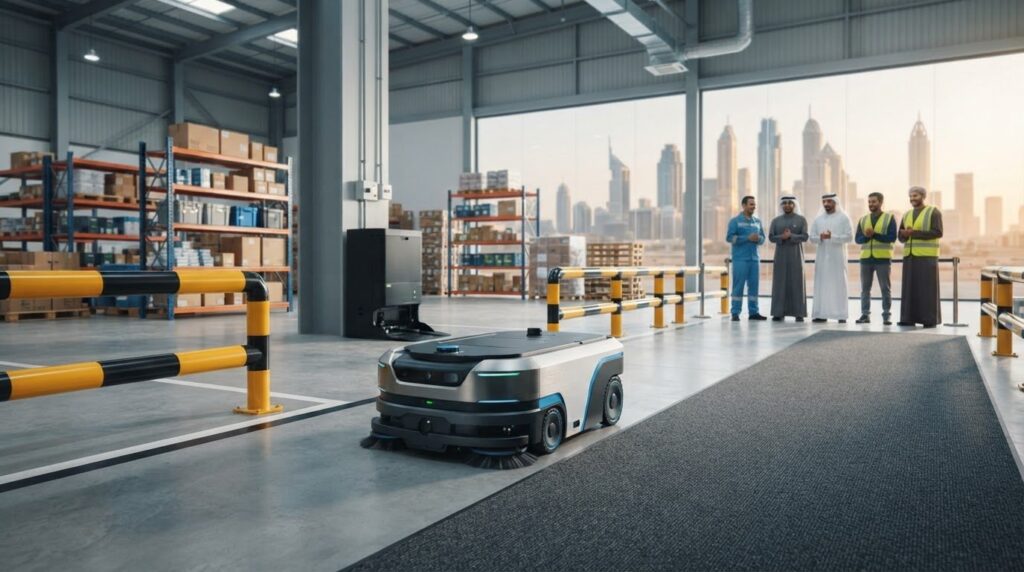
Replacing traditional Automated Guided Vehicles (AGVs) with autonomous mobile robots has revolutionized internal logistics across the Emirates. Unlike older systems that require fixed tracks or magnetic strips, AMRs use LiDAR and SLAM (Simultaneous Localization and Mapping) to navigate complex plant layouts dynamically. Integrating these units with a Warehouse Management System (WMS) ensures a real-time inventory flow that eliminates bottlenecks. Intelligent fleet orchestration allows multiple robots to communicate, preventing traffic congestion and prioritizing urgent deliveries to the production line. This level of autonomy removes the labor-intensive burden of manual transport, allowing your team to focus on higher-value operations.
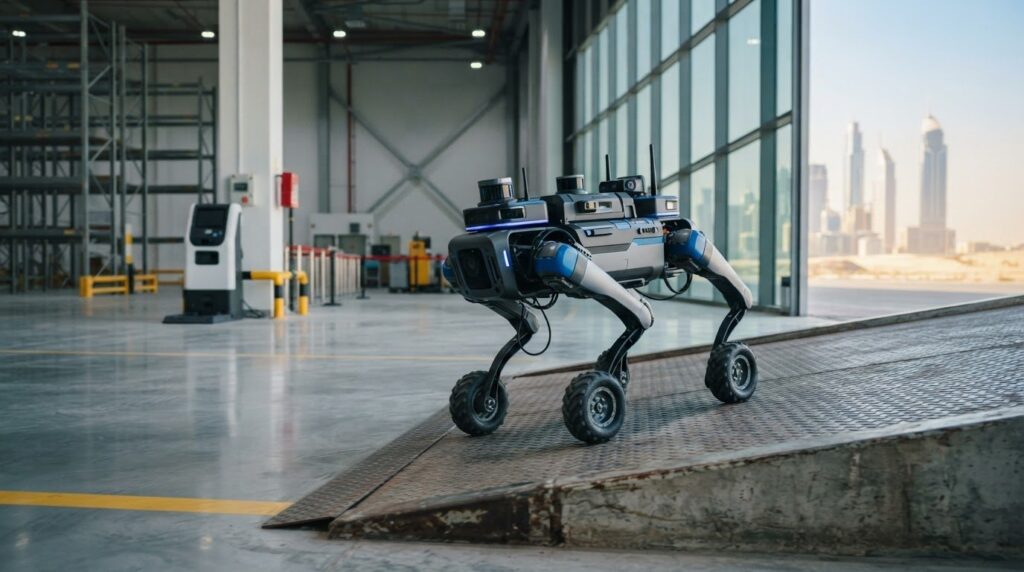
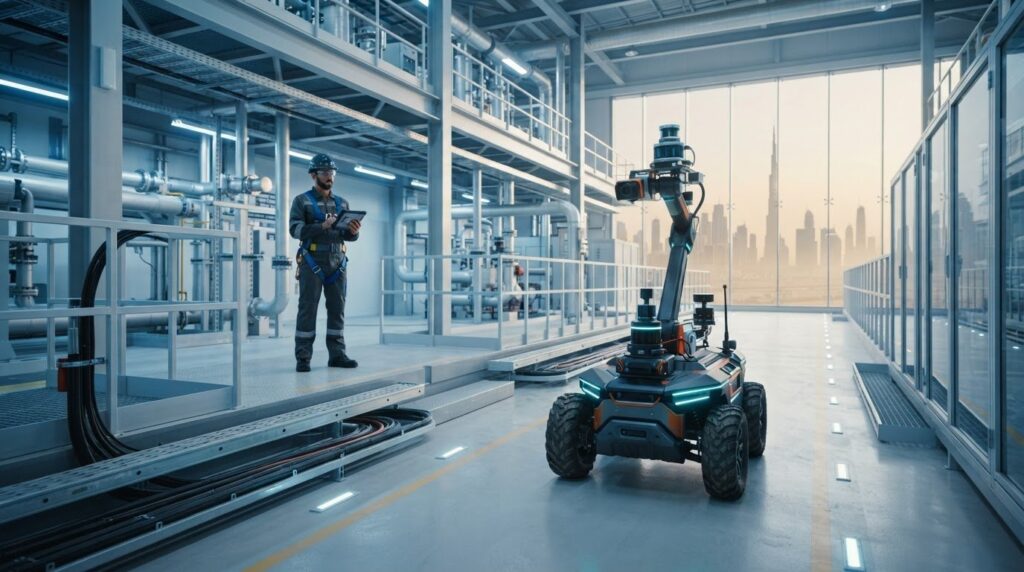
Beyond the assembly line, advanced service and humanoid robots are beginning to handle facility maintenance and complex assistance roles. Specialized inspection and surveillance robots now patrol high-risk industrial environments, such as chemical processing zones or high-voltage areas, where human presence poses a safety risk. These units provide continuous monitoring and early fault detection, transmitting data directly to centralized control hubs. If you’re ready to modernize your hardware infrastructure, you can explore bespoke robotic integration tailored to your specific facility needs. This comprehensive approach to robotics ensures that every autonomous unit contributes to a safer, more efficient, and highly profitable industrial ecosystem.
Orchestrating Efficiency: PLC, SCADA, and ASRS Integration
Establishing a unified control layer is the prerequisite for scaling autonomous operations in a modern industrial setting. Operating at the intersection of logic and physical execution, Programmable Logic Controllers (PLCs) function as the fundamental brain for individual machine automation. While these controllers manage localized tasks, Supervisory Control and Data Acquisition (SCADA) systems centralize facility-wide data to provide a comprehensive operational overview. This hierarchical structure is essential for managing collaborative robot applications UAE, as it allows for the precise coordination of robotic movements based on real-time sensor data from the wider production line. By establishing this unified control layer, manufacturers can ensure that every autonomous unit contributes to a cohesive, high-output environment.
Strategic Control with PLC and SCADA Systems
Implementing PLC and SCADA integration services is a strategic move to minimize unscheduled downtime through predictive diagnostics. Real-time data visualization provides the transparency needed for energy optimization and proactive risk mitigation. In the context of the UAE’s national infrastructure goals, ensuring robust cybersecurity within these industrial control networks is no longer a luxury but a mandate for operational continuity. This centralized intelligence allows for the rapid reconfiguration of production lines to meet shifting market demands without requiring extensive manual reprogramming.
Optimizing Logistics with Advanced ASRS
Adopting automated storage and retrieval systems (ASRS) allows UAE-based warehouses to maximize vertical space in high-density industrial zones. These systems eliminate the inefficiencies of manual picking by utilizing high-speed robotic cranes and shuttles to manage inventory with surgical precision. Integrating ASRS with collaborative robot applications UAE for sortation and packing ensures that the entire logistics cycle remains autonomous from arrival to dispatch. Vertical automation can reduce facility footprint by up to 40%, allowing companies to expand their production capacity without the need for expensive land acquisition.
The critical synergy between control systems and robotic hardware defines the success of a 2026 smart factory. When PLCs direct the micro-movements of a cobot and SCADA monitors the macro-flow of material handled by an ASRS, the resulting efficiency gains are exponential. This level of orchestration ensures that resources are utilized at their peak potential, reducing waste and significantly improving the bottom line. For organizations aiming to lead in the regional market, this integrated approach provides the intellectual and physical framework necessary for sustainable industrial growth.
Strategic Implementation: Navigating the Industry 4.0 Transition
Achieving industrial autonomy requires a systematic methodology that transcends simple equipment procurement. Transitioning your facility begins with a comprehensive audit to identify critical bottlenecks and legacy infrastructure gaps that could impede future scalability. By developing a phased integration roadmap, manufacturers can avoid costly production interruptions while gradually introducing autonomous systems. Balancing initial capital expenditure against long-term operational savings and quality gains is essential for a sustainable ROI. This strategic shift also necessitates upskilling the existing workforce, ensuring they possess the technical proficiency to manage and maintain the complex hardware and software ecosystems that define 2026 industrial operations.
The Roadmap to Full Factory Autonomy
Successful modernization follows a logical, hierarchical progression designed to minimize risk. The first stage involves assessing current PLC infrastructure and industrial network readiness to ensure the foundation can support high-speed data exchange. Once the network is stabilized, the focus shifts to selecting the precise mix of hardware for specific high-value workflows. This is where collaborative robot applications UAE provide the most significant impact, offering the flexibility to handle precision tasks without disrupting established human-centric processes. The final phase involves integrating central SCADA control, which provides the unified, facility-wide management needed to orchestrate diverse robotic units and material handling systems into a single, efficient organism.
Overcoming Common Integration Challenges
Addressing interoperability between different robotic brands and legacy machinery remains a primary hurdle for many regional facilities. Utilizing unified industrial communication protocols like OPC UA allows for the seamless exchange of information, effectively eliminating data silos that hinder real-time decision-making. Managing these technical complexities requires a partner who understands the nuances of bespoke integration. If you’re ready to begin your modernization journey, you can consult with our technical integration experts to design a roadmap tailored to your specific operational goals. This approach ensures the long-term scalability of your smart factory architecture, allowing it to evolve as market demands grow.
Planning for scalability is just as vital as the initial deployment. A modular architecture allows you to add new collaborative robot applications UAE or expand your ASRS capacity without rebuilding the entire control layer from scratch. This foresight protects your investment and ensures that your facility remains at the cutting edge of the UAE’s industrial landscape. By focusing on both the intellectual framework and the physical tools, you create a resilient operation capable of thriving in an increasingly autonomous global market.
Beyond the production line, the digital transformation of the UAE’s industrial sector extends to the management of the facilities themselves. For landlords and property managers overseeing these high-tech spaces, Gridizen provides a comprehensive software solution to streamline administrative tasks and asset oversight.
EdNex Automation: Leading the UAE Industrial Transformation
EdNex Automation serves as the critical bridge between global technological breakthroughs and the specific economic requirements of the Gulf region. By delivering bespoke smart factory solutions tailored to the unique industrial landscape of the UAE, the organization provides the intellectual and physical framework necessary for large-scale transformation. As an authorized Gold Partner of Unitree for 2026, EdNex offers localized access to the world’s most advanced autonomous systems. This partnership ensures that regional enterprises can deploy the latest collaborative robot applications UAE with the confidence that their infrastructure is supported by certified technical experts who understand the gravity of industrial modernization.
Bespoke Solutions for UAE Industrial Sectors
Delivering specialized automation across manufacturing, logistics, and the oil and gas sectors requires a deep understanding of regional operational challenges. EdNex provides the technical integration expertise needed to modernize legacy facilities while ensuring full compliance with national industrial standards and safety regulations. Integrating autonomous cleaning robots into large-scale facility hygiene protocols allows managers to maintain sterile, high-precision environments without increasing manual labor costs. These tailored collaborative robot applications UAE are designed to solve specific bottlenecks, whether in high-speed sorting for logistics hubs or precision assembly for electronics manufacturing. By leveraging local expertise, EdNex ensures that every robotic deployment contributes directly to the facility’s overall productivity and long-term business viability.
Partnering for the Future of Industry 4.0
Choosing EdNex as a strategic partner provides access to a comprehensive Industry 4.0 consultancy that goes far beyond equipment sales. The organization acts as a systematic organizer, bringing order and efficiency to complex environments through controlled and deliberate innovation. Businesses seeking the next frontier of assistance can explore cutting-edge humanoid robots for sale UAE, which are now becoming viable for sophisticated commercial and industrial roles. Providing start-to-finish technical integration expertise distinguishes EdNex from simple hardware vendors by ensuring that every system, from ASRS to humanoid units, is fully synchronized with the facility’s existing PLC and SCADA architecture. This holistic approach guarantees that your investment in automation results in a resilient, future-proof operation.
The commitment to securing industrial resilience through intelligent, autonomous systems remains at the core of every project. By connecting global innovation with regional needs, EdNex helps UAE-based manufacturers achieve the high-level autonomy required to compete on a global stage. This transformation is not merely about adopting new tools; it’s about building a smarter, safer, and more efficient industrial ecosystem that can adapt to the challenges of 2026 and beyond. Through methodical integration and visionary leadership, EdNex continues to define the standard for industrial excellence in the Emirates.
Securing Your Competitive Edge in the Autonomous Era
Positioning your facility at the forefront of the Emirates’ industrial evolution requires a deliberate shift toward full autonomy. By mastering the integration of physical hardware and centralized control systems, you ensure your organization remains resilient against rising operational costs and production bottlenecks. We’ve explored how the alignment of collaborative robot applications UAE with sophisticated PLC and SCADA architectures creates a self-optimizing ecosystem. This transformation isn’t just a technical upgrade; it’s a necessary evolution for long-term business viability in an increasingly competitive market.
As an Authorized Gold Partner of Unitree with a proven track record in complex system integration, we provide the intellectual and technical framework needed for success. Our team offers a comprehensive Industry 4.0 roadmap consultancy to guide you through every stage of deployment. Partner with EdNex Automation to build your 2026 Smart Factory and secure your place as an industry leader. The future of manufacturing in the UAE is autonomous, and it’s time to lead that change.
Frequently Asked Questions
What are the primary benefits of smart factory solutions for UAE businesses?
Smart factory solutions provide a significant boost to production throughput and enhance overall operational resilience. By automating repetitive tasks, companies can mitigate the rising costs of manual labor while maintaining 24/7 consistency across their lines. These systems enable full visibility via SCADA, allowing for faster response times to global supply chain shifts. It’s a strategic move to ensure long-term viability in the Emirates’ evolving industrial market.
How do PLC and SCADA systems improve manufacturing efficiency?
PLC and SCADA systems function as the central nervous system of a facility, orchestrating machine logic and real-time data acquisition. SCADA provides a high-level view of operations, enabling predictive maintenance that prevents unscheduled downtime before it occurs. This integration ensures that every component on the floor operates at peak performance, reducing energy waste and maximizing resource utilization. Centralized control allows for rapid reconfiguration of lines to meet shifting market demands.
Is it possible to integrate modern robotics with legacy industrial machinery?
Integrating modern hardware with legacy PLCs is achievable through unified communication protocols like OPC UA and specialized industrial gateways. This bridge allows older machinery to exchange data with new autonomous units, creating a hybrid ecosystem that doesn’t require a total equipment overhaul. Strategic integration services ensure that existing investments remain viable while the facility transitions toward full Industry 4.0 autonomy. It’s a cost-effective way to modernize without interrupting active production cycles.
What is the typical ROI period for an ASRS implementation in the UAE?
ASRS implementation typically delivers a return on investment within two to five years, depending on the facility’s scale and vertical height requirements. By reducing the warehouse footprint by up to 40% and increasing picking accuracy, companies save significantly on land acquisition and operational errors. The long-term gains in storage density and speed outweigh the initial capital expenditure. This technology is essential for high-density industrial zones where space comes at a premium.
How do autonomous mobile robots (AMRs) differ from traditional AGVs?
Autonomous mobile robots use LiDAR and SLAM technology to navigate dynamically without the need for fixed tracks or magnetic strips. Unlike traditional AGVs, AMRs can reroute around obstacles in real-time, offering superior flexibility for complex plant layouts. This adaptability is crucial for collaborative robot applications UAE where environments change frequently to accommodate new production cycles. They empower facilities to manage internal logistics with surgical precision and minimal human intervention.
What safety standards must collaborative robots meet in an industrial setting?
Collaborative robots must adhere to international safety standards like ISO 10218 and ISO/TS 15066, which define the power and force limiting requirements for shared workspaces. These protocols ensure that robots can operate alongside humans without the need for protective fencing. Advanced sensor integration allows the unit to detect human proximity and slow or stop instantly to prevent injury. Maintaining these standards is vital for achieving a zero-harm environment while maximizing floor space utility.
How does the UAE’s Operation 300bn impact factory automation requirements?
Operation 300bn aims to increase the industrial sector’s contribution to the GDP while targeting a 30% boost in productivity. This national mandate drives the adoption of advanced automation to diversify the economy and secure domestic supply chains. Manufacturers are encouraged to implement smart technologies to remain competitive and qualify for strategic support. It’s no longer just an option; it’s a necessary step for any facility operating within the UAE’s borders by 2026.
Can humanoid robots be used for practical industrial applications in 2026?
Humanoid robots are increasingly deployed for practical industrial roles, including facility inspection and complex assistance tasks in hazardous zones. These units provide the dexterity needed to navigate environments designed for humans, such as climbing stairs or accessing confined spaces. In 2026, they serve as versatile assets that bridge the gap between fixed automation and human-centric operations. Their ability to handle diverse tools makes them ideal for maintenance roles that were previously impossible to automate.