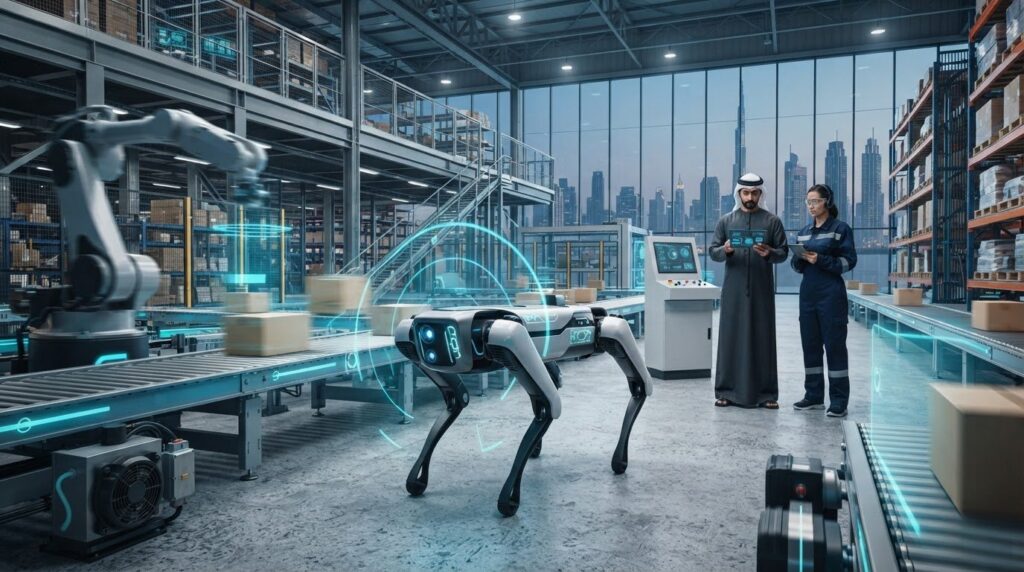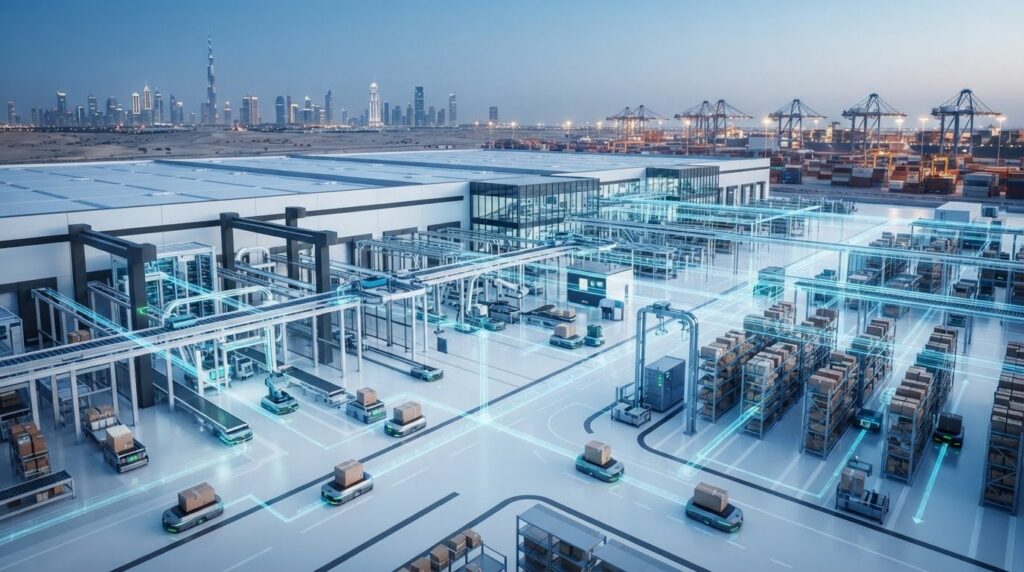
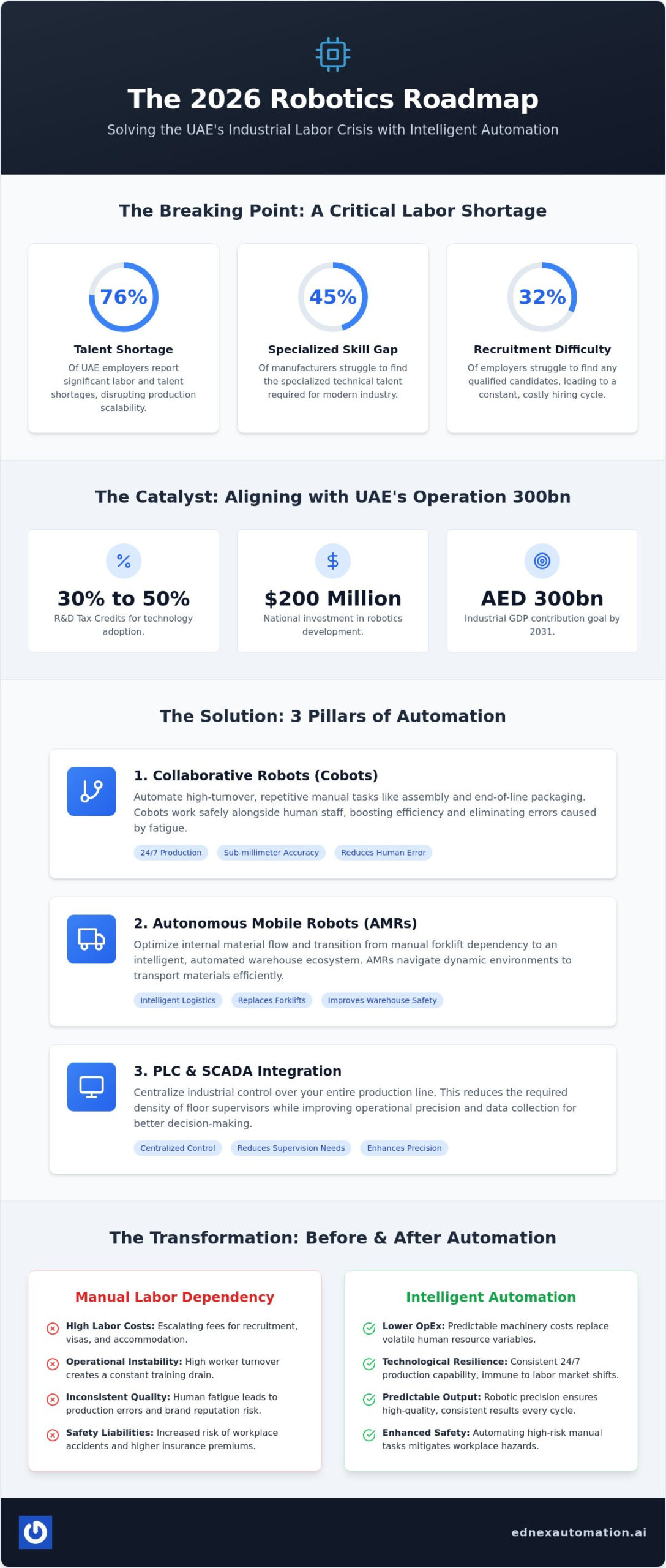
With 76% of UAE employers reporting significant talent shortages in 2026, the traditional recruitment model has officially reached a critical breaking point. You’ve likely experienced the relentless pressure of rising recruitment costs and the operational instability caused by high worker turnover. Solving labor shortages in UAE manufacturing is no longer a matter of simply expanding your HR department; it’s about fundamentally re-engineering the production floor through intelligent, autonomous systems. Recognizing that 45% of manufacturers struggle to find specialized technical talent, the industry must transition from manual reliance to scalable technological resilience.
This article details the 2026 Robotics Roadmap, revealing how advanced industrial automation provides a permanent solution to the regional labor crisis. By leveraging R&D tax credits of up to 50% for technology adoption, your facility can integrate collaborative robots and autonomous mobile robots to maintain consistent 24/7 production capability. We’ll explore the strategic implementation of these systems to lower operational expenses, eliminate human error, and bridge the specialized skill gap. Discover how modernizing your legacy infrastructure aligns with the UAE’s Operation 300bn vision to ensure long-term industrial viability and competitive advantage.
Key Takeaways
- Analyzing the structural shifts in the industrial workforce to mitigate the escalating costs associated with manual labor recruitment and accommodation.
- Implementing collaborative robots (Cobots) as a strategic intervention for solving labor shortages in UAE manufacturing by automating high-turnover, repetitive manual operations.
- Optimizing internal material flow through the deployment of Autonomous Mobile Robots (AMRs), effectively transitioning from manual forklift dependency to intelligent warehouse ecosystems.
- Utilizing PLC and SCADA integration to centralize industrial control, thereby reducing the density of required floor supervisors while improving operational precision.
- Establishing a scalable 2026 robotics roadmap to ensure long-term business viability through bespoke automation solutions tailored to specific regional industrial sectors.
The Evolving Labor Landscape in UAE Manufacturing
The UAE industrial sector stands at a definitive crossroads where legacy operational models no longer satisfy the demands of a high-velocity global market. Addressing the 76% talent shortage reported by regional employers in 2026, manufacturers are forced to rethink their fundamental reliance on human capital. Shifting demographics and a tightening international labor market have rendered traditional recruitment strategies insufficient, leaving organizations unable to scale during peak demand cycles. Solving labor shortages in UAE manufacturing now requires a departure from reactive hiring toward a structured, technology-first approach that prioritizes long-term resilience over temporary staffing fixes.
Operating a manual-heavy facility in the 2026 economy introduces a significant competitive disadvantage. Beyond the base salary, the escalating costs of visas, international recruitment fees, and mandatory worker accommodation create a high-overhead environment that erodes profit margins. Integrating industrial robots in manufacturing enables organizations to bypass these logistical bottlenecks, replacing volatile human resource variables with predictable, high-performance machinery. Facilities that fail to modernize find themselves trapped in a cycle of rising costs and stagnant output, unable to compete with automated counterparts that offer higher precision at a lower cost-per-unit.
The True Cost of Manual Labor Dependency
National Vision and Industrial Transformation
Aligning with the UAE’s “Operation 300bn” strategy is no longer a choice but a necessity for organizations seeking long-term viability. This government mandate aims to increase the industrial sector’s GDP contribution to AED 300 billion by 2031, providing a powerful tailwind for those adopting Industry 4.0 standards. As of January 1, 2026, the introduction of 30% to 50% R&D tax credits for industrial technology adoption has made the transition more financially accessible than ever before. This fiscal support, combined with a $200 million national investment in robotics, marks 2026 as the critical tipping point for regional automation. Early adopters don’t just solve current labor gaps; they secure a subsidized path toward total operational modernization.
Collaborative Robots: Replacing Repetitive Manual Tasks
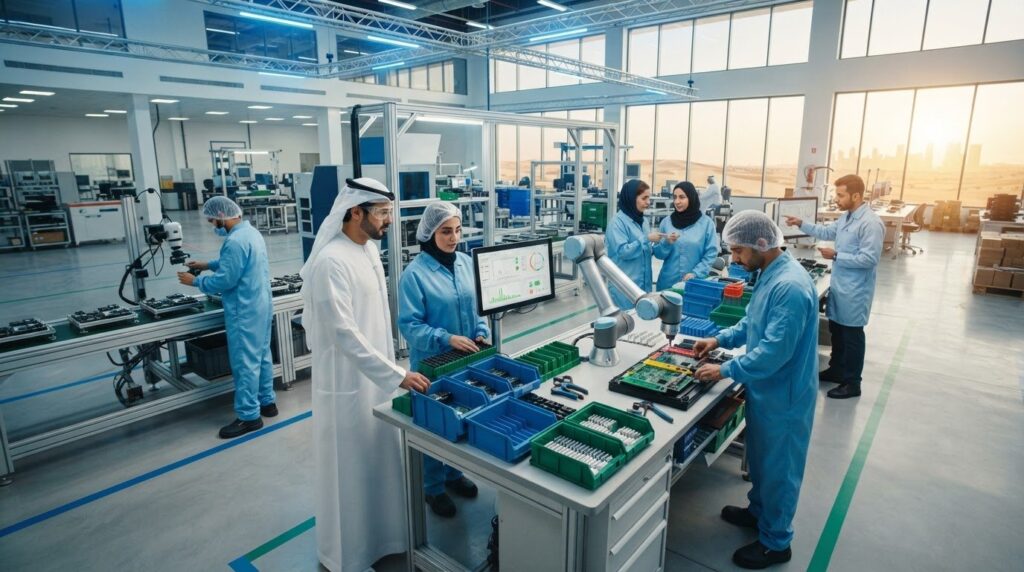
Cobots are versatile, safe-to-human robots for industrial tasks. Unlike traditional industrial machinery that requires extensive safety perimeters, these systems are engineered to function in immediate proximity to human operators. Integrating these advanced units is a primary strategy for solving labor shortages in UAE manufacturing, particularly in sectors where recruitment for repetitive roles remains a persistent challenge. By automating the most monotonous aspects of the production cycle, manufacturers can transition their existing workforce into higher-value supervisory positions, effectively bridging the 45% specialized talent gap identified in recent market analyses.
Identifying high-turnover manual tasks is the first step toward achieving robotic consistency. In assembly lines where precision is paramount, human fatigue often leads to incremental errors that compromise the entire batch. Collaborative robots eliminate this variability by executing identical movements with sub-millimeter accuracy for thousands of cycles. This reliability doesn’t just improve quality; it provides a predictable production baseline that allows for more accurate strategic workforce planning aligned with three-to-five-year business roadmaps.
Primary Cobot Applications in UAE Plants
Strategizing for end-of-line efficiency, many regional facilities are now deploying cobots to manage palletizing and packaging processes. These roles are historically difficult to fill and maintain due to their physically demanding nature. In the electronics and pharmaceutical sectors, precision pick-and-place operations benefit from the delicate handling capabilities of modern robotic grippers. Implementing these solutions is a core component of successful collaborative robots UAE strategies, ensuring that local plants remain competitive against global production standards.
Human-Robot Synergy and Safety
Prioritizing worker safety, modern cobots utilize sophisticated force-sensing technology to halt motion instantly upon contact with a human colleague. This allows for a dense factory floor layout without the need for restrictive safety cages or expensive infrastructure modifications. The ease of programming these units further reduces the barrier to entry; many systems now feature “lead-through” programming that allows supervisors to teach tasks by simply moving the robotic arm. This flexibility enables rapid redeployment as production needs change, ensuring your investment remains a long-term asset. Consulting with an expert in industrial automation can help identify the specific workflows most suitable for robotic augmentation in your facility.
Autonomous Logistics: Solving Warehouse Personnel Scarcity
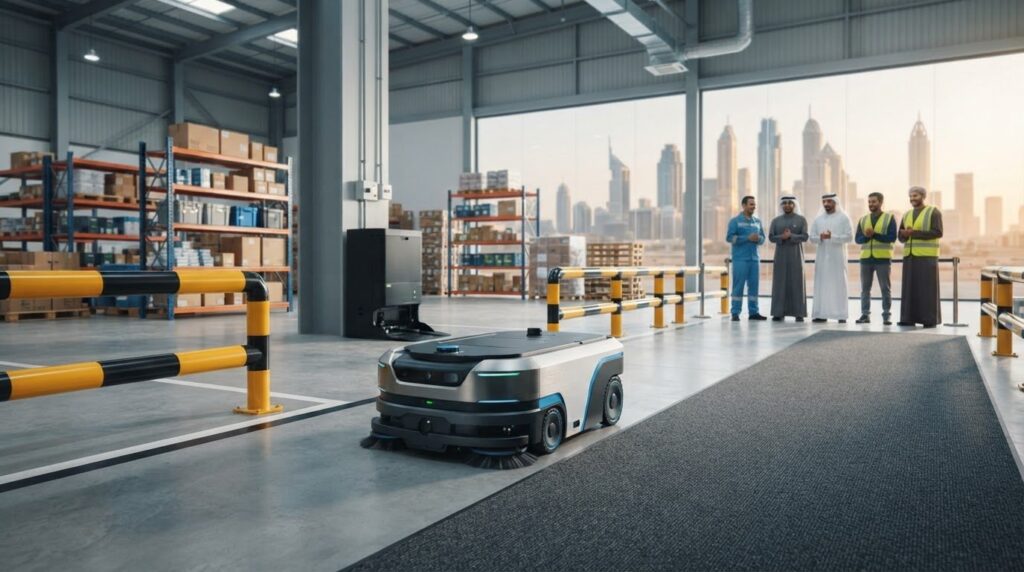
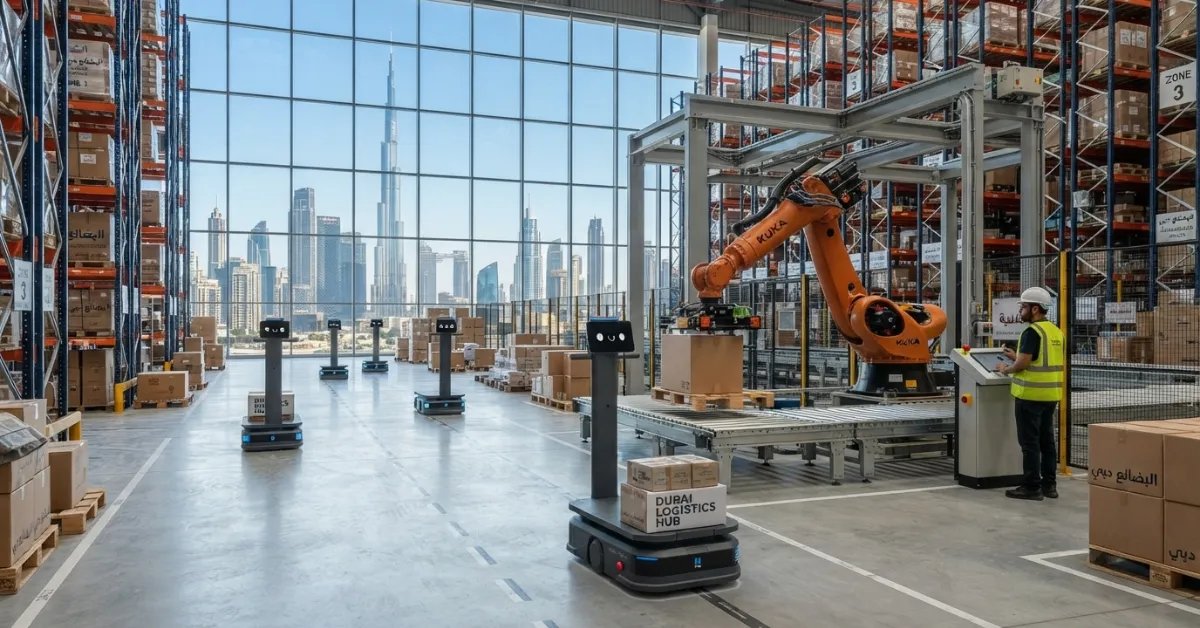
Efficient internal logistics represents the connective tissue of any manufacturing facility, yet it remains one of the most labor-intensive departments to manage effectively. Transitioning from manual forklifts to autonomous warehouse ecosystems allows manufacturers to mitigate the scarcity of certified operators while simultaneously improving safety protocols. This shift is a strategic pillar for solving labor shortages in UAE manufacturing, particularly as the logistics sector faces a projected talent gap throughout 2026. By removing human-operated machinery from high-traffic zones, facilities can achieve a more fluid material flow that isn’t dictated by shift changes or personnel availability.
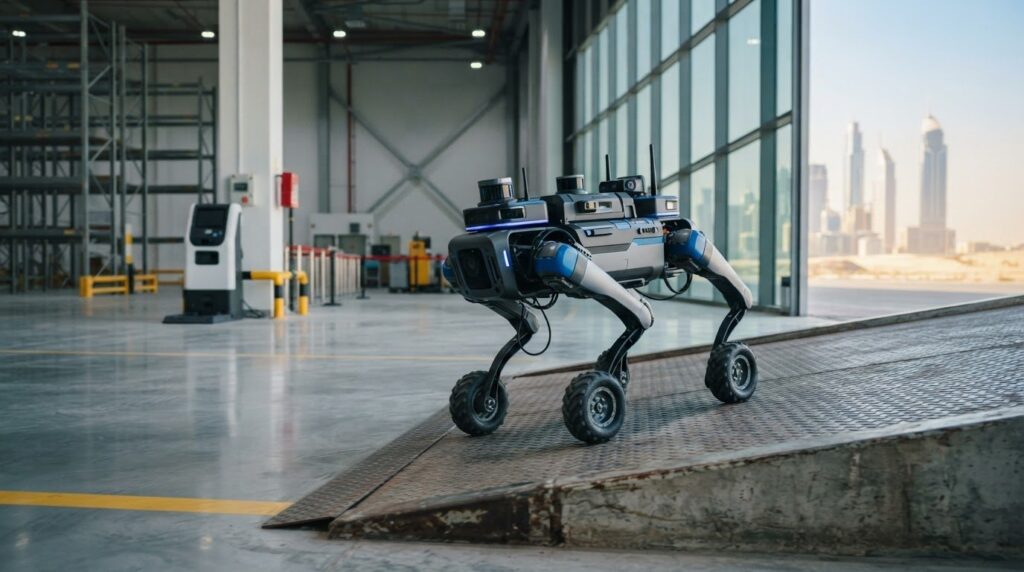
AMRs navigate dynamically using integrated LiDAR sensors and artificial intelligence to map environments and bypass obstacles in real-time. This level of autonomy ensures that internal transport remains uninterrupted even in high-density environments where traditional machinery would struggle. Replacing manual forklift operations with a fleet of autonomous units transforms the warehouse into a predictable, high-performance node within the manufacturing chain. Adopting modern logistics technology is essential for solving labor shortages in UAE manufacturing by automating the movement of goods between production and dispatch without requiring a massive increase in headcount.
AMRs vs. Traditional Material Handling
Leveraging the flexibility of autonomous mobile robots provides a significant advantage over fixed conveyor systems that require permanent floor space and costly infrastructure modifications. Unlike traditional systems, AMRs can be scaled incrementally, allowing manufacturers to add units to their fleet as facility demand increases. Eliminating human error in internal logistics and inventory transport reduces the risk of damaged goods and misplaced stock, directly contributing to lower operational overheads. This scalability ensures that your logistics capabilities grow in parallel with your production goals, maintaining efficiency during peak demand periods.
Maximizing Efficiency with ASRS
Solving the shortage of skilled warehouse managers requires the implementation of automated storage and retrieval systems to centralize inventory control and reduce the need for floor supervisors. These systems enable vertical space optimization, allowing facilities to increase their storage capacity without expanding their physical footprint. Real-time inventory tracking provides a level of supply chain reliability that manual systems can’t replicate, ensuring that production lines never stall due to logistics delays. Reducing the operational footprint through dense storage configurations directly impacts the bottom line by minimizing energy consumption and facility maintenance costs, while the high-tech nature of the system ensures long-term business viability.
Strategic Implementation: Integrating PLC and SCADA Systems
Deploying robotic hardware represents a significant step forward, yet isolated systems often fail to deliver their full ROI without a cohesive control architecture. Successful strategies for solving labor shortages in UAE manufacturing rely on the seamless communication between new autonomous units and existing legacy machinery. Centralizing these operations through a unified interface reduces the density of required floor supervisors, allowing a single operator to oversee multiple production lines simultaneously. By transforming raw data into actionable insights, manufacturers can move away from reactive management toward a proactive, intelligence-led model.
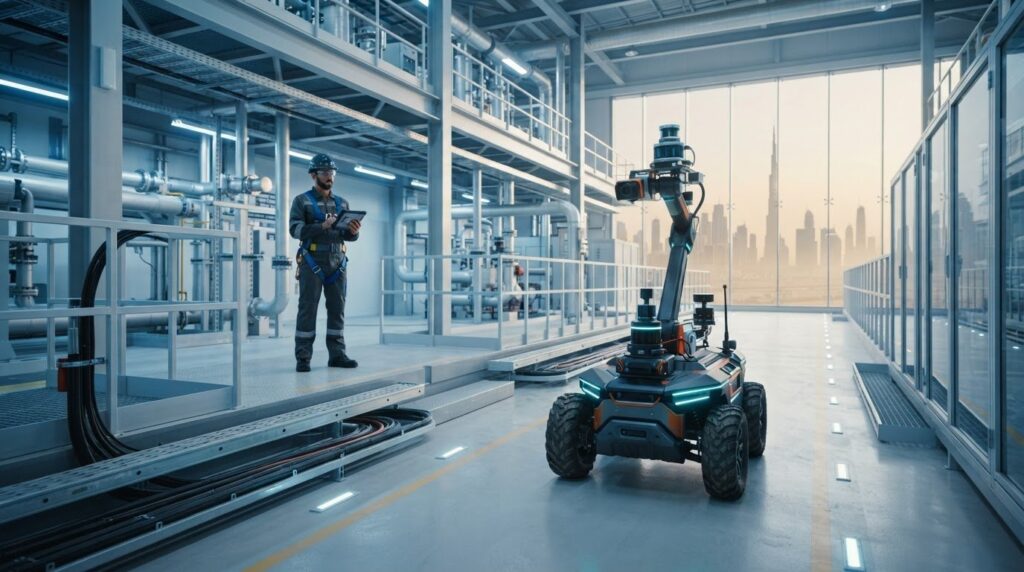
Integrating advanced control systems enables the implementation of predictive maintenance protocols that significantly reduce unplanned downtime. Instead of relying on manual inspections by specialized technicians, sensors within the robotic units transmit performance metrics directly to the management layer. This capability ensures that components are serviced only when necessary, preserving the longevity of the equipment while minimizing the need for on-site maintenance personnel. Bridging the gap between legacy infrastructure and modern robotics is essential for maintaining a competitive edge in the 2026 industrial landscape, ensuring that every asset on the floor contributes to a streamlined output.
The Brain of the Factory: PLC and SCADA
Utilizing PLC and SCADA integration services provides manufacturers with a “single pane of glass” view of their entire facility. This centralization automates complex reporting and data collection tasks, effectively replacing manual clerical work that often bottlenecks production and leads to data entry errors. Customizing control logic ensures that the system meets the unique requirements of UAE manufacturing, ranging from environmental temperature monitoring to specific regulatory compliance reporting. This bespoke approach transforms the factory into a self-reporting ecosystem that requires minimal human oversight for routine operations.
Overcoming the Technical Skills Gap
Transitioning to an automated environment doesn’t necessarily mean a reduction in total staff; rather, it facilitates the upskilling of existing personnel to manage high-tech systems rather than performing manual tasks. Remote monitoring capabilities allow for expert oversight from a centralized location, ensuring long-term system reliability without the need for a constant on-site technical presence. This strategy directly addresses the specialized talent shortage by maximizing the impact of your most skilled employees through technology-enhanced roles. To begin your journey toward a fully integrated and autonomous production environment, consult with our specialists at ednexautomation.ai.
Future-Proofing Production with EdNex Automation
Positioning itself as a strategic partner rather than a mere equipment vendor, EdNex Automation provides the bespoke integration services necessary for solving labor shortages in UAE manufacturing. We recognize that every facility operates under unique environmental and logistical constraints; therefore, we provide a tailored approach that spans from initial feasibility studies to final on-site deployment. By reducing structural labor dependency, regional manufacturers can pivot their focus toward global competitiveness and high-precision output. Our commitment aligns with the national vision for a diversified, technology-led economy where industrial resilience is built on a foundation of intelligent autonomy.
Delivering high-level solutions across diverse sectors, the EdNex advantage lies in our comprehensive understanding of the regional industrial landscape. Whether your operations require specialized machinery for sterile cleanrooms or robust outdoor cleaning robots for harsh environments, our engineering teams ensure that every system integrates seamlessly with your existing infrastructure. We bridge the gap between global breakthrough technologies and local industrial needs, offering an authoritative framework for organizations wishing to remain competitive in an increasingly automated future. This systematic approach brings order, safety, and efficiency to complex environments through controlled and deliberate innovation.
The EdNex Advantage in UAE Industrial Autonomy
Leveraging official certifications and strategic alliances with global entities, we provide access to a sophisticated portfolio including Cobots, AMRs, and humanoid robots for sale UAE. This diverse range of hardware allows for the automation of complex, multi-stage processes that were previously considered exclusively manual. By utilizing these advanced systems, facilities can maintain a consistent 24/7 production capability while mitigating the risks associated with human error and workforce volatility. Our focus on modernization ensures that your facility is equipped with the most intelligent and reliable infrastructure components available in the 2026 market, reinforcing your status as an industry leader.
Starting Your Automation Journey
Adopting a systematic, phased implementation approach allows manufacturers to manage capital expenditure while realizing immediate operational improvements. We recommend starting with a comprehensive site audit to identify high-ROI automation targets where robotic intervention can deliver the most significant impact on productivity. Identifying these high-value opportunities is the most effective way of solving labor shortages in UAE manufacturing while maximizing the return on your technological investment. This methodical rhythm ensures a seamless transition from manual reliance to a high-performance, autonomous ecosystem. Contact EdNex Automation to secure your factory’s future.
Securing Industrial Resilience Through Intelligent Autonomy
Achieving long-term viability in the regional industrial sector requires a fundamental shift from reactive staffing to a systematic, technology-first architecture. By integrating collaborative robotics and autonomous material handling, manufacturers effectively mitigate the risks of workforce volatility while maintaining consistent, high-precision output. Solving labor shortages in UAE manufacturing is no longer a speculative goal; it’s a structural necessity for any organization aiming to capitalize on the region’s ambitious “Operation 300bn” industrial strategy. This transition ensures that production cycles remain uninterrupted, regardless of shifting labor demographics or recruitment challenges.
Leveraging a specialized division founded in 2018, the EdNex group provides the intellectual framework and technical expertise necessary for complex PLC, SCADA, and ASRS integration. Our national UAE coverage, supported by global technological alliances, ensures that your facility’s transformation is managed with world-class precision from initial feasibility to final deployment. This evolution toward intelligent autonomy doesn’t just address current personnel scarcity; it builds a foundation for long-term global competitiveness. Book a Technical Consultation with EdNex Automation Experts to begin your facility’s modernization today. The future of UAE industry is autonomous, and the time for strategic implementation has arrived.
Frequently Asked Questions
How can robotics help solve the labor shortage in UAE manufacturing specifically?
Robotics provides a permanent solution by automating high-turnover manual roles that are increasingly difficult to fill. By deploying autonomous systems, facilities can maintain consistent 24/7 production cycles despite the 76% talent shortage reported by regional employers in 2026. This technological shift allows manufacturers to transition from a reliance on volatile human resources to a predictable, scalable model driven by intelligent machinery.
What is the expected ROI for implementing cobots in a UAE-based plant?
ROI is typically realized through the drastic reduction in recruitment fees, visa costs, and worker accommodation expenses. Since January 1, 2026, companies can leverage 30% to 50% R&D tax credits for industrial technology adoption, which significantly accelerates the payback period. These fiscal incentives, combined with increased production precision and reduced waste, ensure that robotic integration remains a high-value investment for long-term viability.
Can robots be integrated into older manufacturing facilities with legacy equipment?
Modern robotic units are designed for seamless integration with legacy infrastructure through advanced PLC and SCADA control layers. This architecture allows new autonomous systems to communicate directly with older machinery, creating a unified production ecosystem. Expert system integration ensures that your existing assets aren’t rendered obsolete, but are instead enhanced by a centralized intelligence that optimizes overall facility performance.
Do I need to hire specialized engineers to operate these robotic systems?
You don’t necessarily need to expand your technical headcount to manage modern robotics. Most collaborative systems feature intuitive interfaces and lead-through programming that allow your existing floor staff to be upskilled quickly. This approach directly addresses the specialized talent gap by empowering current employees to oversee automated workflows, transforming them from manual laborers into high-value system supervisors.
How do Autonomous Mobile Robots (AMRs) differ from traditional AGVs?
AMRs utilize LiDAR and AI for dynamic navigation, whereas traditional AGVs are restricted to fixed paths or magnetic strips. This inherent flexibility is a primary driver for solving labor shortages in UAE manufacturing, as AMRs can adapt to changing floor layouts without costly infrastructure modifications. Their ability to navigate safely around human colleagues and obstacles makes them ideal for high-density, fast-moving industrial environments.
What UAE government incentives are available for industrial automation projects?
The UAE government provides significant support through the “Operation 300bn” strategy, which aims to modernize the national industrial sector. Manufacturers can access R&D tax credits of up to 50% for eligible expenditures on advanced technology. Additionally, the $200 million national investment in robotics facilitates easier access to cutting-edge hardware, encouraging regional businesses to transition toward highly automated, Industry 4.0 compliant operations.
Are collaborative robots safe to use in high-traffic manufacturing areas?
Cobots are engineered with sophisticated force-sensing technology that ensures they halt all motion instantly upon contact with a person or object. This safety profile allows them to operate in high-traffic zones without the need for restrictive safety cages or physical barriers. Their presence enhances workplace safety by taking over high-risk, repetitive tasks that frequently lead to human fatigue and workplace injuries.
How long does the typical implementation of an ASRS system take?
Implementation timelines depend on the specific scale and complexity of your facility, though a phased deployment strategy is always recommended to minimize operational disruption. The process begins with a comprehensive site audit and feasibility study, followed by the systematic integration of the storage hardware and control software. A methodical roadmap ensures that the transition to an automated warehouse ecosystem is both controlled and safety-compliant.