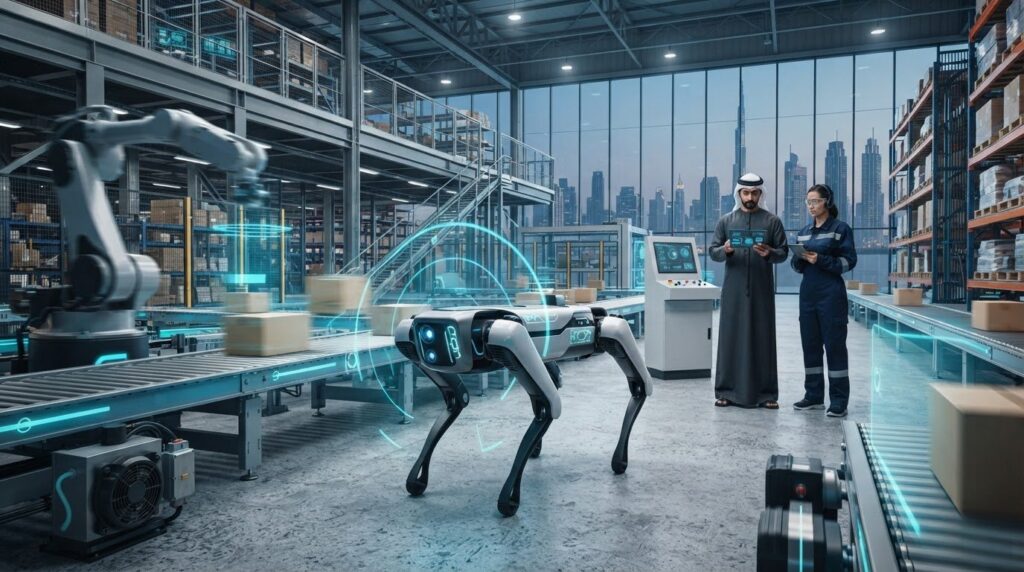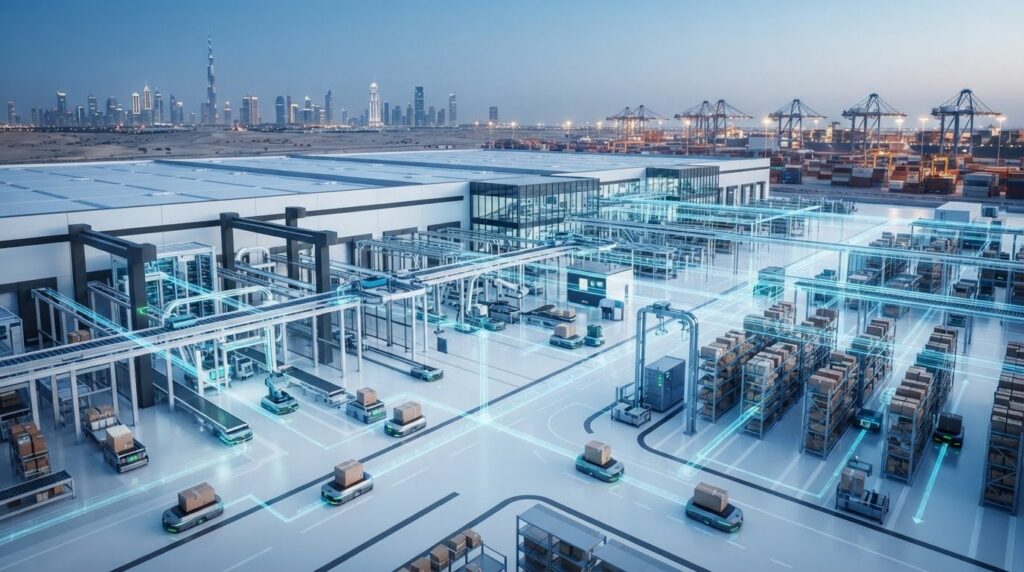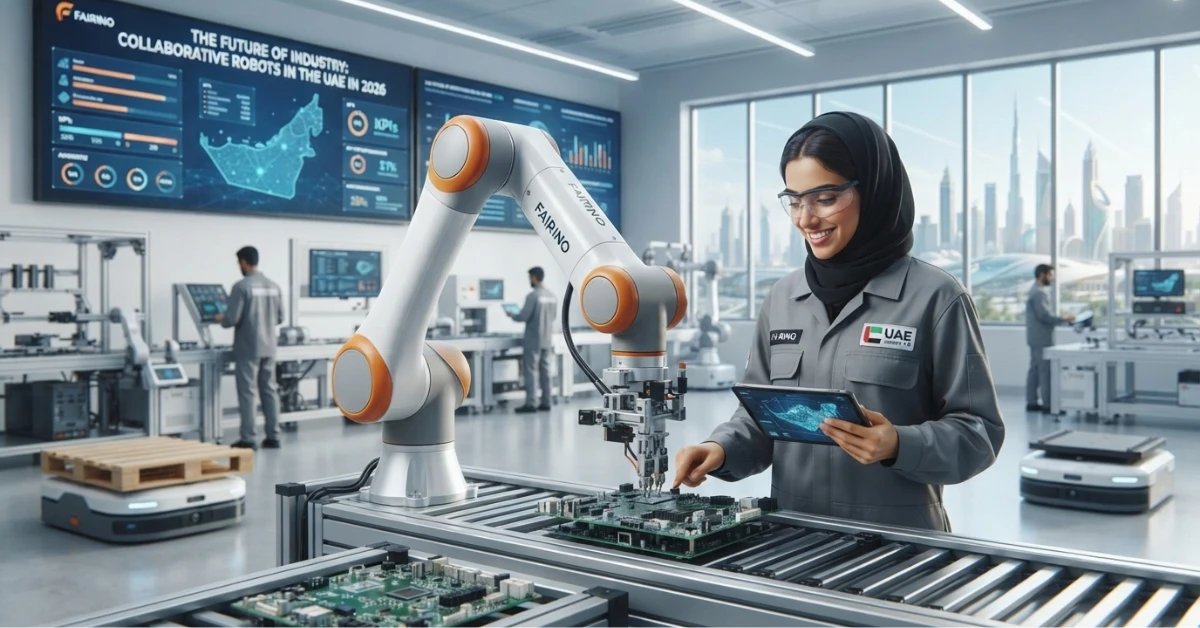
By September 2026, every organization in the Emirates utilizing automation must complete mandatory self-assessments under the UAE AI Act, signaling a definitive shift from optional modernization to a strictly regulated digital economy. Integrating collaborative robots UAE has become a critical necessity for leaders facing rising operational costs and the complex challenge of finding specialized engineers for legacy systems. Recognizing that hardware represents only a fraction of the total cost of ownership, forward-thinking enterprises are moving toward intelligent systems that harmonize with human labor rather than replacing it.
This article provides an authoritative analysis of how cobots are redefining industrial productivity while meeting the rigorous ISO 10218-1 safety standards required for modern shop floors. You’ll gain a clear understanding of advanced safety features, a technical roadmap for seamless integration, and evidence-based insights into ROI within the UAE’s specific economic context. By aligning with national strategies like Operation 300bn, these systems serve as the essential catalyst for your organization’s long-term viability in an increasingly autonomous landscape.
Key Takeaways
- Understand the fundamental shift from isolated industrial machinery to intelligent systems that operate safely without physical barriers. This transition maximizes facility floor space and enhances overall operational agility.
- Explore the technical architecture of modern platforms, specifically how force-torque sensing and machine learning enable real-time spatial awareness. These capabilities ensure precise task execution in dynamic, human-centric environments.
- Identify high-impact applications for collaborative robots UAE in specialized sectors like electronics assembly and high-volume logistics. Strategic deployment in these areas drives measurable improvements in throughput and picking accuracy.
- Learn the essential steps for a successful automation audit and the critical role of PLC and SCADA integration. Centralized control is vital for maintaining high safety standards and ensuring transparent data reporting across your infrastructure.
- Discover how a comprehensive consulting approach, spanning from initial concept to full-scale deployment, secures your organization’s competitive edge. Expert integration ensures your systems remain compliant with evolving regional regulatory frameworks.
What are Collaborative Robots? Defining the 2026 Industrial Standard
By mid-2026, the UAE’s industrial sector has reached a pivotal inflection point where technology no longer merely supports production but actively defines it. Under the ambitious framework of Operation 300bn, the nation is accelerating its transition toward a high-value manufacturing hub. Collaborative robots UAE represent the strategic interface of this evolution, moving from niche experimental applications to enterprise-scale deployment. Unlike their rigid predecessors, these systems are engineered for shared environments, utilizing advanced force-feedback and spatial awareness to work alongside human operators without the need for restrictive safety cages.
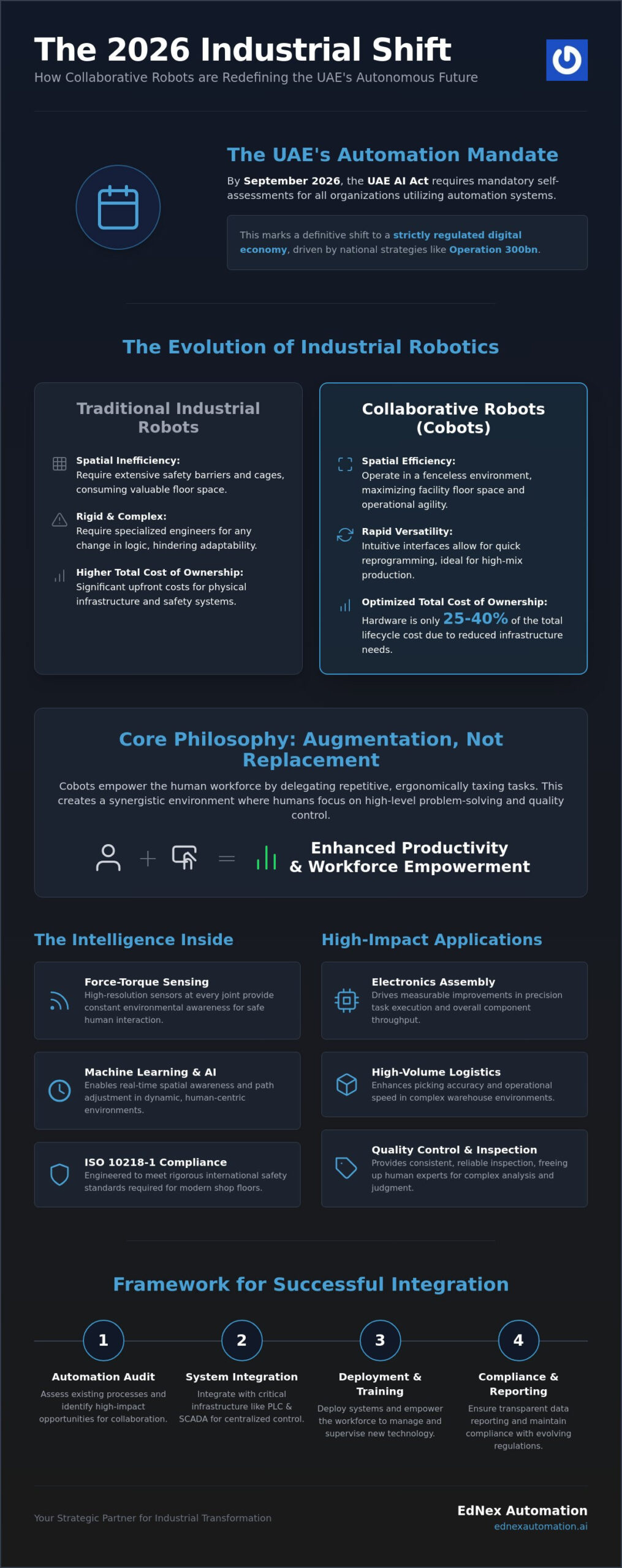
The 2026 shift is driven by the UAE AI Act, which mandates rigorous self-assessments for all autonomous systems. This regulatory clarity has transformed robotics from a high-risk gamble into a standardized industrial asset. Understanding What are Collaborative Robots? requires a perspective that values flexibility and intelligence over raw speed and isolation. These systems aren’t just tools; they’re the intellectual framework of the modern shop floor, providing the agility needed to meet the D33 economic agenda’s goals of doubling Dubai’s economy.
The Core Philosophy: Human-Robot Collaboration
The fundamental objective of modern cobot deployment is augmentation rather than replacement. By delegating repetitive, ergonomically taxing tasks to intelligent machinery, organizations empower their workforce to focus on high-level problem solving and quality control. This synergy creates a shared workspace where humans and robots interact dynamically. Transitioning to this model requires addressing the psychological shift in the workforce, as employees move from being machine operators to system supervisors. The 2026 industrial standard emphasizes this partnership, ensuring that technological progress remains human-centric while maximizing throughput and safety.
Key Differentiators from Traditional Industrial Robots
- Spatial Efficiency: Traditional robots require extensive safety barriers that consume valuable floor space. Cobots operate in a fenceless environment, allowing for a significant reduction in equipment footprint within existing facilities.
- Rapid Versatility: While legacy systems require specialized engineers for any change in logic, modern cobots feature intuitive interfaces for quick reprogramming, making them ideal for high-mix, low-volume production cycles.
- Optimized Total Cost of Ownership: Although hardware typically accounts for only 25% to 40% of the lifecycle expenditure, the reduced need for physical infrastructure and specialized safety systems makes collaborative robots UAE a more viable long-term investment for regional manufacturers.
As the UAE moves toward its goal of doubling the digital economy’s contribution to GDP by 2031, the role of cobots has expanded. They’re no longer just machines but the essential catalyst for Industry 4.0. By providing a reliable bridge between global technological breakthroughs and regional industrial needs, these systems ensure that local businesses remain competitive in an increasingly automated global market. This spirit of digital efficiency extends to administrative and marketing functions, where leveraging specialized email marketing software for SMEs allows growing enterprises to scale their communication as effectively as their production lines.
Technical Architecture: The Intelligence Behind Modern Cobots
The technical architecture of modern collaborative robots UAE has evolved from simple pre-programmed loops into sophisticated, self-correcting ecosystems. Utilizing high-resolution force-torque sensors at every joint, these units maintain a constant state of environmental awareness that was previously impossible. This sensory data allows the system to detect minute changes in resistance, triggering an immediate halt or a path adjustment when a human operator enters its proximity. These hardware advancements are further enhanced by the UAE’s 2026 framework for “Agentic AI,” which empowers robotics to execute self-governing models for complex industrial tasks. For developers building the Windows-based logic behind these systems, you can learn more about Cortex AI IDE to see how agentic AI is revolutionizing software creation.
Modern cobots integrate advanced machine learning algorithms to facilitate adaptive path planning. Instead of following a rigid, linear trajectory, the system synthesizes real-time data to optimize its movements for efficiency and safety. This intelligence reduces cycle times in dynamic environments where human workers and autonomous mobile robots are in constant motion. For organizations looking to modernize their infrastructure, selecting a platform with the right industrial robotics intelligence is the first step toward long-term operational resilience.
Safety Systems and Force-Limiting Technology
Ensuring compliance with ISO 10218-1 and ISO/TS 15066 is no longer a choice but a regulatory mandate under the 2026 UAE AI Act. Power and Force Limiting (PFL) serves as the primary technical safeguard, utilizing internal sensors to monitor the energy exerted during every movement. If the system detects an impact exceeding specific thresholds, it ceases operation within milliseconds. Beyond mechanical stops, vision-based safety zones use 3D LiDAR and depth cameras to create virtual buffers. As a worker approaches, the cobot automatically reduces its velocity, maintaining productivity without compromising safety standards.
The Role of AI in Adaptive Automation
- Dynamic Obstacle Avoidance: Utilizing real-time environment mapping, cobots can recalculate their work envelope instantly to bypass unexpected obstructions.
- Predictive Maintenance: Integrated AI monitors internal motor heat, vibration patterns, and joint wear to forecast potential failures before they cause costly downtime.
- AI-Driven Vision: High-precision cameras coupled with neural networks allow for sub-millimeter quality inspection, identifying defects that are often invisible to the human eye.
User-centric interfaces have lowered the barrier to entry for local manufacturers. No-code programming environments and intuitive “lead-through” teaching methods allow floor staff to reconfigure tasks without deep robotics expertise. By simply moving the robot arm through the desired path, the system records the coordinates and optimizes the motion profile automatically. This democratization of technology ensures that the UAE’s manufacturing sector can scale rapidly, aligning with the national goal of doubling the digital economy’s contribution to GDP by 2031.
Strategic Cobot Applications Across UAE Industrial Sectors
Precision and repeatability are no longer luxury metrics but baseline requirements for regional competitiveness. Deploying collaborative robots UAE across diverse sectors allows organizations to bridge the gap between human dexterity and mechanical consistency. In the pharmaceutical and FMCG industries, these systems conduct high-speed quality inspections, ensuring that every product meets stringent regulatory benchmarks before leaving the facility. This level of automated oversight is vital for maintaining the global standing of UAE-made goods, especially as the nation aims to double its digital economy’s contribution to GDP.
Laboratory and research environments are also experiencing a transformation through specialized automation. In the biotechnology sector, cobots manage delicate liquid handling and sample preparation, driving innovation through increased experimental throughput. These research-grade platforms provide the intellectual framework necessary for rapid scientific discovery, reflecting the UAE’s commitment to becoming a global leader in life sciences and advanced technology.
Manufacturing and Assembly Optimization
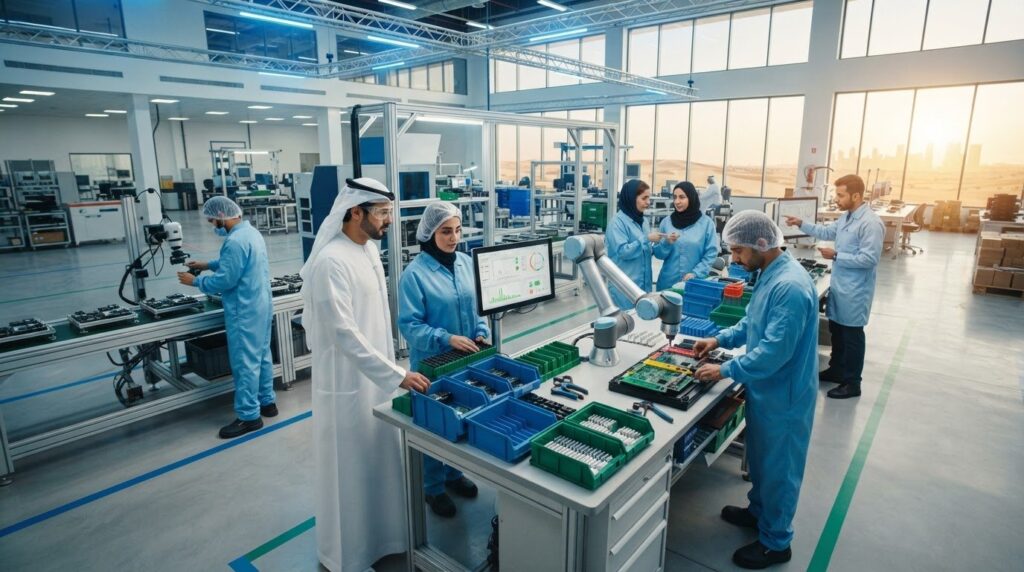
High-precision sectors like aerospace and electronics assembly demand a level of accuracy that exceeds human capability over long shifts. Cobots excel in intricate tasks such as screw driving, soldering, and adhesive dispensing with sub-millimeter precision. By integrating these systems into the production line, manufacturers achieve a degree of uniformity that significantly reduces waste. Beyond assembly, collaborative machine tending has become a standard for maximizing the uptime of CNC machines and injection molding units. The robot handles the loading and unloading of parts, allowing the machinery to run continuously while human technicians focus on high-level process optimization. Local manufacturing plants report substantial efficiency gains when shifting from manual tending to these autonomous solutions.
Logistics and End-of-Line Automation
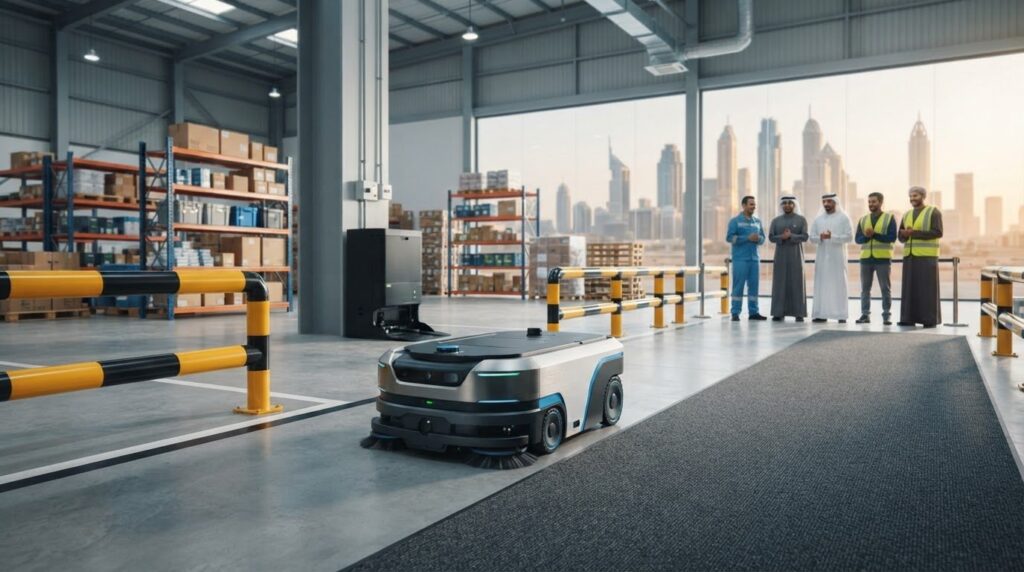
The UAE’s role as a global logistics hub necessitates a rapid evolution in warehouse management. Modern fulfillment centers are increasingly utilizing cobots for end-of-line tasks such as pick-and-place operations and automated palletizing. These systems work in tandem with autonomous mobile robots to create a seamless, end-to-end flow of goods from the receiving dock to the shipping container. Automated palletizing reduces the physical strain on human operators, mitigating the risk of repetitive strain injuries in high-volume environments. By streamlining these repetitive movements, logistics providers can dramatically increase their daily throughput, ensuring that the UAE remains at the forefront of global supply chain innovation.
Implementation Framework: Integrating Cobots into Industrial Ecosystems
Successful deployment of collaborative robots UAE begins with a rigorous automation audit designed to identify high-impact zones where human-machine synergy can be maximized. Conducting this comprehensive feasibility study allows industrial leaders to map out precise sensory and payload requirements before any hardware is installed. By prioritizing a phased integration strategy, organizations can transition from manual processes to automated workflows without halting active production lines. This systematic approach ensures that the new technology serves as a functional extension of the existing workforce rather than a disruptive force.
Centralizing control through PLC and SCADA integration services remains a non-negotiable requirement for 2026-era facilities. These services provide the intellectual framework necessary for cobots to communicate effectively with plant-wide infrastructure. Without this centralized orchestration, even the most advanced robotics remain isolated, failing to provide the data transparency required for modern regulatory compliance and operational optimization.
Bridging Robotics and Control Infrastructure
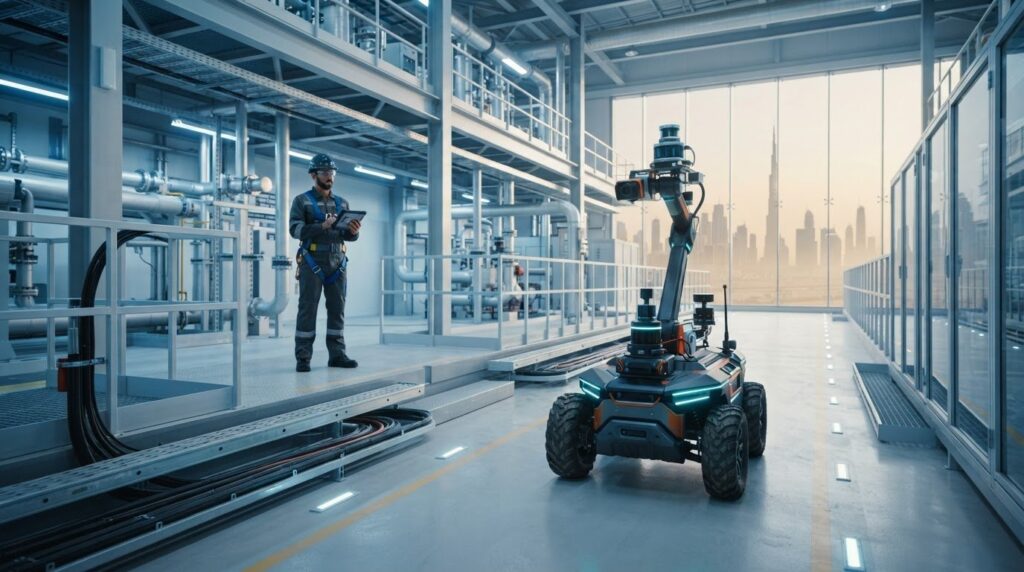
Ensuring that robotic units communicate seamlessly with existing industrial control systems requires the customization of PLC logic to manage complex handshakes between machinery. SCADA systems play a vital role in this architecture, monitoring real-time performance and collecting telemetry that informs predictive maintenance schedules. By orchestrating multi-robot collaborative cells through a unified control layer, facility managers can adjust motion profiles and safety zones dynamically. This level of integration allows for the rapid scaling of production capacity while maintaining the high safety standards mandated by the UAE AI Act.
Calculating the Realized Value and ROI
Evaluating the financial viability of automation requires looking beyond the initial purchase price to the total cost of ownership over a seven-year lifecycle. In the 2026 market, hardware typically represents only 25% to 40% of the total expenditure, with the remainder allocated to integration, software, and maintenance. Deploying collaborative robots in the UAE provides a strategic advantage through repurposability; unlike traditional fixed automation, cobots can be easily moved and retasked as market demands shift. This adaptability, combined with reduced error rates and increased throughput, ensures a sustainable return on investment that supports long-term business viability.
To ensure your facility meets the upcoming September 2026 mandatory self-assessment deadlines, partnering with a technical expert is essential. Contact our engineering team at EdNex Automation to initiate a professional audit of your current production environment and discover how bespoke integration can future-proof your operations.
EdNex Automation: Your Strategic Partner for Industrial Transformation
EdNex Automation serves as the critical link between global technological breakthroughs and the specific industrial requirements of the Middle East. As a specialized division of the EdNex group, we provide the intellectual framework necessary to transform complex production challenges into streamlined, autonomous workflows. Our expertise spans the entire lifecycle of industrial modernization, offering comprehensive consulting that guides your organization from initial concept to full-scale deployment. By providing access to a diverse portfolio of both research-grade and heavy-duty industrial collaborative robots UAE, we ensure that every solution is precisely calibrated to its intended environment.
Achieving total facility automation requires a holistic approach that extends beyond standalone robotic arms. We specialize in creating synergistic ecosystems by combining advanced cobots with automated storage and retrieval systems to optimize material flow and inventory management. This integrated methodology eliminates bottlenecks and ensures that every component of your infrastructure contributes to a unified productivity goal. Our commitment to national technical support and specialized training empowers local engineering teams to maintain and supervise these systems with confidence, fostering a culture of technical excellence within your workforce.
Bespoke Integration and Technical Excellence
Delivering high-level solutions often necessitates the development of custom hardware designed for unique operational demands. Our engineering team excels in bespoke end-effector design, ensuring that your robotics can handle specialized components with the required precision and care. For organizations exploring the frontier of service and assistance, we offer seamless integration with humanoid robots to enhance human-centric interactions in commercial and industrial settings. Our status as a trusted partner is reinforced by official certifications and strategic alliances with global robotics leaders, providing our clients with the legitimacy and expertise needed for large-scale transformation.
Ensuring Long-Term Operational Success
- Proactive Maintenance: We implement rigorous diagnostic programs to monitor system health, ensuring zero-downtime operations through scheduled preventative care and real-time telemetry.
- Scalable Pathways: Our automation roadmaps are designed for modular growth, allowing you to expand your capabilities as your business objectives and market demands evolve.
- Regional Expertise: With national coverage for integration and support, we provide the localized presence required for immediate technical assistance and regulatory compliance.
Securing your position in the UAE’s rapidly advancing digital economy requires a partner who understands the gravity of industrial evolution. We don’t just supply tools; we build the foundations for your future competitiveness. Contact EdNex Automation today to begin your industrial digital transformation and ensure your facility remains at the cutting edge of Industry 4.0 innovation.
Accelerating Your Path to Industrial Excellence in 2026
The evolution of the UAE’s industrial sector into a global powerhouse depends on the strategic adoption of intelligent, human-centric systems. Integrating collaborative robots UAE has moved beyond experimental use, becoming a fundamental requirement for maintaining compliance with the UAE AI Act and achieving the ambitious targets of the D33 agenda. Organizations that prioritize holistic technical architecture and seamless control integration will secure a significant advantage in operational agility and long-term throughput while mitigating the risks of rising operational costs. Success in this landscape requires a shift from isolated machinery to a unified, data-driven ecosystem.
Realizing this vision requires a technical partner who bridges global innovation with regional industrial needs. As an official Industrial 4.0 partner with comprehensive PLC/SCADA integration expertise and a robust national UAE support network, we provide the end-to-end framework necessary for your transformation. Consult with EdNex Automation for your bespoke robotics integration strategy to begin future-proofing your production environment today. Every step toward automation is a step toward enduring business viability, and we’re ready to ensure your journey is systematic, safe, and successful.
Frequently Asked Questions
What is the primary difference between a cobot and an industrial robot?
The primary differentiator lies in the safety architecture and the intended operational environment of the system. While traditional industrial robots are high-speed machines requiring physical barriers to prevent human injury, cobots are engineered with integrated force-limiting sensors that allow them to work alongside humans in shared spaces. This shift from isolation to collaboration maximizes floor space and allows for greater flexibility in dynamic production environments.
Are collaborative robots safe to use without safety cages in a factory?
Yes, collaborative robots are designed for fenceless operation by utilizing power and force-limiting (PFL) technology that ceases motion upon contact. However, a comprehensive risk assessment of the specific application is mandatory to ensure compliance with ISO 10218-1 and ISO/TS 15066 standards. The safety of the operation depends not only on the robot but also on the end-effector and the specific parts being handled during the task.
How much weight can collaborative robots handle in industrial settings?
Industrial-grade cobots typically manage payloads ranging from 3kg to 30kg, depending on the specific model and reach requirements. While traditional robots manage significantly heavier loads, the 2026 generation of heavy-duty cobots has expanded these capabilities to support more strenuous tasks in palletizing and machine tending. This payload range covers the majority of repetitive manual tasks found in manufacturing and logistics sectors today.
How long does it typically take to see a return on investment for cobots in the UAE?
Industrial leaders in the region often realize a return on investment within 12 to 24 months, depending on the complexity of the integration and the specific labor costs being offset. It’s important to recognize that hardware represents only 25% to 40% of the total expenditure, with the remaining investment allocated to integration and software. The long-term value is driven by increased throughput and the ability to rapidly repurpose the robot for new tasks.
Can cobots be integrated with my existing PLC and SCADA systems?
Yes, modern collaborative robots UAE are designed for seamless communication with existing industrial control layers through standardized protocols like Modbus, Profinet, or OPC UA. Integrating these systems with PLC and SCADA infrastructure ensures centralized orchestration and real-time performance monitoring. This connectivity is vital for maintaining data transparency and meeting the mandatory self-assessment requirements of the UAE AI Act.
What industries in the UAE benefit most from collaborative robots?
The manufacturing, logistics, and pharmaceutical sectors currently derive the most significant benefits from this technology due to their high-volume, high-precision requirements. These industries utilize cobots for tasks such as electronics assembly, pick-and-place operations, and automated quality inspection. By adopting these systems, companies align their operations with national strategies like Operation 300bn and the Dubai Economic Agenda (D33).
Do I need specialized programming knowledge to operate a cobot?
No, the 2026 standard for collaborative robotics focuses on user-centric interfaces that utilize no-code programming and intuitive lead-through teaching. This allows existing floor staff to reconfigure tasks by manually moving the robot arm through a desired path, significantly reducing the reliance on specialized robotics engineers. These intuitive methods lower the barrier to entry for local manufacturers looking to scale their automation efforts quickly.
What maintenance is required for collaborative robots in high-temperature environments?
Operating collaborative robots UAE in high-temperature environments requires a proactive maintenance schedule focused on thermal management and joint integrity. Regular inspections of joint seals, cooling systems, and internal telemetry data are essential to prevent thermal degradation of sensitive electronics. Utilizing specialized protective sleeves and monitoring vibration patterns through a SCADA system ensures that the machinery maintains peak performance despite the region’s challenging climatic conditions.